Loading subject page…


11,656 views

Video Summary: 2d Nmr Overview of Heteronuclear Explained
Ever wondered how pharmaceutical companies at Johnson & Johnson identify molecular structures in new drug compounds? The heteronuclear 2D NMR overview reveals how scientists map connections between different atomic nuclei like hydrogen and carbon-13. This 2D NMR overview of heteronuclear techniques includes powerful methods like HSQC, HMBC, and HETCOR that create detailed molecular fingerprints by showing cross-peaks between coupled nuclei on two-dimensional spectra. Watch the full video on JoVE Coach to master this concept with expert-led visuals and step-by-step explanations.
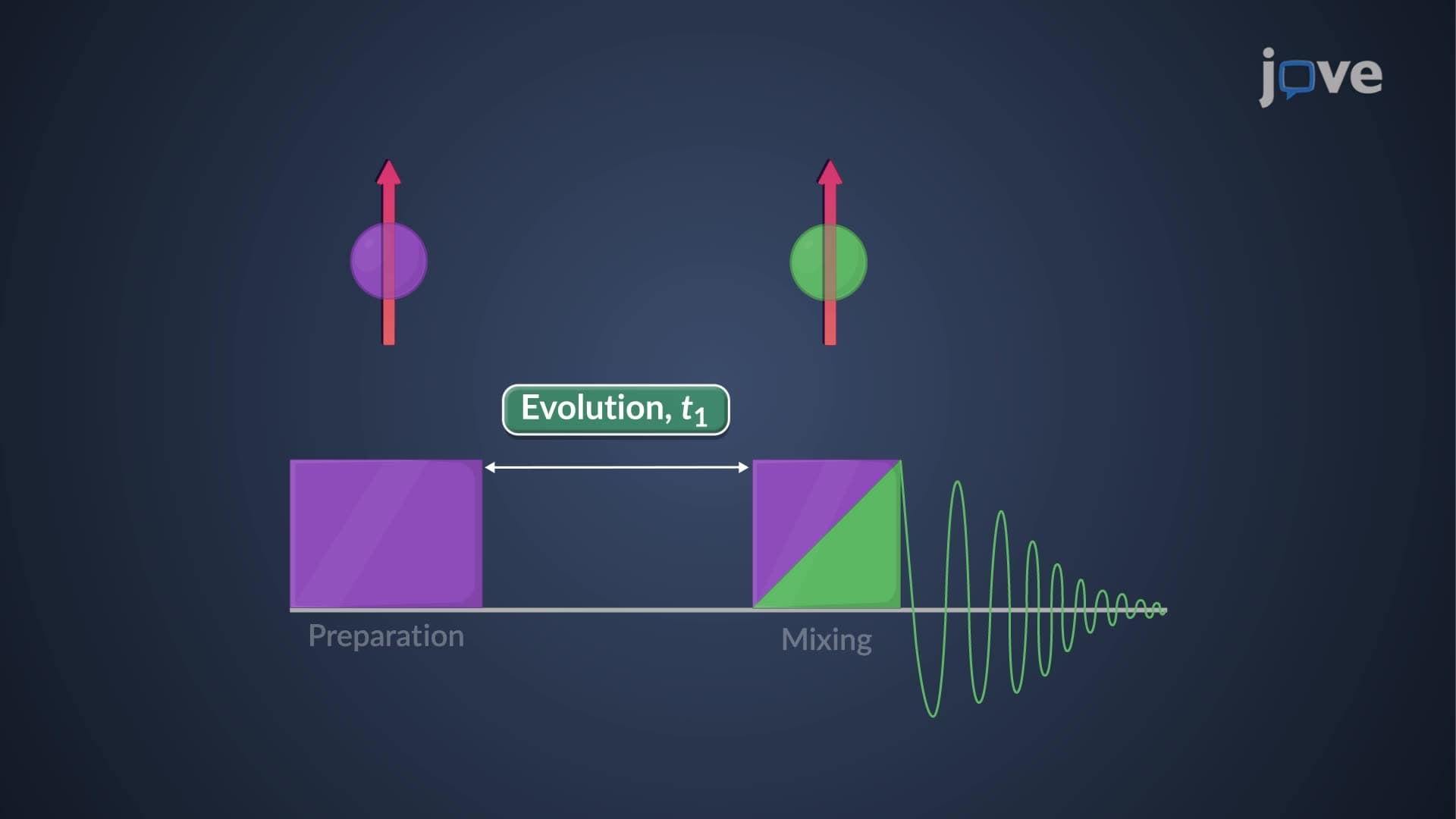
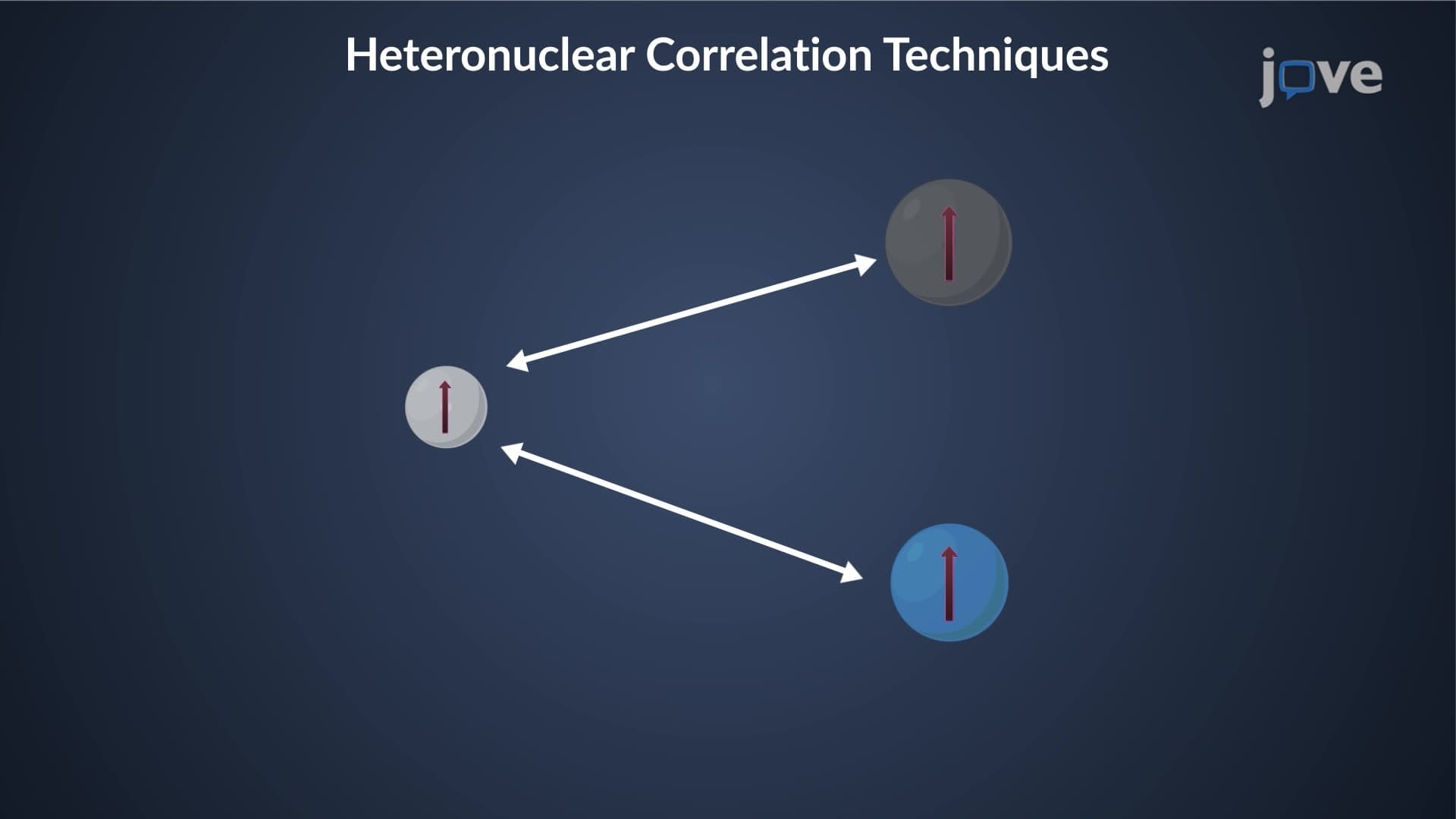
The 2D NMR overview of heteronuclear techniques represents a revolutionary approach to molecular structure determination that goes far beyond traditional one-dimensional NMR. Unlike homonuclear methods that examine connections between identical nuclei, heteronuclear techniques investigate coupling between different types of nuclei-most commonly protons (¹H) with carbon-13 (¹³C) or nitrogen-15 (¹⁵N). These methods create two-dimensional maps where one axis displays the chemical shift of the X-nucleus (such as ¹³C) and the other shows proton chemical shifts, with cross-peaks revealing which atoms are connected through space or bonds.
Heteronuclear correlation spectroscopy (HETCOR) serves as a foundational technique that enhances weak X-nucleus signals through polarization transfer from abundant protons. This approach proves particularly valuable when analyzing carbon-13, which has low natural abundance (1.1%) and poor sensitivity compared to protons. Research laboratories at institutions like MIT and Stanford routinely use HETCOR for structural biology applications, where enhanced X-axis resolution becomes critical for distinguishing closely spaced carbon signals in complex biomolecules. The technique excels in pharmaceutical development, where companies need precise structural confirmation of synthetic intermediates.
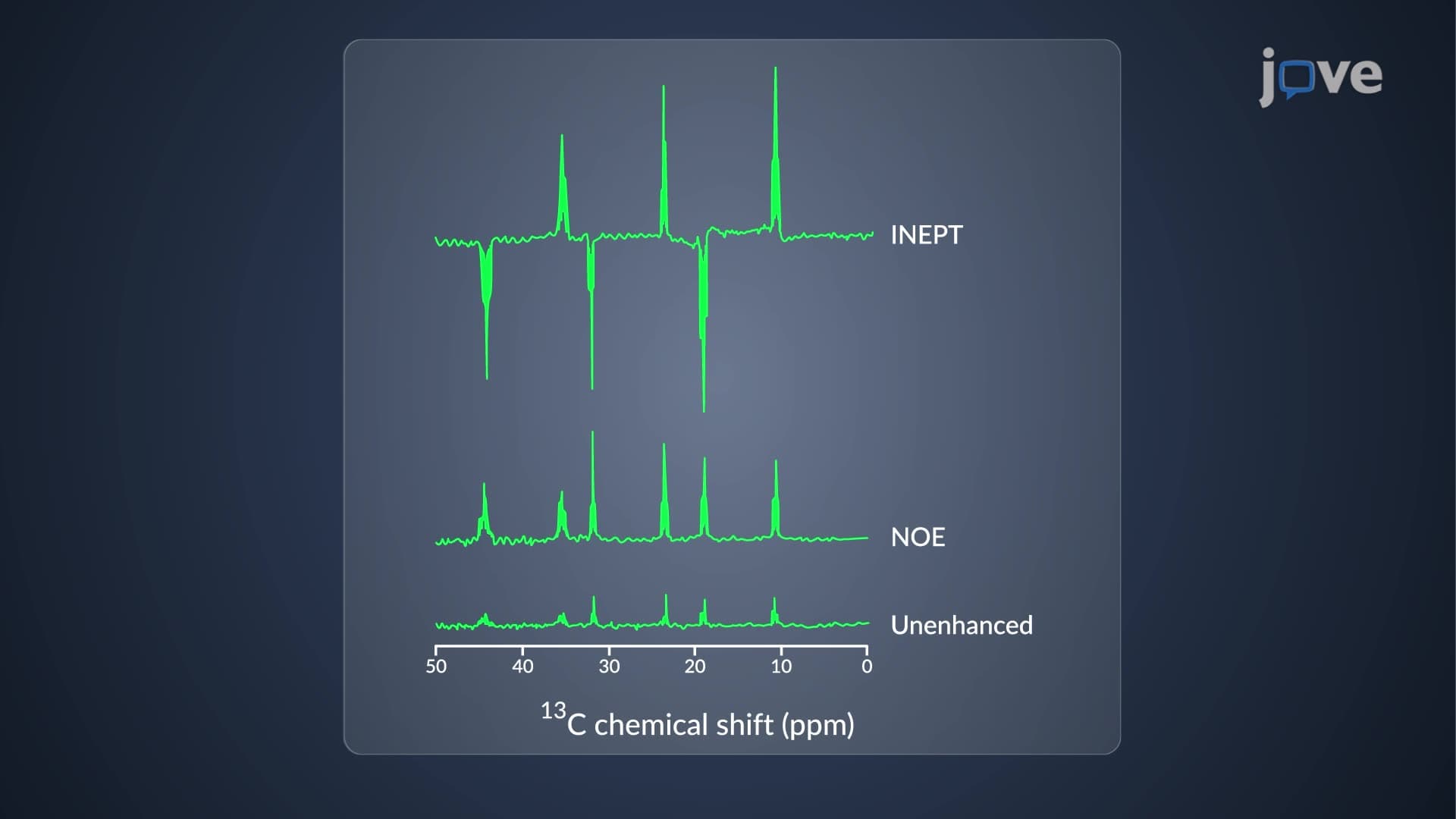
Both Heteronuclear Single-Quantum Coherence (HSQC) and Heteronuclear Multiple-Quantum Coherence (HMQC) focus on one-bond proton-X correlations, but they employ different suppression methods that affect spectral quality. HSQC typically provides superior X-nucleus peak resolution, making it the preferred choice for crowded spectra where signal overlap poses challenges. Students preparing for advanced organic chemistry courses or the MCAT will encounter these techniques when studying protein NMR or natural product structure elucidation. The key distinction lies in their pulse sequences: HSQC uses refocused INEPT (Insensitive Nuclei Enhanced by Polarization Transfer) steps that better suppress unwanted signals.
Heteronuclear Multiple-Bond Correlation (HMBC) specifically targets two-bond and three-bond proton-X connectivity while suppressing direct one-bond correlations that would otherwise dominate the spectrum. This selectivity makes HMBC invaluable for determining molecular frameworks and confirming structural hypotheses. Gradient-enhanced HMBC further improves performance by eliminating interfering artifacts, particularly useful when analyzing complex natural products or synthetic compounds with overlapping signals. Students will find HMBC essential for AP Chemistry advanced topics and college-level spectroscopy courses, where understanding long-range connectivity helps solve challenging structural problems.
Related Micro-courses