Loading subject page…


11,656 views

Video Summary: 2d Nmr Overview of Homonuclear Explained
Ever wondered how chemists at companies like Merck determine the exact structure of new drug molecules? A homonuclear 2D NMR overview reveals how scientists analyze interactions between identical nuclei types, primarily protons, to map molecular structures with precision. These powerful techniques include COSY experiments that reveal which protons connect through chemical bonds, and NOESY methods that identify protons close in space but not directly bonded. Watch the full video on JoVE Coach to master this concept with expert-led visuals and step-by-step explanations.
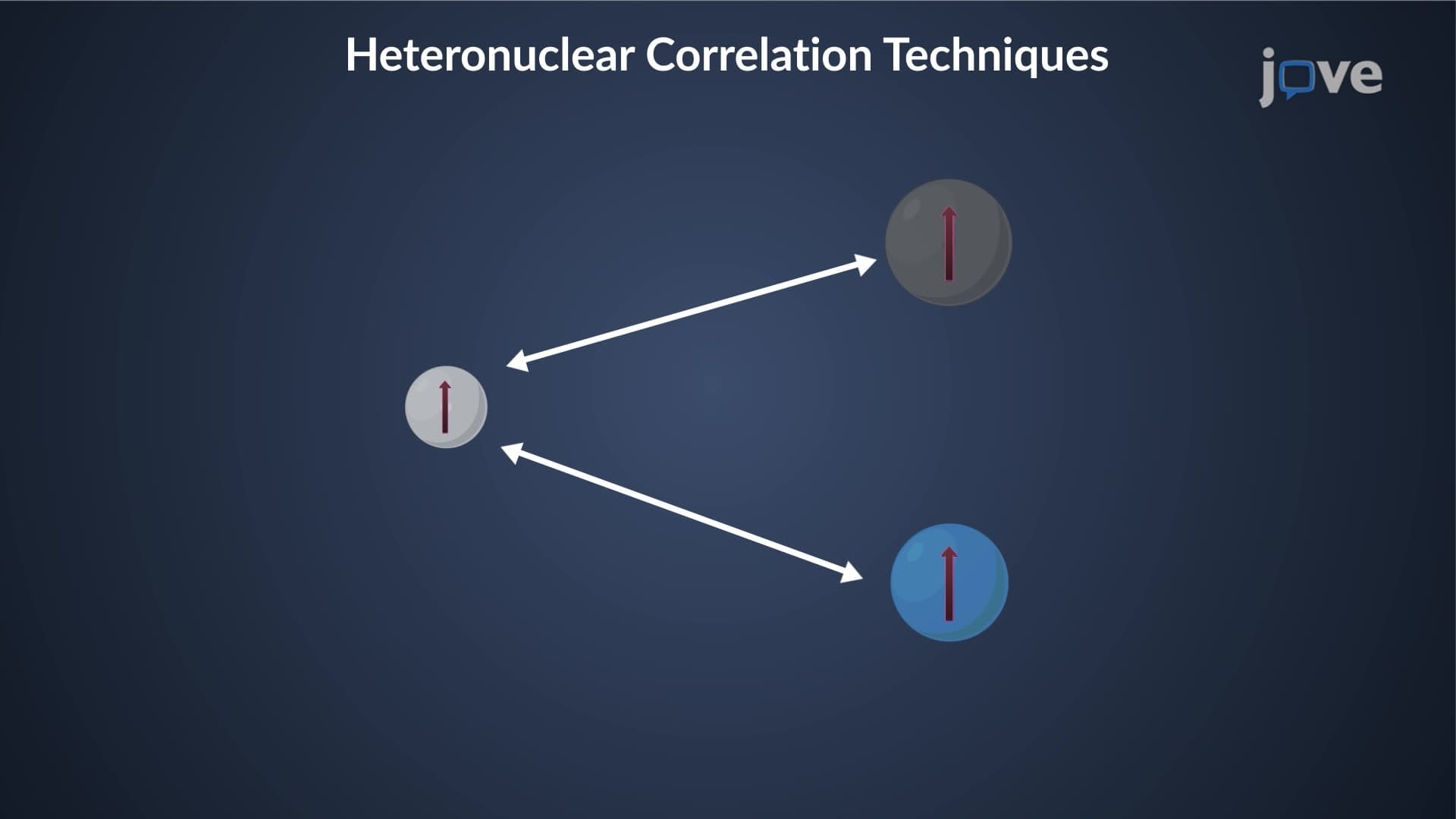
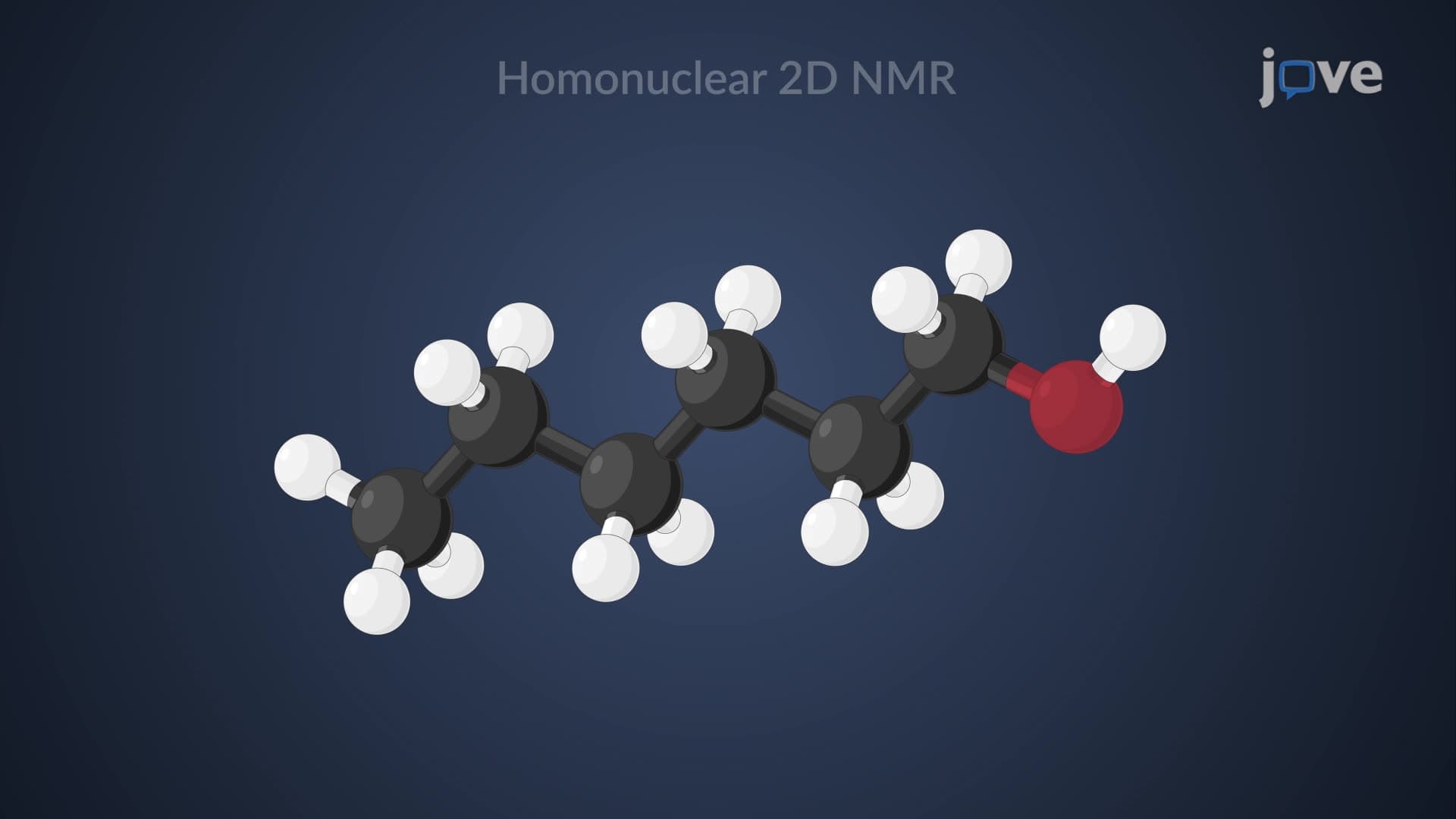
Homonuclear two-dimensional NMR spectroscopy represents a cornerstone of modern structural analysis, focusing exclusively on interactions between identical nucleus types-most commonly protons (¹H). Unlike heteronuclear experiments that examine relationships between different nuclei (like ¹H and ¹³C), homonuclear methods provide detailed maps of how protons within a molecule interact with each other through chemical bonds or spatial proximity.
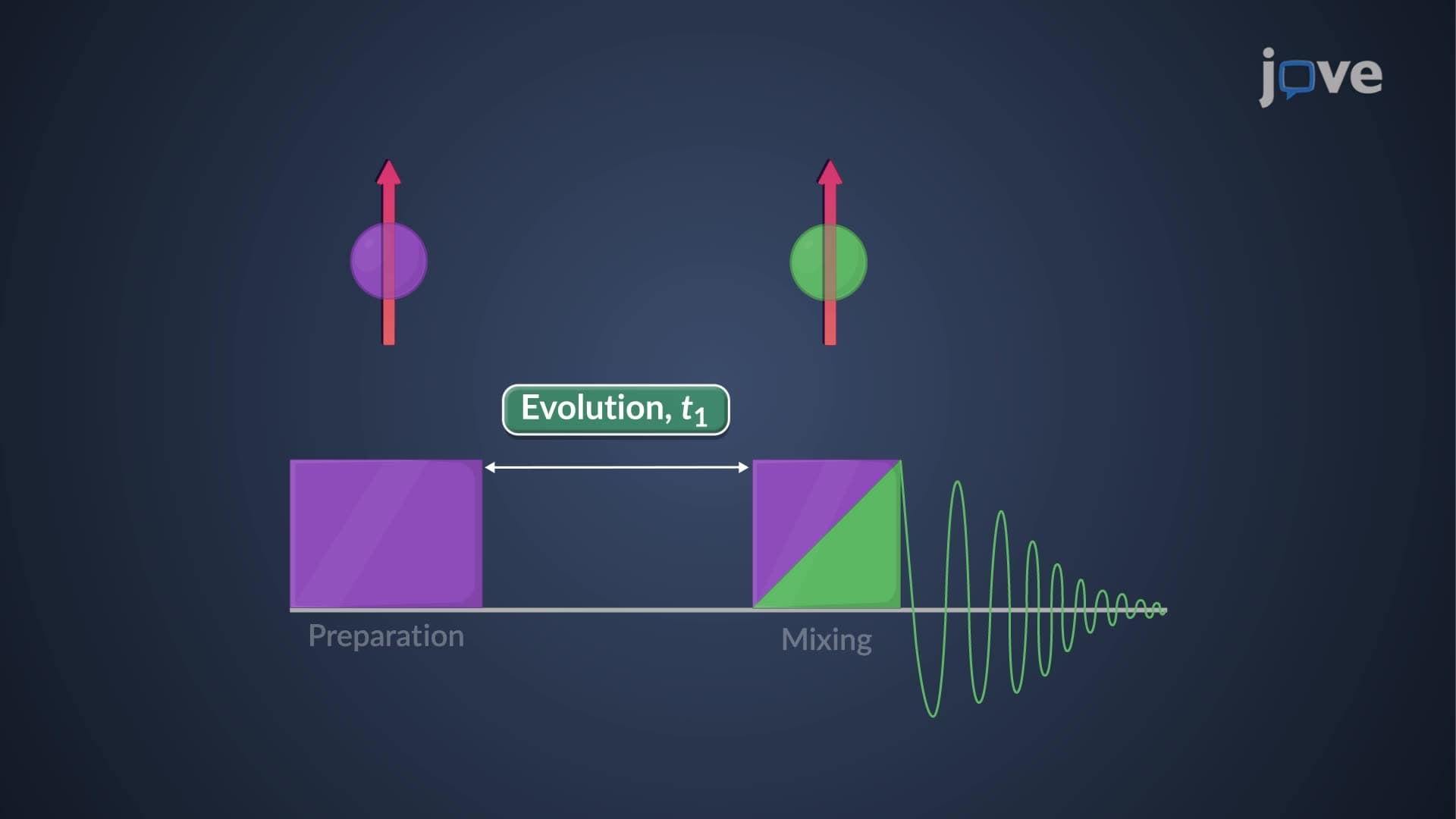
The correlation spectroscopy (COSY) family forms the backbone of homonuclear 2D NMR methods. COSY-90 experiments use two consecutive 90-degree radiofrequency pulses to generate cross-peaks between protons separated by two or three chemical bonds. This technique proves invaluable for determining molecular connectivity patterns, particularly in complex organic molecules studied in AP Chemistry or undergraduate organic chemistry courses.
COSY-45 offers an alternative approach, employing a 45-degree second pulse that sacrifices signal intensity for enhanced spectral resolution and reduced artifacts. This trade-off becomes crucial when analyzing crowded spectra of large biomolecules, such as those encountered in biochemistry research at institutions like Harvard Medical School or Johns Hopkins University.
Long-range COSY (LR-COSY) extends the standard experiment by lengthening evolution and detection periods, revealing correlations across four or more bonds that standard COSY cannot detect. This capability proves essential when analyzing aromatic compounds or complex natural products commonly featured in MCAT organic chemistry sections.
Relayed COSY adds sophisticated pulse sequences to create "relay" pathways, generating cross-peaks between protons that don't directly couple but connect through intermediate spins. This technique helps pharmaceutical companies like Pfizer elucidate complex drug metabolite structures where overlapping signals obscure direct connectivity patterns.
Total correlation spectroscopy (TOCSY) represents the pinnacle of through-bond correlation experiments, simultaneously providing information equivalent to multiple COSY experiments. TOCSY reveals all proton-proton correlations within individual spin systems, making it invaluable for protein structure determination at research universities nationwide.
Nuclear Overhauser Effect Spectroscopy (NOESY) shifts focus from bond connectivity to spatial relationships, identifying protons within approximately 5 Angstroms of each other regardless of bonding patterns. This spatial information proves crucial for determining three-dimensional molecular conformations, particularly in pharmaceutical research where drug-receptor interactions depend on precise molecular shapes.
Related Micro-courses