Loading subject page…


11,655 views

Video Summary: H Nmr Conformationally Flexible Molecules and Temporal Resolution
Ever wondered why cyclohexane shows only one peak in NMR conformational flexibility studies despite having 12 different hydrogen atoms? Conformationally flexible molecules H NMR reveals a fascinating temporal dance: cyclohexane's chair conformations flip 100,000 times per second at room temperature, making axial and equatorial protons appear identical to the NMR spectrometer. This phenomenon occurs in pharmaceutical compounds analyzed at major US research institutions like Johns Hopkins and Stanford. Watch the full video on JoVE Coach to master this concept with expert-led visuals and step-by-step explanations.
NMR conformational flexibility represents one of the most elegant demonstrations of how molecular motion intersects with spectroscopic observation. When molecules undergo rapid structural changes, NMR spectroscopy captures an averaged picture rather than individual conformational snapshots. This principle fundamentally shapes how we interpret spectra of flexible organic compounds.
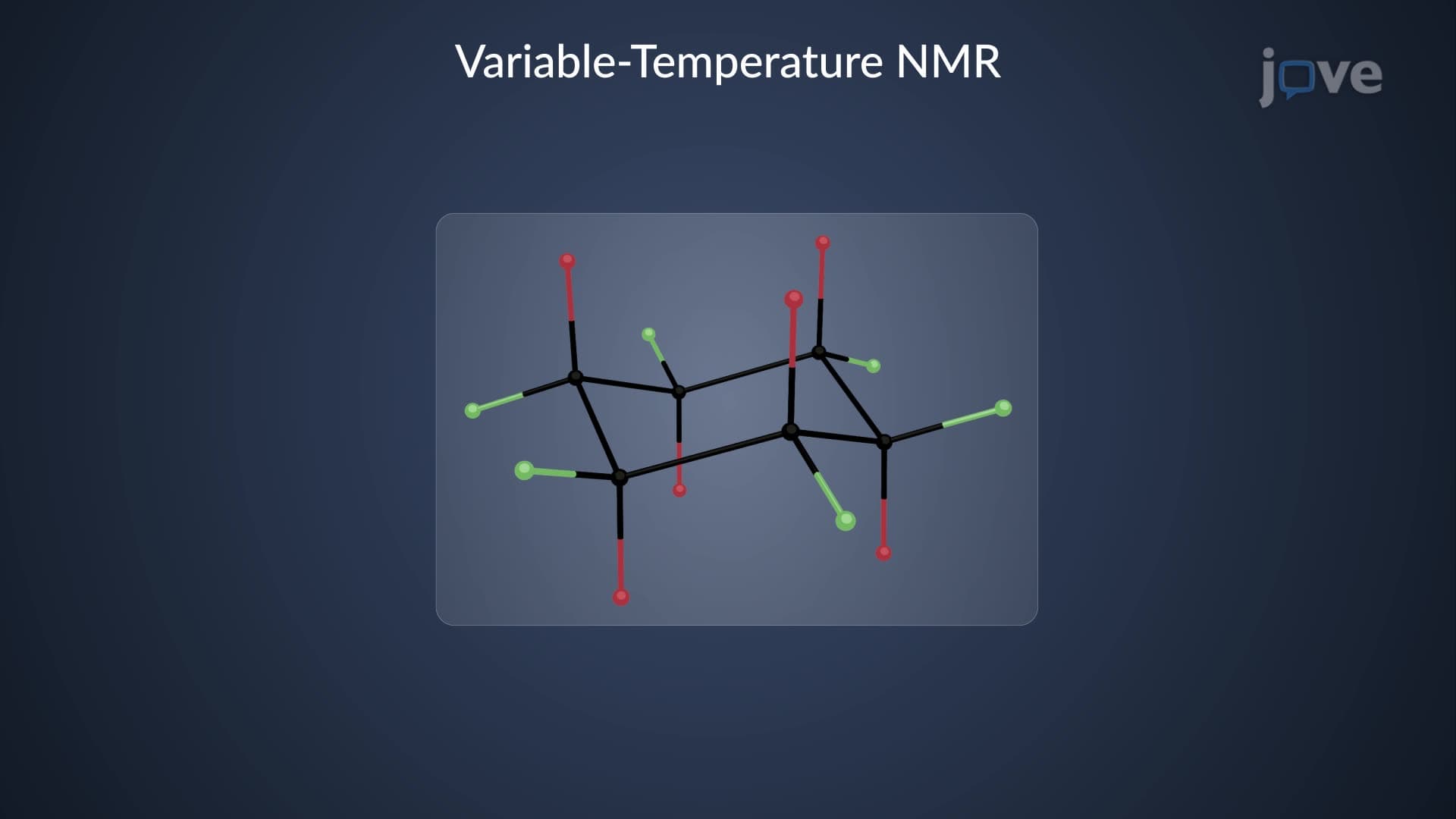
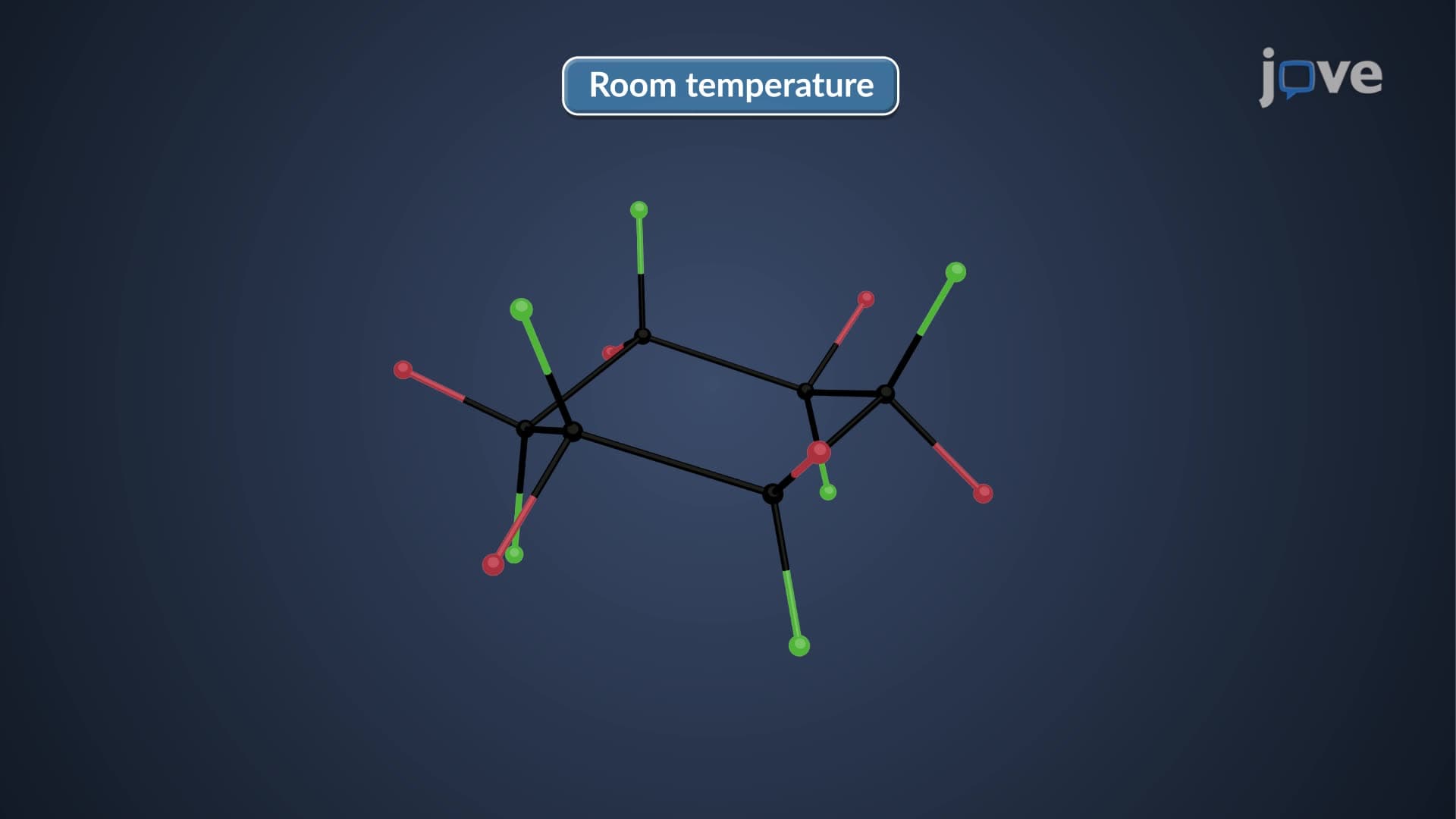
Cyclohexane serves as the classic example for understanding conformational averaging NMR. In its stable chair conformation, cyclohexane possesses six axial protons (pointing up or down) and six equatorial protons (extending outward). These protons are diastereotopic-chemically distinct due to their different spatial environments. However, at room temperature, cyclohexane undergoes rapid chair-to-chair interconversion approximately 10⁵ times per second.
This ring flip NMR timescale phenomenon creates a fascinating spectroscopic result: instead of seeing separate signals for axial and equatorial protons, the NMR spectrometer detects only a single averaged peak. The rapid exchange between conformations occurs much faster than the NMR measurement timescale, effectively "fooling" the instrument into seeing all protons as equivalent.
The concept of NMR fast slow exchange depends critically on the relationship between conformational exchange rates and the NMR timescale. When conformational changes occur faster than the frequency difference between distinct proton environments (fast exchange), spectral averaging produces simplified spectra. Conversely, slow exchange conditions reveal individual conformational states as separate signals.
This principle extends far beyond cyclohexane to pharmaceutically relevant molecules. For instance, researchers at pharmaceutical companies like Pfizer and Merck routinely encounter conformational flexibility when analyzing drug candidates. Rotational barriers around C-N bonds in amides, ring puckering in cycloalkanes, and side-chain conformations in amino acids all contribute to dynamic NMR process effects.
Understanding how NMR resolves conformationally flexible molecules proves essential for students preparing for advanced chemistry courses and professional exams. On the MCAT, test-takers frequently encounter questions about conformational analysis and NMR interpretation. AP Chemistry students benefit from grasping these concepts when studying molecular structure and spectroscopy units.
In research laboratories across US universities, from MIT to UC Berkeley, graduate students apply these principles when characterizing synthetic intermediates and natural products. The ability to predict and interpret conformational effects in NMR spectra distinguishes competent spectroscopists from novices, making this knowledge invaluable for careers in pharmaceutical research, materials science, and academic chemistry.
Related Micro-courses