Loading video…


 12 Concepts
 11.7K views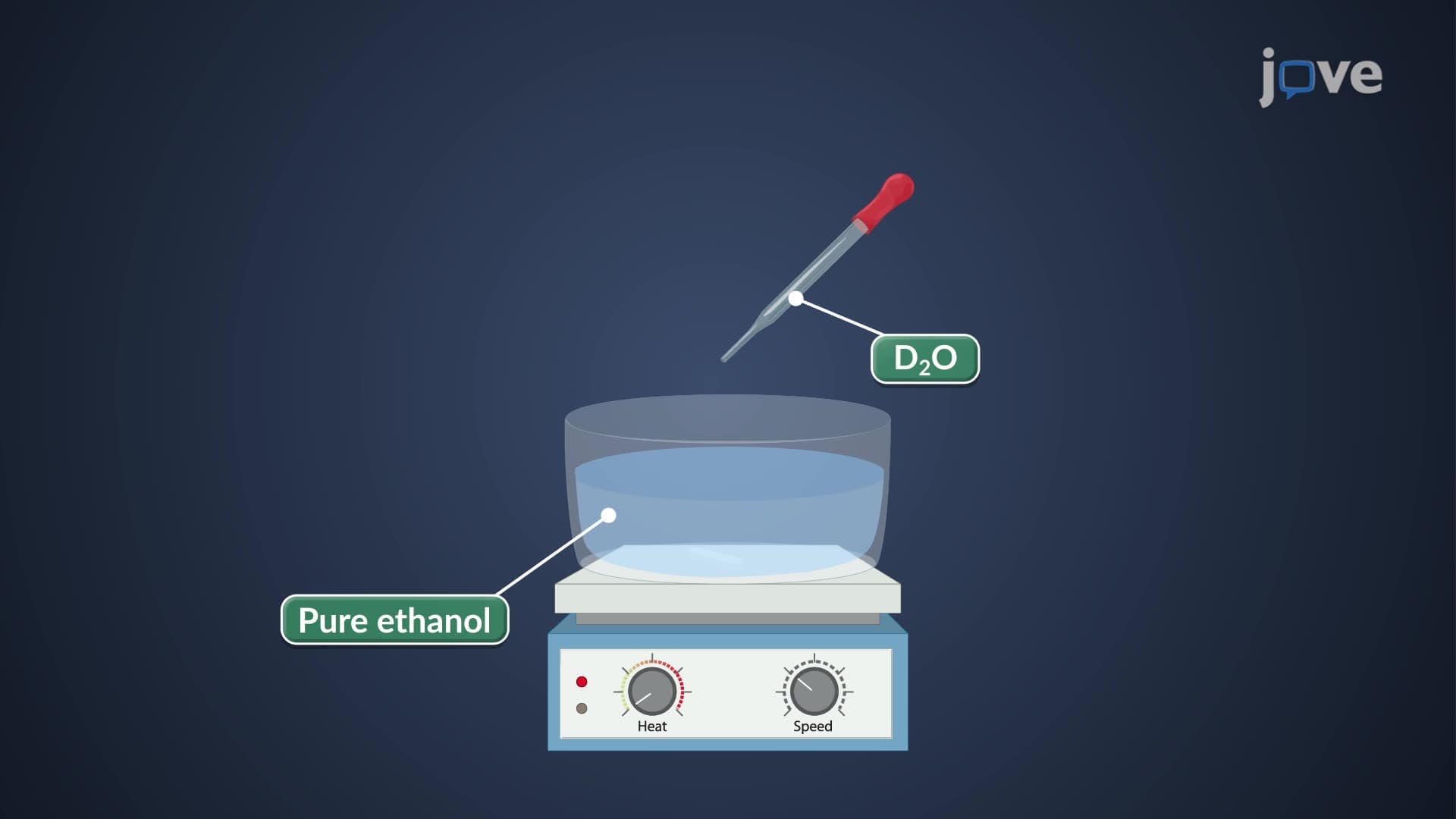

Video Summary: H Nmr Deuterium Exchange of Labile Protons
Ever wondered how pharmaceutical companies at Pfizer or Merck identify which hydrogen atoms in drug molecules can be easily replaced? Deuterium exchange NMR provides the answer by revealing labile protons-hydrogen atoms that readily swap with deuterium from D2O solvent. This powerful technique, known as ¹H NMR: Deuterium Exchange of Labile Protons, transforms complex NMR spectra by making certain peaks disappear, allowing chemists to pinpoint exactly which protons are attached to oxygen or nitrogen atoms. Watch the full video on JoVE Coach to master this concept with expert-led visuals and step-by-step explanations.
The deuterium exchange technique represents one of the most elegant diagnostic tools in NMR spectroscopy. When D2O (heavy water) is added to an NMR sample, a fascinating chemical phenomenon occurs: labile protons-those attached to electronegative atoms like oxygen, nitrogen, or sulfur-readily exchange with deuterium atoms. Since deuterium has different magnetic properties than regular hydrogen, these exchanged positions become "invisible" in standard ¹H NMR spectra.
Labile protons possess unique reactivity due to their acidic nature and the electronegativity of their attached heteroatoms. In alcohols, carboxylic acids, amines, and thiols, these protons can rapidly exchange with deuterium through acid-base equilibria. The process occurs so quickly that NMR cannot detect the individual exchange events-instead, the original proton signal simply vanishes from the spectrum.
Research laboratories at institutions like MIT and Stanford routinely employ this technique when characterizing new organic compounds. The exchange rate depends on pH, temperature, and the specific chemical environment, making it a versatile tool for structural analysis.
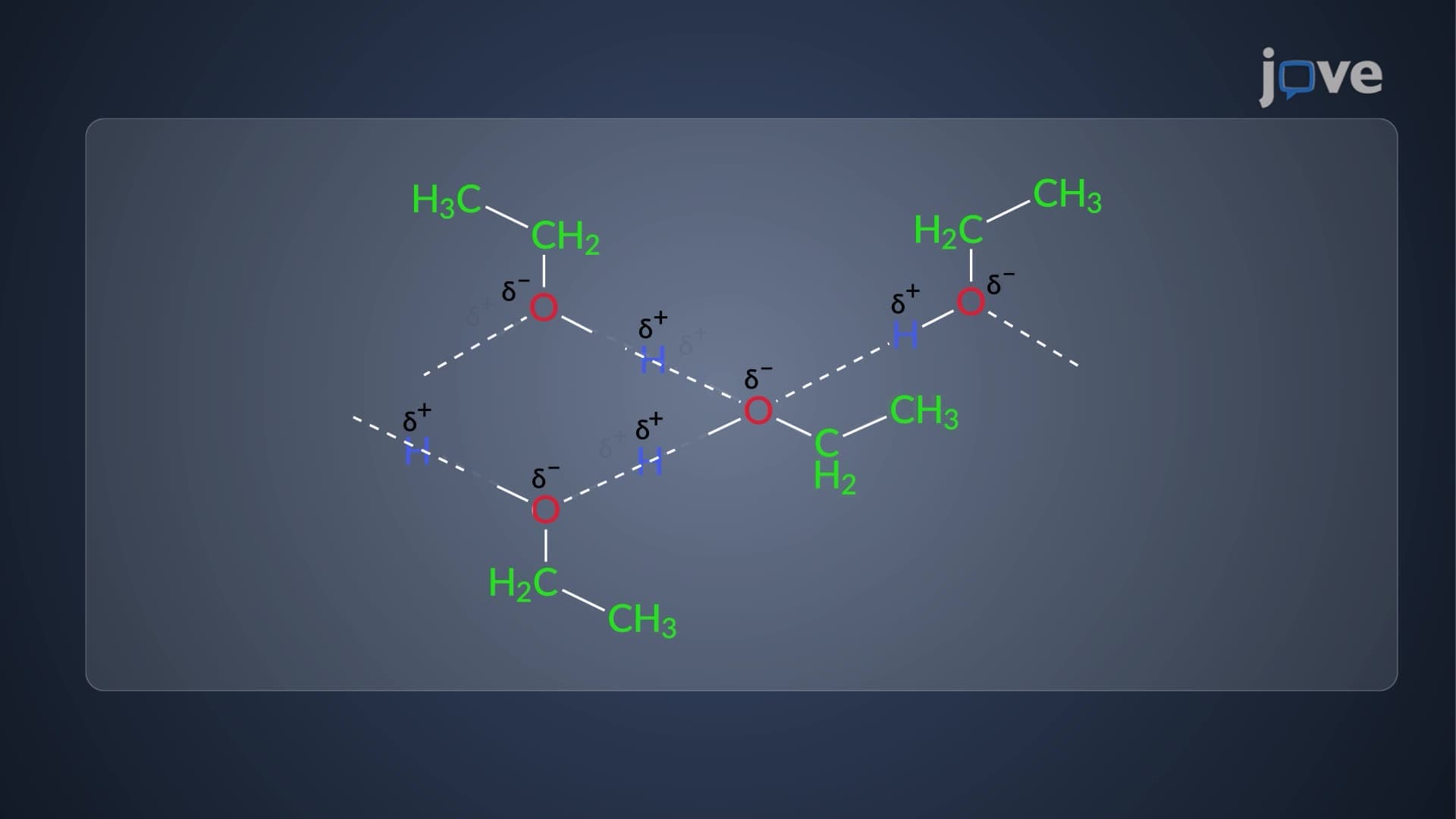
Consider ethanol analysis, a common example in AP Chemistry and organic chemistry courses. Pure ethanol shows a characteristic triplet for the OH proton due to coupling with the adjacent CH2 group. After D2O addition, this triplet disappears entirely, while the methylene protons transform from a complex multiplet into a clean quartet. This dramatic change confirms both the presence of the OH group and its coupling relationships.
This technique proves invaluable for students preparing for the MCAT, where NMR interpretation questions frequently appear. Medical schools expect pre-med students to recognize how deuterium exchange can differentiate between various functional groups in biomolecules.
Pharmaceutical companies like Johnson & Johnson and Bristol Myers Squibb use deuterium exchange extensively during drug development. The technique helps identify potential metabolic sites in drug candidates, since labile protons often represent points of biological modification. Additionally, deuterated drugs (where specific hydrogens are replaced with deuterium) can show improved pharmacological properties, making this knowledge crucial for medicinal chemistry applications.
Related Micro-courses