Loading subject page…


11,655 views
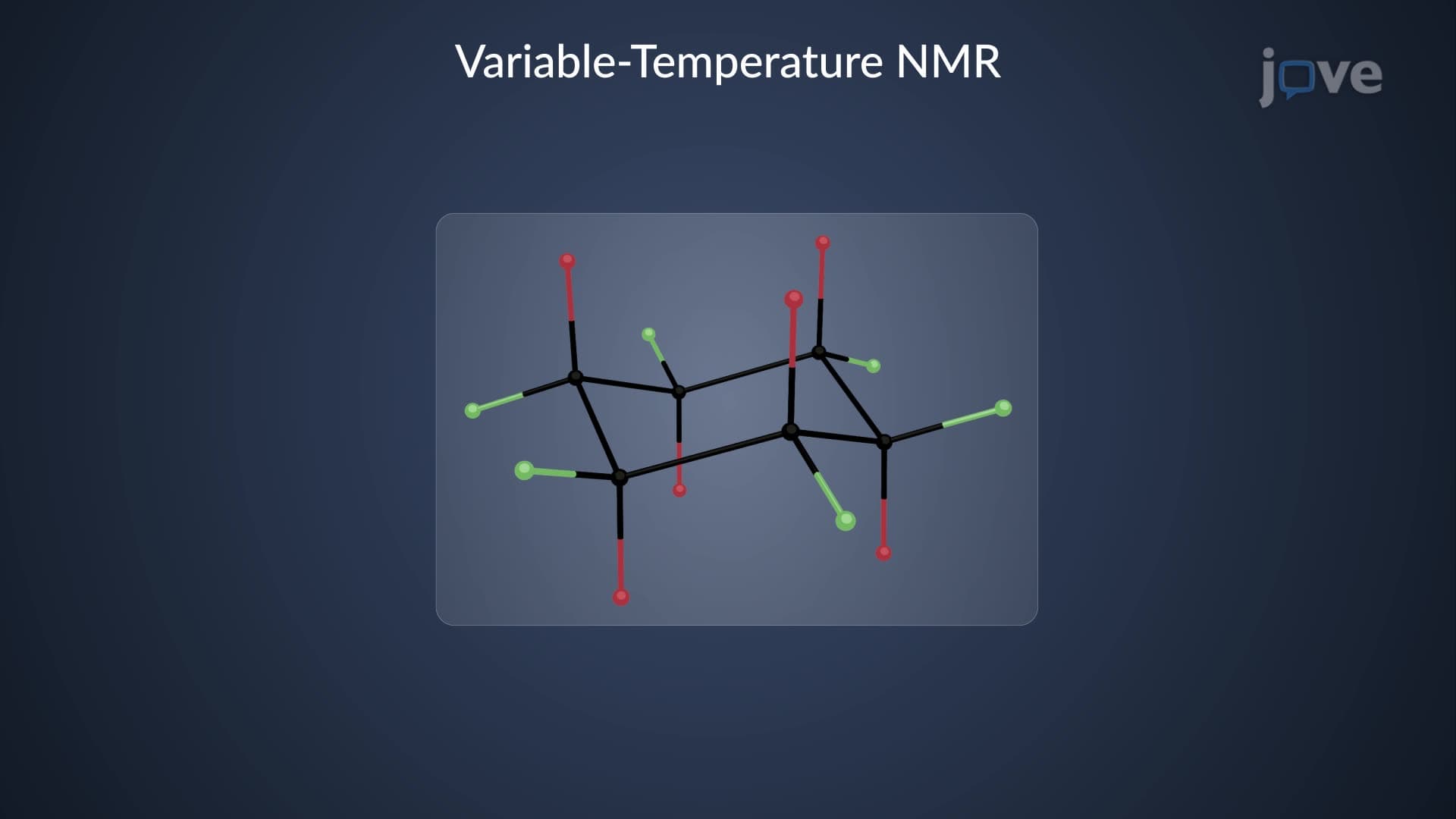

Video Summary: H Nmr Variable Temperature Analysis of Flexible Molecules
Did you know that molecules are constantly dancing, even in a test tube? Variable temperature NMR analysis reveals this molecular motion by slowing down rapid structural changes that are normally invisible at room temperature. Consider how pharmaceutical companies at Pfizer use ¹H NMR: Variable-Temperature Analysis of Flexible Molecules to study drug conformations that directly impact medication effectiveness. This technique transforms blurred molecular snapshots into crystal-clear structural details by systematically lowering temperatures. Watch the full video on JoVE Coach to master this concept with expert-led visuals and step-by-step explanations.
Variable temperature NMR analysis represents one of the most powerful techniques for studying molecular dynamics in solution. Unlike static NMR experiments, this method exploits the temperature dependence of molecular motion to reveal conformational details that remain hidden at ambient conditions. The technique proves invaluable when molecules undergo rapid structural changes that occur faster than the NMR timescale can detect.
At room temperature, many flexible molecules undergo rapid conformational changes with rates exceeding 10³ Hz. These fast exchange processes cause NMR signals to average out, producing single peaks that mask important structural information. As temperature decreases, molecular kinetic energy drops proportionally, slowing these exchange processes. When exchange rates approach the NMR frequency difference between conformers (typically around 10² Hz), fascinating spectral changes occur.
The coalescence temperature NMR phenomenon occurs at a critical point where separate signals begin to merge. Above this temperature, distinct conformations appear as averaged signals. Below it, individual conformational states become observable as separate peaks. This temperature-dependent behavior follows the Arrhenius equation, allowing researchers to calculate activation energies for conformational processes.
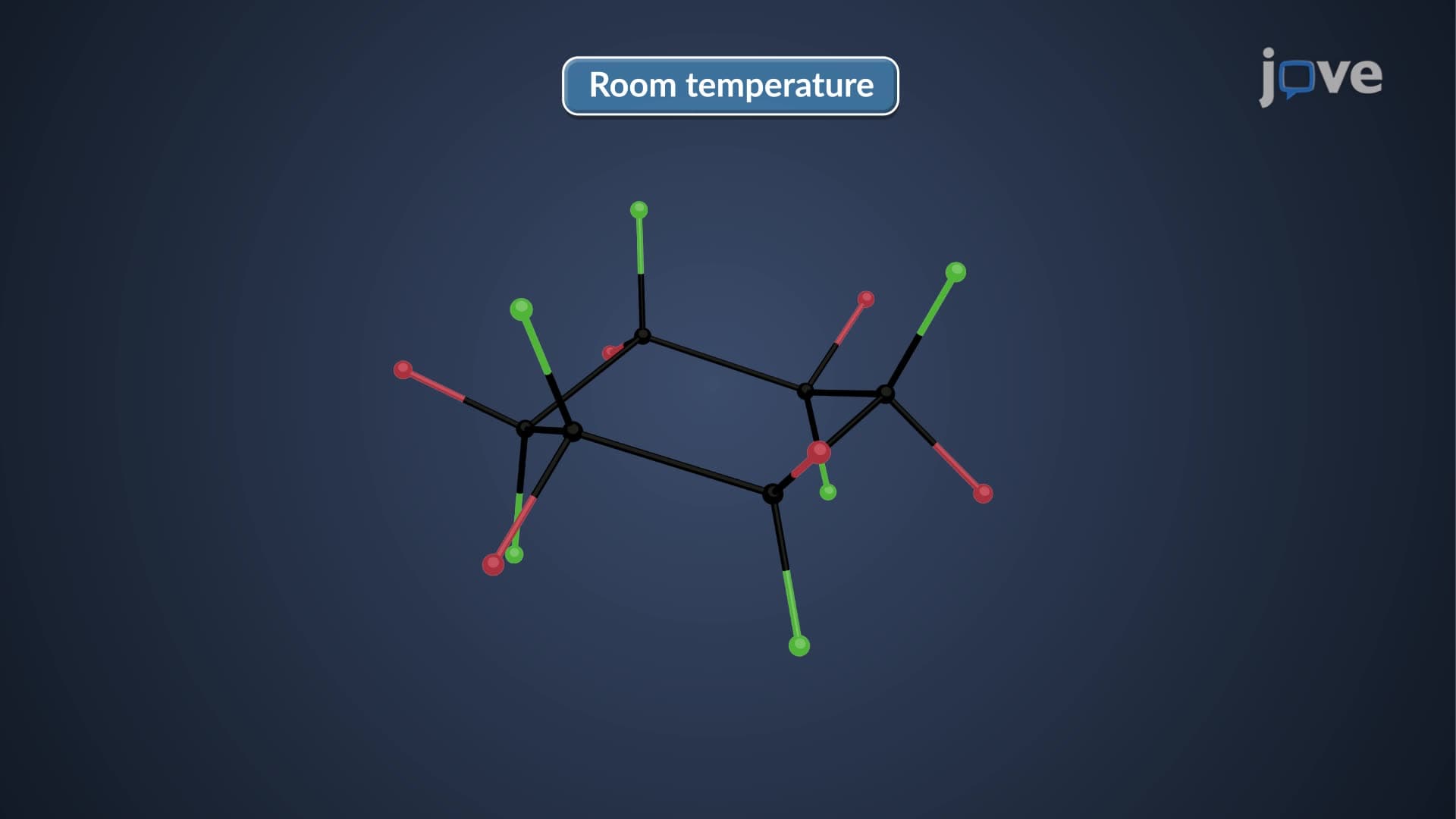
The cyclohexane chair-chair interconversion exemplifies VT NMR flexible molecules analysis perfectly. At 298K (room temperature), rapid ring flipping occurs approximately 10⁵ times per second, causing axial and equatorial protons to exchange positions faster than NMR can distinguish them. Students preparing for the MCAT or AP Chemistry exams frequently encounter this example because it demonstrates fundamental concepts about molecular flexibility and NMR timescales.
When cooled to 183K (-90°C), the exchange rate drops dramatically to around 10² Hz. At this low temperature NMR freezing point, the technique reveals two distinct signals at 1.62 ppm (equatorial) and 1.14 ppm (axial). The chemical shift difference reflects the different magnetic environments: equatorial protons experience less steric crowding and appear downfield, while axial protons face more congested environments and resonate upfield.
Pharmaceutical companies like Merck and Johnson & Johnson routinely employ temperature dependent NMR techniques during drug development. For instance, when developing conformationally flexible drug molecules, researchers must understand how different conformations affect biological activity. Variable temperature studies help identify the bioactive conformation and guide synthetic modifications.
At universities like MIT and Stanford, graduate students use these techniques to study protein folding dynamics, polymer chain flexibility, and supramolecular assembly processes. The method proves particularly valuable in materials science, where understanding molecular motion in polymers directly impacts mechanical properties and processing conditions.
Related Micro-courses