Loading subject page…


30,224 views

Video Summary: What Is Mass Spectrometry Amine Fragmentation
Did you know that forensic labs across the US use amine MS fragmentation patterns to identify illegal drugs like methamphetamine in criminal cases? When organic chemists analyze amines using mass spectrometry, these nitrogen-containing compounds undergo predictable alpha-cleavage reactions that create characteristic fragmentation patterns. Understanding what is mass spectrometry amine fragmentation helps explain why compounds like triethylamine produce distinctive molecular ion peaks and base peaks that serve as chemical fingerprints. Watch the full video on JoVE Coach to master this concept with expert-led visuals and step-by-step explanations.
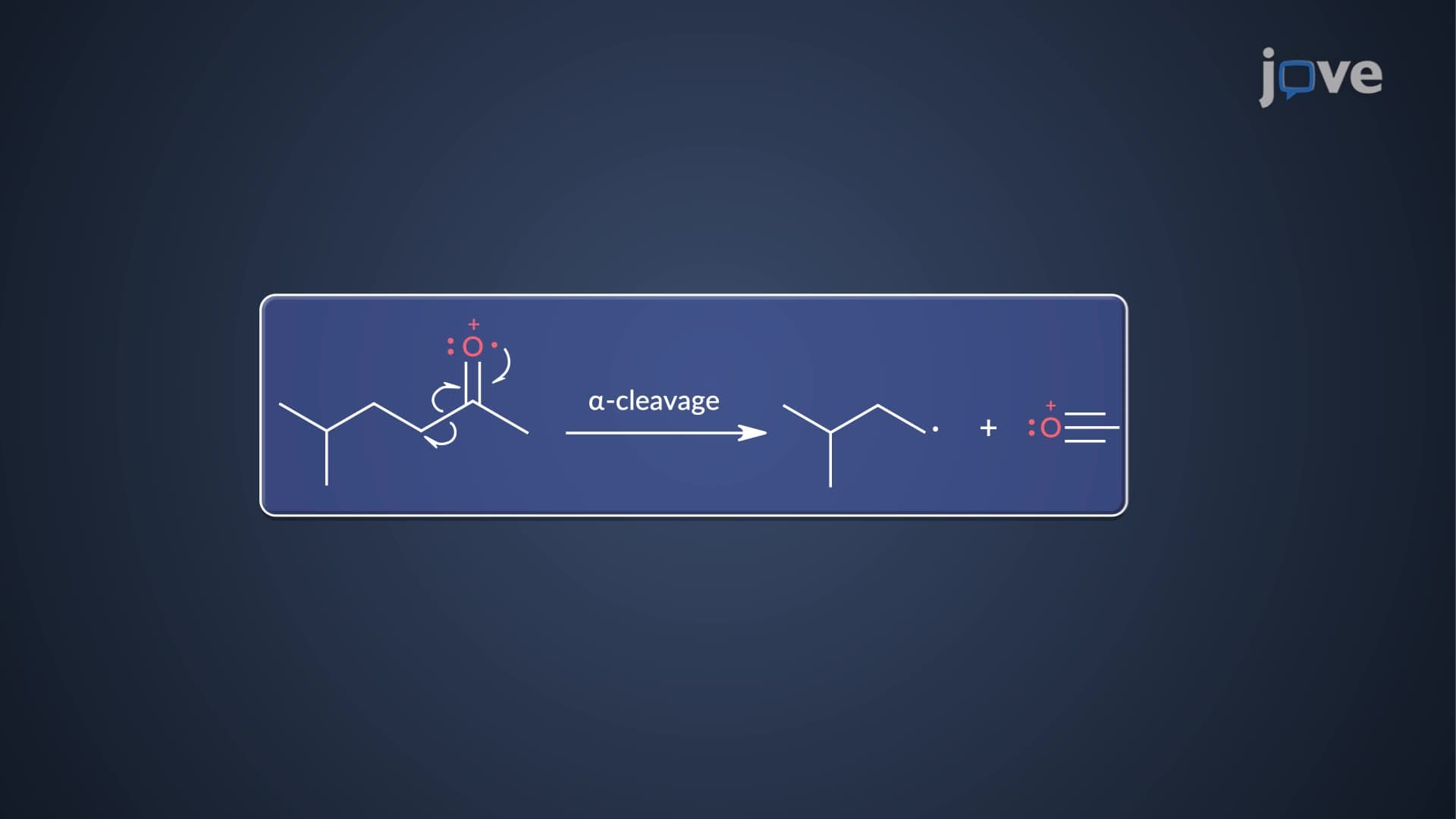
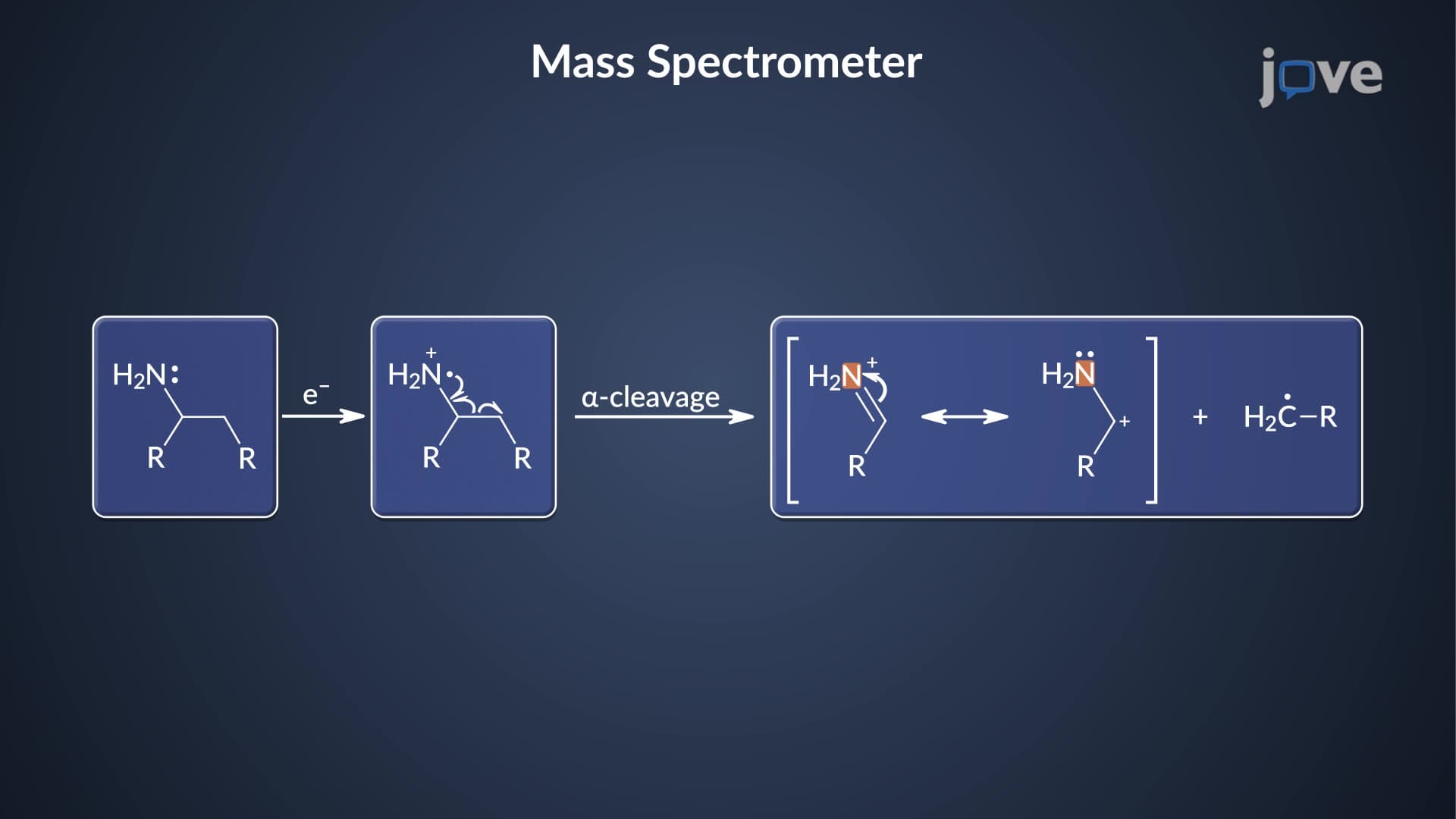
Mass spectrometry amine fragmentation represents one of the most predictable and diagnostically valuable fragmentation patterns in organic mass spectrometry. When amines enter the mass spectrometer's ionization chamber, they undergo electron impact ionization to form molecular ion radicals. These charged species then fragment through alpha-cleavage, a process where the bond adjacent to the nitrogen atom breaks, releasing an alkyl radical and forming a resonance-stabilized iminium ion (R2N+=CHR').
The driving force behind this fragmentation lies in the exceptional stability of the resulting iminium ion. Unlike other carbocations, iminium ions benefit from resonance stabilization where the positive charge delocalizes between the nitrogen and carbon atoms. This stability makes alpha-cleavage the predominant fragmentation pathway for most aliphatic amines, often producing the base peak (most intense signal) in the mass spectrum.
A fundamental principle governing amine mass spectrometry is the nitrogen rule, which states that organic compounds containing an odd number of nitrogen atoms will exhibit molecular ions with odd molecular weights. This rule stems from nitrogen's trivalent nature and provides immediate structural information. For example, triethylamine (C6H15N) shows a molecular ion at m/z 101, instantly confirming the presence of one nitrogen atom.
This principle proves invaluable for students preparing for advanced placement chemistry exams or MCAT biochemistry sections. When analyzing unknown mass spectra, checking whether the molecular ion appears at an odd or even mass-to-charge ratio immediately indicates nitrogen content. Pharmaceutical companies routinely apply this rule when developing new medications containing amine functional groups.
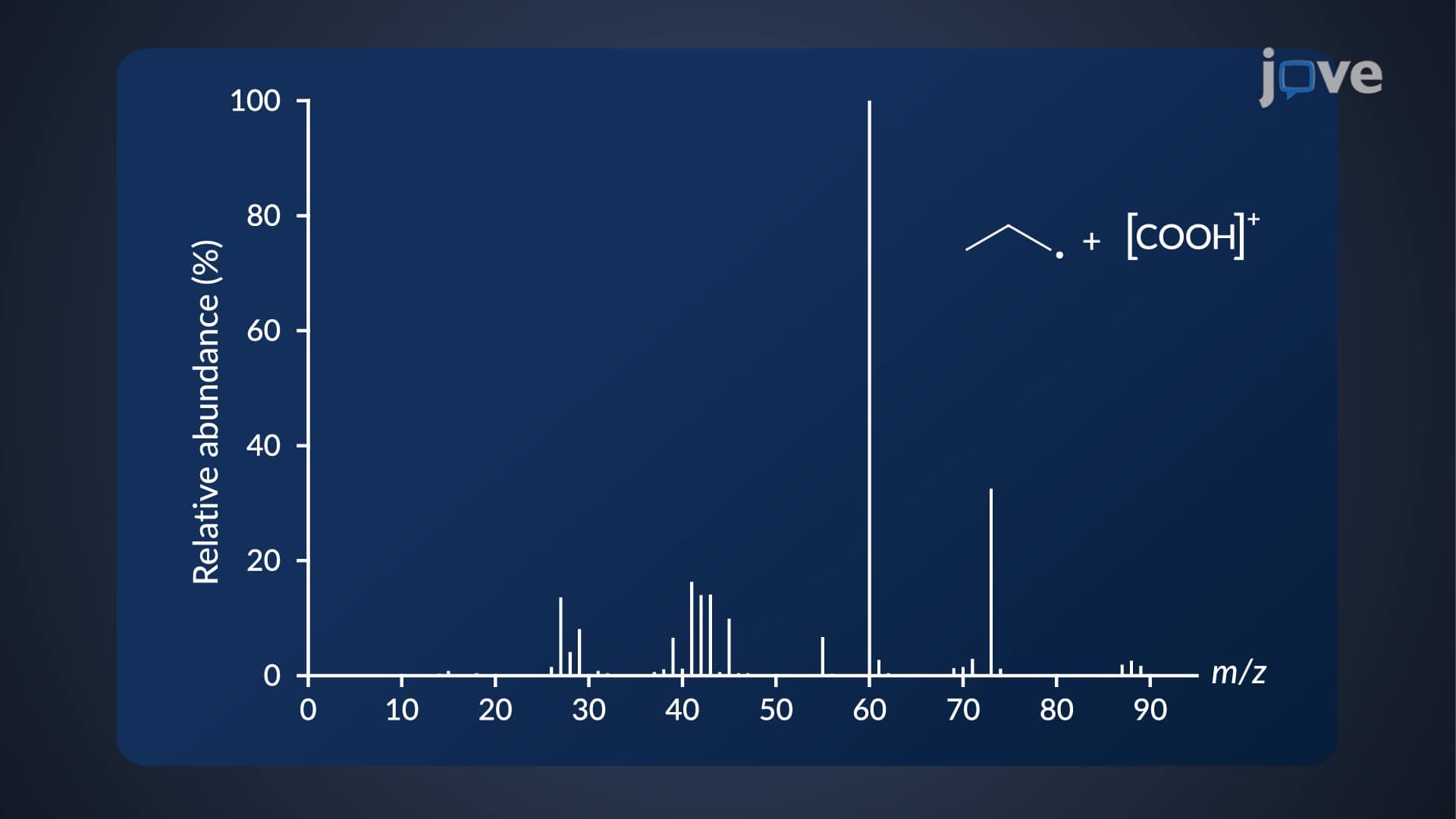
Different amine structures produce characteristic fragmentation patterns that serve as molecular fingerprints. Primary amines typically show simple alpha-cleavage patterns, while tertiary amines like triethylamine exhibit more complex fragmentation due to multiple possible cleavage sites. In triethylamine's case, loss of a methyl radical (15 mass units) from the molecular ion peak at m/z 101 generates the base peak at m/z 86, corresponding to the diethyliminium ion [(C2H5)2N+=CH2].
Secondary amines present intermediate complexity, often showing multiple fragmentation pathways depending on the size and branching of their alkyl substituents. These patterns become crucial when forensic chemists analyze controlled substances or when pharmaceutical quality control laboratories verify drug purity and identity.
Understanding amine fragmentation patterns extends far beyond academic exercises. The Drug Enforcement Administration (DEA) laboratories rely heavily on mass spectral fragmentation analysis to identify seized substances containing amine functional groups. Methamphetamine, MDMA, and cocaine all contain nitrogen atoms and exhibit characteristic fragmentation patterns that provide definitive identification evidence in criminal proceedings.
Similarly, clinical laboratories performing therapeutic drug monitoring use amine fragmentation patterns to quantify medications like antidepressants and stimulants in patient blood samples. Students pursuing careers in forensic science, clinical chemistry, or pharmaceutical development will encounter these concepts regularly in their professional practice.
Related Micro-courses