Loading subject page…


30,224 views

Video Summary: What Is Mass Spectrometry Cycloalkane Fragmentation
Did you know that cycloalkane molecules break apart in predictable patterns when analyzed by mass spectrometry, making them easier to identify than their linear cousins? Cycloalkane MS fragmentation follows distinct pathways that forensic labs across the US use daily to identify unknown compounds in criminal investigations. Understanding what is mass spectrometry cycloalkane fragmentation reveals why cyclohexane produces stronger molecular ion signals than straight-chain hexane and how ring structures influence breaking patterns. Watch the full video on JoVE Coach to master this concept with expert-led visuals and step-by-step explanations.
What is mass spectrometry cycloalkane fragmentation? It's the systematic breaking of cyclic alkane molecules under high-energy conditions that produces characteristic fragment patterns. Unlike their linear counterparts, cycloalkanes exhibit remarkable stability in their molecular ion forms due to the ring structure's ability to distribute positive charge more effectively. This enhanced stability makes cycloalkane fragmentation mass spectrometry particularly valuable for pharmaceutical analysis and environmental monitoring.
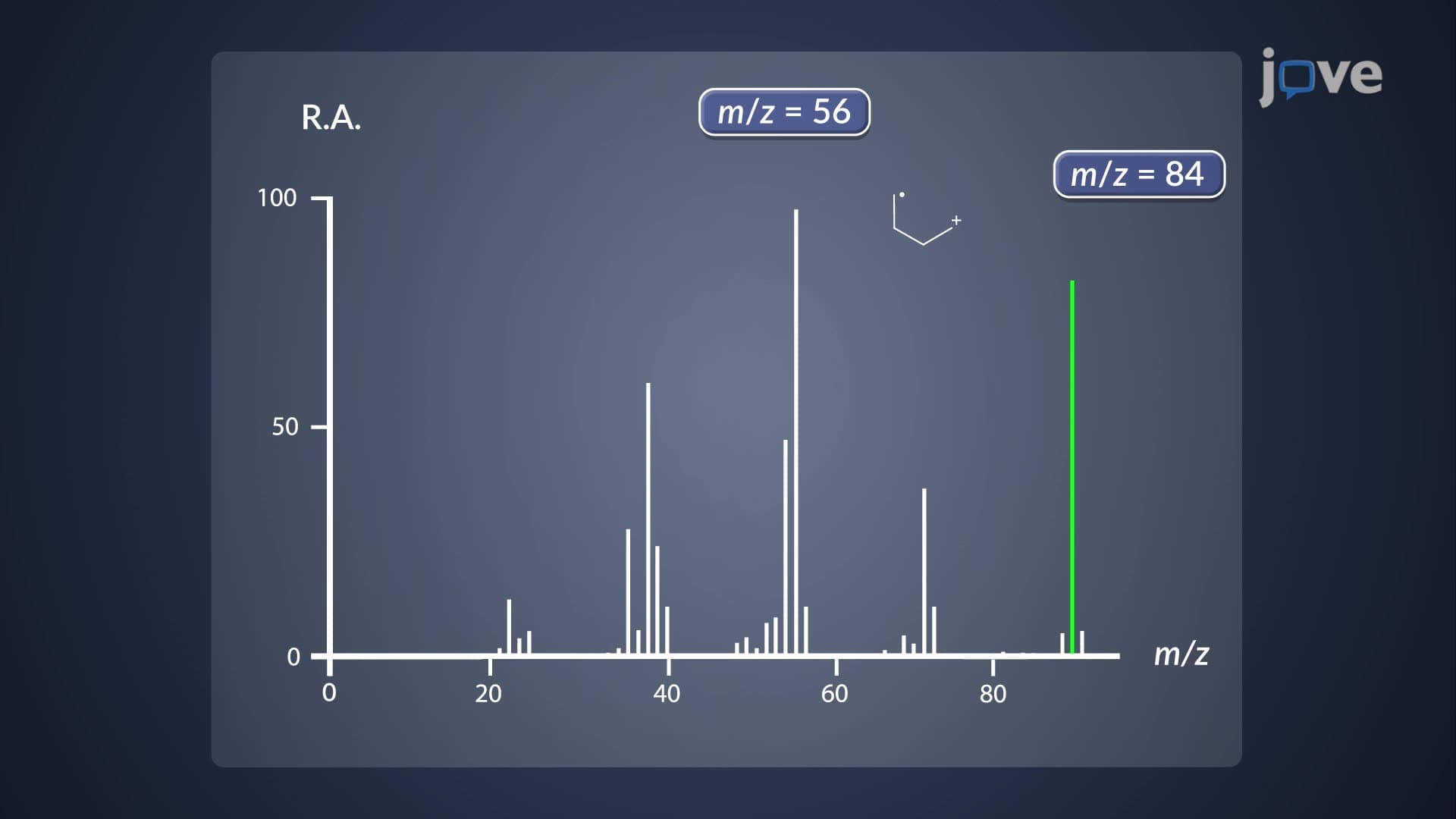
The cyclohexane example perfectly illustrates this principle. When cyclohexane (C6H12, m/z 84) undergoes electron impact ionization, its molecular ion peak appears significantly more intense than hexane's molecular ion. This occurs because the ring structure stabilizes the positive charge through resonance and inductive effects that linear molecules cannot achieve.
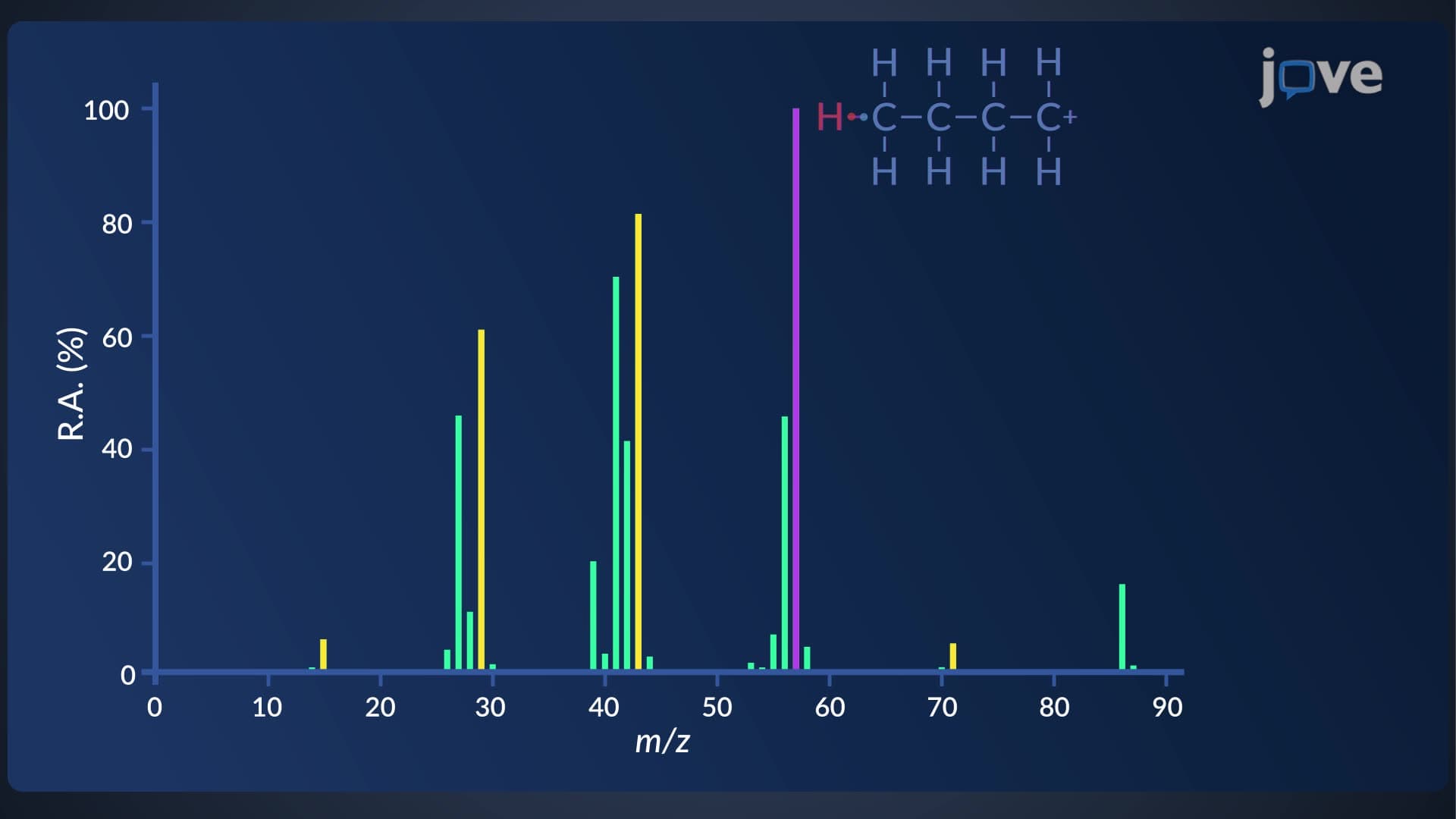
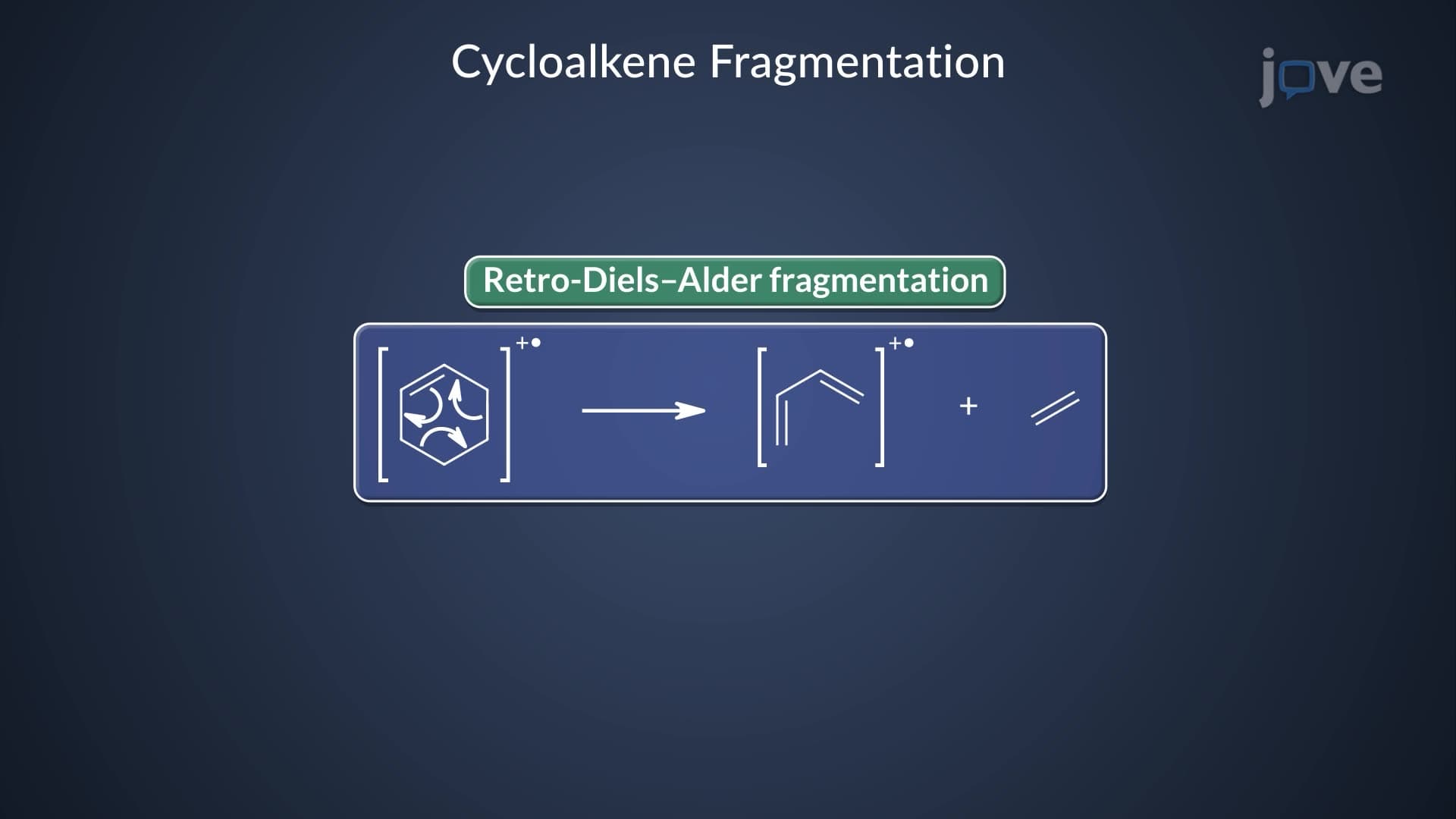
How cycloalkanes fragment in mass spectrometry follows predictable patterns that students encounter on AP Chemistry exams and college organic chemistry courses. The most common pathway involves cycloalkane ring opening MS through loss of a two-carbon unit (ethylene, C2H4). For cyclohexane, this produces a stable butyl radical cation (m/z 56) that often becomes the base peak-the most abundant ion in the spectrum.
This cyclic alkane MS pattern reflects the thermodynamic stability of the resulting fragments. The butyl cation formed from cyclohexane ring opening adopts favorable conformations that linear fragmentation cannot achieve. Students at institutions like MIT and Stanford regularly use these patterns to solve structural determination problems in their organic chemistry coursework.
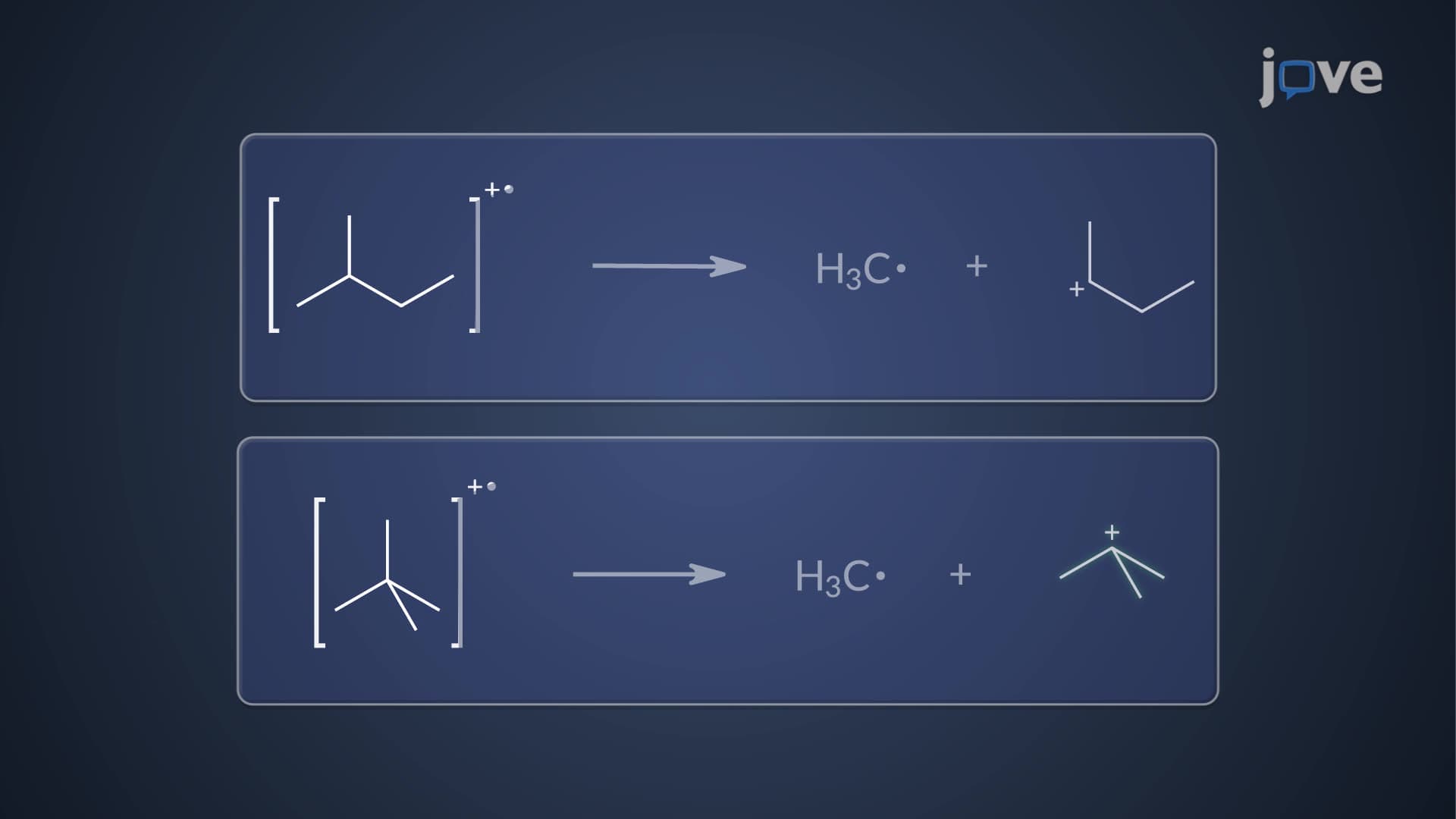
Branched cycloalkanes introduce additional complexity through side chain loss mechanisms. Methylcyclopentane demonstrates dual fragmentation pathways: ethylene elimination (similar to unsubstituted rings) and methyl radical loss. The cycloalkane molecular ion first loses its methyl substituent, forming the cyclopentyl cation, which subsequently fragments via ethylene loss to yield a propyl radical cation.
This retro Diels-Alder cycloalkane-like behavior appears frequently in MCAT organic chemistry sections, where students must predict fragmentation patterns for complex cyclic structures. Understanding these mechanisms proves essential for pharmaceutical chemistry applications, where drug metabolite identification relies heavily on mass spectral fragmentation patterns.
Ring fragmentation mass spec techniques find extensive use in US industries from petrochemical analysis at ExxonMobil facilities to drug testing laboratories nationwide. Environmental scientists employ these methods to identify cyclic pollutants in groundwater samples, while forensic chemists use cycloalkane fragmentation patterns to analyze evidence from crime scenes. The predictable nature of these fragmentation pathways makes them invaluable tools for structural confirmation in both academic research and industrial quality control processes.
Related Micro-courses