Loading subject page…


42,410 views

Video Summary: What Is Mass Spectrometry Isotope Effect
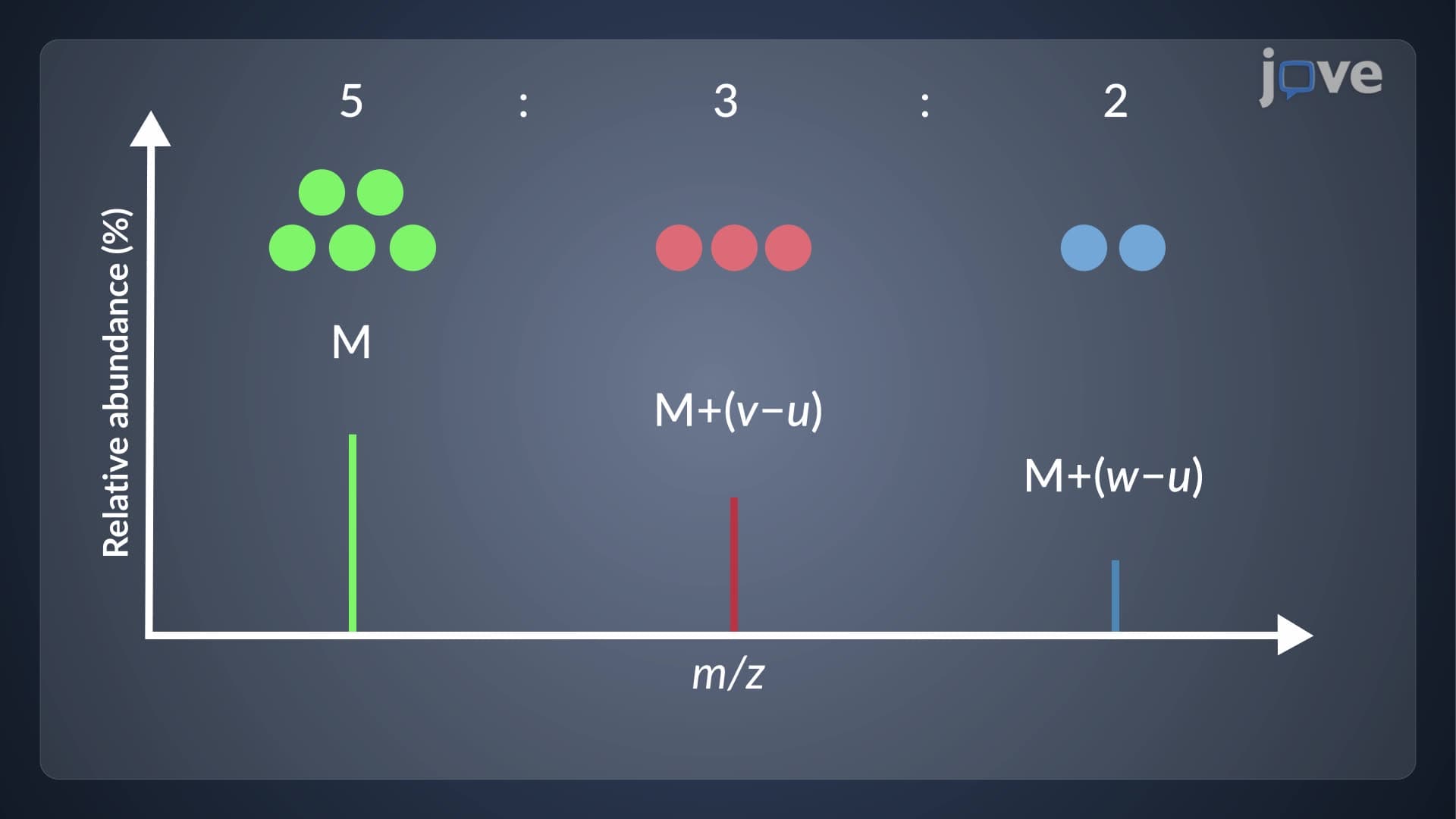
Did you know that a single carbon atom can literally weigh different amounts? The mass spectrometry isotope effect reveals how naturally occurring isotopes create distinctive "fingerprint" patterns in mass spectra, with heavier isotopes appearing as additional peaks alongside the main molecular ion. For example, when analyzing caffeine from your morning coffee, the carbon-13 isotopes produce telltale M+1 peaks that help chemists confirm the molecule's identity. Watch the full video on JoVE Coach to master this concept with expert-led visuals and step-by-step explanations.
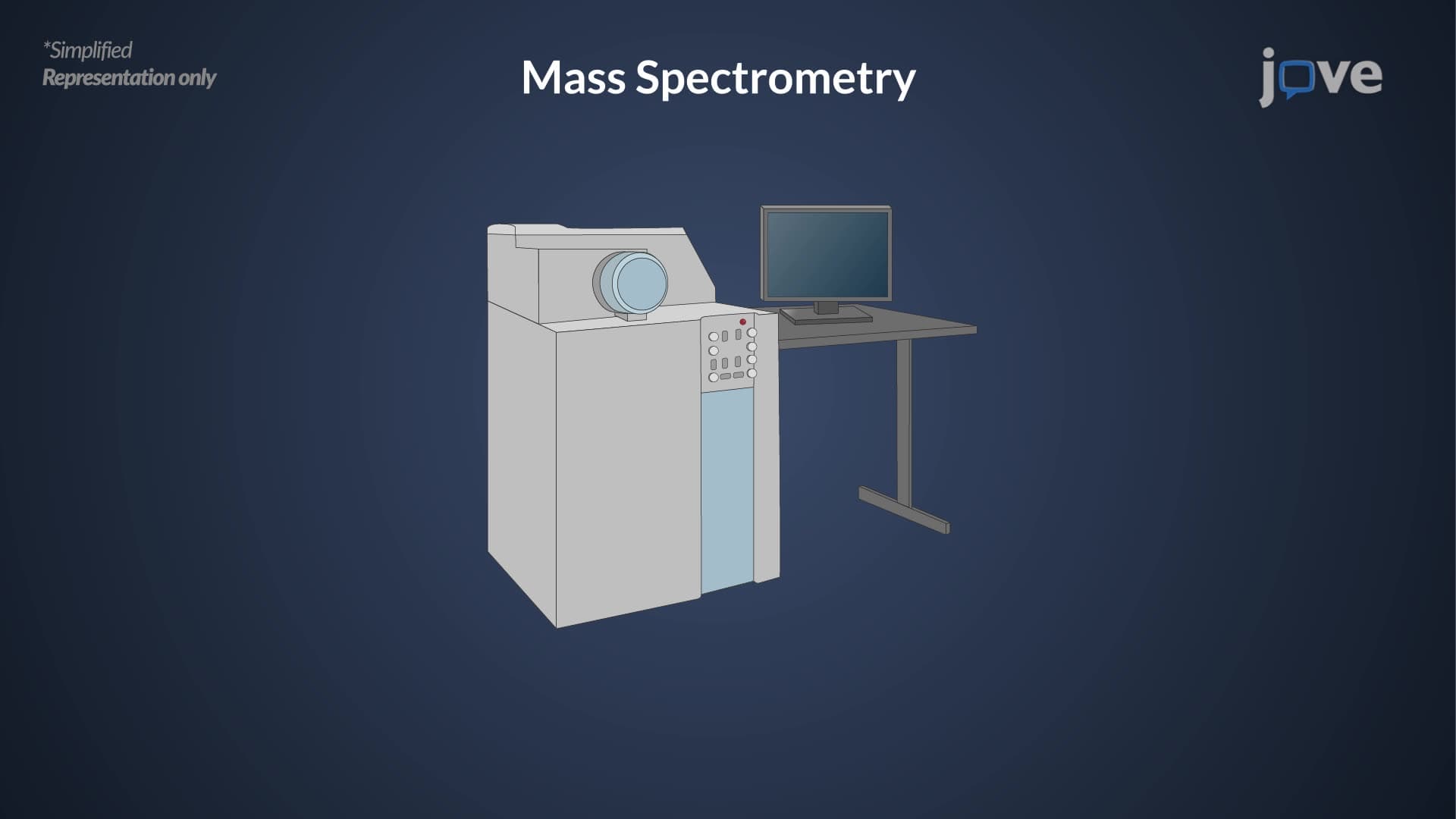
The mass spectrometry isotope effect represents one of analytical chemistry's most powerful identification tools. Unlike other spectroscopic techniques that rely on electronic transitions or molecular vibrations, mass spectrometry directly measures the mass-to-charge ratio of ions, making it exquisitely sensitive to isotopic variations. When molecules contain atoms with naturally occurring isotopes, the resulting mass spectrum displays characteristic peak patterns that serve as molecular fingerprints.
This phenomenon occurs because isotopes of the same element possess identical chemical properties but different masses due to varying neutron numbers. For instance, while carbon-12 comprises 98.9% of natural carbon, carbon-13 accounts for the remaining 1.1%. When analyzing organic compounds, this small percentage translates into measurable M+1 peaks that appear exactly one mass unit higher than the molecular ion peak.
Carbon-containing molecules demonstrate the most commonly encountered isotope effect in organic mass spectrometry. The M+1 peak intensity correlates directly with the number of carbon atoms present, following a predictable mathematical relationship. For a molecule containing n carbon atoms, the M+1 peak intensity relative to the molecular ion peak approximately equals n × 1.1%.
Consider analyzing glucose (C6H12O6) in a biochemistry lab at Stanford University. The molecular ion appears at m/z 180, while the M+1 peak at m/z 181 shows an intensity roughly 6.6% of the molecular ion (6 carbons × 1.1%). This relationship proves invaluable for determining molecular formulas and confirming structural assignments in organic chemistry courses and AP Chemistry examinations.
Advanced students preparing for the MCAT often encounter problems requiring isotope pattern interpretation. Understanding that larger molecules with more carbon atoms produce more prominent M+1 peaks helps distinguish between structural isomers and confirms empirical formulas derived from combustion analysis.
Chlorine and bromine isotopes create distinctive M+2 patterns due to their unique natural abundance ratios. Chlorine exists as Cl-35 (75.8%) and Cl-37 (24.2%), while bromine occurs as Br-79 (50.7%) and Br-81 (49.3%). These distributions generate characteristic isotope signatures that immediately identify halogenated compounds.
Chlorine-containing molecules exhibit M+2 peaks approximately one-third the intensity of the molecular ion peak, reflecting chlorine-37's natural abundance. Bromine compounds show nearly equal intensity between molecular ion and M+2 peaks, creating an unmistakable "doublet" pattern. This distinction proves crucial in pharmaceutical analysis, where halogenated drugs like fluoxetine (Prozac) require precise identification.
Major pharmaceutical companies like Pfizer and Merck routinely employ isotope pattern recognition for drug metabolism studies and impurity analysis. The FDA requires mass spectral confirmation of drug identity, making isotope effect understanding essential for analytical chemists in regulatory environments.
In environmental analysis, isotope patterns help identify chlorinated pollutants in water supplies. The EPA's Method 8270 specifically references isotope pattern matching for confirming polychlorinated biphenyl (PCB) contamination in environmental samples. Students pursuing environmental science degrees at universities like UC Berkeley encounter these applications in advanced analytical chemistry coursework.
Related Micro-courses