Loading subject page…


42,407 views

Video Summary: What Is Mass Spectrum Interpretation
Ever wonder how forensic scientists identify unknown substances found at crime scenes? Mass spectrum interpretation is the analytical technique that reveals a molecule's identity by analyzing its characteristic fragmentation patterns and isotope signatures. For instance, the FBI's forensic laboratories routinely use this method to identify drug compounds in criminal investigations. This systematic approach involves analyzing molecular ion peaks, applying the nitrogen rule, and determining empirical formulas from m/z values and isotope intensities. Watch the full video on JoVE Coach to master this concept with expert-led visuals and step-by-step explanations.
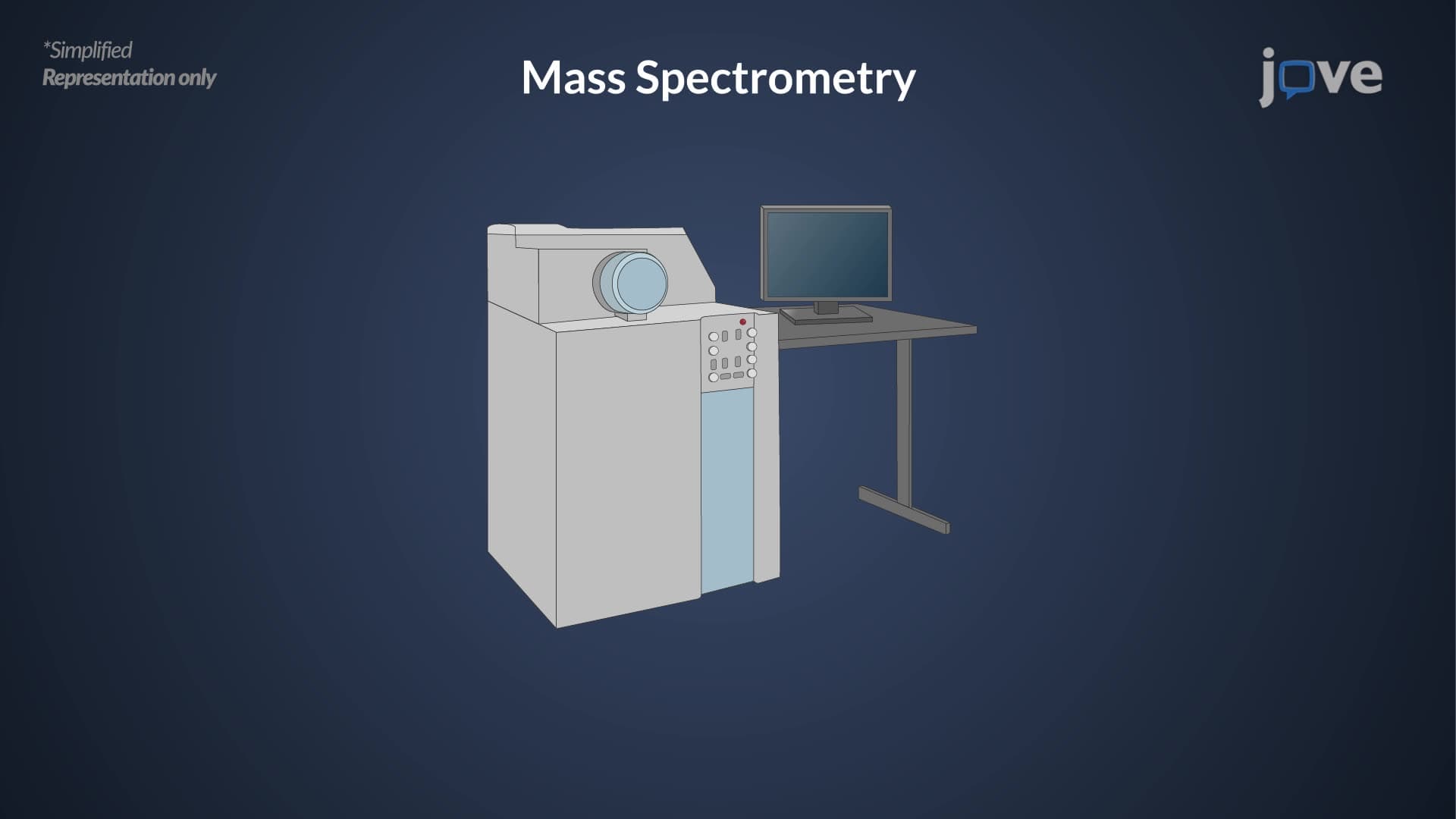
Mass spectrum interpretation is a systematic analytical process that transforms raw spectral data into meaningful molecular information. This technique forms the backbone of modern analytical chemistry, enabling scientists to identify unknown compounds by examining their unique spectral fingerprints. The process begins with identifying the molecular ion peak, which represents the intact molecule after electron impact ionization.
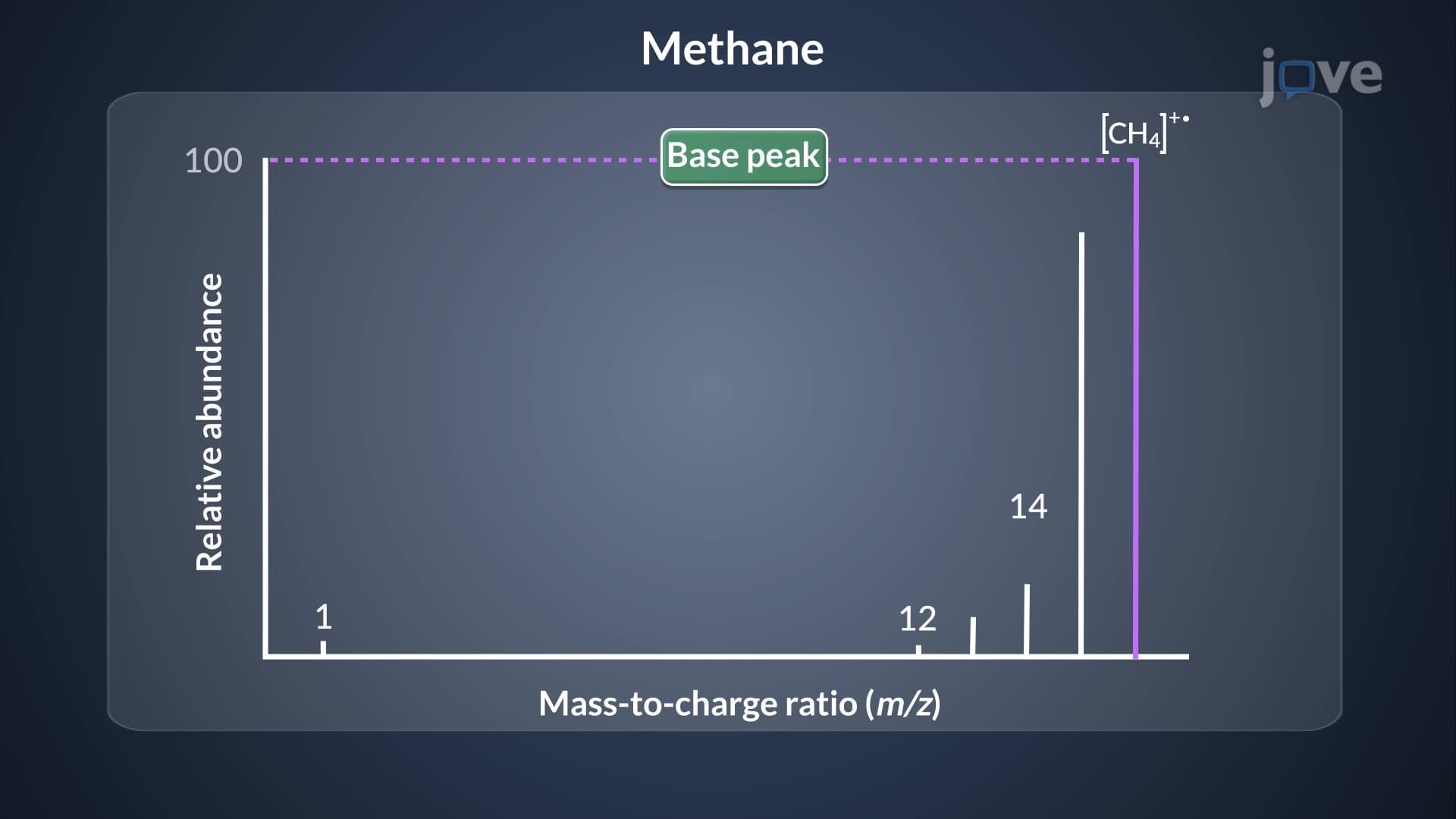
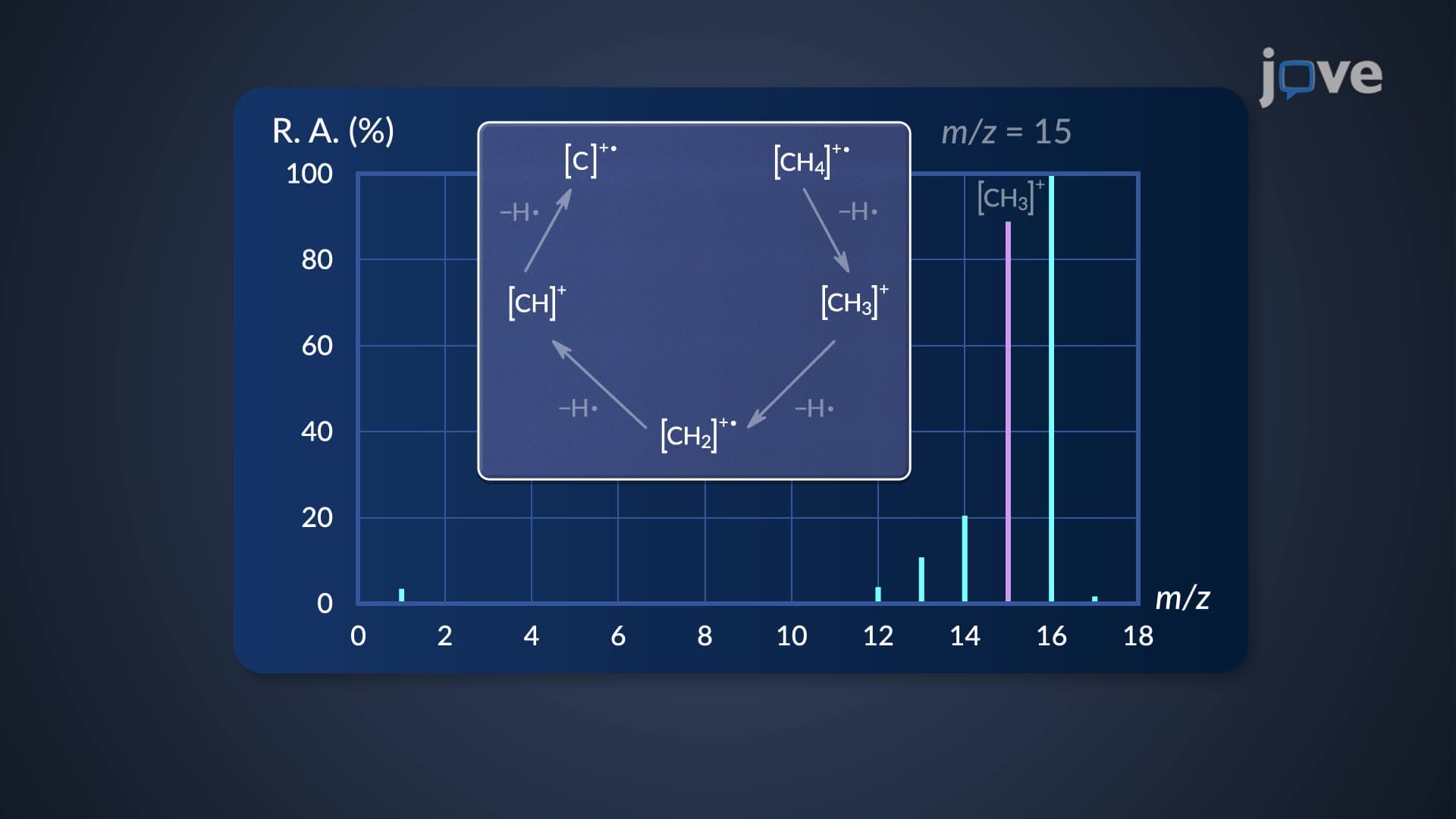
The nitrogen rule serves as a crucial first step in mass spectrum interpretation. This rule states that molecules with even-numbered molecular ion masses contain either zero or an even number of nitrogen atoms, while odd-numbered masses indicate an odd number of nitrogen atoms. For example, a compound showing a molecular ion at m/z 16 contains no nitrogen atoms, as demonstrated in the methane (CH₄) example. This rule proves invaluable for students preparing for AP Chemistry exams and college organic chemistry courses, where rapid structural determination is essential.
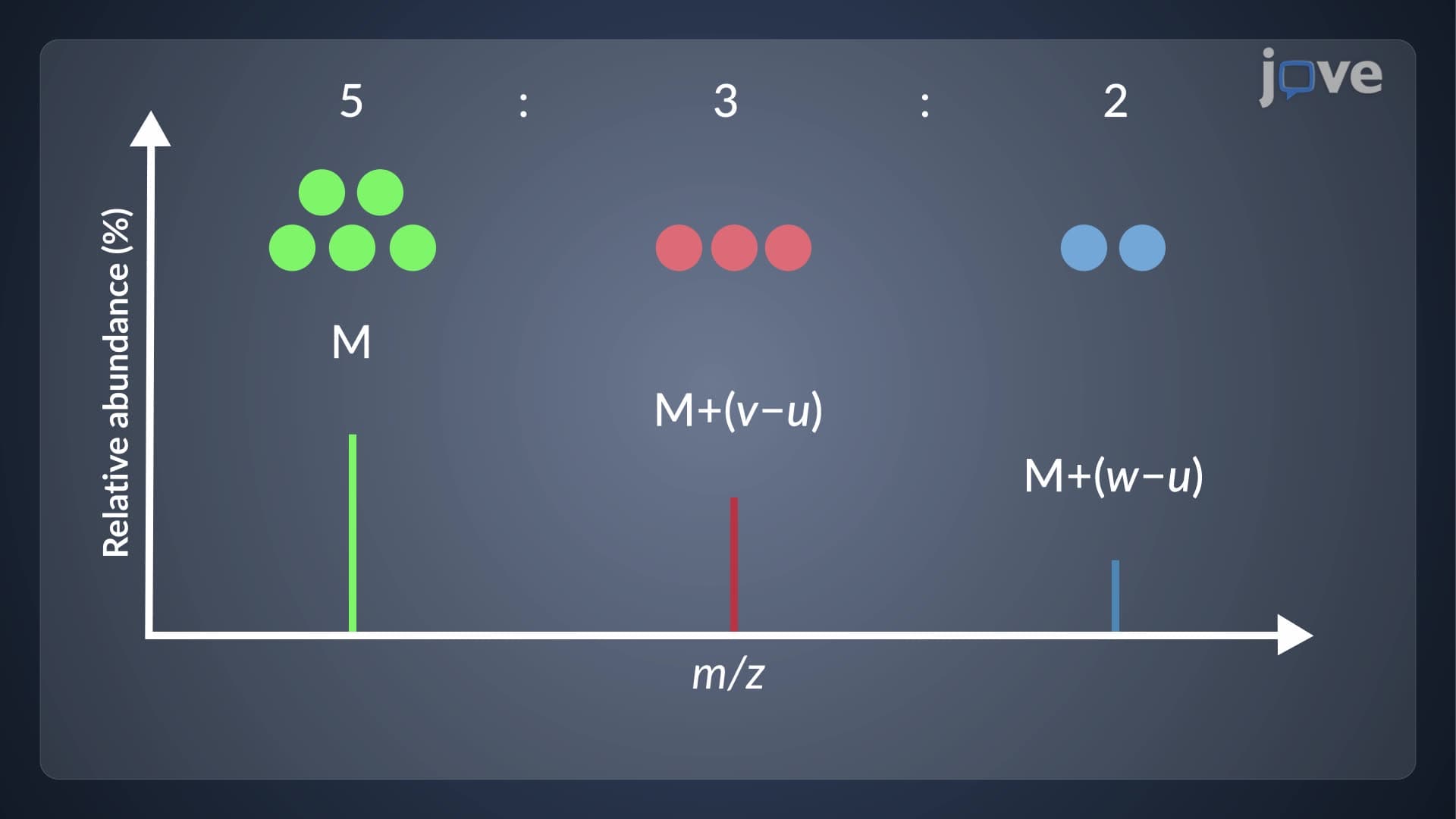
Determining the number of carbon atoms requires careful analysis of the M+1 isotope peak intensity. Carbon-13 occurs naturally at approximately 1.1% abundance, so each carbon atom contributes roughly 1.1% intensity to the M+1 peak relative to the molecular ion peak. Students can calculate carbon content by dividing the M+1 peak intensity by 1.1%. This technique frequently appears on MCAT practice problems and undergraduate analytical chemistry exams.
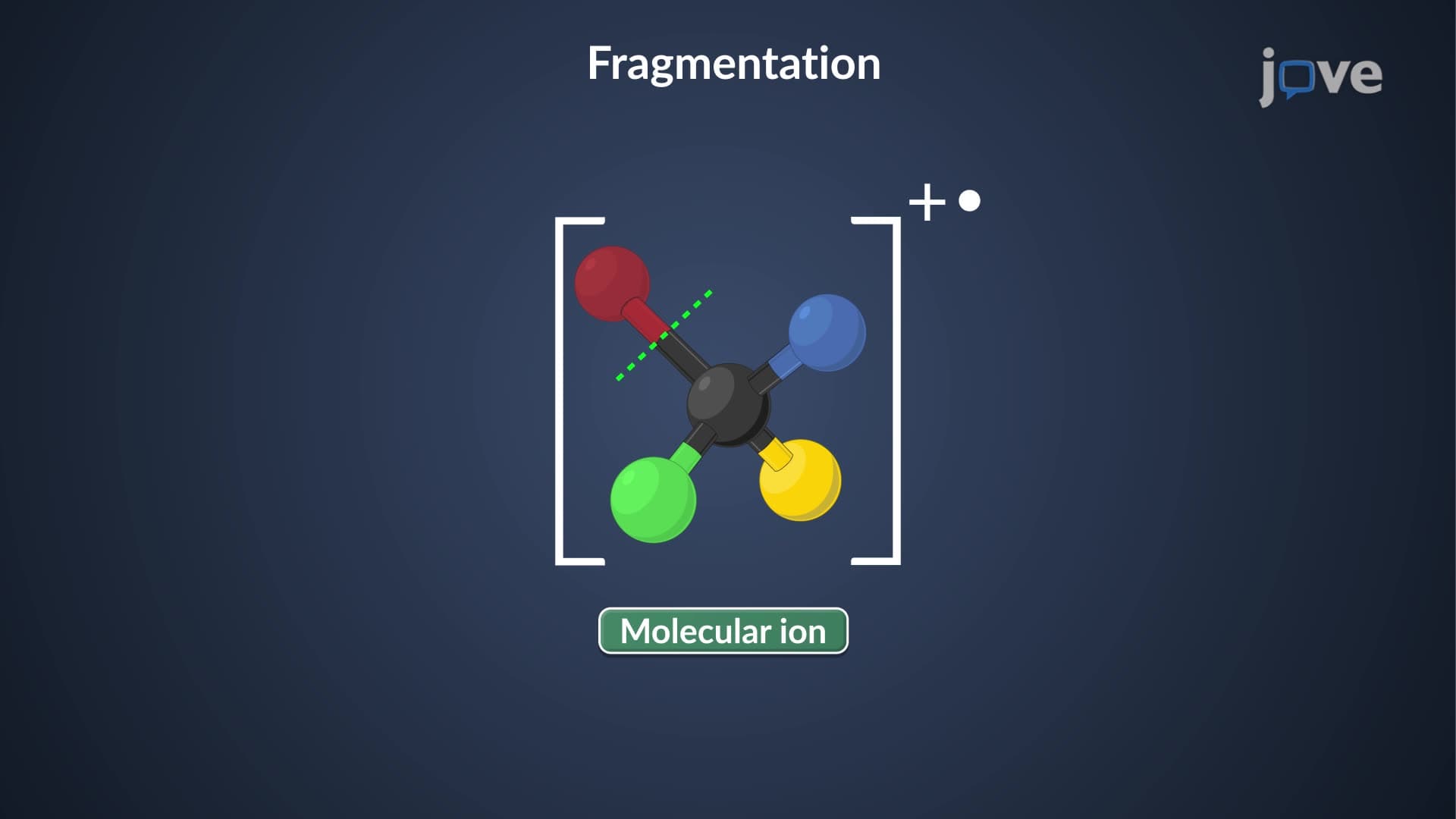
Beyond basic elemental analysis, mass spectrum interpretation involves examining fragmentation patterns and calculating degrees of unsaturation. The degree-of-unsaturation formula [DBE = (2C + 2 + N - H - X)/2] reveals the number of rings and multiple bonds present in a molecule. Characteristic fragment ions, such as m/z 15 (methyl cation) or m/z 43 (acetyl cation), provide structural clues that help distinguish between isomeric compounds. These concepts are particularly important for students planning to pursue careers in pharmaceutical research or forensic science, where accurate compound identification is critical for drug development and legal proceedings.
Related Micro-courses