Loading subject page…

- Analytical Chemistry
- Introduction to Molecular Spectroscopy
- Deactivation Processes: Jablonski Diagram
Micro-course: Introduction to Molecular Spectroscopy
36,707 views
Learn key concepts and earn your certificate.

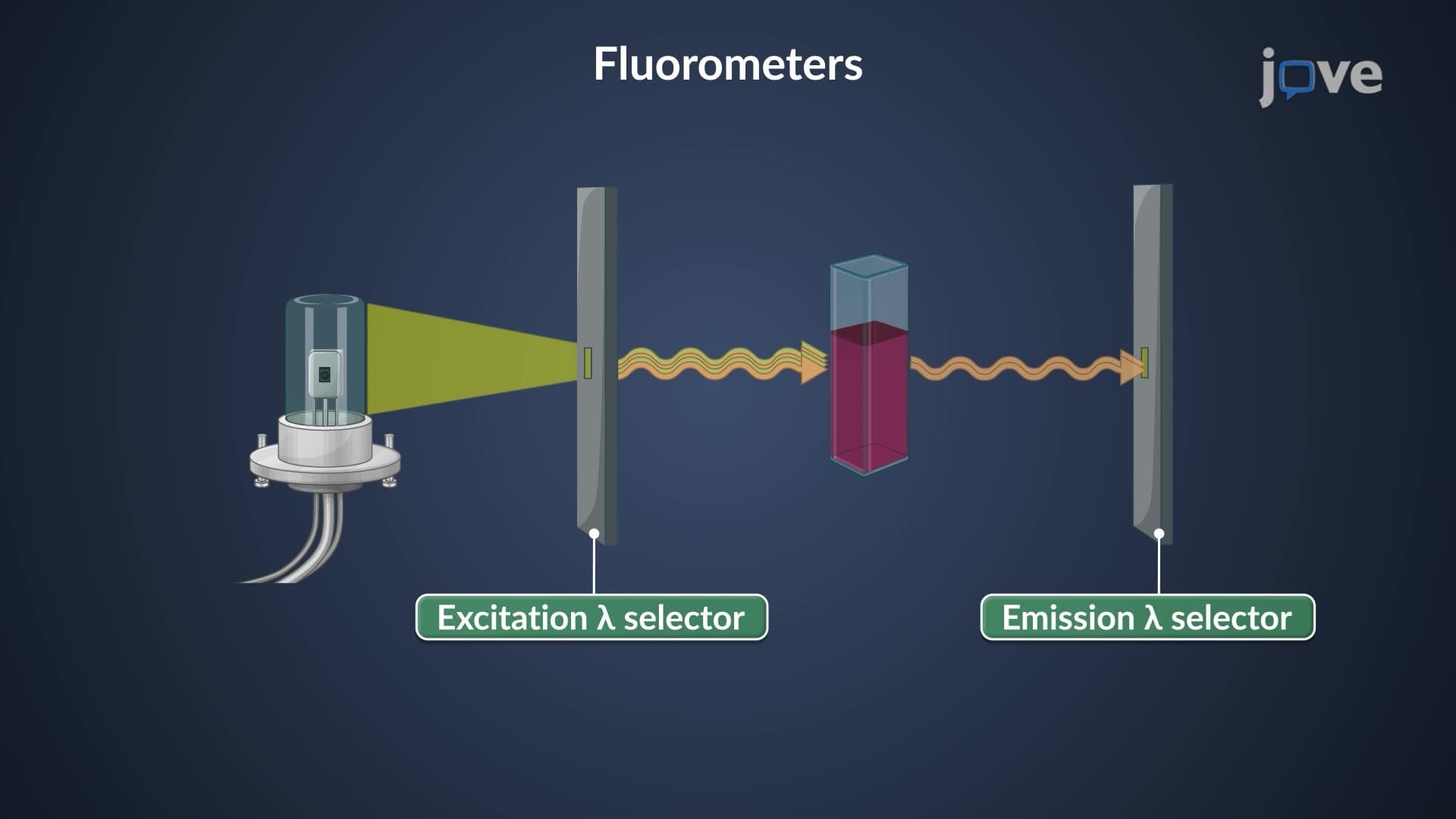
Deactivation Processes: Jablonski Diagram

00:00
01:25
Video Summary: What Is Deactivation Processes Jablonski Diagram
Ever wonder why a fluorescent highlighter glows bright yellow under UV light but appears orange under normal lighting? The Jablonski diagram explained reveals how molecules release absorbed light energy through complex pathways. This energy level diagram spectroscopy tool maps out deactivation processes Jablonski diagram pathways that determine fluorescence colors in everything from medical imaging dyes used at Johns Hopkins Hospital to forensic analysis at FBI labs. Watch the full video on JoVE Coach to master this concept with expert-led visuals and step-by-step explanations.
- Understand what is deactivation processes Jablonski diagram and how it maps molecular energy transitions from excited to ground states
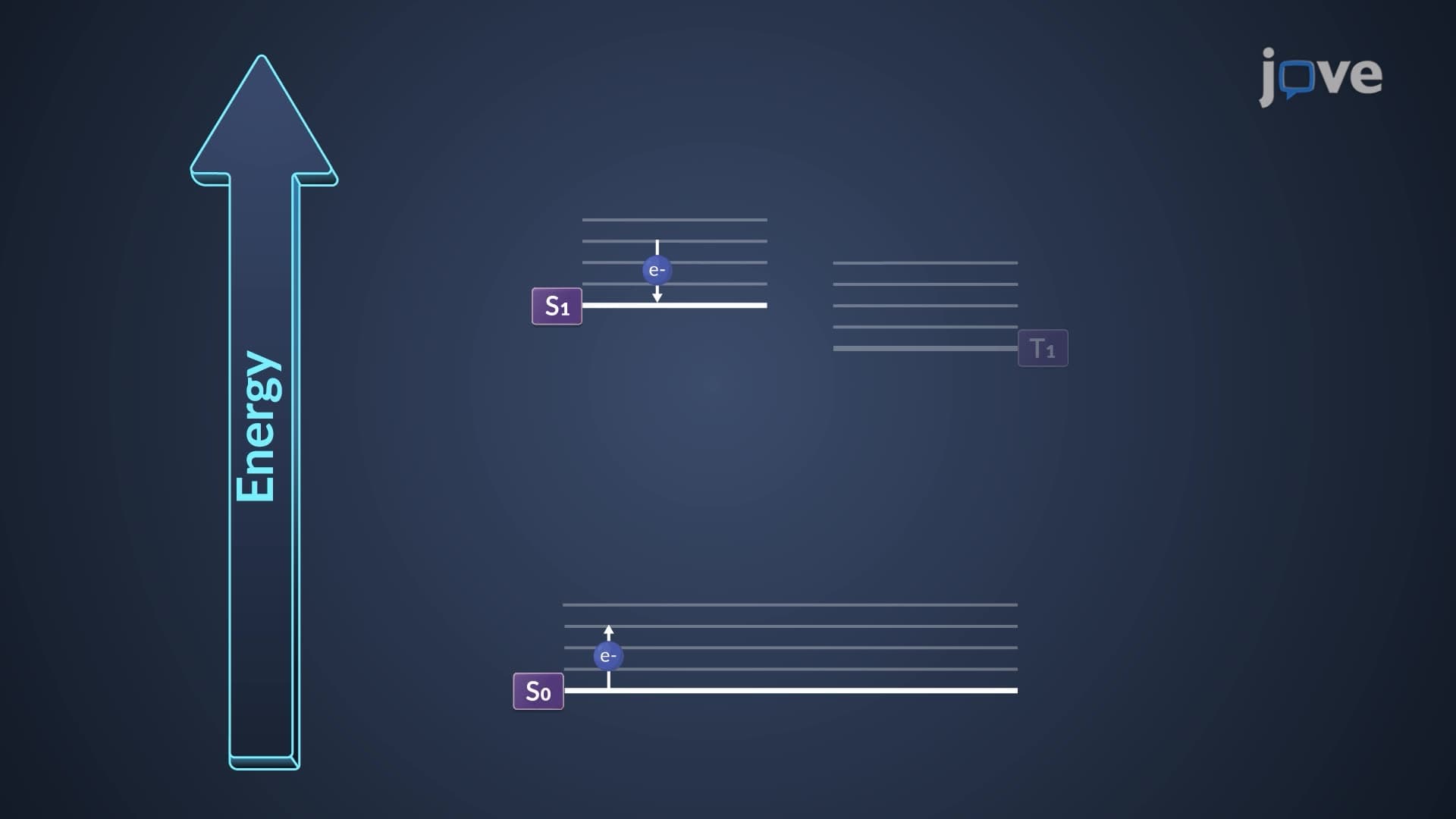
- Identify the key components: ground singlet state (S0), excited singlet states (S1, S2), and triplet state (T1) energy levels
- Analyze vibrational relaxation processes that cause molecules to lose energy within the same electronic state
- Compare radiationless deactivation pathways including internal conversion and external conversion mechanisms
- Evaluate intersystem crossing transitions between singlet and triplet spin states in molecular systems
- Apply Stokes shift principles to explain why fluorescence occurs at longer wavelengths than absorption
- Recognize how different deactivation pathways compete to determine overall fluorescence efficiency
- Explore real-world applications in medical diagnostics, environmental monitoring, and analytical chemistry techniques
Understanding Deactivation Processes Jablonski Diagram Fundamentals
The Jablonski diagram explained serves as the essential roadmap for understanding how molecules handle absorbed light energy. Named after Polish physicist Aleksander Jabłoński, this energy level diagram spectroscopy tool visualizes the fate of excited electrons after photon absorption. When molecules in fluorescent materials-like those used in COVID-19 rapid tests developed by Abbott Laboratories-absorb UV light, their electrons jump to higher energy states before returning to ground state through various pathways.
Electronic States and Energy Levels in Spectroscopy
The diagram's foundation rests on distinct electronic states. The ground singlet state (S0) represents the molecule's lowest energy configuration, where all electron spins are paired. Excited singlet states (S1, S2) occur when electrons absorb photons but maintain their spin pairing. The triplet state (T1) forms when electron spins become unpaired through intersystem crossing. This concept frequently appears on AP Chemistry exams and college physical chemistry courses, particularly when discussing molecular orbital theory.
Internal Conversion Jablonski and Vibrational Relaxation Processes
Vibrational relaxation Jablonski processes occur rapidly (femtoseconds) as excited molecules lose excess vibrational energy within the same electronic state. This phenomenon explains why fluorescent proteins used in biomedical research at Stanford University maintain their electronic state while dissipating energy through molecular vibrations. Internal conversion involves transitions between electronic states of the same spin multiplicity, allowing molecules to cascade down energy levels without emitting photons.
Intersystem Crossing Diagram and Fluorescence Pathways
The intersystem crossing diagram illustrates spin-forbidden transitions between singlet and triplet states. While quantum mechanically unlikely, heavy atoms or specific molecular geometries can facilitate these transitions. This process proves crucial in photodynamic therapy treatments used at Memorial Sloan Kettering Cancer Center, where molecules must reach triplet states to generate therapeutic singlet oxygen. The fluorescence pathway Jablonski ultimately determines whether absorbed energy emerges as light emission or dissipates as heat, directly impacting applications from LED technology to biological imaging systems used in MCAT-level biochemistry research.
Frequently Asked Questions
A Jablonski diagram maps how excited molecules return to their ground state through various energy pathways. It's essential for understanding fluorescence, phosphorescence, and photochemical reactions. This concept helps predict molecular behavior in applications ranging from medical imaging to solar cell efficiency, making it a cornerstone topic in physical chemistry and spectroscopy courses.
AP Chemistry exams typically test Jablonski diagram concepts in free-response questions about atomic structure and bonding. MCAT biochemistry sections frequently include fluorescence-based questions related to protein folding and enzyme kinetics. Students should focus on identifying energy states, transition types, and relating diagram features to real-world applications like medical diagnostics.
Internal conversion occurs between states of the same spin (singlet to singlet), while intersystem crossing involves spin changes (singlet to triplet). College midterms often test this distinction through mechanism problems. Remember: internal conversion is spin-allowed and fast, while intersystem crossing is spin-forbidden and slower, requiring special conditions to occur efficiently.
Pharmaceutical companies like Pfizer use fluorescence spectroscopy for drug discovery and quality control. Environmental agencies apply these principles in water quality monitoring systems. The aerospace industry relies on fluorescent materials for non-destructive testing of aircraft components, while medical device manufacturers design imaging systems based on these energy transfer principles.
No advanced mathematics required-basic algebra and energy concepts suffice for introductory understanding. High school students can grasp the fundamental principles by focusing on energy level differences and transition rules. The visual nature of Jablonski diagrams makes them accessible to students with strong conceptual thinking skills, even without extensive quantum mechanics background.
Create visual mnemonics linking S0 (ground), S1/S2 (excited singlets), and T1 (triplet) to familiar examples. Practice drawing diagrams from memory, focusing on arrow directions and transition types. Use flashcards connecting processes (vibrational relaxation, internal conversion, intersystem crossing) to real applications like glow-in-the-dark materials or fluorescent microscopy techniques.
Mastering Jablonski diagrams builds foundation knowledge for photochemistry, analytical chemistry, and biochemistry courses. This concept connects to laser physics, environmental chemistry, and materials science topics. Students planning careers in research, medicine, or engineering benefit from understanding these energy transfer mechanisms that govern modern technological applications.
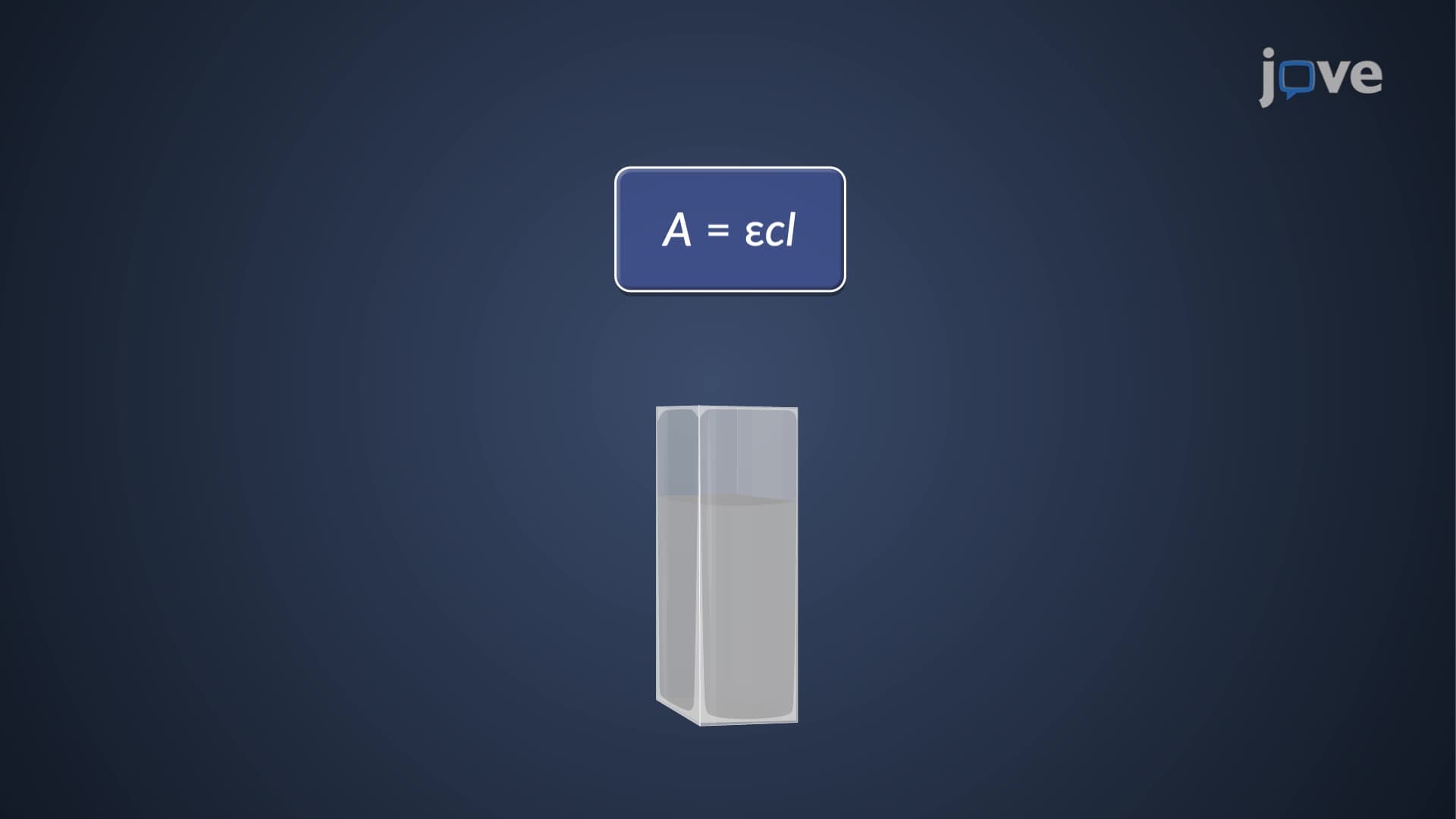
Explore molecular orbital theory, Beer-Lambert law applications, and quantum mechanical selection rules. Study fluorescence lifetime measurements, Stokes shift calculations, and phosphorescence mechanisms. Understanding these related concepts creates a comprehensive framework for advanced spectroscopy techniques used in analytical chemistry and materials characterization methods.
Related Micro-courses

19 Concepts

17 Concepts

15 Concepts