Loading subject page…


87,705 views

Video Summary: What Is Sensory Functions Skin
Ever wonder how you instantly pull your hand away from a hot stove or feel a mosquito landing on your arm? Skin sensory function biology involves specialized nerve receptors that detect everything from gentle touch to dangerous heat. When a dermatologist examines a patient's ability to feel different textures during a neurological assessment, they're testing these same sensory receptors in skin function. These cutaneous receptors work as your body's early warning system, sending rapid signals to your brain for immediate responses. Watch the full video on JoVE Coach to master this concept with expert-led visuals and step-by-step explanations.
The skin serves as far more than just a protective barrier-it functions as a sophisticated sensory organ containing millions of specialized nerve endings that constantly monitor our external environment. Skin sensory function biology encompasses the complex network of receptors that detect mechanical, thermal, and chemical stimuli, transforming physical energy into electrical signals the nervous system can interpret.
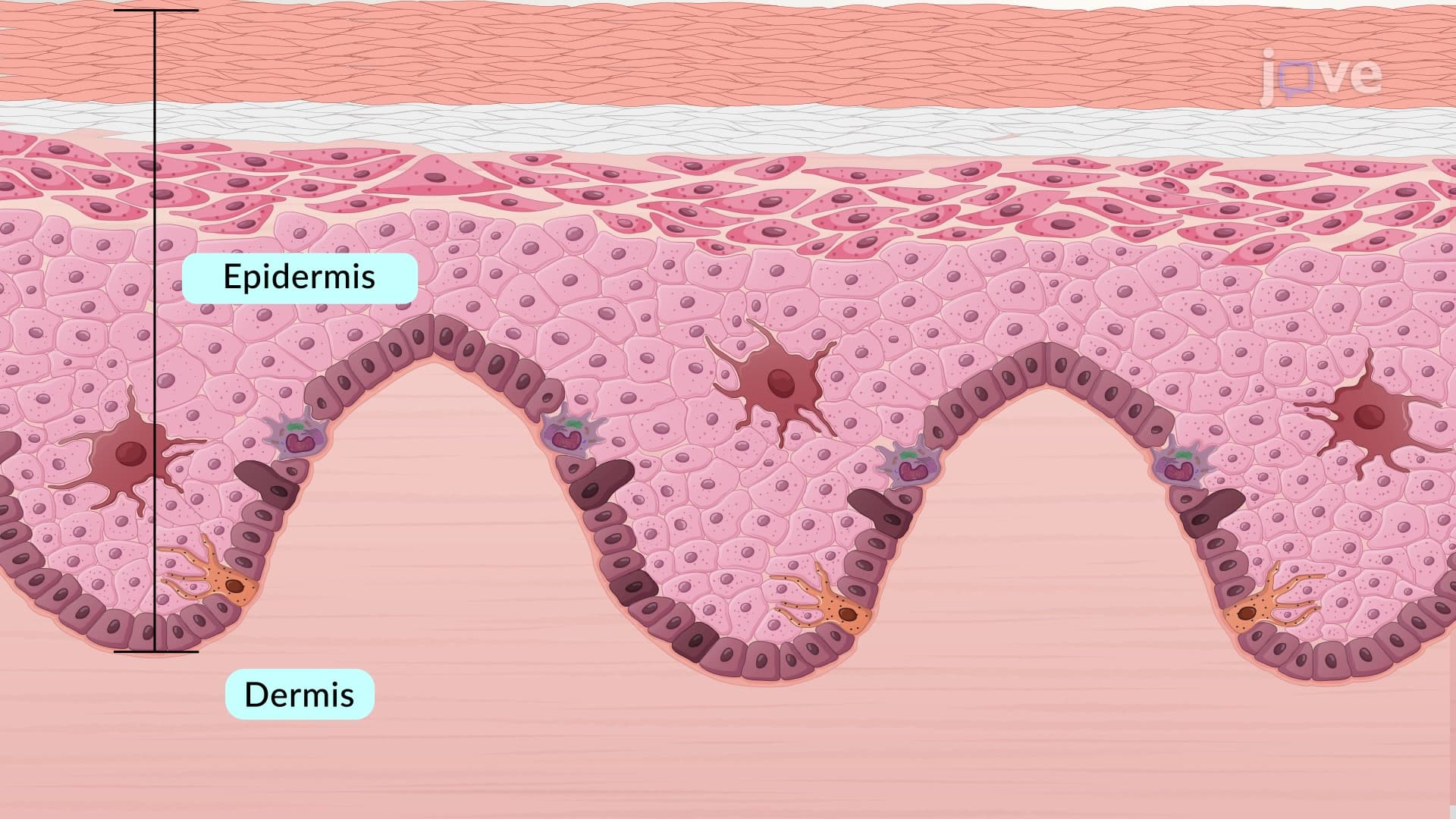
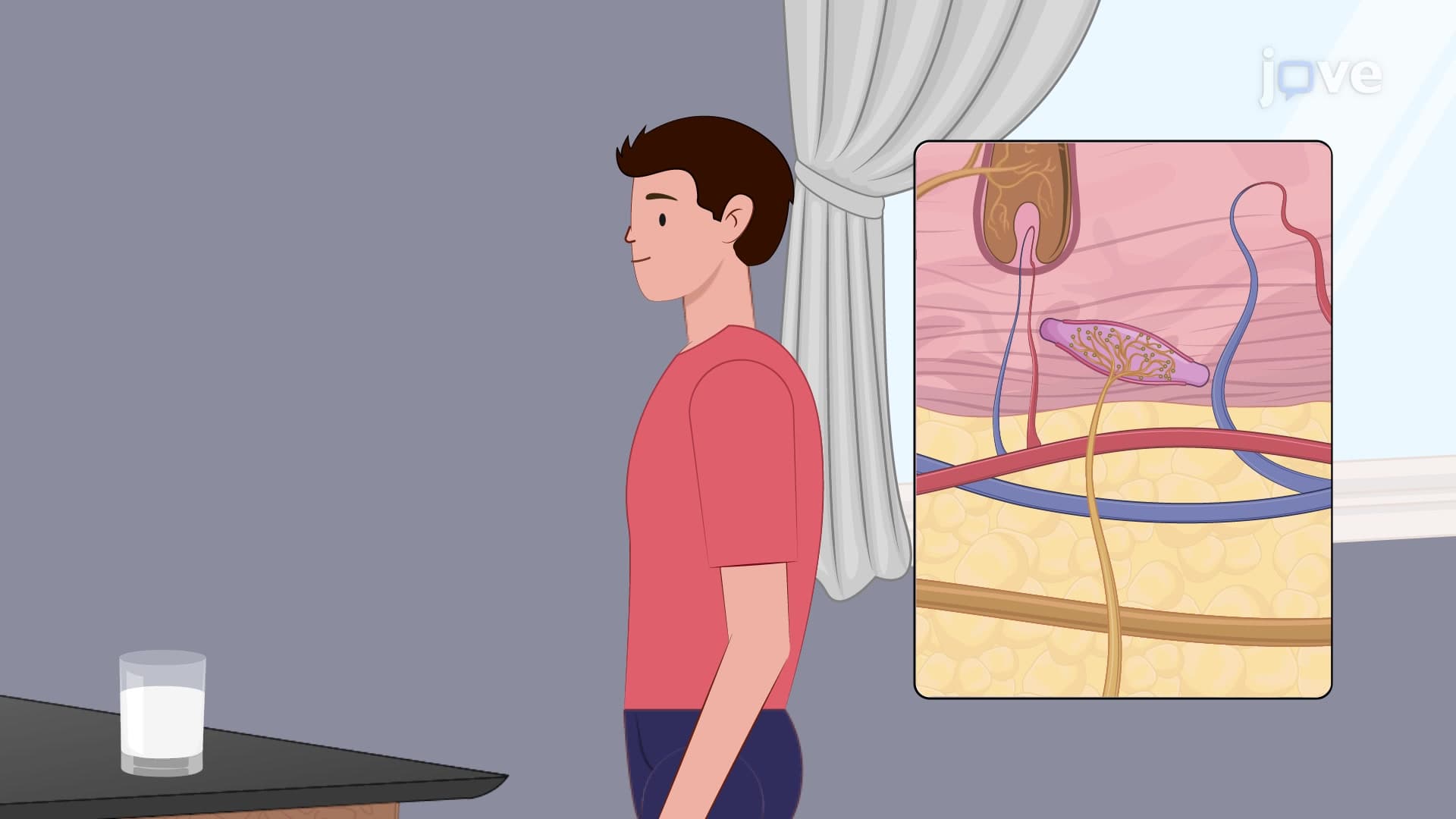
Sensory receptors in skin function fall into two main structural categories: encapsulated and non-encapsulated nerve endings. Non-encapsulated receptors include free nerve endings that detect pain, temperature, and crude touch, plus specialized Merkel discs in the basal epidermis that provide detailed information about texture and fine spatial discrimination. These Merkel discs are why you can distinguish between sandpaper and silk with your fingertips.
Encapsulated receptors feature specialized structures that enhance their sensitivity to specific stimuli. Meissner's corpuscles in dermal papillae respond to light touch and low-frequency vibrations-essential for tasks like reading Braille. Ruffini endings detect skin stretch and contribute to proprioception, while Pacinian corpuscles deep in the dermis respond to deep pressure and high-frequency vibrations, like feeling your phone buzz in your pocket.
Nociceptor pain skin responses represent one of the body's most critical protective mechanisms. These free nerve endings respond to potentially damaging stimuli including extreme temperatures, mechanical trauma, and chemical irritants. When tissue damage occurs, nociceptors release inflammatory mediators that not only signal pain but also initiate healing responses. This system explains why patients with congenital insensitivity to pain often suffer severe injuries-they lack this crucial warning system.
Thermoreceptor temperature skin detection involves separate populations of nerve endings sensitive to warming and cooling. Cold receptors typically respond to temperatures below normal skin temperature (around 90°F), while warm receptors activate above this threshold. This dual system allows precise temperature discrimination essential for preventing thermal injury.
Understanding what are the sensory functions of skin proves essential for students preparing for medical school entrance exams like the MCAT, where questions often test knowledge of sensory physiology. In AP Biology courses, students must explain how different receptor types contribute to sensory perception and neural integration. Clinical applications include neurological examinations where healthcare providers test two-point discrimination, vibration sense, and pain sensation to assess peripheral nerve function and identify conditions like diabetic neuropathy.
Related Micro-courses