Loading…
Loading video…

167,201 views
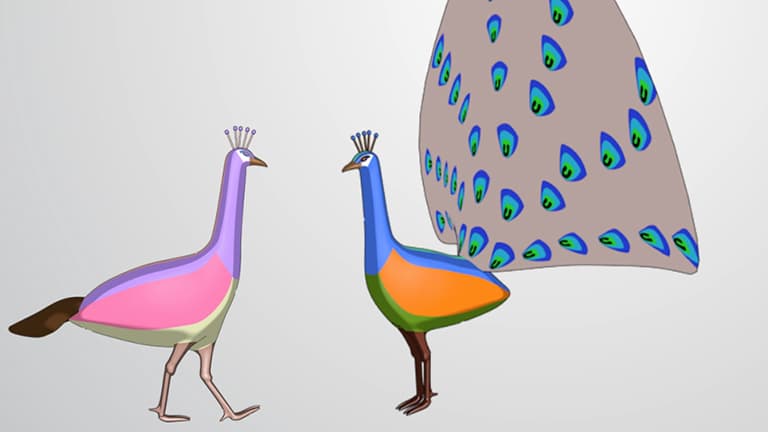
Why do male cardinals flash brilliant red feathers while females remain brown and camouflaged? Mate choice drives these striking differences across species, where one sex—typically females—selectively chooses partners based on traits that signal genetic quality and reproductive fitness. From the elaborate tail displays of peacocks in American zoos to the complex songs of mockingbirds across southern US states, what is mate choice becomes evident in nature's most spectacular courtship rituals. Watch the full video on JoVE Coach to master this concept with expert-led visuals and step-by-step explanations.
What is mate choice represents one of evolution's most powerful forces, shaping the incredible diversity of courtship behaviors and physical traits we observe across animal species. This selective process occurs when members of one sex—predominantly females—evaluate and choose mating partners based on specific criteria that maximize their reproductive success. The biological foundation rests on the principle that females typically invest more energy in reproduction through egg production and offspring care, making partner selection critically important for their genetic legacy.
In the United States, students encounter mate choice extensively in AP Biology courses, where it connects to broader evolutionary concepts tested on standardized exams. The topic appears frequently in college-level evolutionary biology and animal behavior courses, requiring students to analyze both proximate mechanisms (immediate causes) and ultimate explanations (evolutionary advantages) of selective mating behaviors.
The mate choice definition explained reveals how sexual selection creates dramatic differences between males and females within the same species. Male northern cardinals display vibrant red plumage throughout their range across the eastern United States, while females maintain subdued brown coloration. This dimorphism results from generations of female preference for brighter males, whose coloration signals superior health, territory quality, and genetic fitness.
Research conducted at universities like Cornell and Duke demonstrates that bright coloration often correlates with parasite resistance and nutritional status. Males maintaining vivid displays despite environmental stresses prove their genetic quality to potential mates. However, these conspicuous traits carry costs—brighter males face increased predation risk from hawks and other visual hunters common in North American forests.
Beyond physical appearance, mate choice encompasses complex behavioral evaluations. American robins demonstrate this through territorial song competitions, where males with larger repertoires and more complex vocalizations attract higher-quality mates. Female preferences for elaborate songs reflect the cognitive demands of learning and performing intricate melodies, suggesting superior neural development and overall fitness.
The bowerbird example, while primarily found in Australia, parallels behaviors observed in North American species like the great bowerbird's distant relative, the satin bowerbird kept in US zoos. However, closer-to-home examples include male red-winged blackbirds defending prime wetland territories across American marshes, where territory quality directly influences female choice and reproductive success.
Understanding mate choice principles extends beyond academic study into practical applications. Wildlife conservation programs use these concepts to improve captive breeding success for endangered species like California condors and black-footed ferrets. Additionally, medical professionals studying human reproductive behavior draw parallels from evolutionary mate choice research, particularly in fields like reproductive endocrinology and behavioral psychology.
For students preparing for medical school entrance exams like the MCAT, mate choice concepts integrate with broader evolutionary biology topics, requiring synthesis of genetic, behavioral, and ecological principles that frequently appear in biological sciences sections.
Frequently Asked Questions
Mate choice is the selective process where individuals, typically females, evaluate and choose mating partners based on specific traits that indicate genetic quality or reproductive fitness. Unlike random mating, this process involves active assessment of potential partners' characteristics such as physical appearance, behavioral displays, or territory quality, leading to non-random breeding patterns that drive evolutionary change over generations.
Mate choice frequently appears in AP Biology free-response questions about evolution and natural selection, often requiring students to explain sexual selection mechanisms and their effects on population genetics. College exams typically test deeper understanding through data analysis problems involving courtship behaviors, reproductive success rates, and evolutionary trade-offs between survival and reproduction.
MCAT Biological and Biochemical Foundations sections include mate choice within evolutionary biology and animal behavior topics. Students must understand sexual selection theory, genetic fitness concepts, and behavioral adaptations. The exam often presents research scenarios requiring analysis of mating systems, parental investment theory, and population-level evolutionary changes resulting from selective breeding patterns.
Male mallard ducks across North American wetlands display iridescent green heads and elaborate courtship behaviors to attract females, who remain camouflaged in brown plumage for nest protection. Female mallards choose mates based on display intensity, territory quality, and male condition, demonstrating classic mate choice principles observable in local parks and wildlife refuges throughout the United States.
Mate choice builds logically on basic natural selection concepts taught in introductory biology, making it accessible to most high school students. The key is connecting observable animal behaviors—like bird courtship displays students can observe locally—to underlying evolutionary principles. Visual examples and real-world applications help students grasp abstract concepts about reproductive success and genetic fitness.
Focus on understanding the relationship between mate choice criteria and offspring survival advantages, then practice analyzing specific examples like peacock tail displays or bird song complexity. Create concept maps connecting sexual selection, genetic fitness, and population-level changes. Review practice problems involving data interpretation about mating success rates and their evolutionary consequences.
Explore sexual selection theory more deeply, including intrasexual competition and alternative mating strategies. Study parental investment theory, mating systems (monogamy, polygamy, polyandry), and life history trade-offs. Advanced students can investigate molecular mechanisms of mate recognition, pheromone communication, and evolutionary game theory applications to reproductive strategies.
Researchers use controlled choice experiments where females are presented with multiple male options, measuring preferences through time spent near different males, mating frequency, or offspring survival rates. Field studies track natural mating patterns, correlating male traits with reproductive success. Modern techniques include genetic paternity testing and behavioral analysis software to quantify complex courtship interactions.
While plants cannot actively choose mates, they exhibit analogous selective processes through mechanisms like differential pollen acceptance, timing of reproductive readiness, and chemical compatibility systems. However, animal mate choice represents active behavioral selection, making it distinct from plant reproductive strategies and more relevant for understanding behavioral evolution and sexual selection theory.
Related Micro-courses



Related Subjects