Loading…
Loading video…

425,600 views

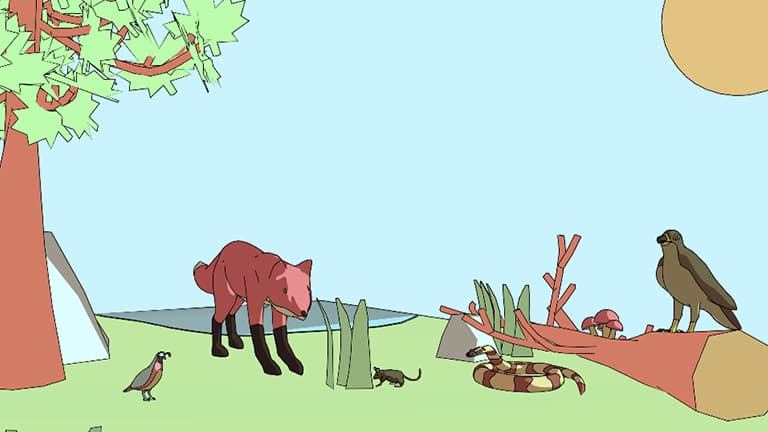
Ever wonder why cold-blooded lizards in Arizona deserts can survive on far less food than warm-blooded mammals? Production efficiency explains how organisms convert consumed energy into new biomass, with dramatic differences between animal types. Ectothermic reptiles achieve production efficiency rates 10 times higher than endothermic mammals like foxes, meaning a desert snake needs only one-tenth the prey biomass a fox requires for equivalent growth. This fundamental concept reveals why energy flows differently through ecosystems and food webs. Watch the full video on JoVE Coach to master this concept with expert-led visuals and step-by-step explanations.
Production efficiency represents a fundamental measure of how effectively organisms convert consumed energy into new biomass that becomes available to the next trophic level. Also known as Net Production Efficiency (NPE), this concept quantifies the percentage of ingested energy that organisms successfully incorporate into growth, reproduction, and tissue development rather than losing to metabolic processes.
Multiple pathways reduce production efficiency as energy moves through biological systems. Cellular respiration consumes substantial energy for basic metabolic functions, while digestive processes require additional energy expenditure. Organisms also lose energy through waste products and heat generation. Perhaps most significantly, incomplete consumption occurs when predators don't consume entire prey items—like when coyotes in Yellowstone National Park leave portions of elk carcasses, creating energy-rich resources that remain unutilized by that particular trophic transfer.
The most striking production efficiency differences occur between ectothermic (cold-blooded) and endothermic (warm-blooded) animals. Reptiles, amphibians, and fish typically achieve NPE values around 10-20%, while mammals and birds average only 1-3%. This ten-fold difference stems from endothermic animals' massive energy investments in thermoregulation and higher metabolic rates. A timber rattlesnake in Pennsylvania forests requires far less biomass input than a red fox to produce equivalent tissue growth, explaining why ectothermic predators can maintain stable populations with lower prey availability.
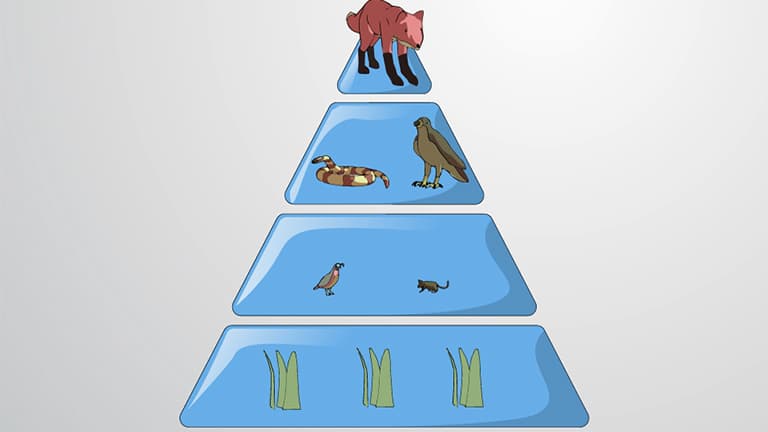
Production efficiency concepts appear prominently in AP Environmental Science exams, college ecology courses, and graduate-level ecosystem studies. Students encounter these principles when analyzing energy pyramids, calculating trophic transfer efficiency, and explaining why food webs contain limited trophic levels. Wildlife management professionals use production efficiency data to model carrying capacity and predict population responses to habitat changes. The concept also underlies agricultural efficiency studies and conservation biology applications across US ecosystems from Everglades wetlands to Pacific Northwest forests.
Frequently Asked Questions
Production efficiency measures how much of the energy an organism consumes gets converted into new body tissue or biomass. It's calculated as the percentage of ingested energy that becomes available for growth, reproduction, and the next trophic level, rather than being lost to metabolism, waste, or incomplete consumption.
Production efficiency directly influences the 10% rule, which states that only about 10% of energy transfers between trophic levels. However, actual production efficiency varies dramatically—ectothermic animals achieve much higher rates (10-20%) while endothermic animals typically show lower efficiency (1-3%), affecting overall energy flow through ecosystems.
Yes, production efficiency concepts frequently appear in AP Environmental Science free-response questions and multiple-choice sections. You'll need to explain energy transfer differences between animal types, analyze ecosystem energy flow, and calculate trophic efficiency. Understanding NPE helps answer questions about food webs, population dynamics, and ecosystem productivity.
College exams often require quantitative analysis of production efficiency data, comparison of ectothermic vs. endothermic energy budgets, and application to real ecosystem examples. Students may calculate NPE values, predict population changes based on efficiency differences, or explain why certain animals dominate specific environments.
In Florida's Everglades, American alligators (ectothermic) can maintain stable populations with less prey biomass than Florida panthers (endothermic) due to their higher production efficiency. The alligators convert 10-15% of consumed energy into biomass, while panthers achieve only 1-2% efficiency, requiring vastly more prey to sustain equivalent population biomass.
No, production efficiency calculations involve basic percentages and ratios suitable for high school algebra students. The concept focuses more on biological understanding than complex mathematics. Most applications require interpreting data, comparing efficiency values, and explaining ecological relationships rather than advanced computational skills.
Create comparison charts showing ectothermic vs. endothermic efficiency differences, practice calculating NPE from given data, and memorize key examples like snake vs. fox energy requirements. Focus on explaining why these differences occur (metabolic demands, thermoregulation costs) and their ecological consequences for food web structure.
Explore trophic pyramids, ecological succession, and biogeochemical cycles to understand broader ecosystem energy flows. Study population ecology concepts like carrying capacity and limiting factors, which connect directly to production efficiency principles. These topics frequently appear together in environmental science curricula and standardized exams.
Related Micro-courses



Related Subjects