Loading subject page…


336,524 views


Video Summary: What are Gene Families
Did you know that humans share nearly identical oxygen-carrying genes with whales, despite millions of years of separate evolution? Gene families are groups of related genes created through duplication events that allow organisms to develop specialized functions while maintaining core genetic blueprints. The hemoglobin gene family in humans exemplifies this concept, containing multiple genes that produce different oxygen-transport proteins optimized for various life stages and tissues. Understanding what are gene families reveals how evolution creates biological complexity through genetic redundancy and specialization. Watch the full video on JoVE Coach to master this concept with expert-led visuals and step-by-step explanations.
Gene families represent one of evolution's most elegant solutions for increasing biological complexity without dramatically expanding genome size. These clusters of related genes arise when a single ancestral gene undergoes duplication, creating multiple copies that can evolve distinct but related functions. This process, fundamental to molecular evolution, explains how organisms develop specialized capabilities while maintaining essential genetic functions.
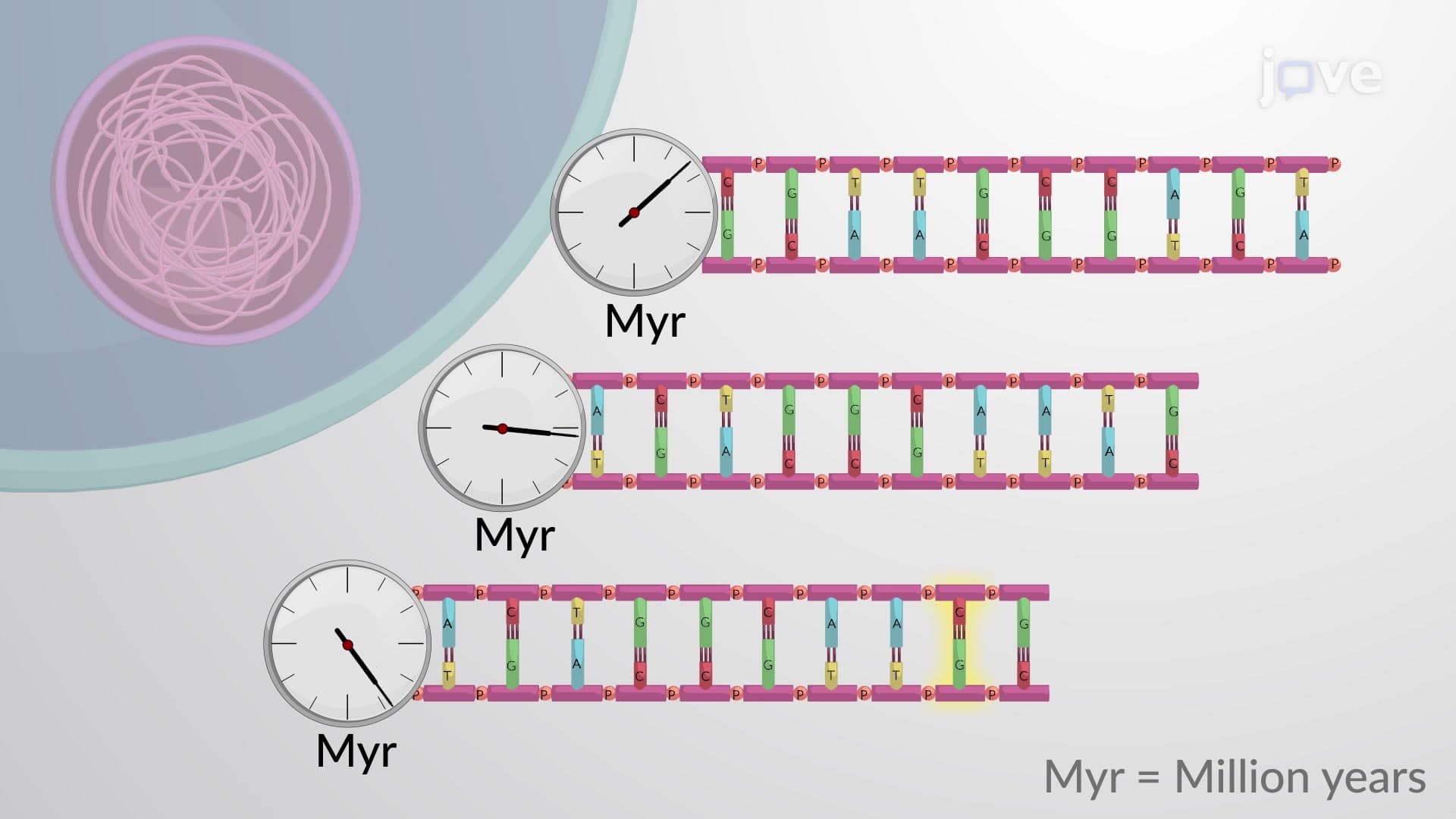
The formation of gene families occurs through various duplication mechanisms, including tandem duplication (genes clustered together), segmental duplication (large genomic blocks), and whole-genome duplication events. Once duplicated, these genes can undergo divergent evolution, where mutations accumulate differently in each copy, leading to functional specialization or subfunctionalization.
The globin gene family provides the most studied example of gene family evolution. Located on chromosomes 11 and 16, this family includes genes encoding alpha and beta globin chains that form hemoglobin and myoglobin proteins. During human development, different globin genes activate at specific stages: embryonic globins function in early development, fetal hemoglobin dominates during pregnancy, and adult hemoglobin takes over after birth. This temporal regulation demonstrates how gene families enable developmental specialization.
Similarly, the immunoglobulin gene families (heavy and light chains) showcase how gene duplication creates the vast antibody diversity essential for immune function. The histone gene families ensure adequate protein production during cell division when DNA packaging demands surge.
Gene families serve as evolutionary laboratories where new functions emerge without losing essential ancestral roles. Comparative genomics reveals that gene family expansions often correlate with organism complexity-mammals possess larger gene families than simpler organisms, reflecting their sophisticated physiological demands.
Medically, gene families present both opportunities and challenges. Redundancy within families can provide therapeutic targets; if one gene becomes defective, related family members might compensate. However, this redundancy also complicates drug development, as targeting one family member may have unintended effects on others.
Understanding gene families proves crucial for AP Biology students studying evolution and molecular genetics. College-level genetics courses extensively cover gene family analysis, particularly in contexts like developmental biology and medical genetics. MCAT preparation benefits from understanding how gene families illustrate evolutionary principles and disease mechanisms.
Researchers use gene family analysis to identify disease genes, develop targeted therapies, and understand evolutionary relationships. Pharmaceutical companies leverage gene family knowledge to design drugs with improved specificity and reduced side effects.
Related Micro-courses