Loading video…


 15 Concepts
 336.5K views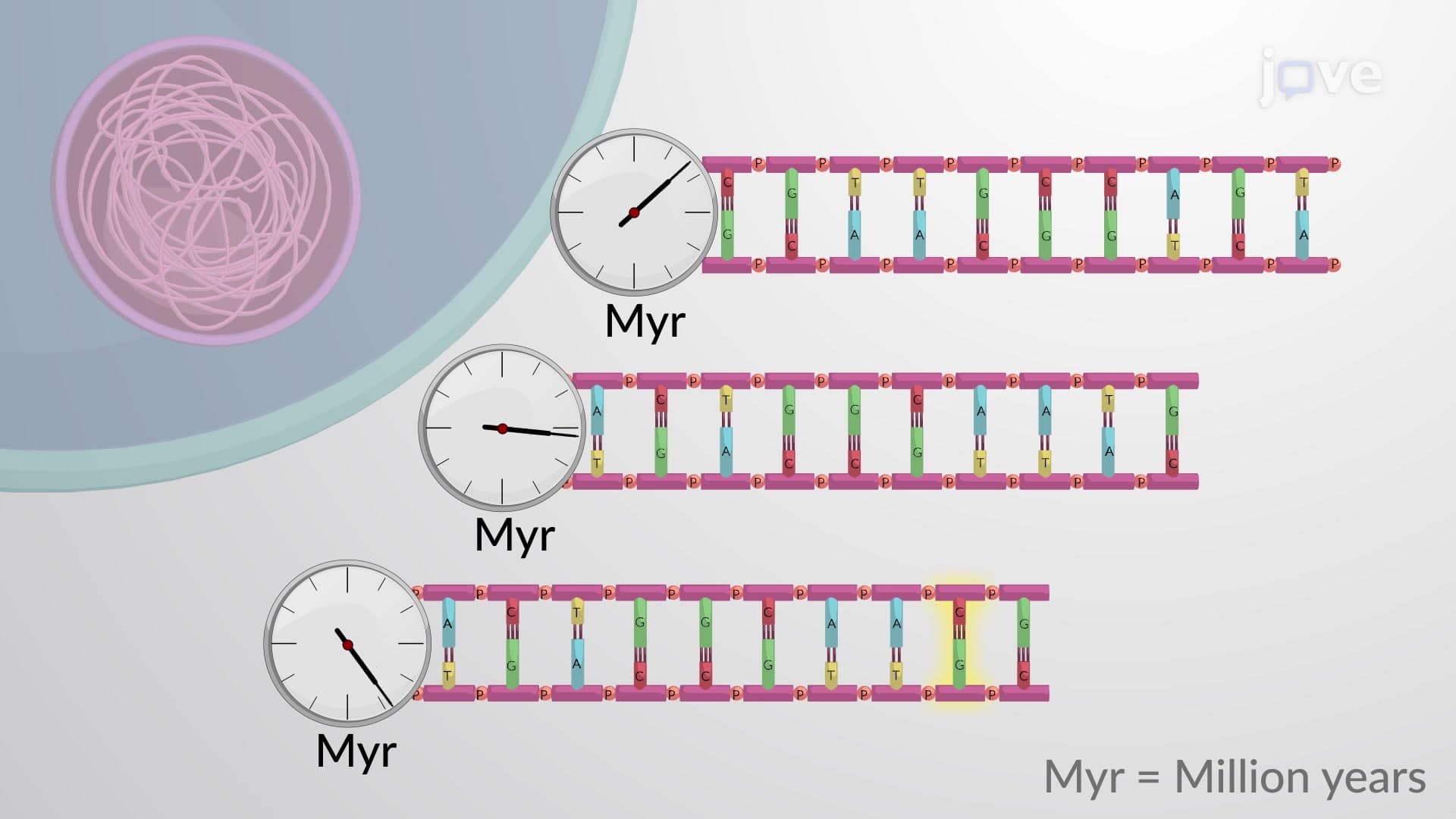

Video Summary: Gene Evolution Fast or Slow Explained
Did you know that some genes in your body have barely changed since your ancestors diverged from chimpanzees 6 million years ago, while others evolve so rapidly they're unrecognizable within just a few generations? Gene evolution fast slow patterns reveal why essential cellular machinery like histones remains nearly identical across species, while immune system genes rapidly adapt to new pathogens-including how SARS-CoV-2 variants emerged during the COVID-19 pandemic in the US. Watch the full video on JoVE Coach to master this concept with expert-led visuals and step-by-step explanations.
The concept of differential gene evolution rates represents one of evolutionary biology's most fascinating discoveries. Unlike the simplified view that all genes evolve at uniform rates, molecular evolution reveals a complex landscape where some genes change rapidly across generations while others remain virtually unchanged for millions of years. This variation in evolutionary speed directly correlates with each gene's biological importance and the selective pressures acting upon it.
Several key factors determine whether genes evolve quickly or slowly. Functional constraints play the primary role-genes encoding essential cellular machinery face intense purifying selection that eliminates most mutations. For example, histone proteins, which package DNA in all eukaryotic cells, show remarkably slow evolution because even minor changes can disrupt fundamental cellular processes. Conversely, genes under positive selection pressure, such as those involved in pathogen resistance or sexual selection, evolve rapidly to maintain organism fitness in changing environments.
The mutation rate also influences evolutionary speed, but this factor varies significantly across different genomic regions. Genes in highly mutable regions may accumulate changes faster simply due to increased DNA replication errors or environmental mutagen exposure.
Fast-evolving genes demonstrate their importance through concrete examples. Human leukocyte antigen (HLA) genes, crucial for immune system function, show extreme diversity both within and between populations-this rapid evolution helps humans combat ever-changing pathogen threats. During the 2020-2021 COVID-19 pandemic, researchers at the CDC and universities like Stanford tracked SARS-CoV-2's rapid spike protein evolution, observing new variants emerge within months.
In contrast, slow-evolving genes include those encoding ribosomal RNA and basic metabolic enzymes. These genes remain so conserved that molecular biologists can identify homologs across vastly different species, from humans to bacteria.
The molecular clock hypothesis revolutionized evolutionary biology by providing a method to estimate species divergence times. This concept assumes that neutral mutations accumulate at relatively constant rates, creating a "genetic stopwatch." Researchers use molecular clocks in phylogenetic studies to reconstruct evolutionary trees and in forensic applications to track disease outbreaks.
For students preparing for AP Biology or college-level cell biology courses, understanding gene evolution rates proves essential for interpreting phylogenetic trees, analyzing comparative genomics data, and explaining observed genetic diversity patterns. This knowledge directly applies to MCAT questions involving evolution and molecular biology, where students must predict which genes would show greater variation between related species.
Related Micro-courses