Loading subject page…

- Chemistry
- Acid Base and Solubility Equilibria
- Titration Calculations: Weak Acid - Strong Base
Micro-course: Acid-base and Solubility Equilibria
925,504 views
Learn key concepts and earn your certificate.


Titration Calculations: Weak Acid - Strong Base

00:00
03:55
Video Summary: Weak Acid Strong Base Titration
Ever wonder why stomach antacids work so effectively? A weak acid strong base titration perfectly models how calcium carbonate neutralizes excess stomach acid. This fundamental analytical chemistry technique involves adding a strong base (like sodium hydroxide) to a weak acid (such as acetic acid) while monitoring pH changes. The FDA uses similar titration methods to verify medication potency in pharmaceutical manufacturing. Understanding weak acid strong base titration is essential for mastering buffer systems and equivalence point calculations. Watch the full video on JoVE Coach to master this concept with expert-led visuals and step-by-step explanations.
- Understand the fundamental principles of weak acid strong base titration and predict pH changes throughout the process
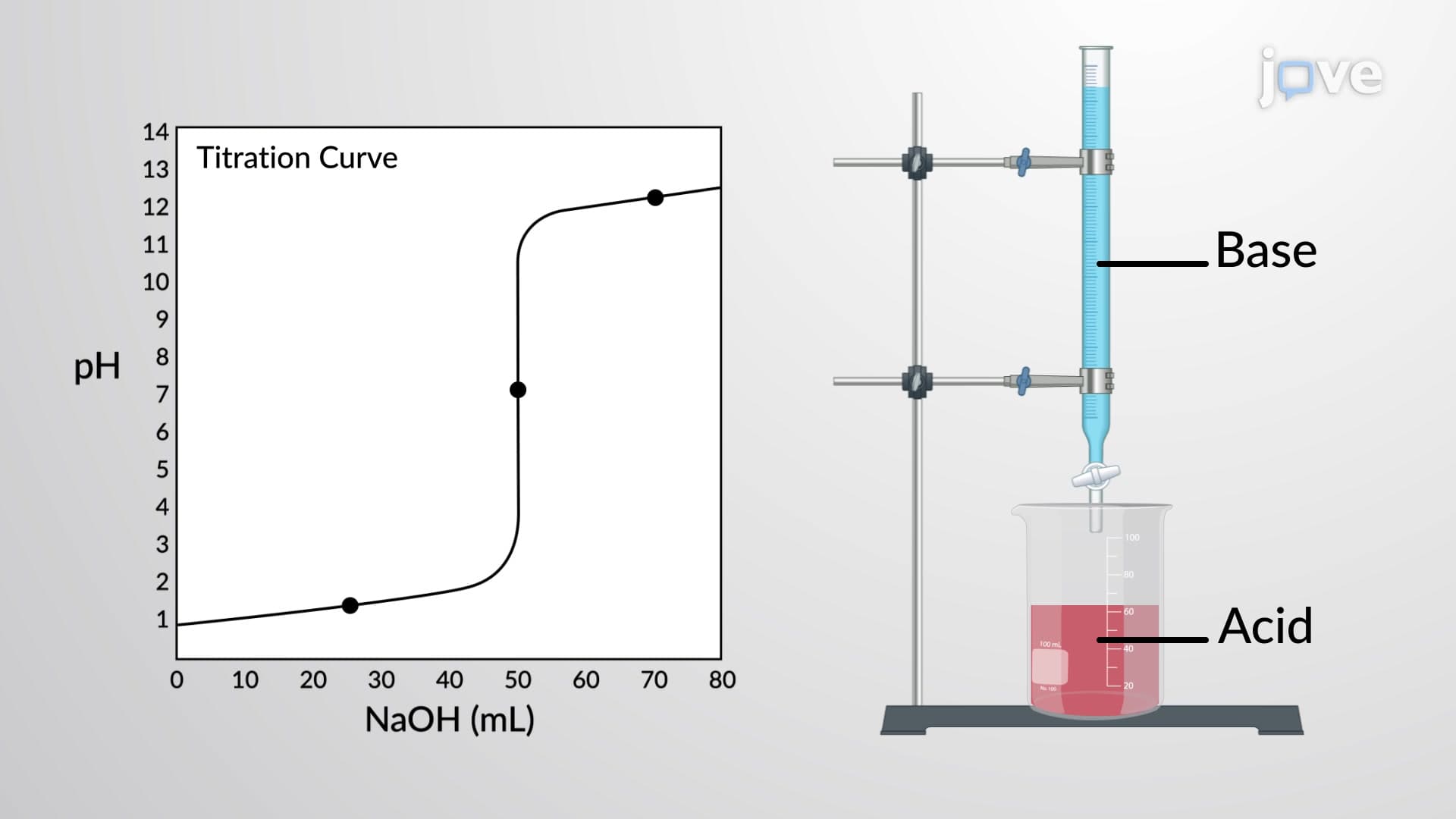
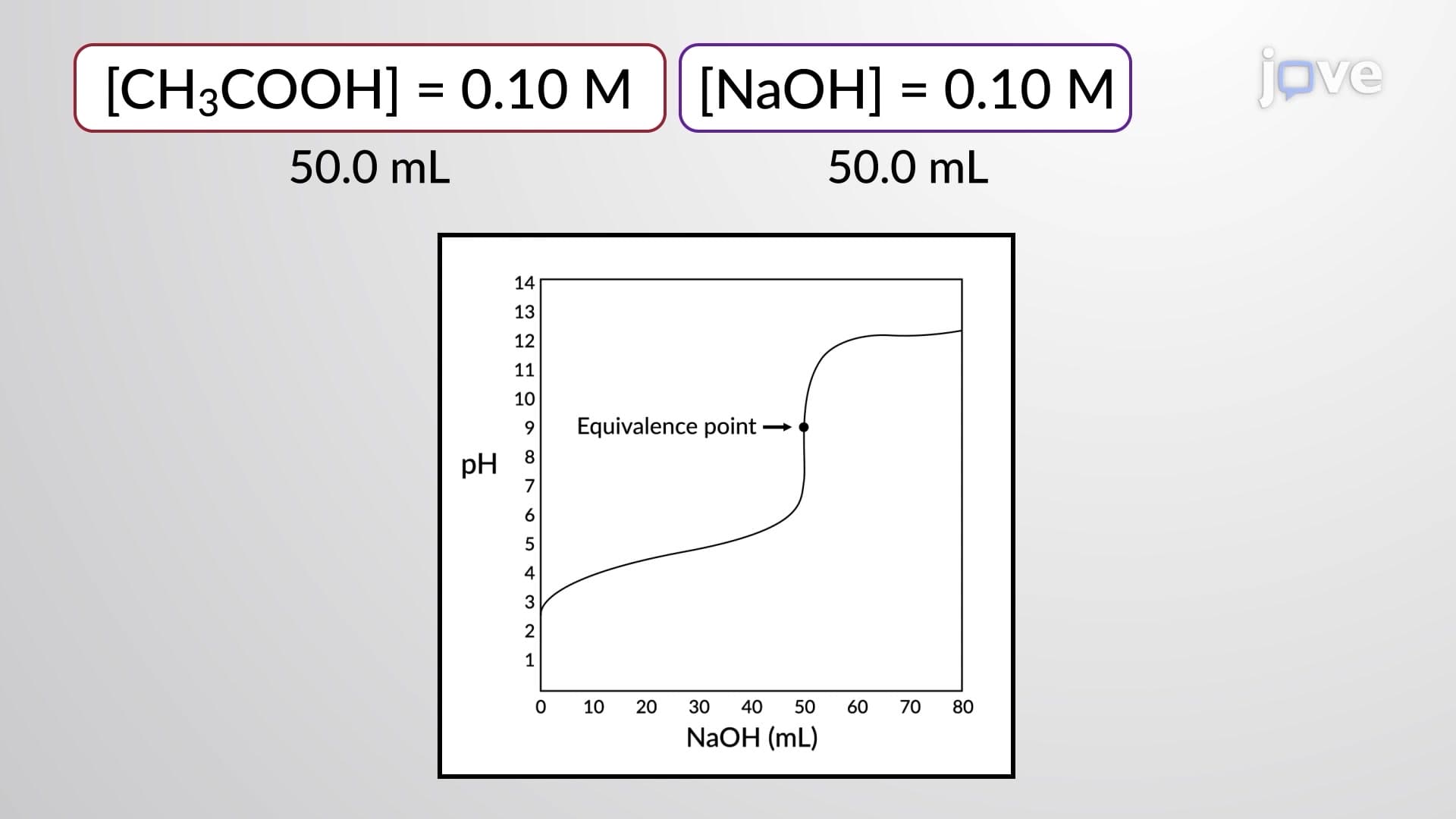
- Identify the four distinct regions of a titration curve: initial pH, buffer region, equivalence point, and post-equivalence point
- Analyze pH calculations using ICE tables, Henderson-Hasselbalch equation, and acid-base equilibrium constants
- Compare the differences between weak acid strong base titrations and strong acid strong base titrations
- Evaluate the role of buffer systems and recognize when Henderson-Hasselbalch equation applies
- Apply Ka, Kb, and Kw relationships to determine equilibrium concentrations and pH values
- Recognize why the equivalence point occurs in the basic region for weak acid strong base titrations
- Explore real-world applications in pharmaceutical analysis, environmental monitoring, and quality control
Understanding Weak Acid Strong Base Titration Fundamentals
Weak acid strong base titration represents one of the most important analytical techniques in chemistry, combining principles of acid-base equilibrium with practical laboratory skills. Unlike strong acid strong base titrations that show sharp, symmetrical curves, weak acid strong base titrations produce distinctive S-shaped curves with unique characteristics at each stage.
The process involves systematically adding a strong base (typically NaOH or KOH) to a weak acid solution while monitoring pH changes. This technique is crucial for AP Chemistry students and appears frequently on MCAT exams, where understanding buffer calculations and equivalence point determination separates high scorers from average performers.
The Four Critical Regions of Titration
The initial pH region depends entirely on the weak acid's dissociation. For acetic acid (Ka = 1.8 × 10^-5), students must use ICE tables to calculate the initial pH, typically around 2.87 for 0.10 M solutions. This calculation forms the foundation for more complex equilibrium problems encountered in college general chemistry courses.
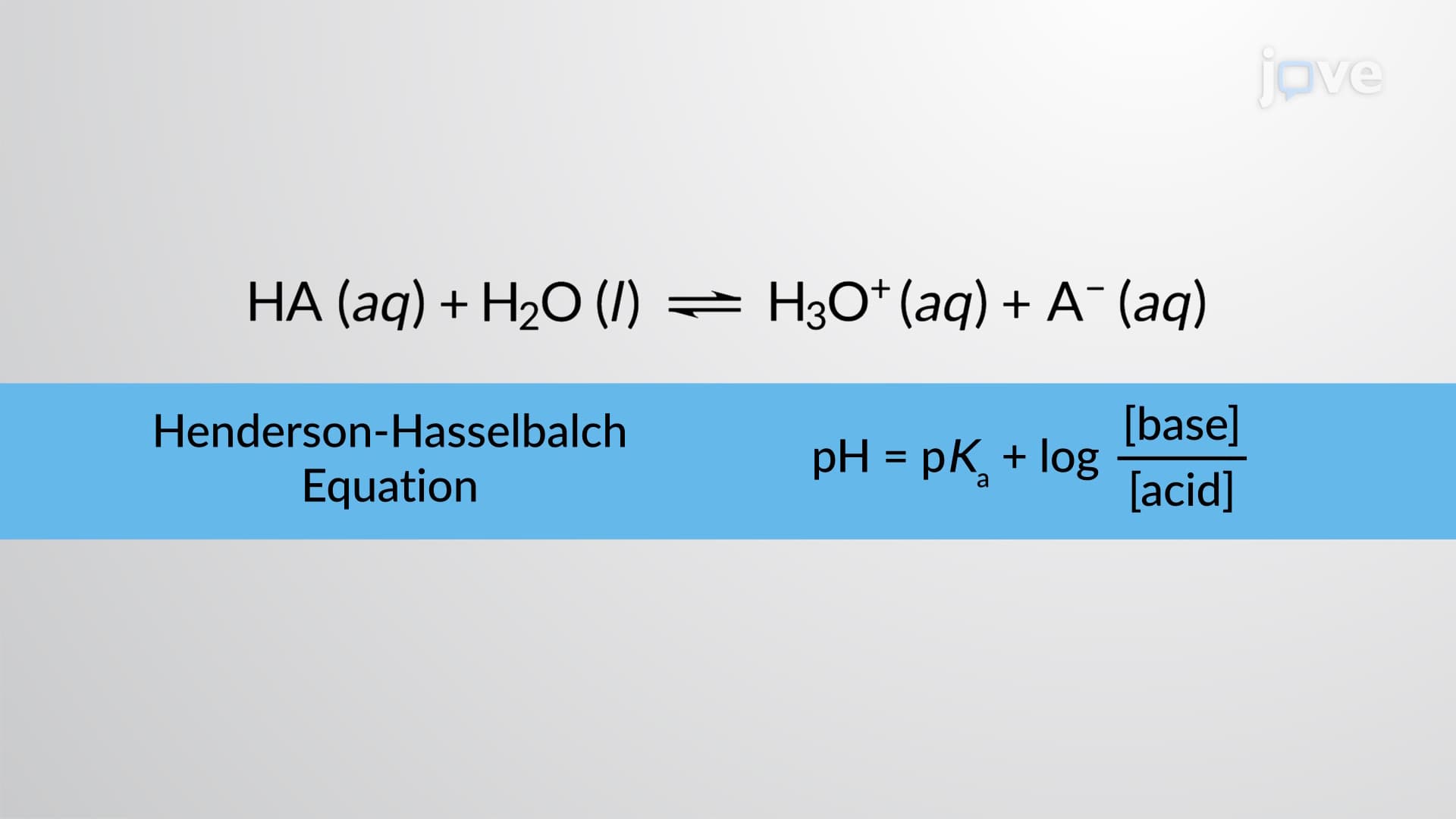
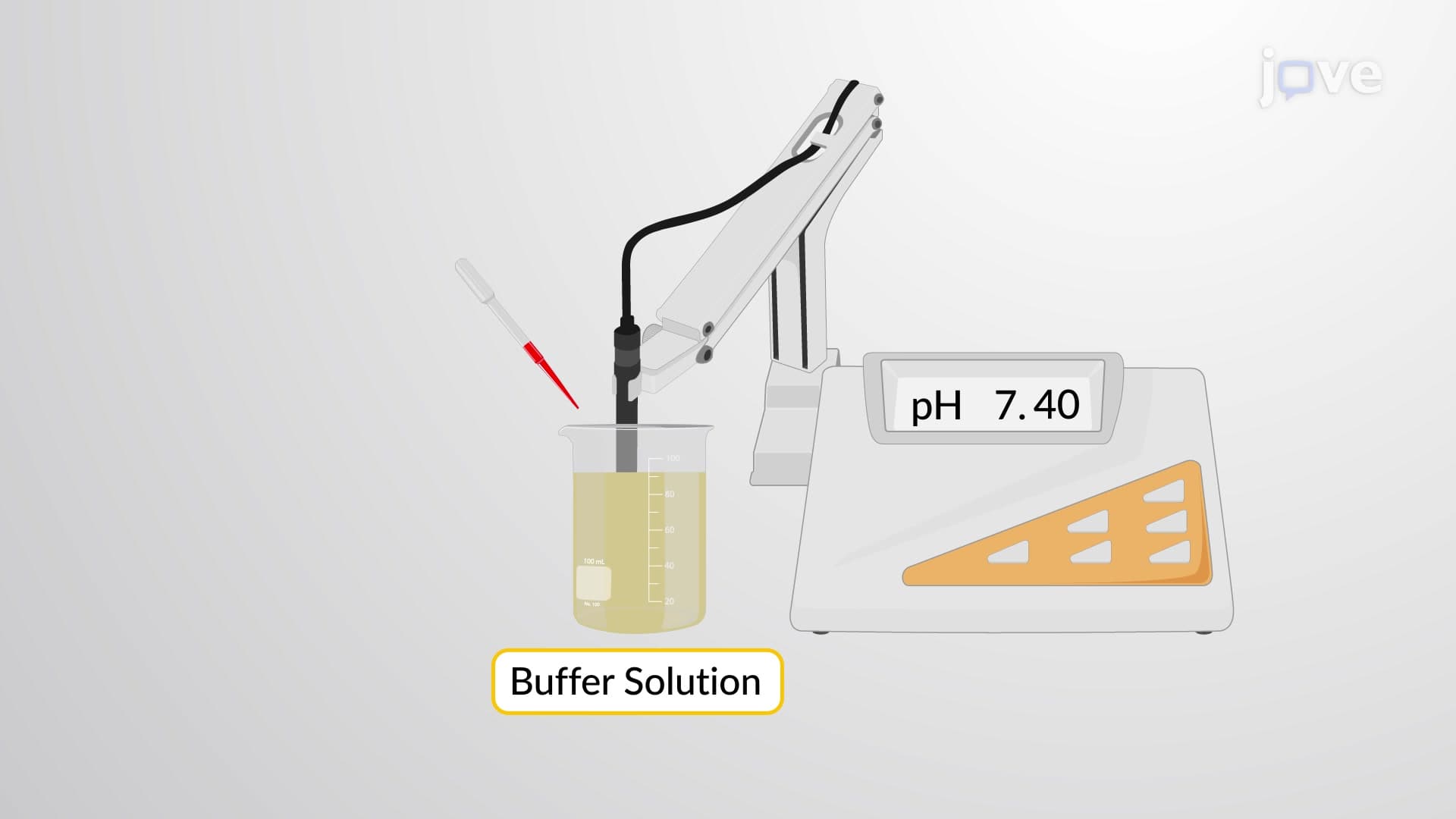
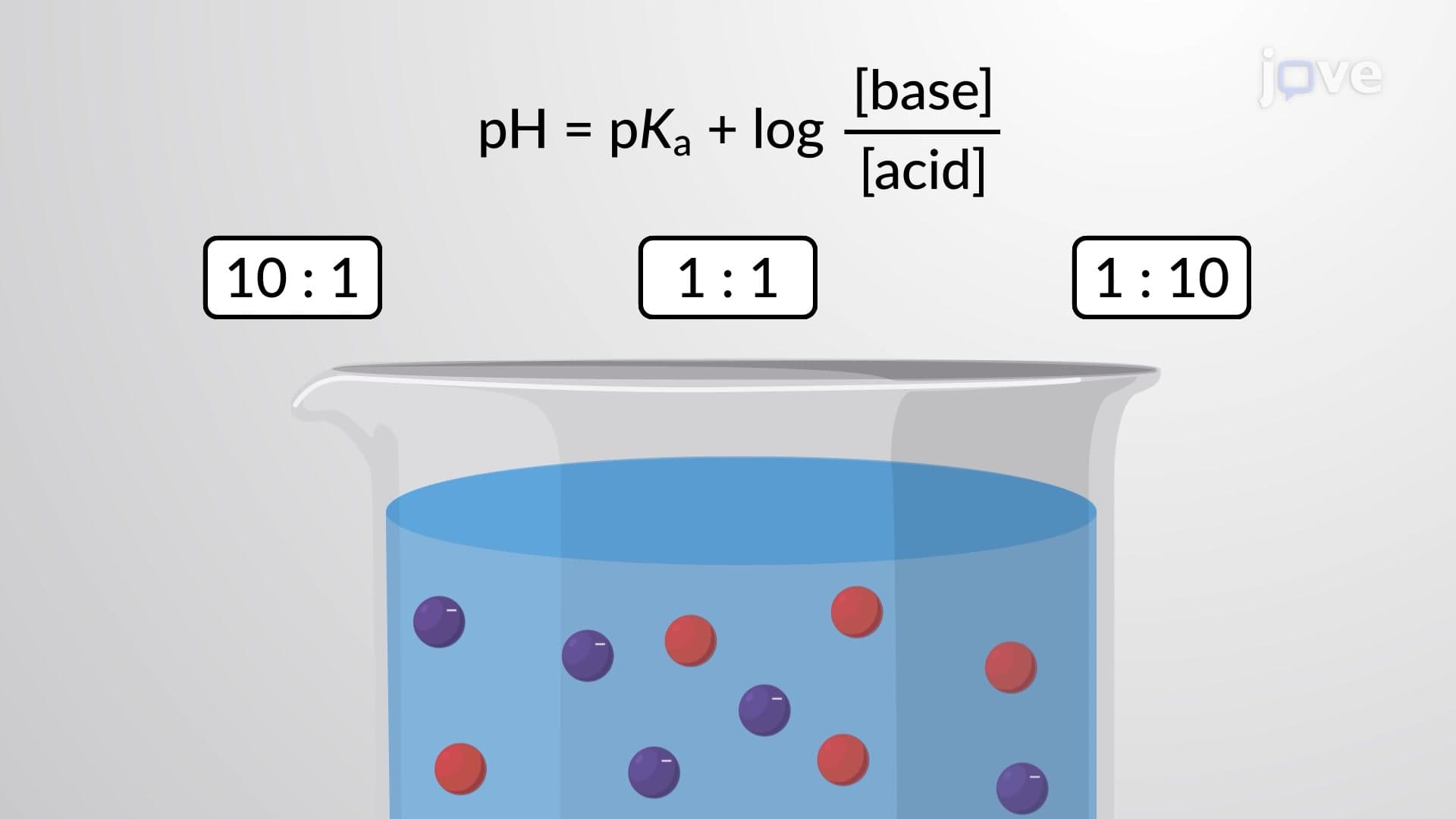
The buffer region emerges as the strong base converts some weak acid molecules into their conjugate base. Here, the Henderson-Hasselbalch equation becomes invaluable: pH = pKa + log([A-]/[HA]). This region demonstrates remarkable pH stability, explaining why biological systems maintain narrow pH ranges despite constant metabolic acid production.
The equivalence point occurs when moles of added base equal initial moles of weak acid. Critically, this point lies in the basic region (pH > 7) because the conjugate base of a weak acid is itself basic. Students often struggle with this concept, expecting neutral pH at equivalence points. The pH calculation requires determining the conjugate base concentration and using Kb = Kw/Ka relationships.
Real-World Applications and Exam Relevance
Pharmaceutical companies routinely employ weak acid strong base titrations to determine active ingredient concentrations in medications like aspirin (acetylsalicylic acid). The FDA mandates precise titration methods for drug quality control, making this technique essential for pharmacy students preparing for NAPLEX examinations.
Environmental laboratories use these titrations to measure organic acid concentrations in water samples, helping assess pollution levels and treatment effectiveness. This application frequently appears in AP Environmental Science curricula and college analytical chemistry courses.
For MCAT preparation, focus on recognizing titration curve shapes, calculating pH at various points, and understanding buffer capacity concepts. The exam often presents complex scenarios requiring students to distinguish between different titration types and apply appropriate calculation methods.
Frequently Asked Questions
Weak acid strong base titration involves adding a strong base to a weak acid solution while monitoring pH changes. Unlike strong-strong titrations, these produce asymmetrical curves with equivalence points in the basic region (pH > 7). The buffer region shows gradual pH changes, and calculations require equilibrium constants rather than simple stoichiometry. This technique is fundamental for pharmaceutical analysis and environmental testing.
Use different methods for each region: ICE tables with Ka for initial pH, Henderson-Hasselbalch equation for buffer regions, Kb calculations for equivalence points, and excess base molarity for post-equivalence points. Practice identifying which method applies based on the titration stage. AP Chemistry frequently tests these transitions, so memorize when each calculation method is appropriate.
The conjugate base of a weak acid is itself basic, causing hydrolysis reactions that produce hydroxide ions. At equivalence point, only the conjugate base remains in solution, creating pH > 7. This concept appears in MCAT passages about physiological buffers and drug metabolism. Remember: weak acid equivalence points are always basic, strong acid equivalence points are neutral.
Drug manufacturers titrate medications like aspirin, vitamin C, and citric acid to verify potency and purity. The FDA requires standardized titration procedures for quality control in pharmaceutical production. Hospitals use similar techniques to prepare IV solutions and verify medication concentrations. This application connects classroom learning to healthcare careers and regulatory compliance.
No advanced math required, just algebra and logarithms taught in high school chemistry. The key is recognizing patterns and practicing systematic approaches to different calculation types. Start with ICE table setups, then progress to Henderson-Hasselbalch applications. Most students struggle with concept recognition rather than mathematical complexity, so focus on understanding when to apply each method.
Create a decision tree showing which calculation method applies at each titration stage. Practice identifying curve regions from graphs, then work backwards to understand the underlying chemistry. Focus on buffer calculations since they combine multiple concepts. Use practice problems from previous exams to identify common question patterns and calculation shortcuts.
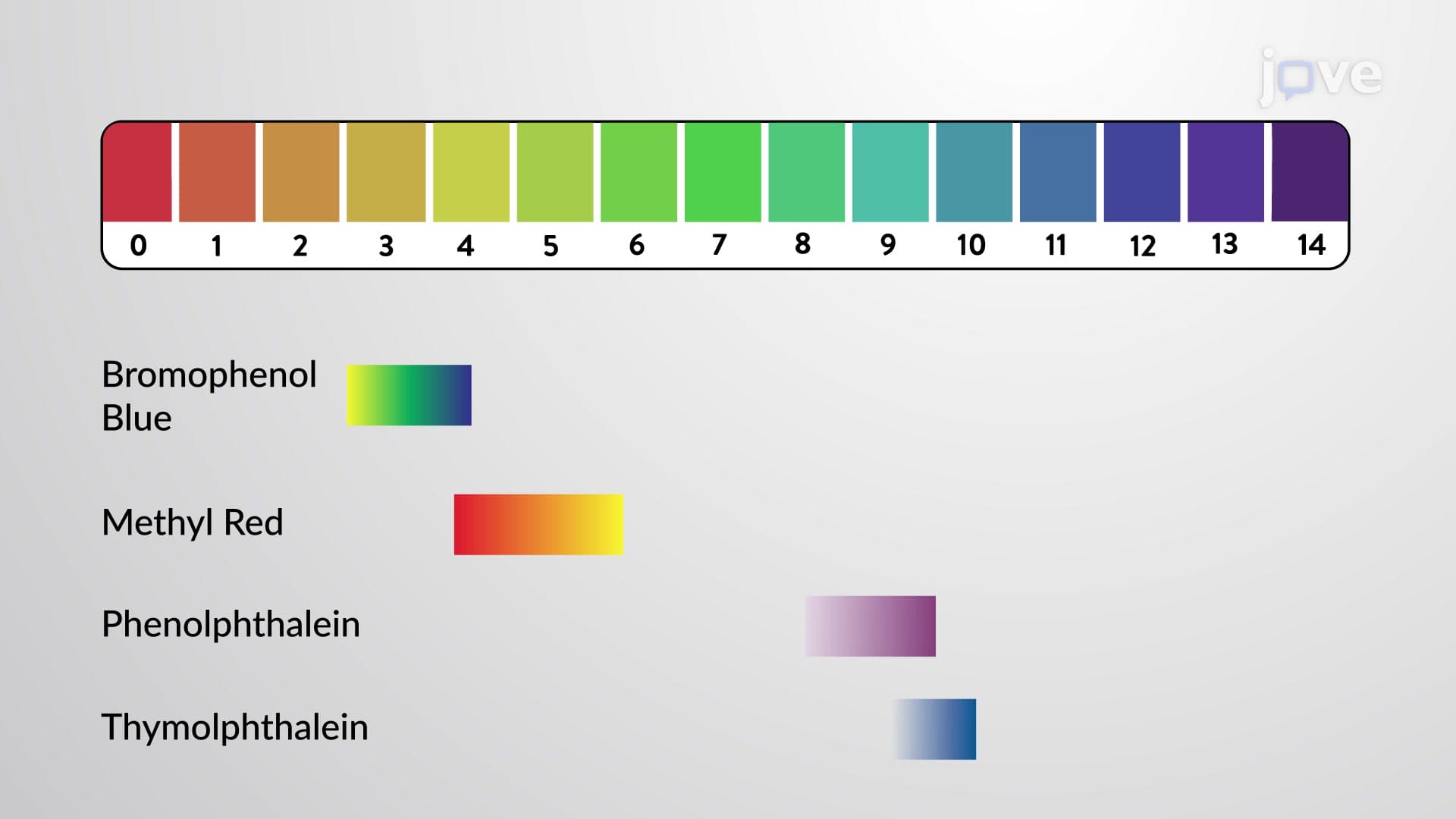
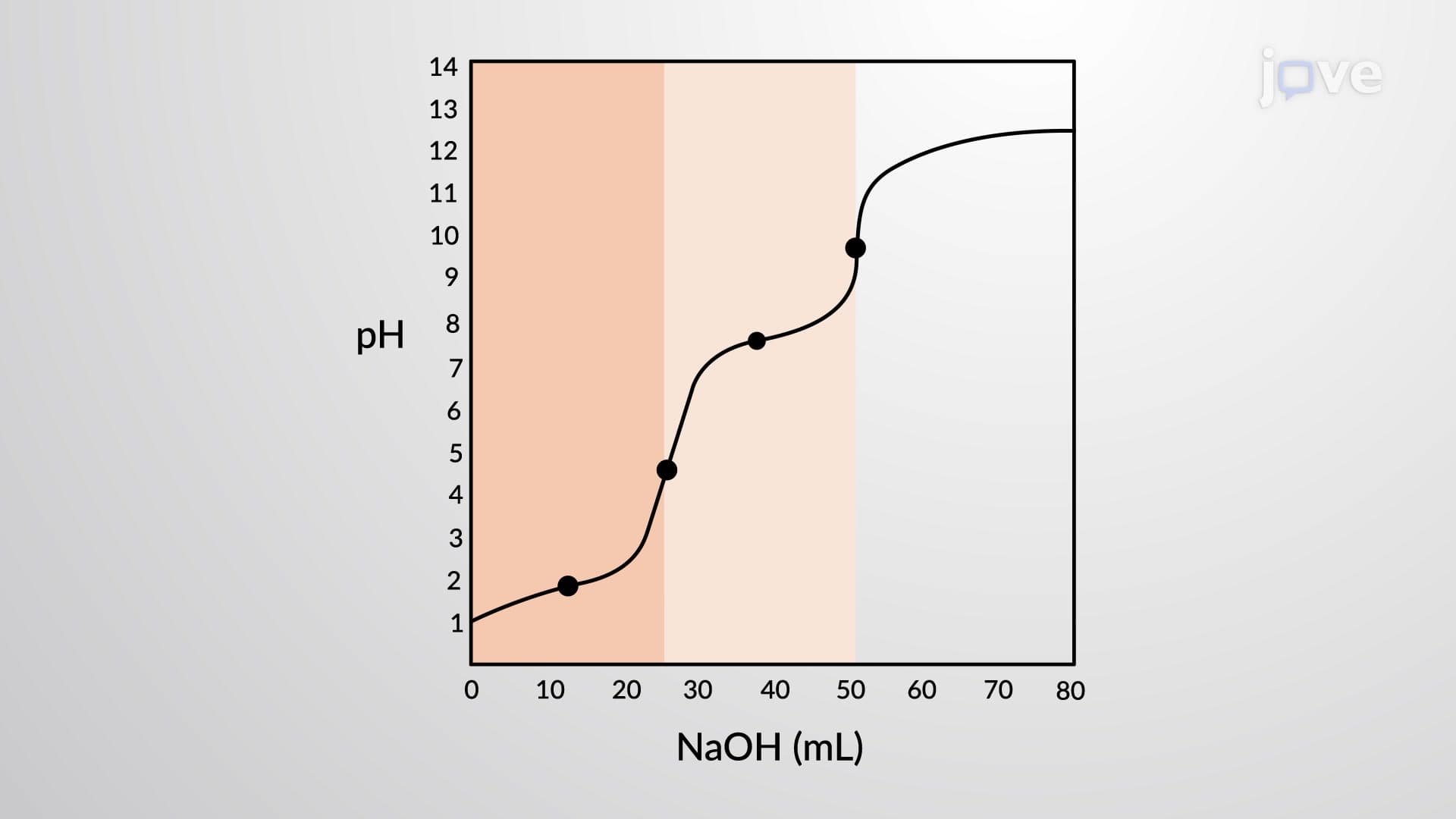
Progress to polyprotic acid titrations, which involve multiple equivalence points and complex pH calculations. Study amino acid titrations for biochemistry applications, and explore indicator selection principles. These advanced topics build directly on weak acid strong base fundamentals and appear in upper-level chemistry courses and professional exams like the MCAT and PCAT.
Related Micro-courses