Loading video…


 15 Concepts
 925.5K views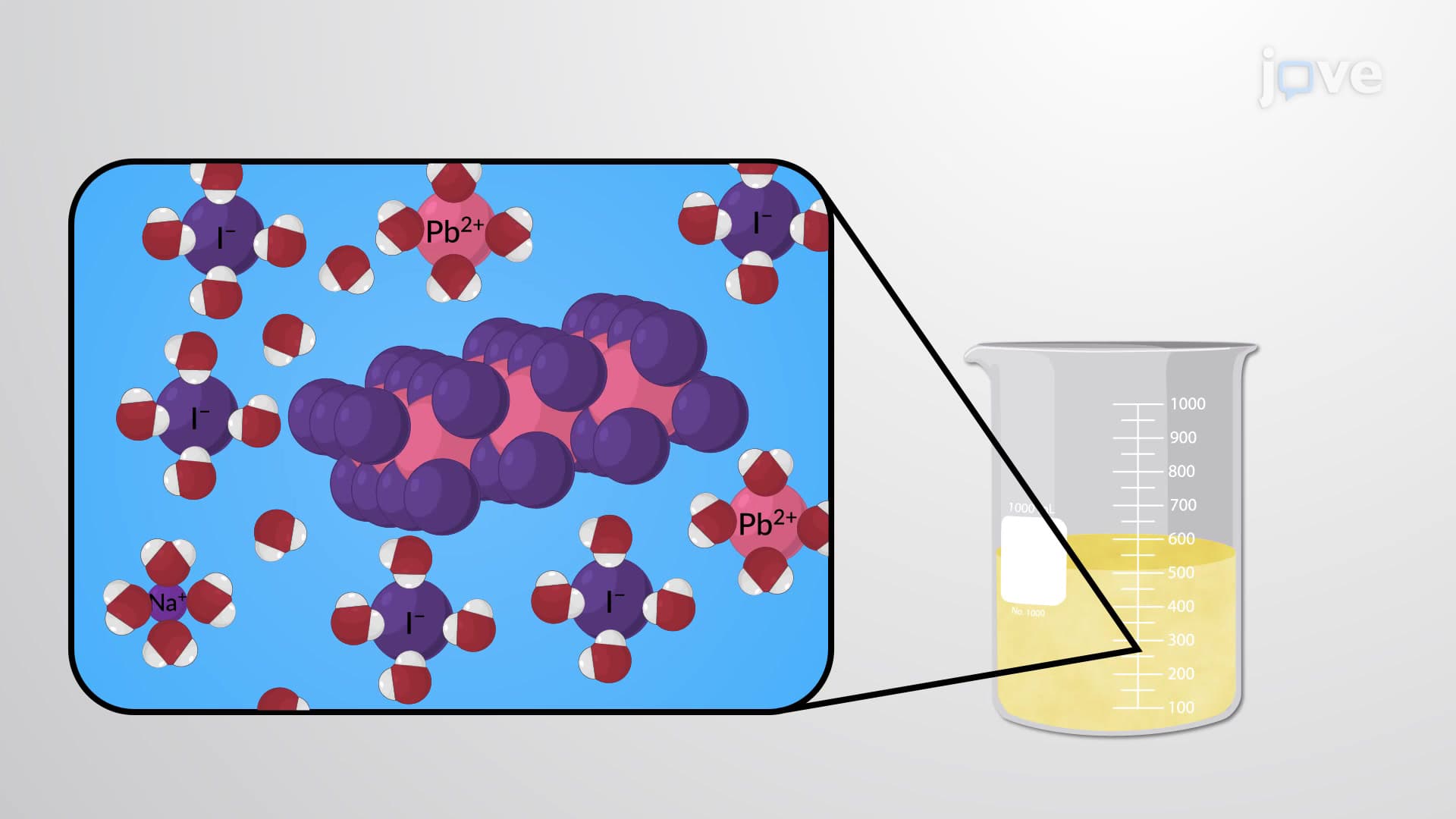

Video Summary: What Is Precipitation of Ions
Ever wonder why mixing two clear solutions can suddenly create a solid? Precipitation of ions occurs when dissolved ions combine to form an insoluble compound that separates from solution as a solid. In water treatment facilities across the US, this principle removes heavy metals like lead from drinking water by converting them into precipitates that can be filtered out. What is precipitation of ions? It's the fundamental process where ionic compounds form and settle out when their solubility limits are exceeded. Watch the full video on JoVE Coach to master this concept with expert-led visuals and step-by-step explanations.
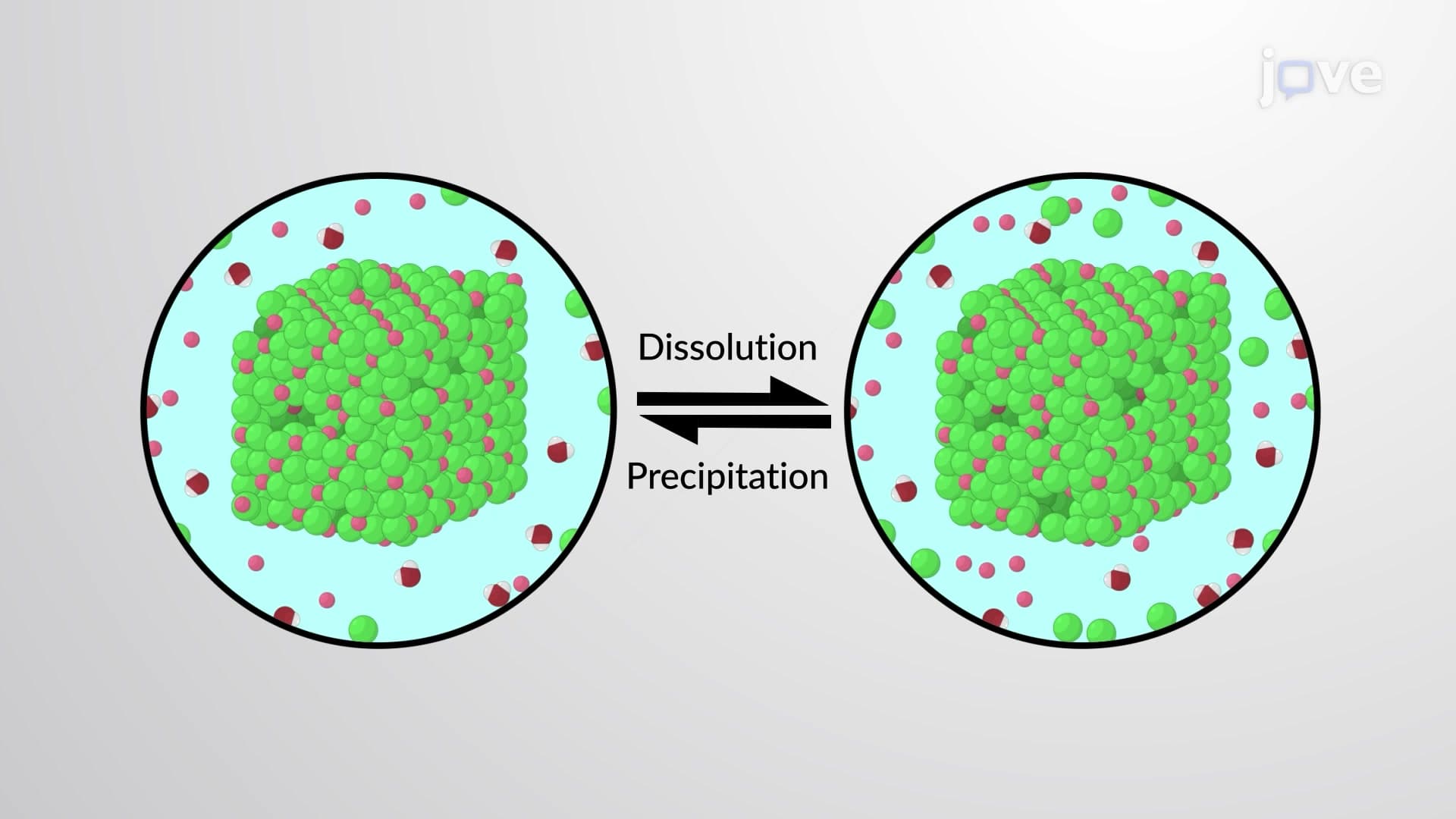
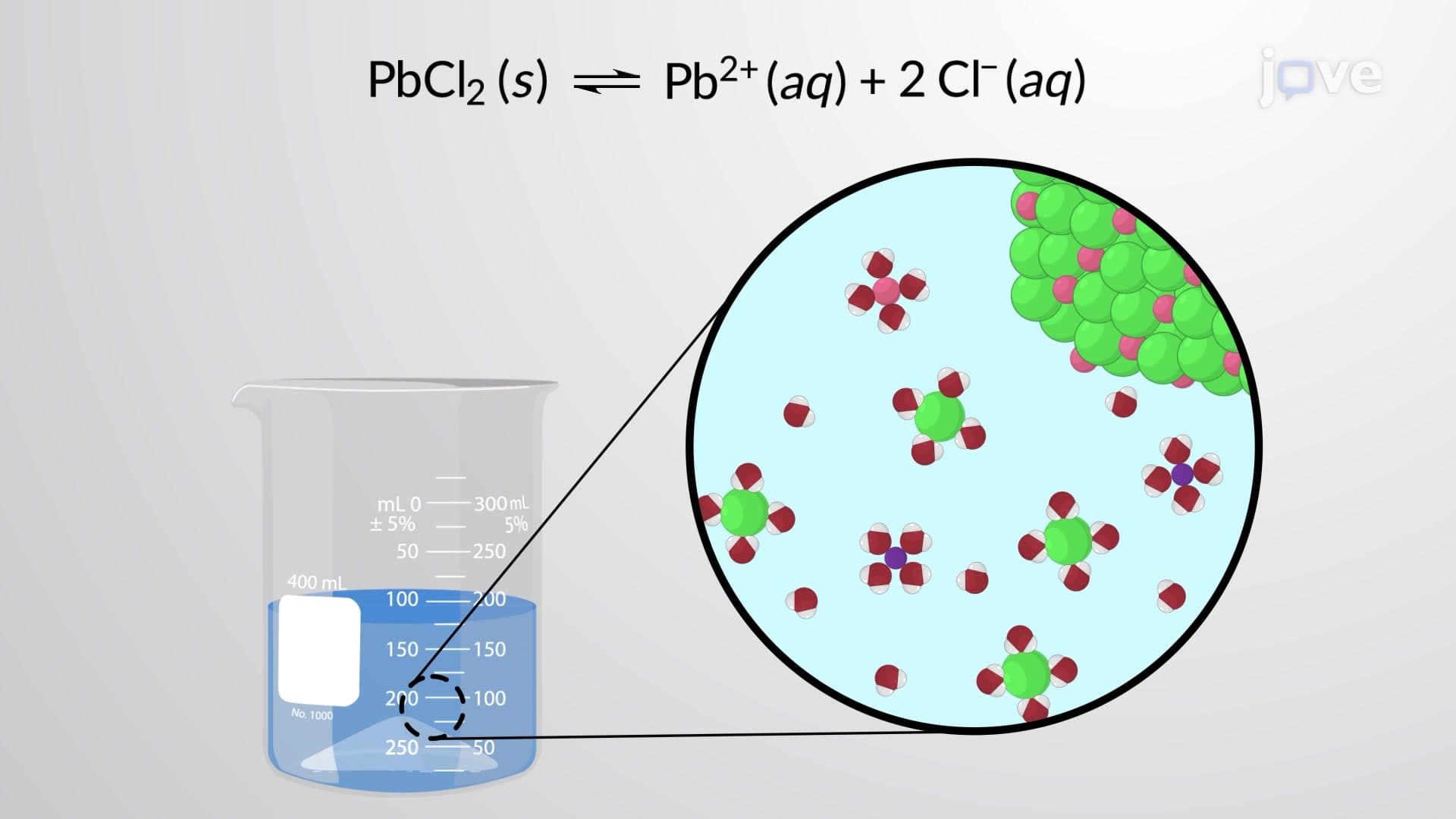
Precipitation of ions represents a fundamental chemical process where dissolved ionic species combine to form an insoluble solid compound that separates from the aqueous solution. This phenomenon occurs when the product of ion concentrations exceeds the compound's solubility limit, triggering the formation of a crystalline precipitate.
The driving force behind precipitation reactions lies in thermodynamic favorability. When two ionic solutions mix, cations and anions can form new combinations. If one of these combinations has extremely low solubility, it will precipitate out. The process involves three key stages: nucleation (initial solid formation), crystal growth, and equilibrium establishment.
Consider the classic example used in AP Chemistry courses: mixing silver nitrate (AgNO₃) with sodium chloride (NaCl). The highly insoluble silver chloride (AgCl) forms immediately as a white precipitate, while sodium nitrate remains dissolved. This reaction demonstrates selective precipitation principles used in analytical chemistry laboratories across US universities.
The reaction quotient (Q) serves as the predictive tool for precipitation. When Q < Ksp, the solution remains unsaturated and no precipitation occurs. At Q = Ksp, the solution reaches saturation with minimal solid present. When Q > Ksp, precipitation actively occurs until equilibrium is restored.
For MCAT preparation, students must master calculating these values. In lead iodide precipitation, if [Pb²⁺] = 1.6 × 10⁻⁴ M and [I⁻] = 4.0 × 10⁻⁴ M, then Q = [Pb²⁺][I⁻]² = 2.6 × 10⁻¹¹. Since Ksp for PbI₂ equals 1.4 × 10⁻⁸, and Q < Ksp, no precipitation occurs.
Precipitation reactions serve critical roles in US industrial processes. Water treatment plants use calcium hydroxide to precipitate heavy metals from contaminated groundwater. The pharmaceutical industry employs selective precipitation to purify drug compounds during manufacturing. Mining operations utilize precipitation to recover valuable metals from ore processing solutions.
Understanding precipitation mechanisms proves essential for college chemistry courses, environmental science programs, and pre-medical studies. Students preparing for standardized tests like the MCAT encounter precipitation problems requiring both conceptual understanding and quantitative analysis skills.
Related Micro-courses