Loading subject page…


797,514 views

Video Summary: What Is Limiting Reactant
Ever wondered why your car stops running even when there's still gas in the tank? The limiting reactant determines exactly how much product forms in any chemical reaction, just like how a missing spark plug limits your engine's performance regardless of fuel availability. In pharmaceutical manufacturing across the United States, companies must identify the limiting reactant to optimize drug production and minimize waste. What is Limiting Reactant becomes crucial for understanding stoichiometry and predicting reaction outcomes in both laboratory and industrial settings. Watch the full video on JoVE Coach to master this concept with expert-led visuals and step-by-step explanations.
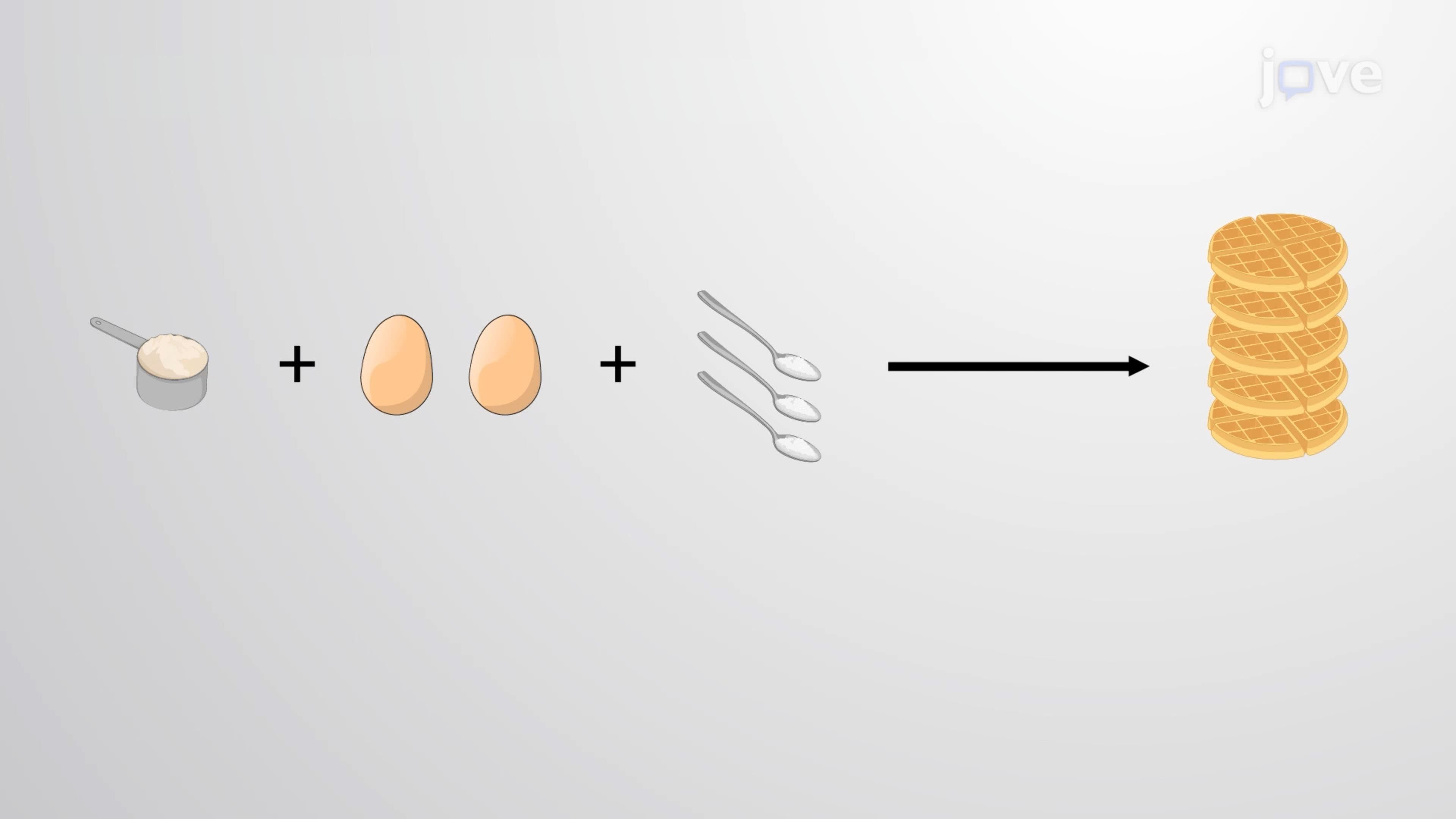
The limiting reactant represents the foundational principle governing all chemical reactions and stoichiometric calculations. Unlike the simple recipe analogy, real chemical processes involve complex molecular interactions where one reactant's depletion completely halts product formation. This concept appears extensively in AP Chemistry exams, college general chemistry courses, and MCAT preparation, making it essential for academic success.
Determining the limiting reactant definition requires systematic comparison of available reactants against stoichiometric requirements. Students must convert given masses to moles using molar masses, then apply mole ratios from balanced equations. For the combustion reaction CH4 + 2O2 → CO2 + 2H2O, comparing reactant availability reveals which species controls product formation. This analytical approach mirrors problem-solving techniques used in pharmaceutical development, where companies like Pfizer and Johnson & Johnson optimize reactant ratios for maximum efficiency.
Understanding limiting reactant extends far beyond classroom calculations into practical applications across American industries. Chemical manufacturing plants in Texas and Louisiana rely on limiting reactant principles to minimize waste and maximize profitability. Environmental engineers use these concepts to design pollution control systems, ensuring complete consumption of harmful reactants. Even food processing companies apply limiting reactant logic when formulating products with specific nutritional profiles.
The limiting reactant concept frequently appears in standardized assessments, including AP Chemistry free-response questions and college placement exams. Students should practice identifying limiting reactants through multiple approaches: comparing theoretical product yields, analyzing mole ratios, and working backwards from desired product quantities. This limiting reactant study guide approach ensures comprehensive understanding necessary for advanced chemistry courses and professional applications in fields like chemical engineering, environmental science, and pharmaceutical research.
Related Micro-courses