Loading video…


 13 Concepts
 797.5K views

Video Summary: What Is Reaction Yield
Ever wonder why pharmaceutical companies can't just make unlimited amounts of medicine from their starting materials? Reaction yield determines how much product actually forms versus how much theoretically should form in any chemical process. Like expecting 100 popcorn pieces from 100 kernels but only getting 65 that actually pop, chemical reactions rarely achieve perfect efficiency. The concept applies everywhere from drug manufacturing at Pfizer to explosives production for mining operations across Colorado. Watch the full video on JoVE Coach to master this concept with expert-led visuals and step-by-step explanations.
Reaction yield represents the efficiency of chemical reactions by comparing how much product actually forms versus the maximum theoretical amount possible. This concept forms the backbone of quantitative chemistry, essential for everything from high school AP Chemistry calculations to pharmaceutical research at companies like Johnson & Johnson.
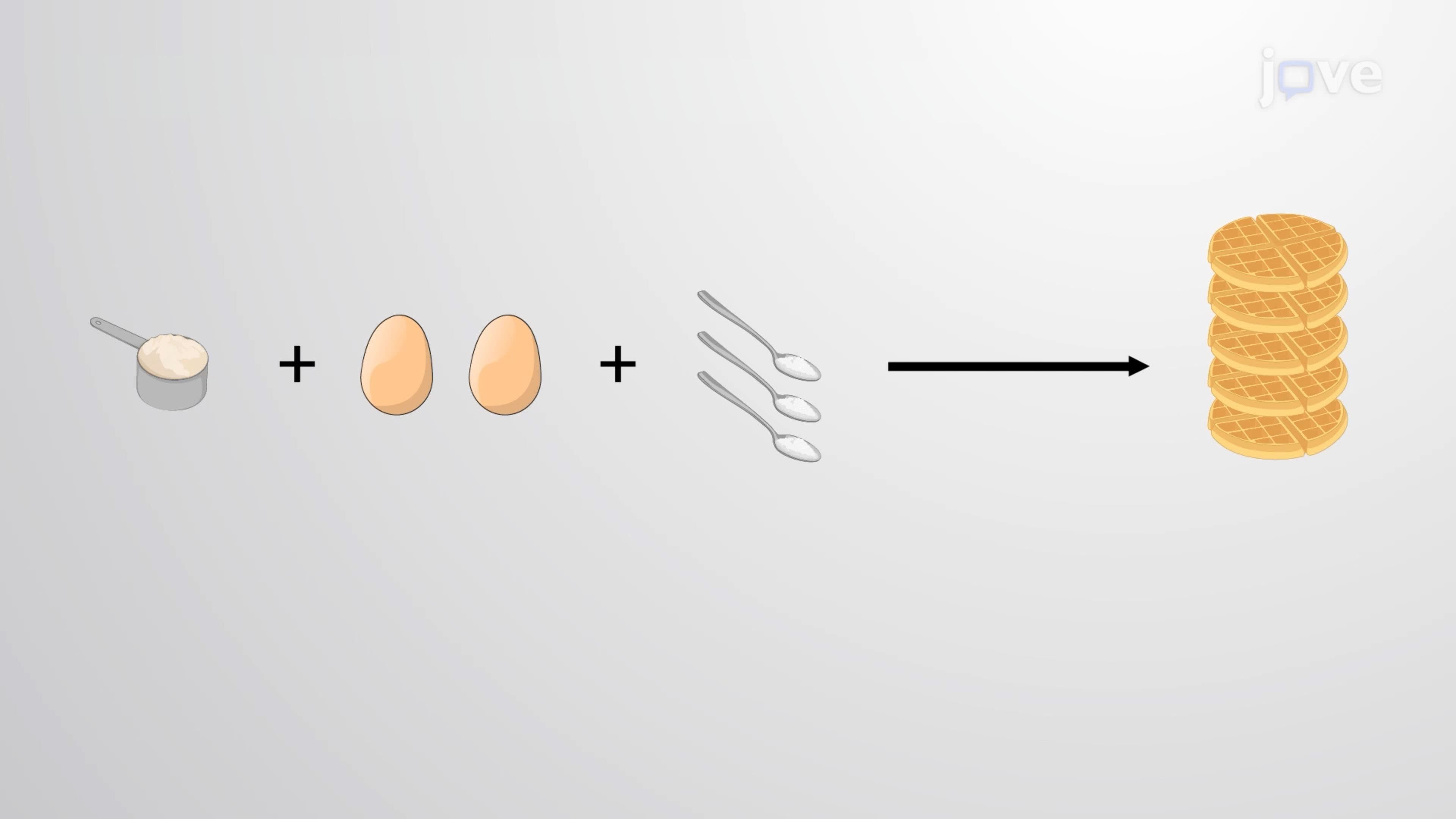
Three distinct types of yield define this concept. Theoretical yield represents the maximum product amount possible if every reactant molecule converts perfectly to product, calculated using stoichiometry and balanced chemical equations. Actual yield measures what researchers actually collect after the reaction concludes, accounting for real-world limitations. Percent yield expresses the ratio of actual to theoretical yield as a percentage, providing a standardized efficiency metric.
Calculating reaction yields requires systematic stoichiometric analysis. Students first identify the limiting reactant-the reagent that runs out first and determines maximum product formation. Using molar masses and balanced equations, chemists convert reactant masses to moles, apply mole ratios to determine theoretical product moles, then convert back to mass units.
For example, in the industrial production of ammonia via the Haber process used by CF Industries Holdings, nitrogen and hydrogen react according to: N₂ + 3H₂ → 2NH₃. If starting with 28g nitrogen and 6g hydrogen, students must determine which reactant limits product formation, calculate theoretical ammonia yield, then compare with actual plant production to determine percent yield.
Chemical manufacturers obsess over yield optimization because even small improvements generate massive profit increases. Pharmaceutical companies like Merck spend billions developing synthetic routes that maximize API (Active Pharmaceutical Ingredient) yields while minimizing waste. Environmental regulations also drive yield improvements, as higher yields mean less reactant waste requiring expensive disposal.
Common factors reducing actual yields include side reactions producing unwanted byproducts, incomplete reactions reaching equilibrium before full conversion, product decomposition during collection, and physical losses during purification. Understanding these limitations helps students appreciate why theoretical calculations rarely match laboratory results.
Reaction yield calculations appear extensively in standardized exams including AP Chemistry, SAT Subject Tests, and college organic chemistry courses. MCAT preparation heavily emphasizes yield calculations within biochemical pathways. Students encounter these concepts in analytical chemistry labs, where yield calculations validate experimental procedures and identify sources of error.
Professional applications span industries from petrochemicals to biotechnology. Process engineers at companies like DowDuPont optimize reaction conditions to maximize yields while minimizing costs. Environmental chemists use yield data to predict pollutant formation, while forensic scientists rely on yield calculations for quantitative analysis in criminal investigations.
Related Micro-courses