Loading video…


 15 Concepts
 774.4K views

Video Summary: Electron Configuration of Multielectron Atoms Explained
Ever wondered why sodium street lights glow bright orange while copper produces blue-green flames? The electron configuration of multielectron atoms determines these distinctive colors by controlling how electrons occupy atomic orbitals. Using principles like the Pauli exclusion principle and Hund's rule, chemists can predict electron arrangements in complex atoms like those found in lithium-ion batteries powering millions of American smartphones. Understanding electron configuration of multielectron atoms explained helps decode atomic behavior and chemical properties. Watch the full video on JoVE Coach to master this concept with expert-led visuals and step-by-step explanations.
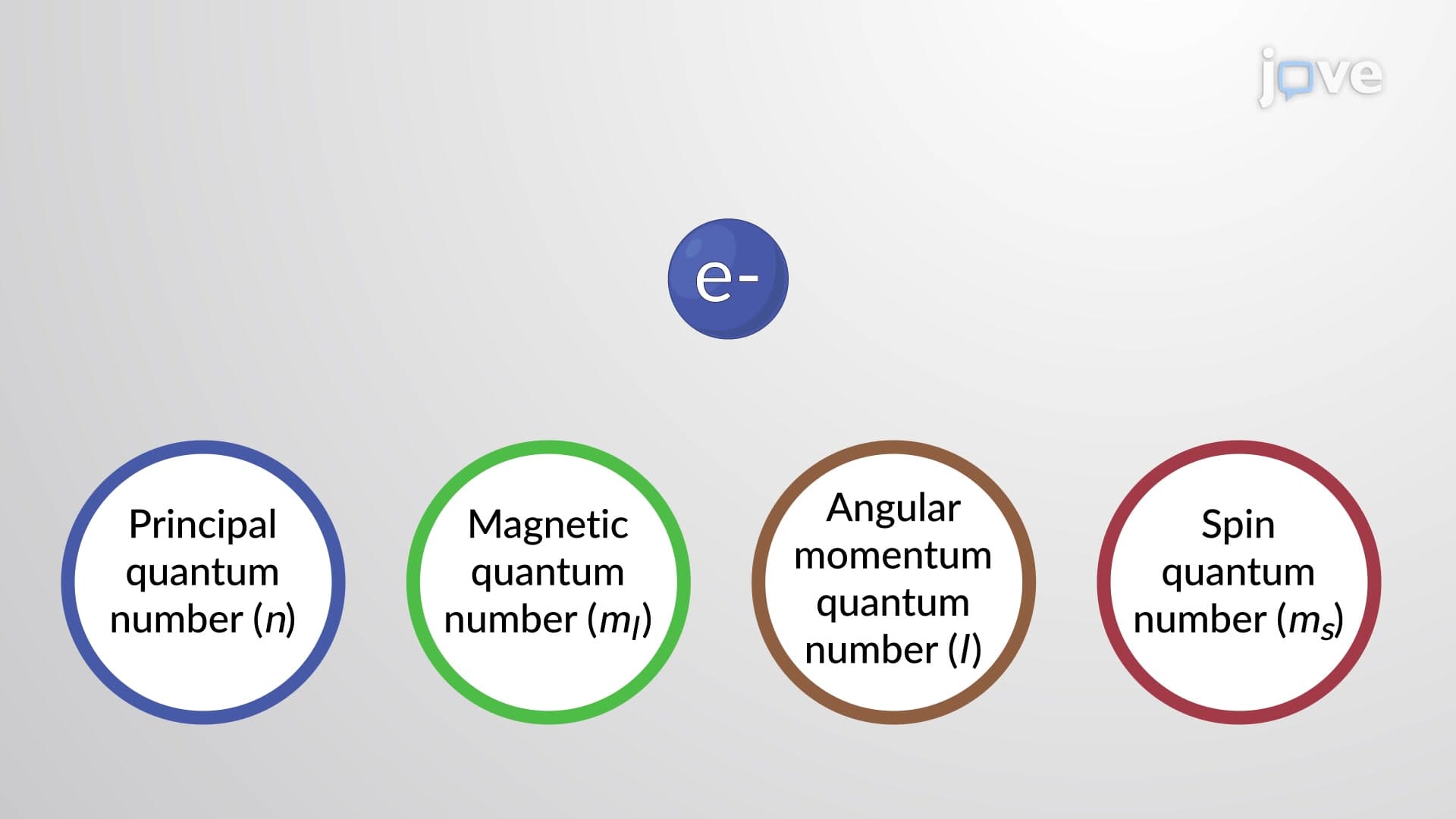
The electron configuration of multielectron atoms builds upon three fundamental principles that govern how electrons occupy atomic orbitals. Unlike hydrogen's single electron, multielectron atoms require careful consideration of electron-electron repulsion and nuclear attraction. The Pauli exclusion principle ensures no two electrons share identical quantum numbers, while Hund's rule maximizes unpaired electrons in degenerate orbitals before pairing occurs. The aufbau principle provides the general filling order, though real atoms often deviate from this idealized sequence.
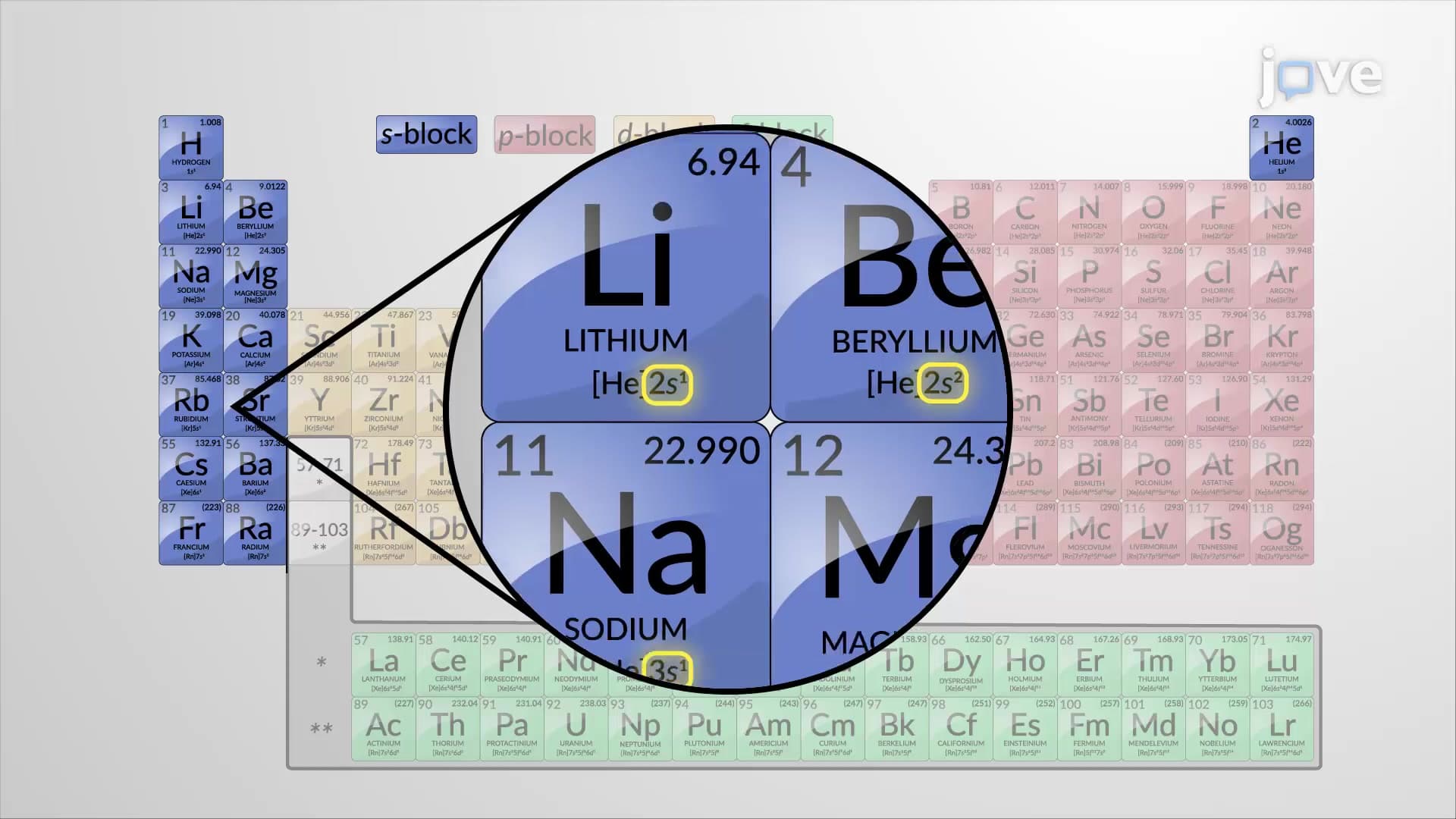
Noble gas core notation revolutionizes how we represent electron configurations for heavier elements. Instead of writing sodium's full configuration (1s² 2s² 2p⁶ 3s¹), chemists use [Ne]3s¹, where neon represents the stable core electrons. This approach proves invaluable on AP Chemistry exams and college coursework, where students must quickly determine valence electrons. The technique works because noble gases represent completed electron shells, providing stable reference points throughout the periodic table.
Transition metals present fascinating exceptions to standard filling patterns, particularly relevant for pre-med students preparing for the MCAT. Chromium adopts [Ar]4s¹3d⁵ rather than the expected [Ar]4s²3d⁴ because half-filled d orbitals provide extra stability. Similarly, copper prefers [Ar]4s¹3d¹⁰ over [Ar]4s²3d⁹ due to the stability of completely filled d orbitals. These anomalies occur when 3d and 4s orbital energies become nearly equal, making electron configuration predictions challenging without experimental verification.
The lanthanide series demonstrates the ultimate complexity in electron configuration, where 4f, 5d, and 6s orbitals exhibit remarkably similar energies. Cerium's unusual [Xe]6s²4f¹5d¹ configuration exemplifies this phenomenon, deviating from simple aufbau predictions. These elements prove crucial in modern technology applications, from smartphone screens using europium phosphors to MRI contrast agents containing gadolinium. Understanding their electron configurations helps explain their unique magnetic and optical properties essential in American manufacturing and medical industries.
Related Micro-courses