Loading subject page…

- Chemistry
- Electronic Structure of Atoms
- Interference and Diffraction
Micro-course: Electronic Structure of Atoms
774,415 views
Learn key concepts and earn your certificate.




Interference and Diffraction

00:00
02:18
Video Summary: What Is Interference and Diffraction
Ever wonder why noise-canceling headphones can magically silence airplane engines, or how doctors use ultrasound to see inside your body? Interference and diffraction are wave phenomena that make these technologies possible, occurring when waves interact with each other and obstacles in their path. From MIT's laser laboratories to Stanford's acoustic research facilities, scientists harness these principles to develop everything from medical imaging to wireless communication systems. Watch the full video on JoVE Coach to master this concept with expert-led visuals and step-by-step explanations.
- Understand what is interference and diffraction and how these fundamental wave behaviors govern countless natural and technological phenomena
- Identify the differences between constructive and destructive interference patterns in various wave types
- Analyze how waves bend and spread when encountering obstacles or apertures of different sizes
- Compare in-phase and out-of-phase wave interactions and their resulting amplitude changes
- Evaluate the conditions necessary for observable diffraction effects in real-world scenarios
- Apply interference principles to explain double-slit experiment results and wave-particle duality
- Recognize practical applications of these concepts in medical imaging, acoustics, and optical technologies
- Explore the mathematical relationships governing wave superposition and path difference calculations
Understanding What is Interference And Diffraction
Interference and diffraction represent two cornerstone concepts in wave physics that explain how waves behave when they encounter other waves or obstacles. While often studied together, these phenomena describe distinctly different aspects of wave behavior that students encounter throughout their physics education, from high school AP Physics courses to college-level engineering programs.
Wave Interference: When Waves Meet
Wave interference occurs when two or more waves occupy the same space simultaneously, creating a new wave pattern through superposition. This principle governs everything from the acoustic design of concert halls at Juilliard to the laser interferometers used in LIGO's gravitational wave detection facilities.
Constructive interference happens when waves align "in phase"-their crests and troughs coincide perfectly. The resulting wave exhibits enhanced amplitude, explaining why multiple speakers can amplify sound or why certain radio frequencies become stronger when signals combine. Students often observe this in laboratory settings using ripple tanks or laser demonstrations.
Destructive interference occurs when waves are "out of phase," with one wave's crest aligning with another's trough. This principle enables noise-canceling technology and explains why certain seating areas in auditoriums experience acoustic "dead zones." When waves are perfectly out of phase with equal amplitudes, complete cancellation results-a phenomenon crucial in modern noise-reduction applications.
Diffraction: Waves Bending Around Obstacles
Diffraction describes how waves bend around obstacles or spread through apertures, particularly when the obstacle or opening size approaches the wavelength. This behavior explains why you can hear conversations around corners but cannot see around them-sound waves (longer wavelength) diffract more readily than light waves (shorter wavelength).
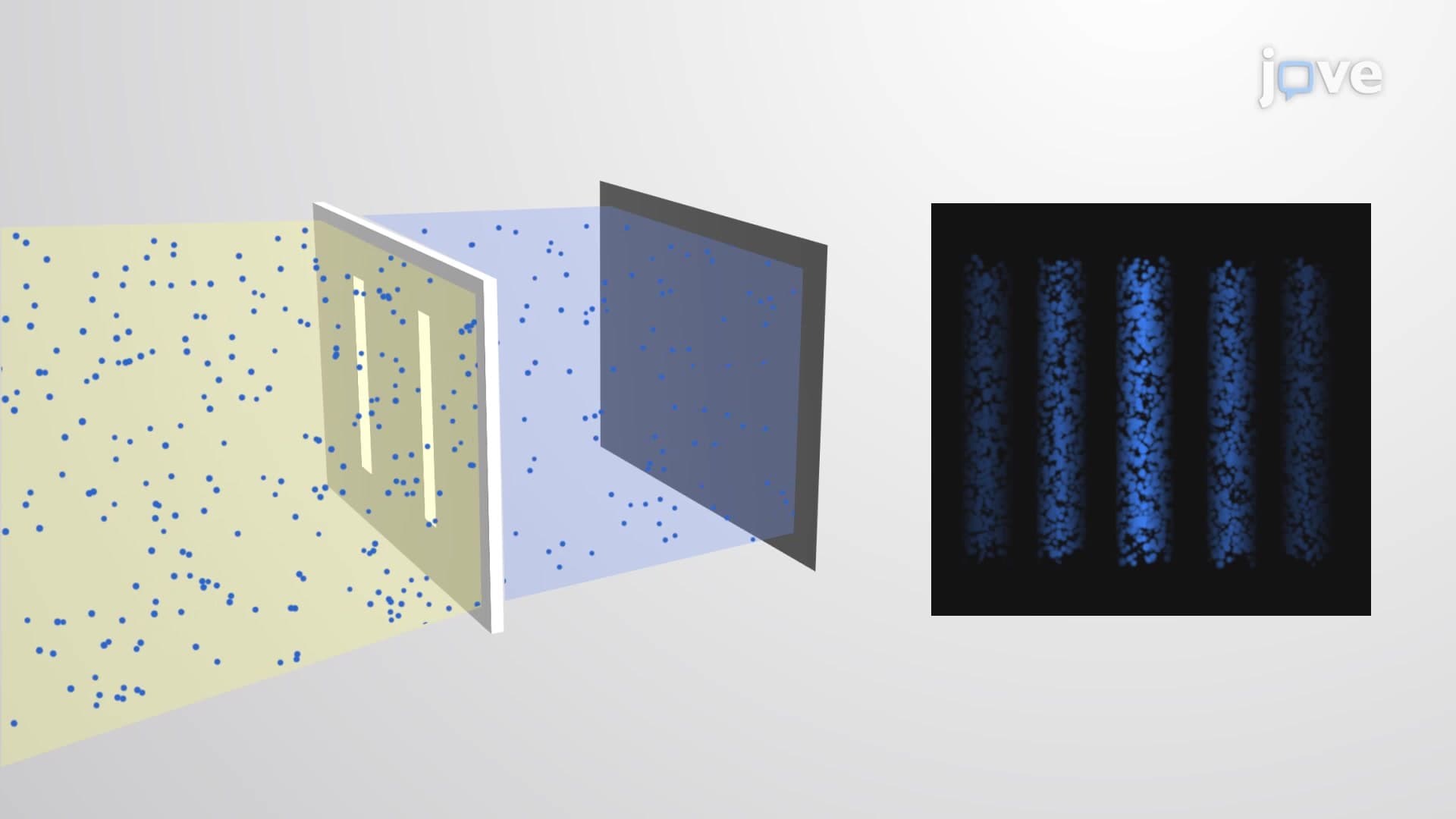
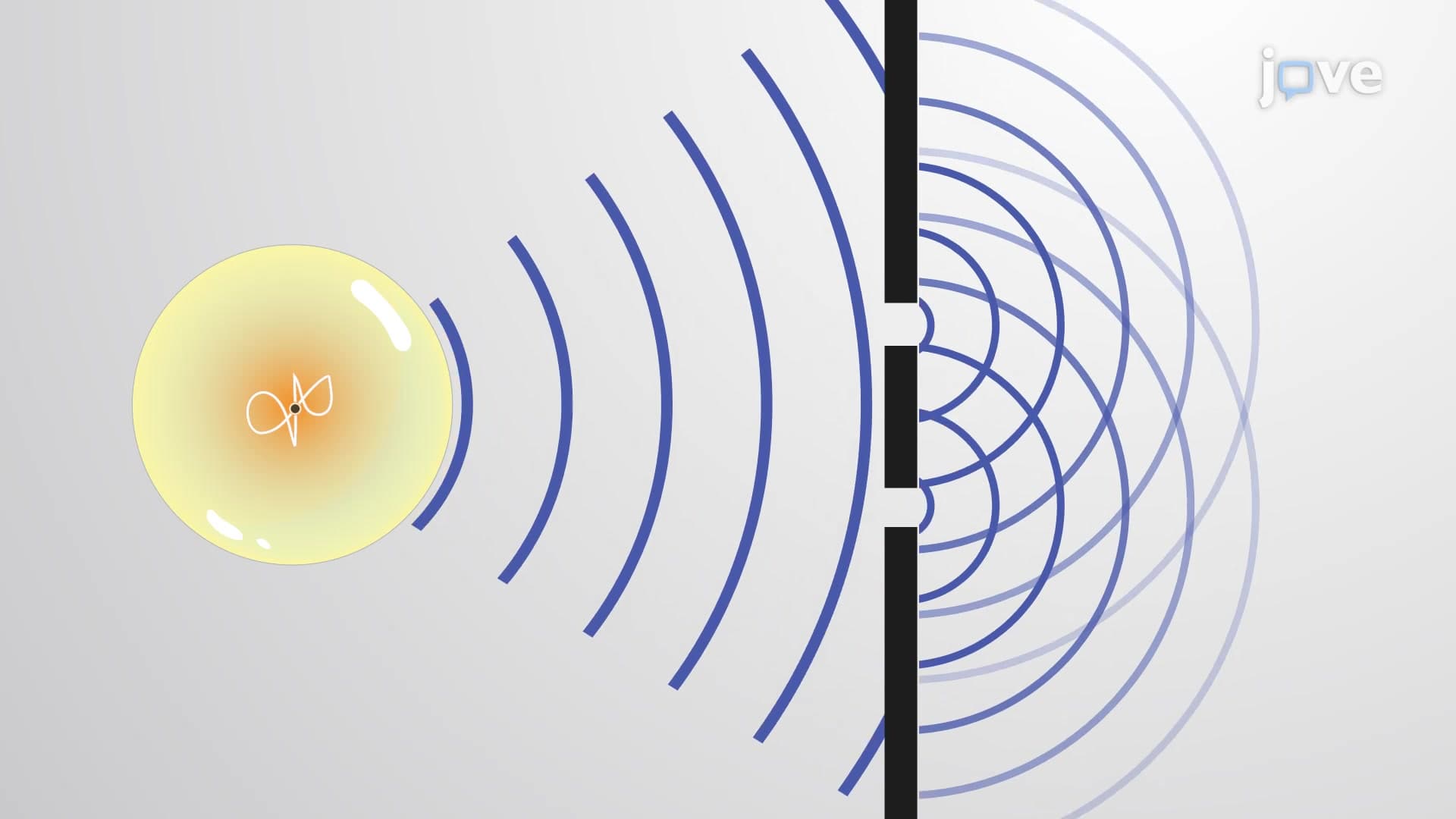
The classic double-slit experiment, first performed by Thomas Young and now replicated in physics labs across American universities, demonstrates both diffraction and interference simultaneously. When coherent light passes through two narrow slits, each slit acts as a new wave source, creating overlapping wave patterns that interfere to produce alternating bright and dark bands.
Practical Applications and Exam Relevance
These concepts appear frequently on standardized tests including AP Physics, SAT Subject Tests, and college entrance exams. Students should understand that path difference determines interference patterns-when waves travel different distances to reach a point, their phase relationship changes predictably. Medical ultrasound, radar systems, and optical instruments all rely on interference and diffraction principles, making this knowledge essential for pre-med, engineering, and physics majors.
Frequently Asked Questions
Interference is what happens when two or more waves meet and either strengthen (constructive) or weaken (destructive) each other by combining their amplitudes. Diffraction is the bending and spreading of waves when they encounter obstacles or pass through openings similar in size to their wavelength. Both phenomena demonstrate the wave nature of light, sound, and other forms of energy.
AP Physics frequently tests these concepts through double-slit experiment problems, asking students to calculate fringe spacing, identify bright/dark regions, and explain wave-particle duality. You'll encounter questions about path differences, wavelength relationships, and real-world applications like diffraction gratings. The MCAT also includes these topics in its physics section, particularly relating to medical imaging technologies.
College exams distinguish these concepts more rigorously than high school courses. Interference problems focus on wave superposition mathematics and phase relationships, while diffraction emphasizes geometric optics and aperture size effects. Midterm questions often combine both phenomena, requiring students to analyze complex wave patterns using both principles simultaneously.
Medical ultrasound relies on interference patterns to create detailed images of internal organs-sound waves reflect off tissue boundaries and interfere constructively or destructively to form the images displayed on monitors. MRI machines use diffraction principles in their gradient coils, while optical coherence tomography (OCT) uses light interference to image retinal structures in ophthalmology practices across the United States.
These concepts are very manageable with proper foundation in basic wave properties like wavelength, frequency, and amplitude. Most students successfully master these topics in AP Physics or introductory college courses. The key is visualizing wave interactions through demonstrations and practice problems rather than relying solely on mathematical formulas.
Focus on understanding path difference calculations and phase relationships rather than memorizing formulas. Practice drawing wave diagrams showing constructive and destructive interference, work through double-slit problems systematically, and connect mathematical results to physical observations. Create concept maps linking interference to real applications like noise cancellation and optical instruments.
Consider exploring polarization, electromagnetic wave propagation, and quantum mechanics applications. Advanced courses in optics, acoustics, and wave mechanics build directly on these foundational concepts. Engineering students often progress to topics like antenna theory and signal processing, while pre-med students benefit from understanding medical imaging physics.
The double-slit experiment creates interference fringes that are impossible to explain if light were purely particle-like. When light passes through two slits, it creates alternating bright and dark bands-evidence that light waves from each slit interfere constructively and destructively. This wave behavior coexists with light's particle properties, demonstrating wave-particle duality fundamental to modern physics.
Related Micro-courses