Loading subject page…


774,416 views

Video Summary: What Is Quantum Numbers
Ever wondered how scientists can pinpoint an electron's location in an atom smaller than anything visible to the naked eye? Quantum numbers serve as the precise address system that describes exactly where electrons reside around atomic nuclei. Just like how GPS coordinates help locate your position anywhere in the United States, these four mathematical values map electron positions in three-dimensional space around atoms. Watch the full video on JoVE Coach to master this concept with expert-led visuals and step-by-step explanations.
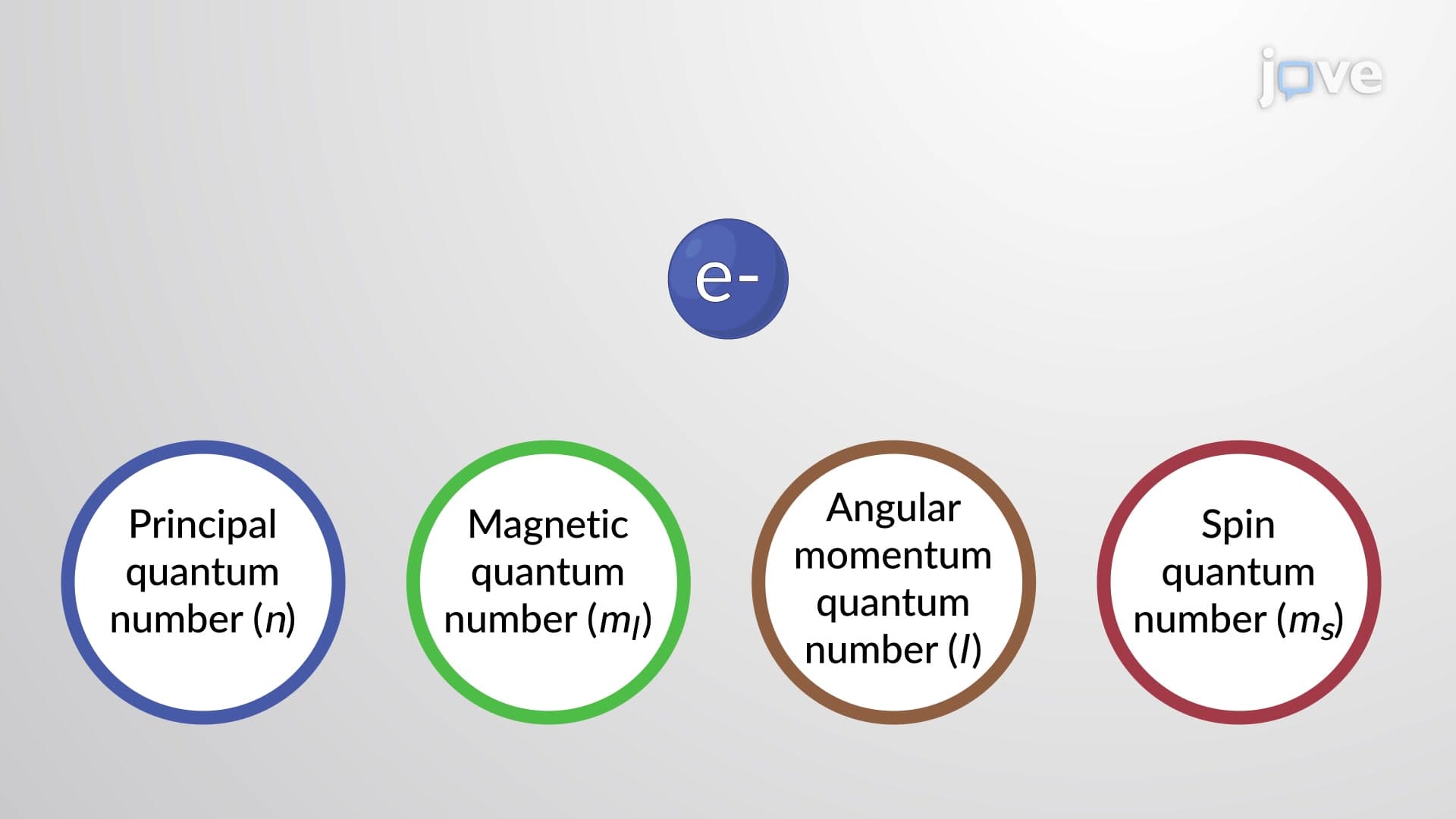
Quantum numbers represent one of chemistry's most elegant solutions to describing the seemingly impossible: the exact location and properties of electrons moving at incredible speeds around atomic nuclei. These four numerical values work together like a sophisticated coordinate system, providing chemists and physicists with precise information about electron behavior in atoms.
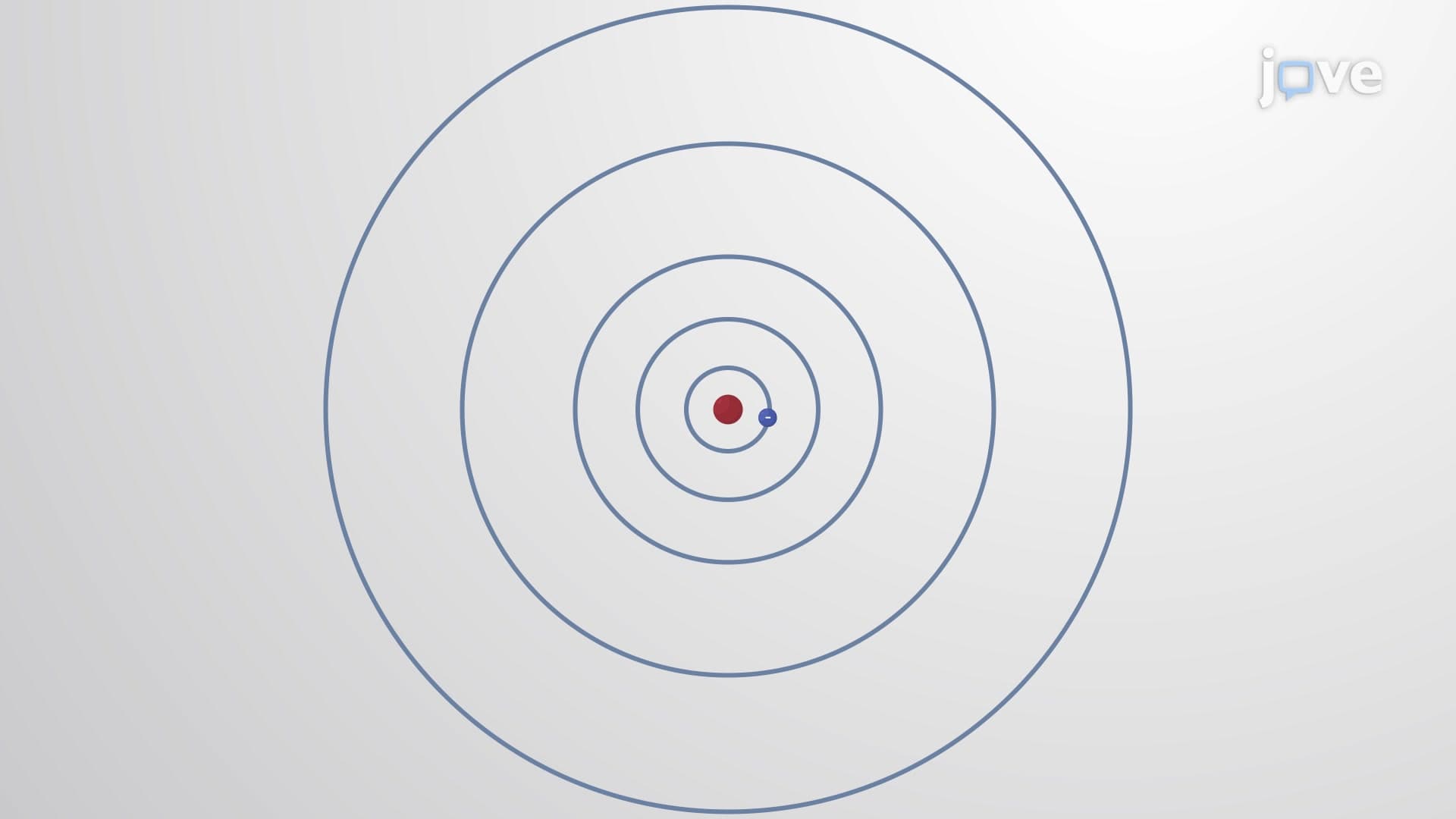
The principal quantum number (n) functions as the primary address for electrons, indicating which energy level or "shell" an electron occupies. With integer values starting from 1, this number directly correlates to an electron's energy and its average distance from the nucleus. Students preparing for AP Chemistry exams often visualize this concept by imagining electrons traveling on different highway levels around a city center-the higher the highway number, the farther from downtown.
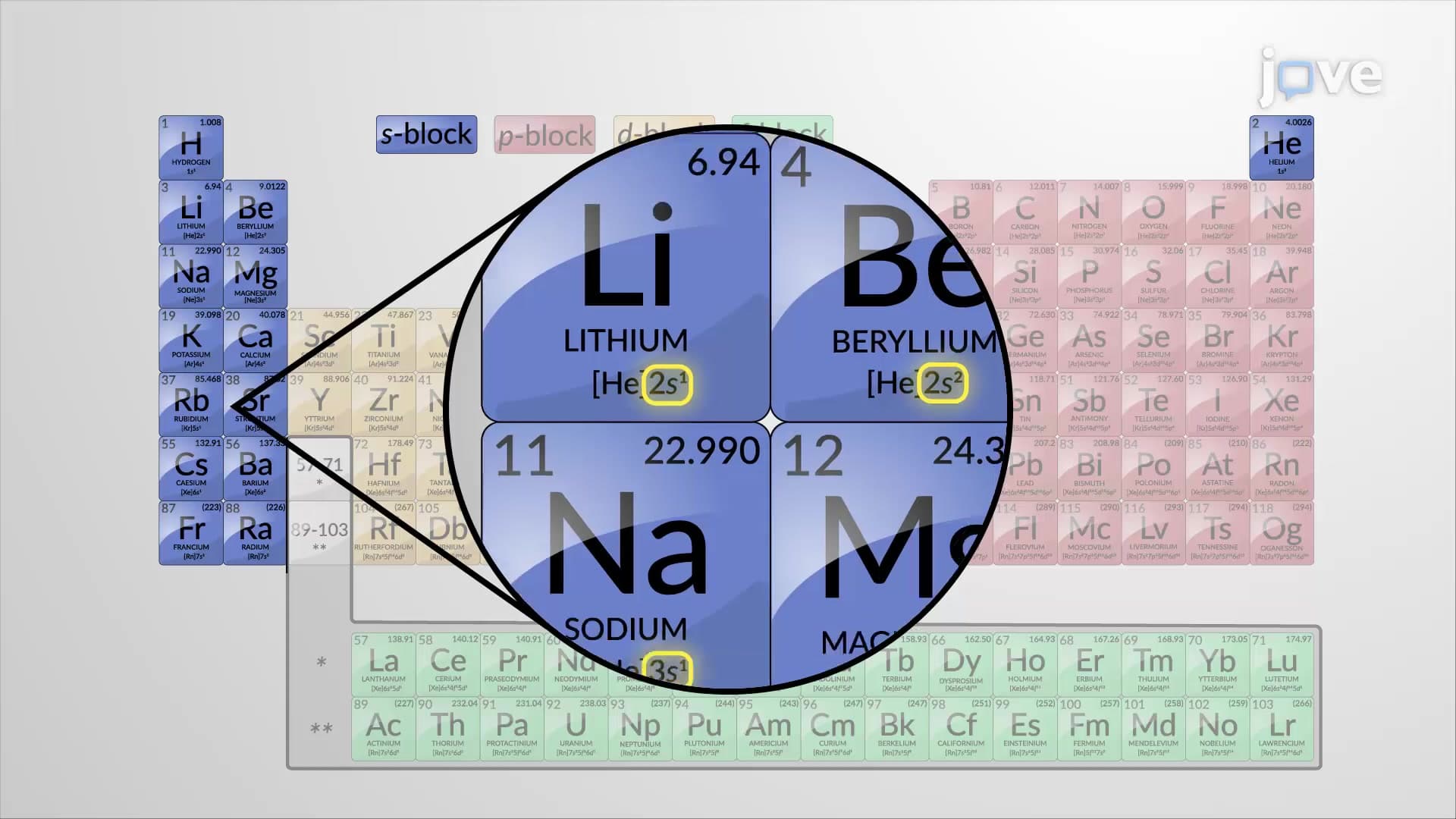
In practical applications, understanding principal quantum numbers proves essential for predicting atomic properties. For instance, when analyzing why sodium readily loses an electron to form Na+ ions, the answer lies in sodium's outermost electron occupying the n=3 level, making it relatively easy to remove compared to electrons closer to the nucleus.
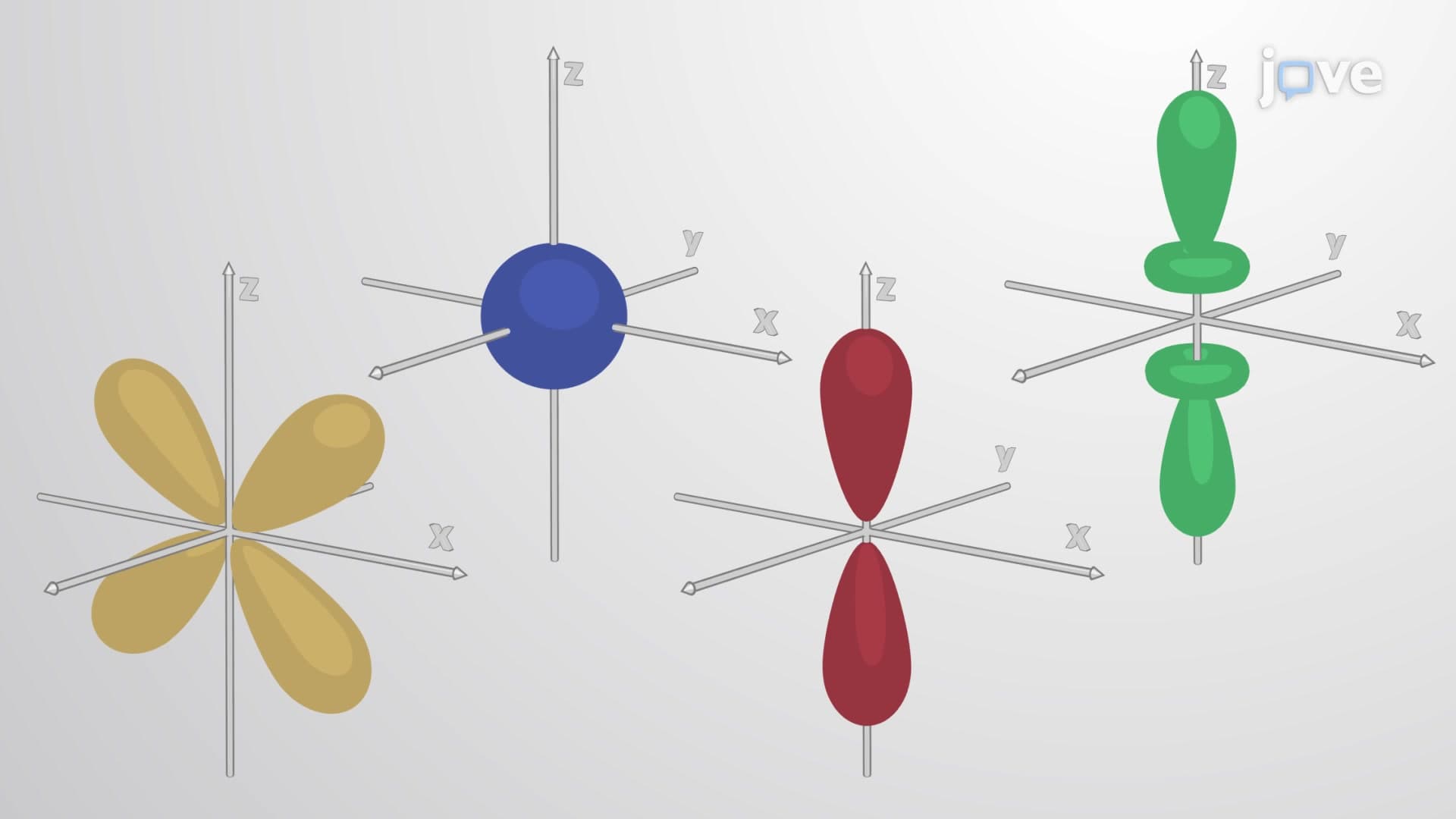
The angular momentum quantum number (l) determines the three-dimensional shape of the region where electrons are most likely found, called orbitals. These shapes-spherical s orbitals, dumbbell-shaped p orbitals, and more complex d and f orbitals-directly influence how atoms bond and interact with each other.
This concept becomes particularly relevant when studying organic chemistry mechanisms taught in college-level courses. The directional nature of p orbitals, for example, explains why carbon forms tetrahedral arrangements in methane, a fundamental principle underlying all organic molecule structures.
The magnetic quantum number (ml) specifies the exact orientation of orbitals in space, determining how many orbitals exist within each subshell. This quantum number proves crucial for understanding electron configuration patterns that appear frequently on MCAT chemistry sections.
Electron spin (ms) represents the intrinsic angular momentum of electrons, with only two possible values: +1/2 and -1/2. This quantum property enables the Pauli exclusion principle, which states that no two electrons in an atom can share identical quantum number sets-a rule that governs all chemical bonding and periodic table organization.
Related Micro-courses