Loading subject page…


774,425 views

Video Summary: What Is the Bohr Model
Ever wonder why neon signs glow with distinct colors, or how scientists first cracked the mystery of atomic structure? The Bohr model revolutionized our understanding of atoms by proposing that electrons orbit the nucleus in fixed energy levels, much like planets around the sun. This groundbreaking theory explains why hydrogen atoms emit specific wavelengths of light-the same principle behind the bright red glow in exit signs across American buildings. Watch the full video on JoVE Coach to master this concept with expert-led visuals and step-by-step explanations.
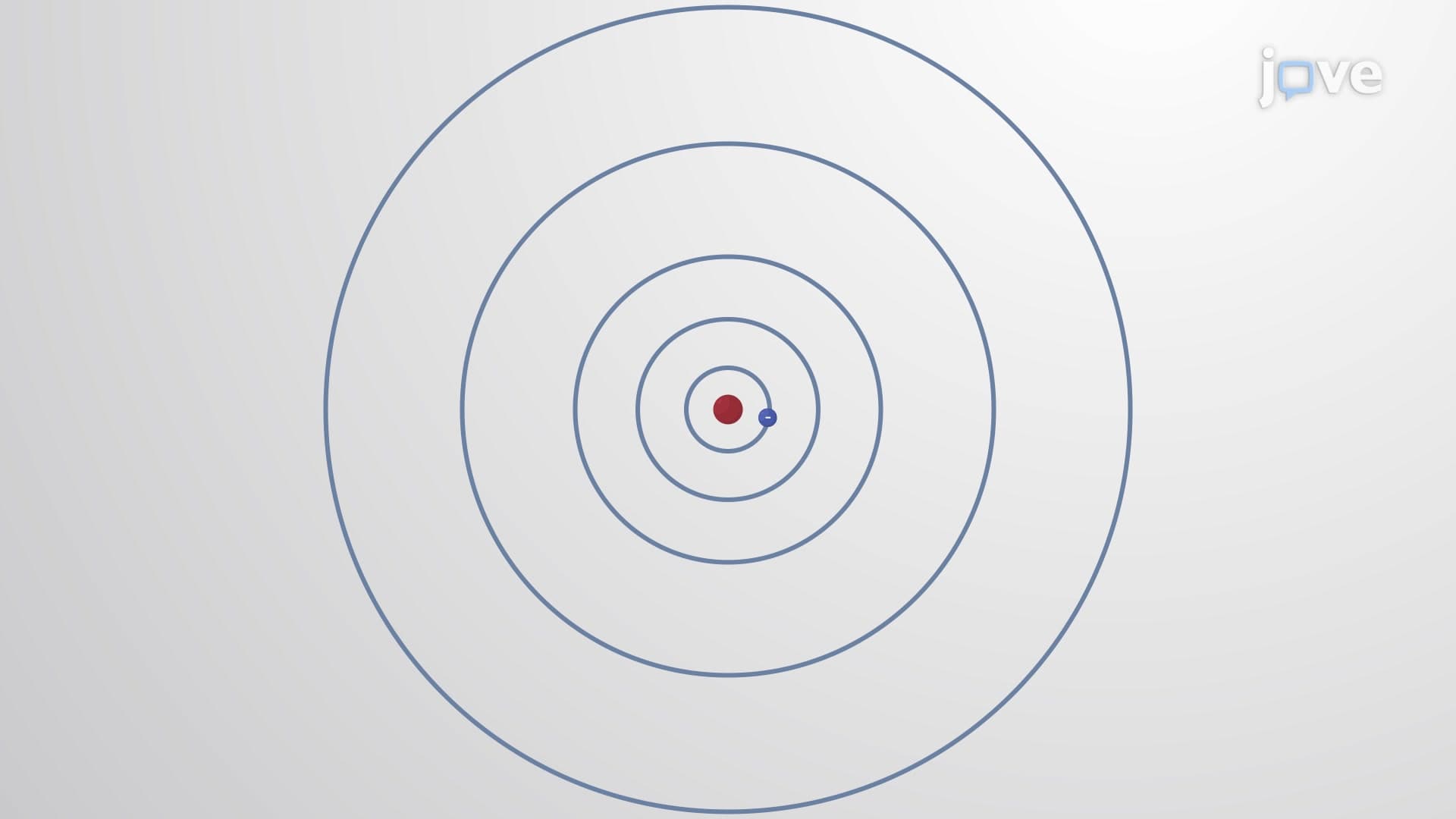
The Bohr model emerged in 1913 when Danish physicist Niels Bohr solved a critical problem in atomic theory. Classical physics predicted that electrons orbiting a nucleus should continuously lose energy and spiral inward, causing atoms to collapse-yet atoms remain stable. Bohr's revolutionary solution proposed that electrons occupy only specific, quantized orbits around the nucleus, similar to how planets have fixed orbits around the sun.
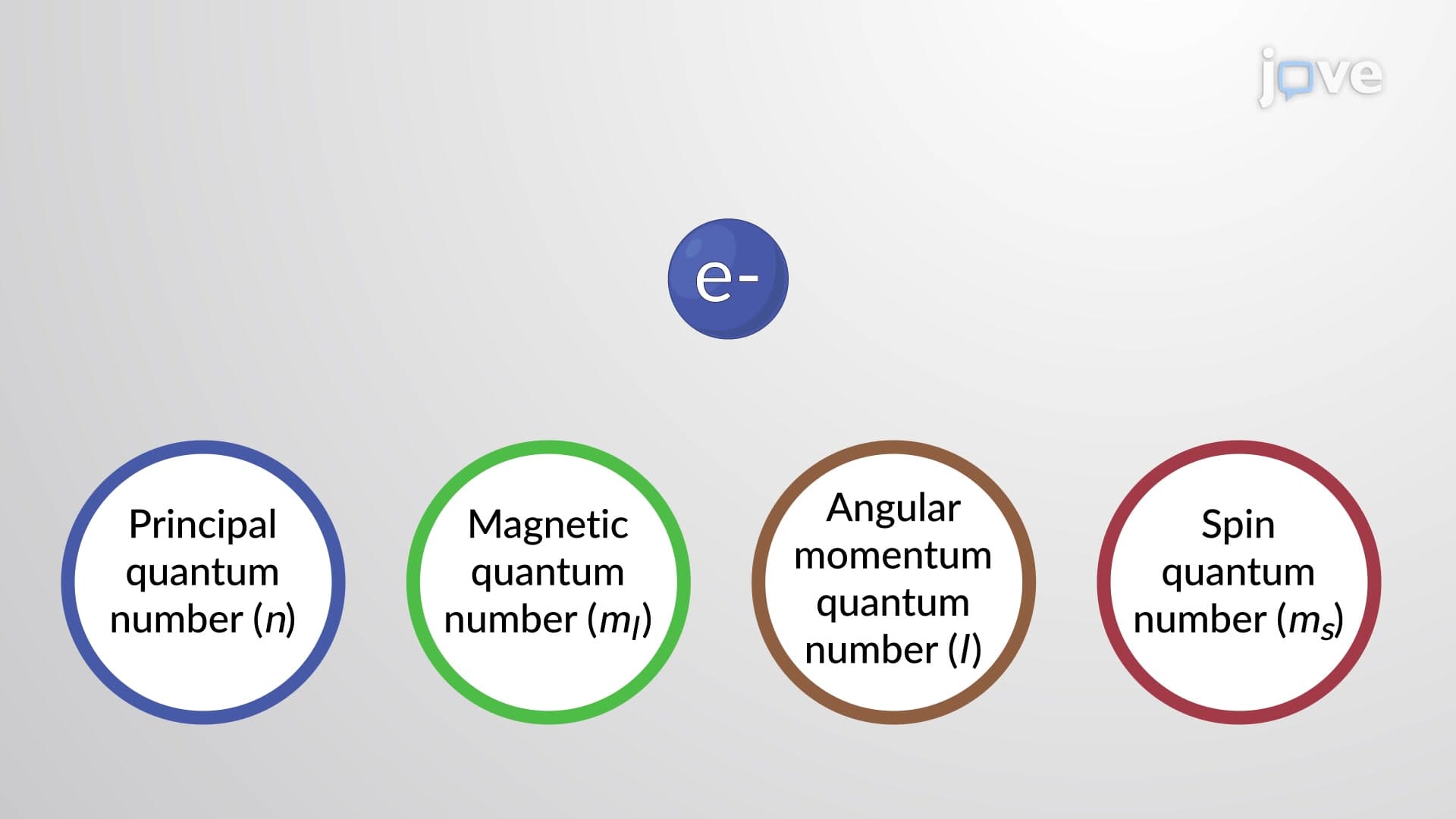
In the Bohr model, each allowed orbit corresponds to a principal quantum number (n), where n = 1, 2, 3, and so forth. The innermost orbit (n = 1) represents the ground state-the electron's lowest possible energy level. As n increases, the orbital radius expands and the electron's energy increases. This quantization means electrons cannot exist between these defined energy levels, only at specific, discrete positions.
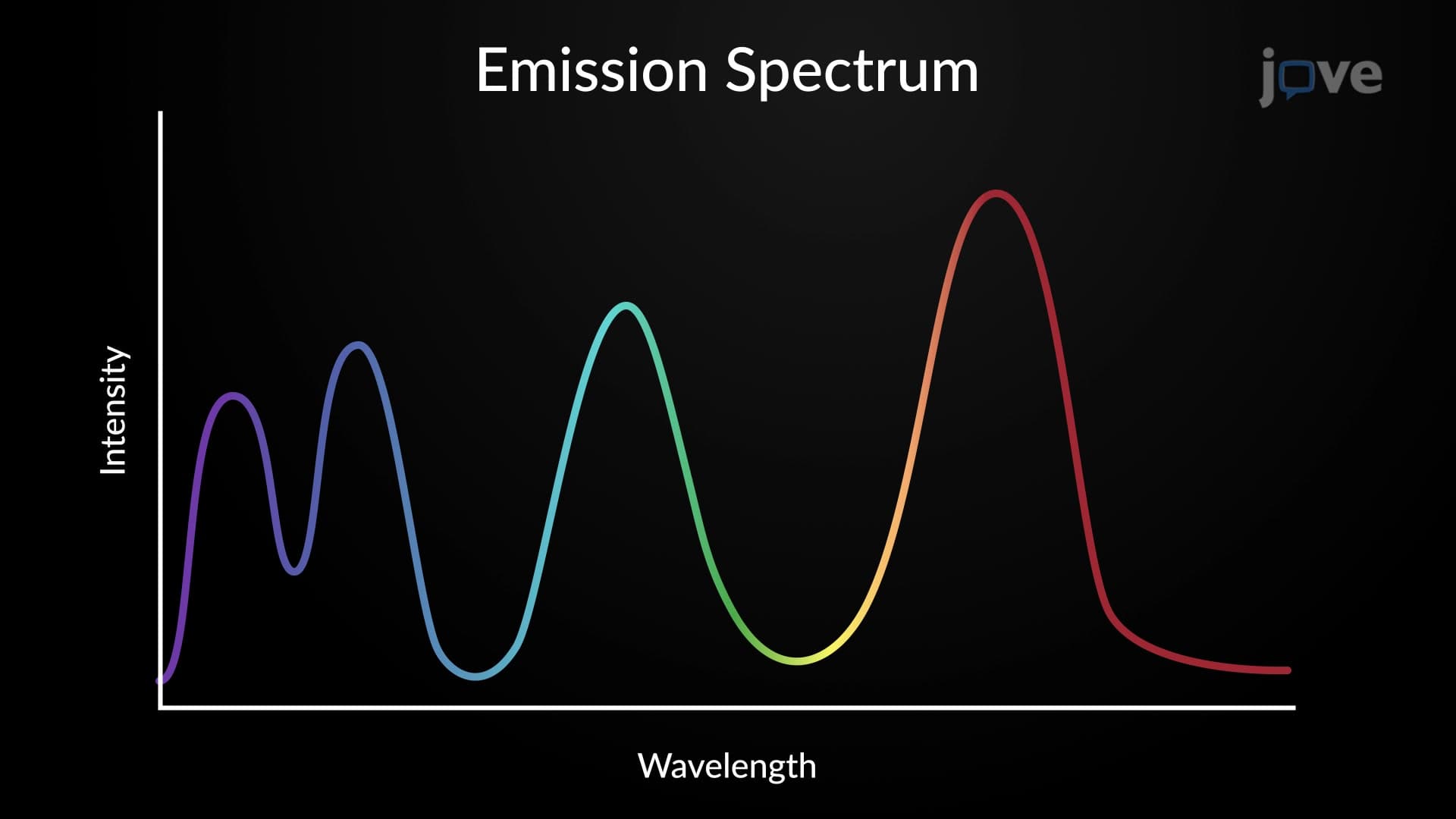
When electrons absorb energy from sources like heat or electrical discharge, they "jump" to higher energy levels (excited states). However, these excited states are unstable. Electrons quickly return to lower energy levels, releasing excess energy as photons of light. The energy difference between initial and final states determines the photon's wavelength and color. This principle explains the distinct colors in fireworks, where different elements produce characteristic emission spectra.
The Bohr model appears extensively in AP Chemistry and college-level physical chemistry courses. Students encounter it when studying atomic structure, electromagnetic radiation, and quantum mechanics fundamentals. While modern quantum mechanical models have superseded Bohr's theory, it remains invaluable for understanding basic atomic behavior and serves as a stepping stone to more complex concepts. The model's limitations-primarily its accuracy only for hydrogen-like atoms-actually help students appreciate the evolution of scientific understanding and the need for more sophisticated quantum mechanical approaches.
Related Micro-courses