Loading video…


 15 Concepts
 774.4K views

Video Summary: What Is the Pauli Exclusion Principle
Ever wonder why atoms don't collapse with all their electrons crowded into the lowest energy level? The Pauli exclusion principle explains this fundamental rule of atomic structure, preventing electrons from occupying identical quantum states within an atom. This principle governs electron behavior in everything from the semiconductors in your smartphone to the chemical bonds in DNA. Watch the full video on JoVE Coach to master this concept with expert-led visuals and step-by-step explanations.
The Pauli exclusion principle stands as one of quantum mechanics' most fundamental rules, dictating that no two electrons within a single atom can possess identical sets of all four quantum numbers. Named after Austrian physicist Wolfgang Pauli, this principle explains why matter has structure and why atoms don't collapse into infinitely dense points.
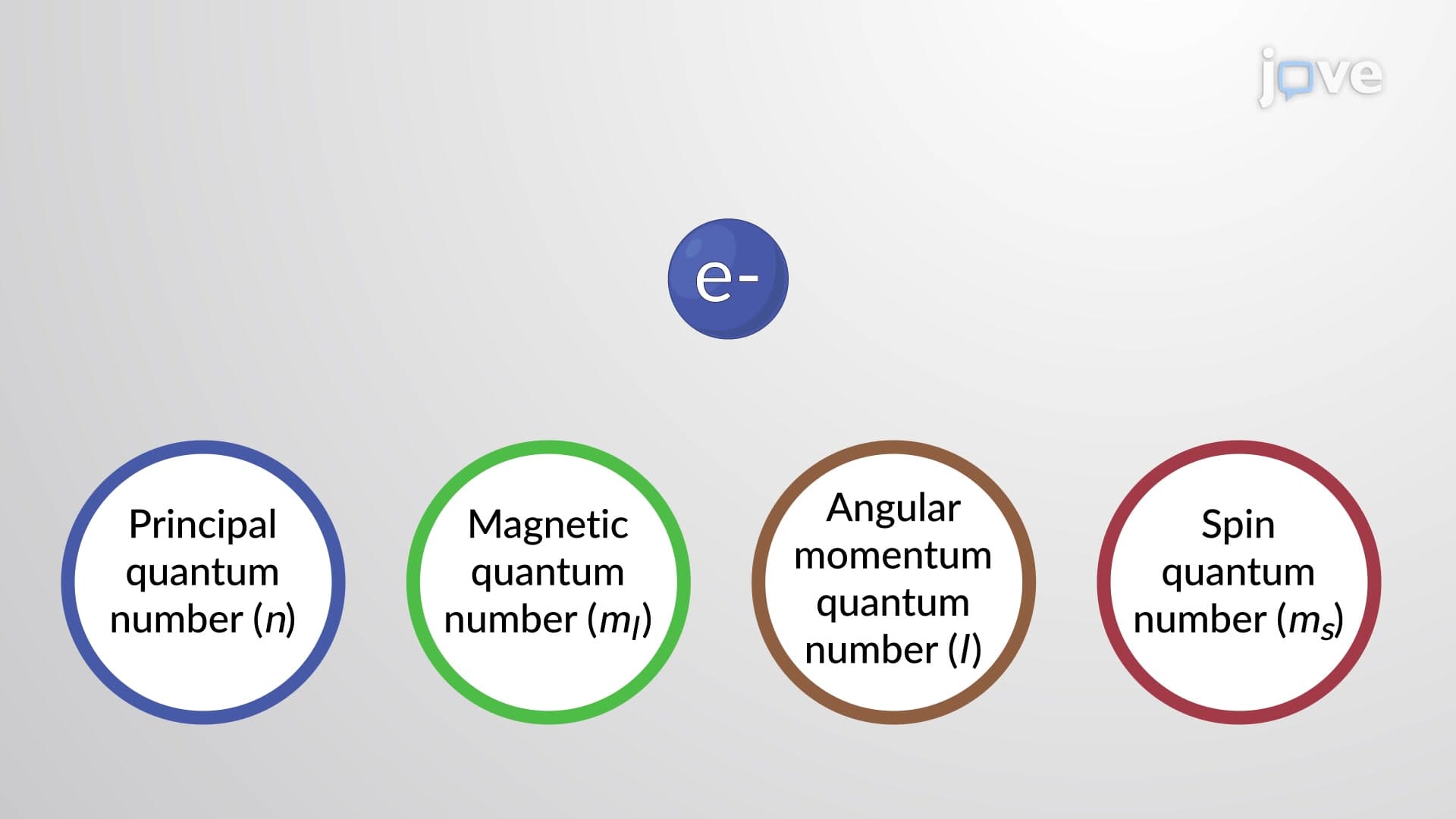
This exclusion rule applies specifically to fermions (particles with half-integer spin), including electrons, protons, and neutrons. For electrons in atoms, it means each must occupy a unique quantum state defined by four quantum numbers: principal (n), azimuthal (l), magnetic (ml), and spin (ms).
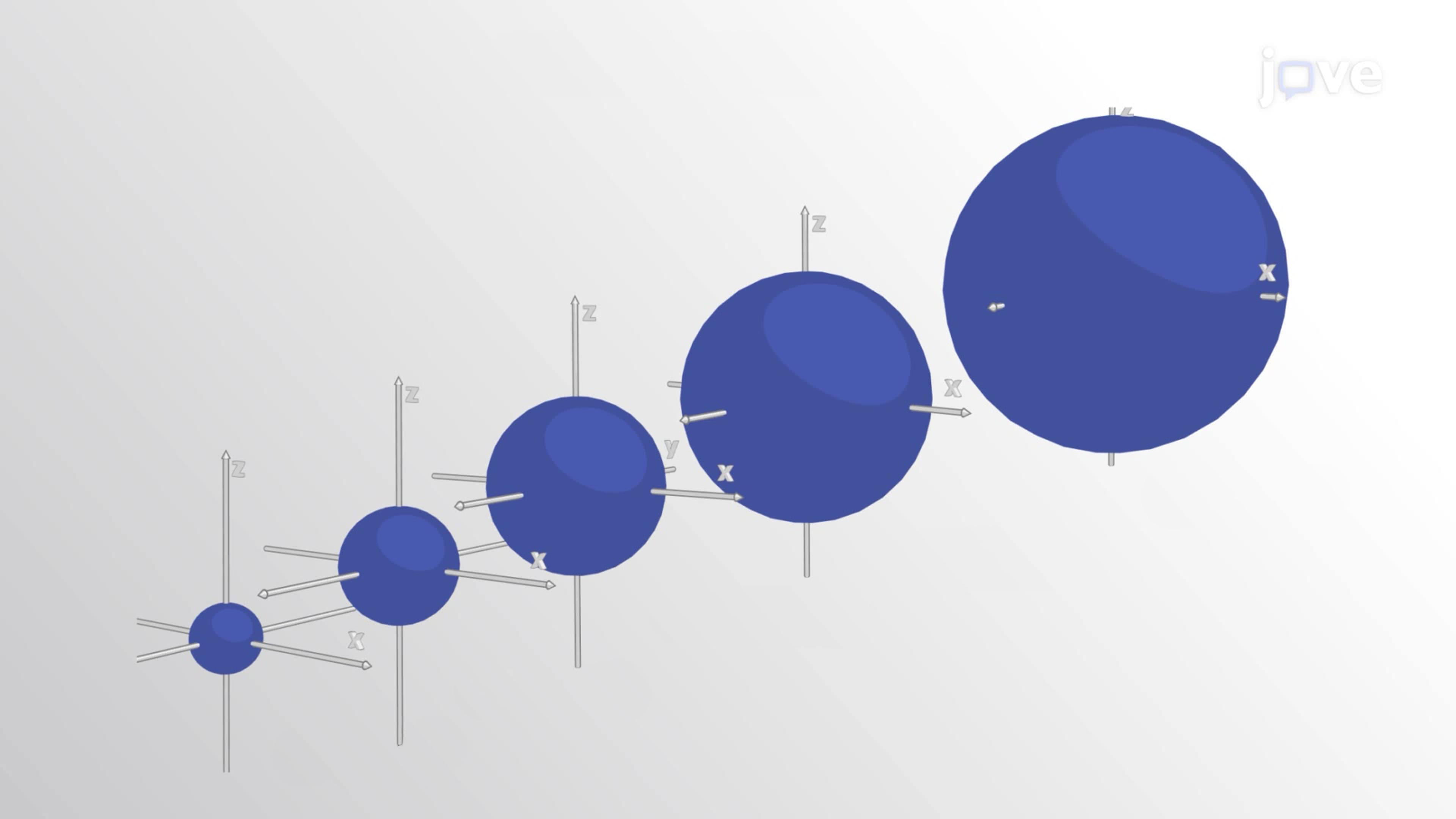
Every electron in an atom requires a unique "address" consisting of four quantum numbers. The principal quantum number (n) indicates the electron shell or energy level, with values 1, 2, 3, and so on. The azimuthal quantum number (l) defines the subshell type (s, p, d, f), ranging from 0 to n-1. The magnetic quantum number (ml) specifies orbital orientation within a subshell, with values from -l to +l.
The spin quantum number (ms) can only be +1/2 (spin-up) or -1/2 (spin-down). Since orbital location is determined by the first three quantum numbers, only the spin can differ for electrons sharing the same orbital. This restriction limits each orbital to a maximum of two electrons with opposite spins.
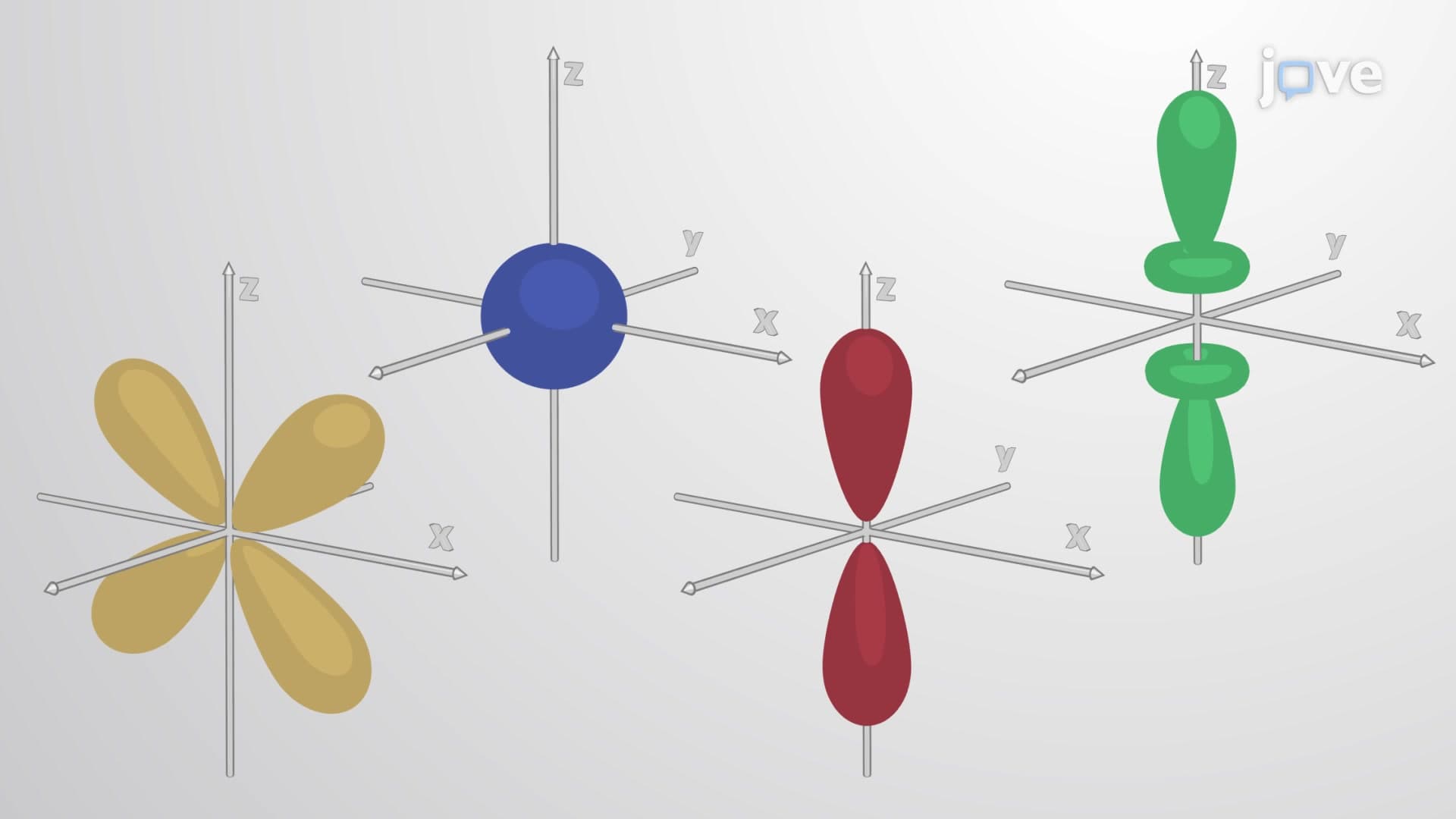
The Pauli exclusion principle directly determines subshell electron capacity. S subshells contain one orbital, accommodating two electrons maximum. P subshells have three orbitals for six electrons total. D subshells contain five orbitals (10 electrons), while f subshells have seven orbitals (14 electrons).
These capacity limits explain electron configuration patterns crucial for AP Chemistry and college-level courses. Students learning to write configurations like 1s² 2s² 2p⁶ must understand that superscript numbers reflect Pauli principle constraints, not arbitrary assignments.
Understanding the Pauli exclusion principle proves essential for predicting chemical behavior and bonding patterns. It explains why carbon forms four bonds (utilizing its four valence electrons), why noble gases are chemically inert (filled electron shells), and how transition metals exhibit variable oxidation states (partially filled d orbitals).
In materials science, the principle governs semiconductor properties in electronic devices. Silicon's electron configuration determines its conductivity characteristics, making modern computing possible. Medical imaging techniques like MRI rely on spin properties that the Pauli principle helps explain.
Related Micro-courses