Loading subject page…

- Chemistry
- Liquids, Solids, and Intermolecular Forces
- Surface Tension, Capillary Action, and Viscosity
Micro-course: Liquids, Solids, and Intermolecular Forces
669,501 views
Learn key concepts and earn your certificate.






Surface Tension, Capillary Action, and Viscosity


00:00
02:57
Video Summary: Surface Tension Capillary Action and Viscosity Explained
Why does a coin float on water when it should sink? Surface tension capillary action and viscosity are fundamental liquid properties governed by intermolecular forces that explain everyday phenomena from water bugs walking on pond surfaces to how paper towels absorb spills. These concepts help explain why mercury forms beads on glass while water spreads out, and why honey pours slower than water. Watch the full video on JoVE Coach to master this concept with expert-led visuals and step-by-step explanations.
- Understand how surface tension capillary action and viscosity arise from cohesive and adhesive intermolecular forces in liquids
- Identify the relationship between surface area minimization and surface tension in creating elastic-like liquid surfaces
- Analyze how capillary action occurs when adhesive forces between liquid and solid overcome cohesive forces within the liquid
- Compare meniscus formation in different liquid-solid combinations, such as water versus mercury in glass tubes
- Evaluate factors affecting liquid viscosity including molecular structure, hydrogen bonding, and temperature changes
- Apply knowledge of intermolecular forces to predict relative viscosities of different organic compounds
- Recognize real-world applications of these principles in biological systems, industrial processes, and laboratory techniques
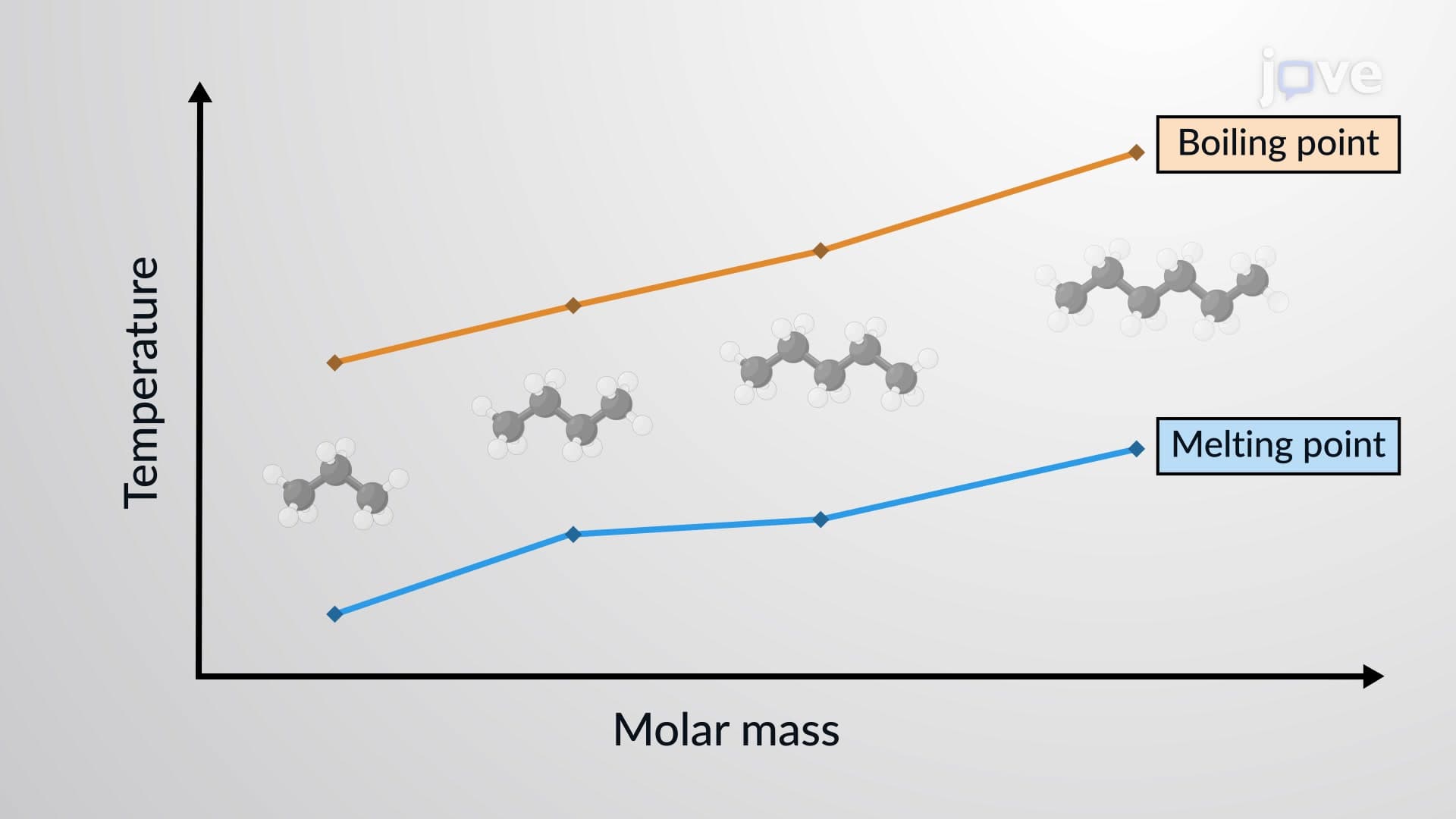
- Explore how molecular geometry and chain length influence dispersion forces and liquid flow resistance
Understanding Surface Tension Capillary Action And Viscosity Through Intermolecular Forces
The behavior of liquids that we observe daily-from dewdrops maintaining perfect spheres to oil's resistance to pouring-stems from three interconnected phenomena rooted in intermolecular attractions. These concepts frequently appear on AP Chemistry exams and college general chemistry courses as applications of bonding theory.
Surface Tension: The Invisible Elastic Membrane
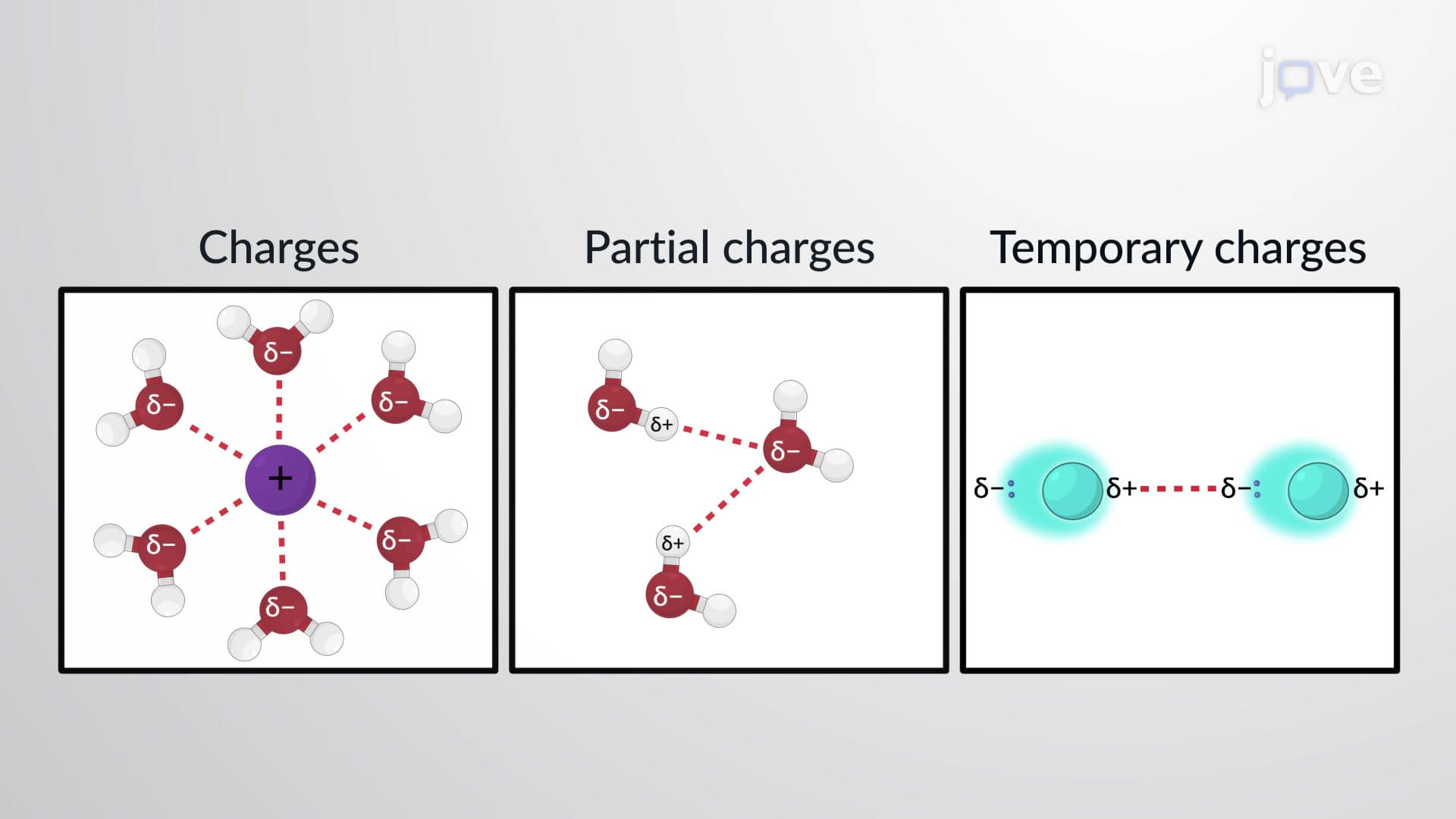
Surface tension emerges from the imbalance of cohesive forces at liquid surfaces. Interior molecules experience equal attractive forces in all directions, while surface molecules face a net inward pull. This creates an energy differential that drives liquids to minimize surface area, forming the smallest possible surface for a given volume-typically spherical droplets.
Measured in joules per square meter (J/m²), surface tension varies dramatically among substances. Water exhibits exceptionally high surface tension (0.073 J/m² at 20°C) due to extensive hydrogen bonding networks. This explains why insects can walk on water surfaces and why water forms nearly spherical droplets on waxy leaves. In contrast, alcohols show lower surface tension because their hydrocarbon portions disrupt hydrogen bonding patterns.
Capillary Action: When Adhesion Overcomes Cohesion
Capillary action occurs when adhesive forces between a liquid and solid surface exceed the liquid's internal cohesive forces. This phenomenon powers paper towel absorption, plant water transport through xylem vessels, and chromatography separations used in forensic laboratories across the United States.
The meniscus shape reveals the relative strength of these competing forces. Water in glass capillaries forms concave (upward-curving) menisci because water-glass adhesion exceeds water-water cohesion. Mercury displays convex (downward-curving) menisci since metallic bonding within mercury far outweighs mercury-glass attraction. Understanding meniscus behavior helps students predict liquid behavior in laboratory glassware and interpret volumetric measurements accurately.
Viscosity: Molecular Resistance to Flow
Viscosity quantifies a fluid's resistance to flow, traditionally measured in poise (g·cm⁻¹·s⁻¹) or the SI unit pascal-seconds. This property depends critically on molecular structure, intermolecular forces, and temperature.
Consider the dramatic viscosity difference between water and corn syrup. Water molecules, though hydrogen-bonded, move relatively freely past each other. Corn syrup contains long glucose polymer chains that entangle extensively, creating significant flow resistance. Similarly, comparing alcohols reveals how molecular complexity affects viscosity: methanol flows easily with its single OH group, while glycerol's three OH groups create extensive hydrogen bonding networks that dramatically increase flow resistance.
Temperature profoundly affects viscosity through its impact on molecular motion. Higher temperatures provide kinetic energy that overcomes intermolecular attractions, explaining why motor oil flows better when warm and why honey becomes less viscous when heated. This temperature dependence appears frequently in MCAT physical chemistry passages and college organic chemistry laboratory experiments.
Frequently Asked Questions
These are three related properties of liquids caused by intermolecular forces. Surface tension creates an invisible "skin" on liquid surfaces, capillary action makes liquids climb up narrow tubes, and viscosity measures how thick or resistant to flow a liquid is. Together, they explain why water beads up, paper towels absorb liquids, and honey pours slowly.
AP Chemistry frequently tests these concepts through intermolecular force applications, asking students to predict relative surface tensions or viscosities based on molecular structure. You might analyze why alcohols have lower surface tension than water or explain capillary action in plant transport systems. Practice connecting molecular-level forces to macroscopic liquid behavior.
MCAT Physical Sciences passages often feature viscosity in blood flow problems or surface tension in lung alveoli scenarios. You'll encounter calculations involving Poiseuille's law for fluid flow or questions about surfactants reducing lung surface tension. Understanding how molecular structure affects these properties helps with both physics and organic chemistry sections.
General Chemistry courses introduce these concepts when discussing intermolecular forces and states of matter. Physical Chemistry delves deeper into thermodynamic explanations and mathematical relationships. Organic Chemistry applies viscosity concepts when discussing polymer properties and liquid-liquid extractions used in laboratory separations.
Capillary action powers many medical applications including blood collection tubes, IV drip chambers, and diagnostic test strips for glucose monitoring. Blood naturally wicks into narrow collection tubes, while test strips use capillary action to draw precise sample volumes for accurate measurements. Understanding these principles helps explain medical device design and function.
The basic concepts require only high school chemistry background knowledge about intermolecular forces and molecular structure. While advanced calculations exist, most introductory courses focus on qualitative predictions and relative comparisons between substances. Start with understanding hydrogen bonding and dispersion forces, then apply these to predict liquid behavior.
Create comparison charts linking molecular structure to liquid behavior-for example, comparing alcohols of different chain lengths or number of OH groups. Practice predicting which substance has higher surface tension or viscosity based on intermolecular forces. Use real examples like cooking oils versus water to make concepts memorable for exams.
These fundamentals lead to studying surface chemistry, colloid science, and materials engineering. Advanced courses explore surfactants in detergent action, emulsion stability in pharmaceuticals, and wetting phenomena in industrial coatings. Biochemistry applications include membrane tension and protein folding in aqueous environments.
Related Micro-courses