Loading subject page…


669,501 views

Video Summary: What are Structures of Solids
Ever wondered why diamond can cut glass but both are made of solid materials? The secret lies in structures of solids and how their atoms are arranged at the molecular level. From the silicon chips powering smartphones made by Intel to the quartz crystals in precision watches, understanding what are structures of solids reveals why materials behave so differently despite sharing similar compositions. Watch the full video on JoVE Coach to master this concept with expert-led visuals and step-by-step explanations.
The structures of solids represent one of chemistry's most fundamental concepts, explaining how matter organizes itself at the atomic scale. This organization directly determines whether a material becomes as hard as diamond or as flexible as plastic. When atoms, ions, or molecules come together to form a solid, they can arrange themselves in two distinct ways: with long-range order (crystalline) or without it (amorphous).
Crystalline solids exhibit a highly ordered, repeating three-dimensional pattern throughout their structure. Think of table salt (sodium chloride) or the silicon wafers used in computer processors manufactured by companies like AMD and NVIDIA. These materials have their constituent particles arranged in precise, predictable patterns that extend throughout the entire solid.
Amorphous solids, conversely, lack this long-range order. Window glass, manufactured by companies like Corning Inc., represents a classic example where silicon dioxide molecules are frozen in a random arrangement. This structural difference explains why crystalline quartz can form beautiful geometric shapes while glass remains shapeless until molded.
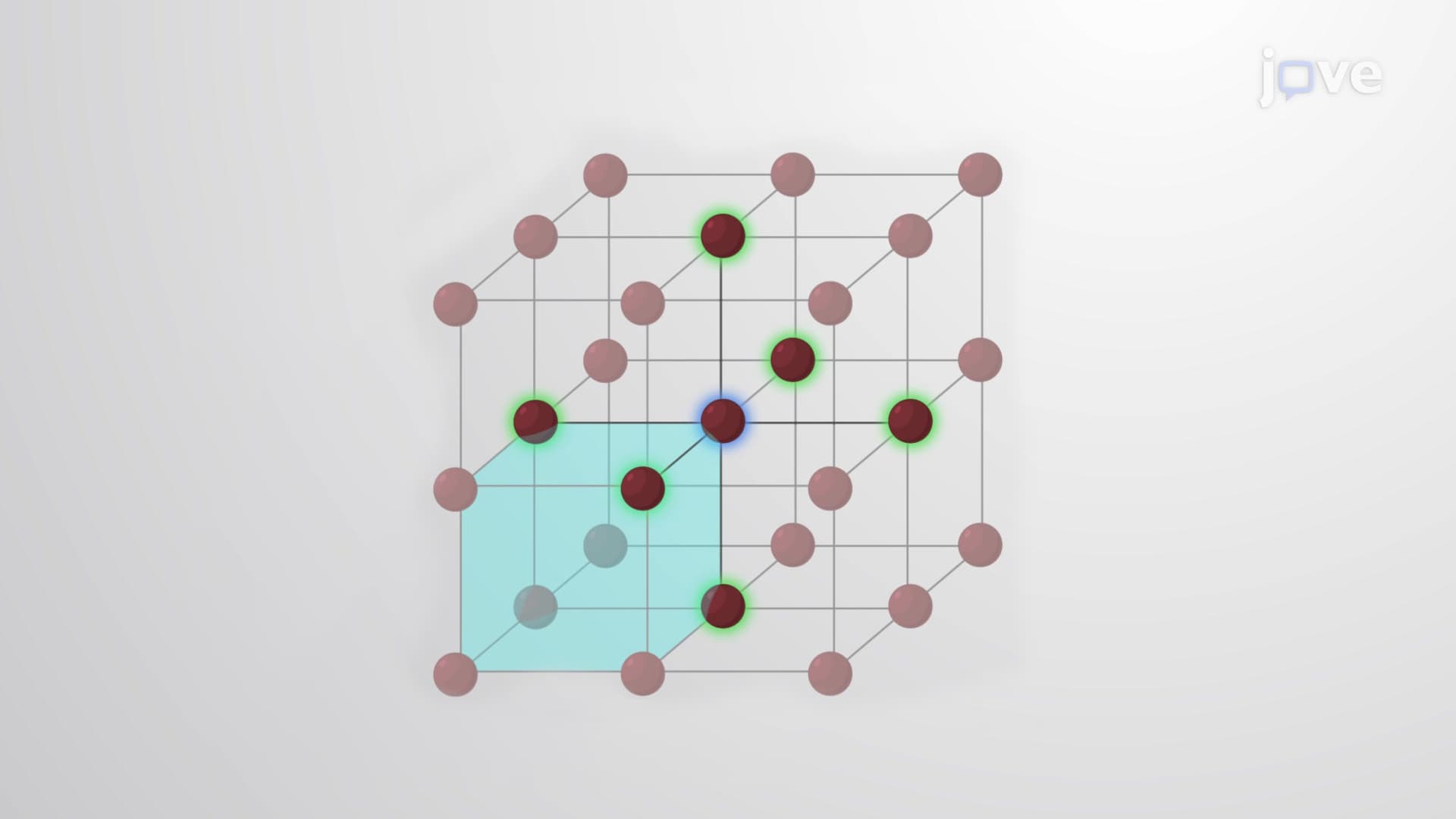
The architecture of crystalline solids revolves around the concept of a unit cell-the smallest repeating unit that maintains the crystal's symmetry. Imagine building with identical LEGO blocks; each block represents a unit cell that, when repeated in three dimensions, creates the entire structure. The crystal lattice encompasses this entire three-dimensional network, defined by lattice points (specific locations in space) and lattice vectors (directions and distances between points).
The seven lattice systems-cubic, tetragonal, orthorhombic, rhombohedral, monoclinic, triclinic, and hexagonal-represent all possible ways to arrange unit cells in three-dimensional space. Each system has unique geometric constraints. For instance, cubic systems (like those found in aluminum used in aerospace applications) have equal edge lengths and 90-degree angles, while hexagonal systems (like those in titanium alloys used by Boeing) have different geometric relationships.
Understanding packing efficiency becomes crucial when calculating material density and predicting properties. Engineers at companies like Tesla must consider how lithium atoms pack in battery cathodes to optimize energy storage. The number of atoms per unit cell directly correlates with material density and performance characteristics.
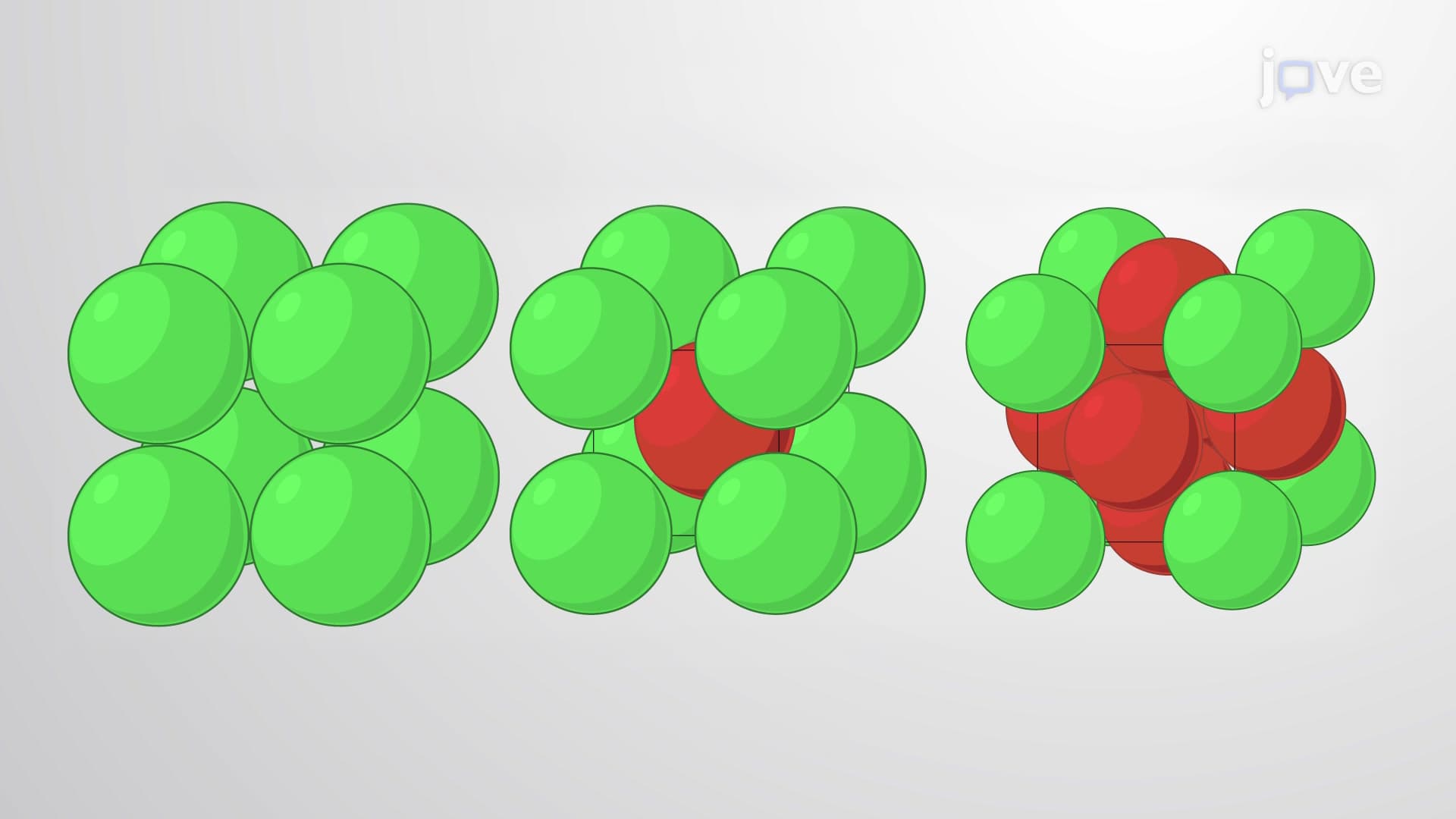
Students preparing for AP Chemistry or college-level materials science courses frequently encounter problems involving unit cell calculations. The standard approach involves counting partial atoms: corner atoms contribute 1/8 to the unit cell (since eight unit cells share each corner), face-centered atoms contribute 1/2 (shared by two unit cells), and body-centered atoms contribute fully to a single unit cell.
These concepts prove essential for understanding advanced topics in materials engineering, semiconductor physics, and pharmaceutical crystallography-knowledge that becomes particularly valuable for students pursuing STEM careers in industries ranging from aerospace to biotechnology.
Related Micro-courses