Loading subject page…


669,502 views

Video Summary: What Is Clausius Clapeyron Equation
Ever wondered why a pressure cooker cooks food faster at higher altitudes? The Clausius Clapeyron equation reveals the mathematical relationship between vapor pressure and temperature that explains this phenomenon. This fundamental thermodynamic principle shows how water's vapor pressure increases exponentially with temperature-from 0.122 atm at 50°C to 1 atm at 100°C. Understanding what is Clausius Clapeyron equation helps predict phase transitions in everything from steam engines to meteorological systems across the United States. Watch the full video on JoVE Coach to master this concept with expert-led visuals and step-by-step explanations.
The Clausius Clapeyron equation represents one of thermodynamics' most elegant mathematical relationships, describing how vapor pressure varies with temperature during phase transitions. Unlike simple linear relationships, vapor pressure increases exponentially with temperature-a behavior that initially puzzled scientists until Rudolf Clausius and Émile Clapeyron developed this foundational equation in the 19th century.
The mathematical beauty lies in its linearization: when plotting the natural logarithm of vapor pressure against reciprocal temperature (1/T), the curved exponential relationship transforms into a straight line. This linear form, ln(P) = -ΔHvap/RT + C, reveals crucial thermodynamic information through its slope and intercept.
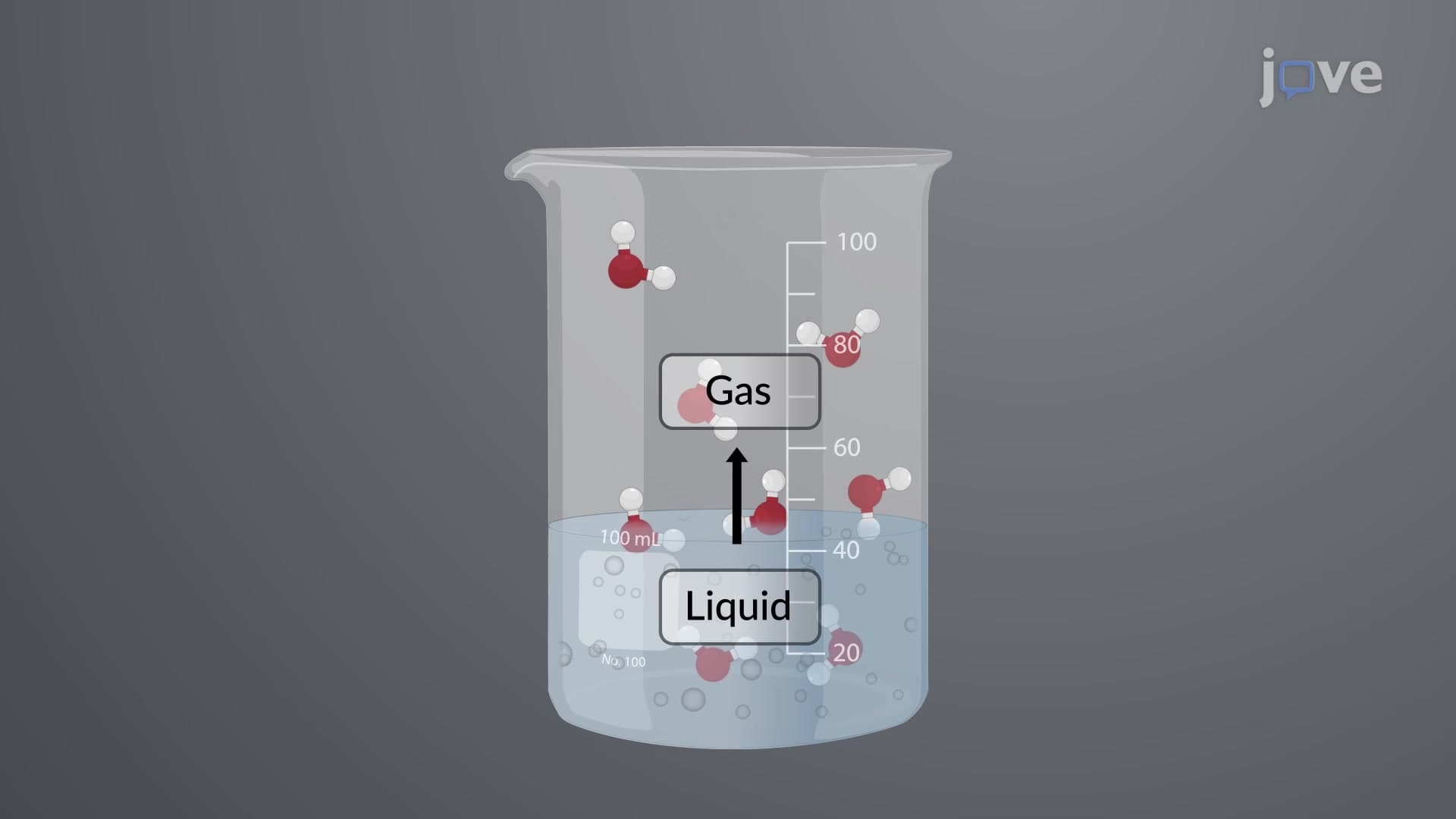
The equation's slope equals -ΔHvap/R, where ΔHvap represents the molar heat of vaporization and R is the ideal gas constant (8.314 J/mol·K). This slope provides direct access to measuring how much energy is required to convert one mole of liquid into vapor. For instance, ethanol's experimental slope of -4638 K yields a molar heat of vaporization of 38,560 J/mol, demonstrating the equation's practical utility in determining thermodynamic properties.
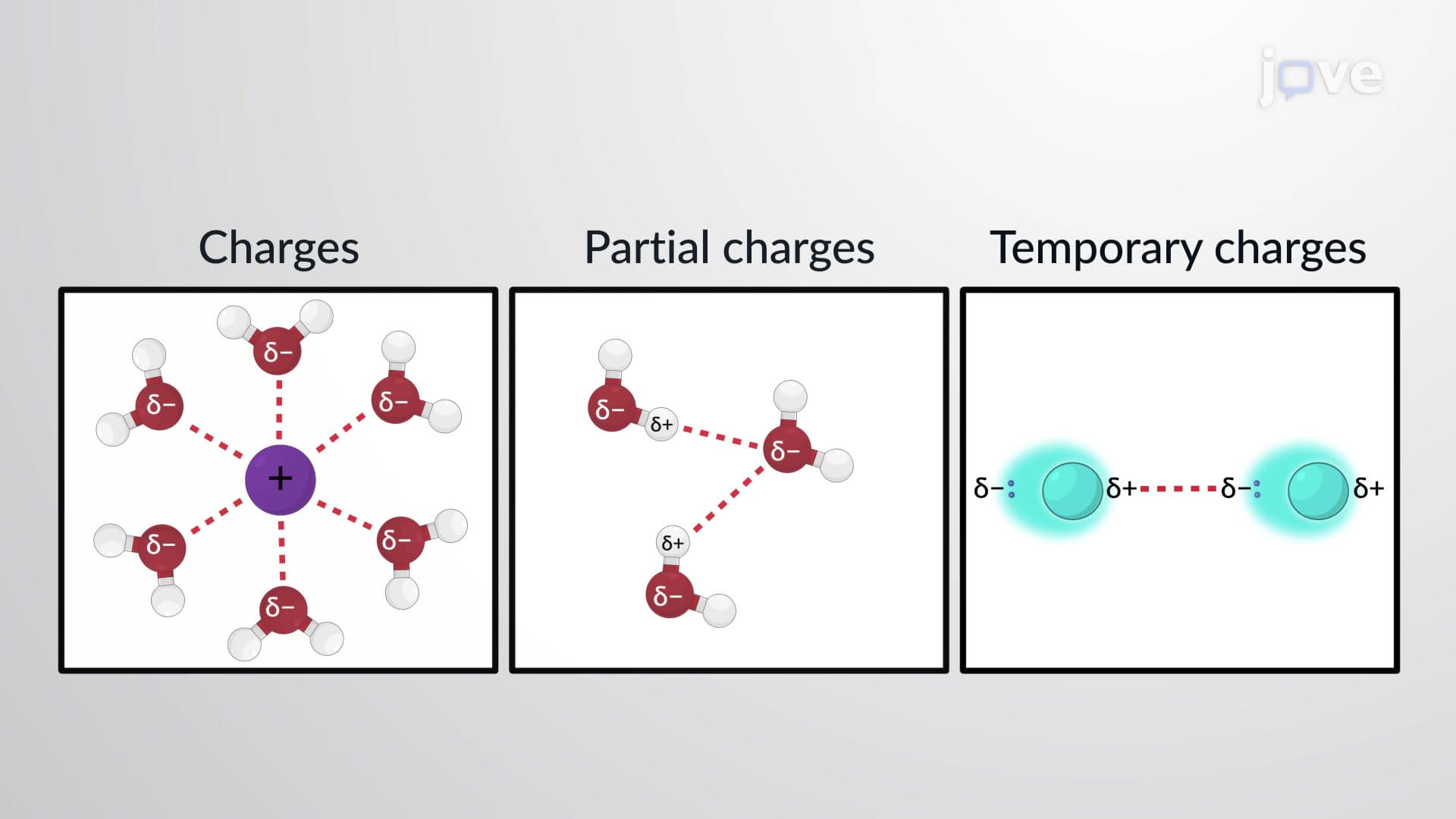
The y-intercept (C) represents a substance-specific constant related to entropy changes during vaporization. This parameter varies among different liquids based on their molecular structure and intermolecular forces, explaining why water, ethanol, and other substances exhibit unique vapor pressure behaviors.
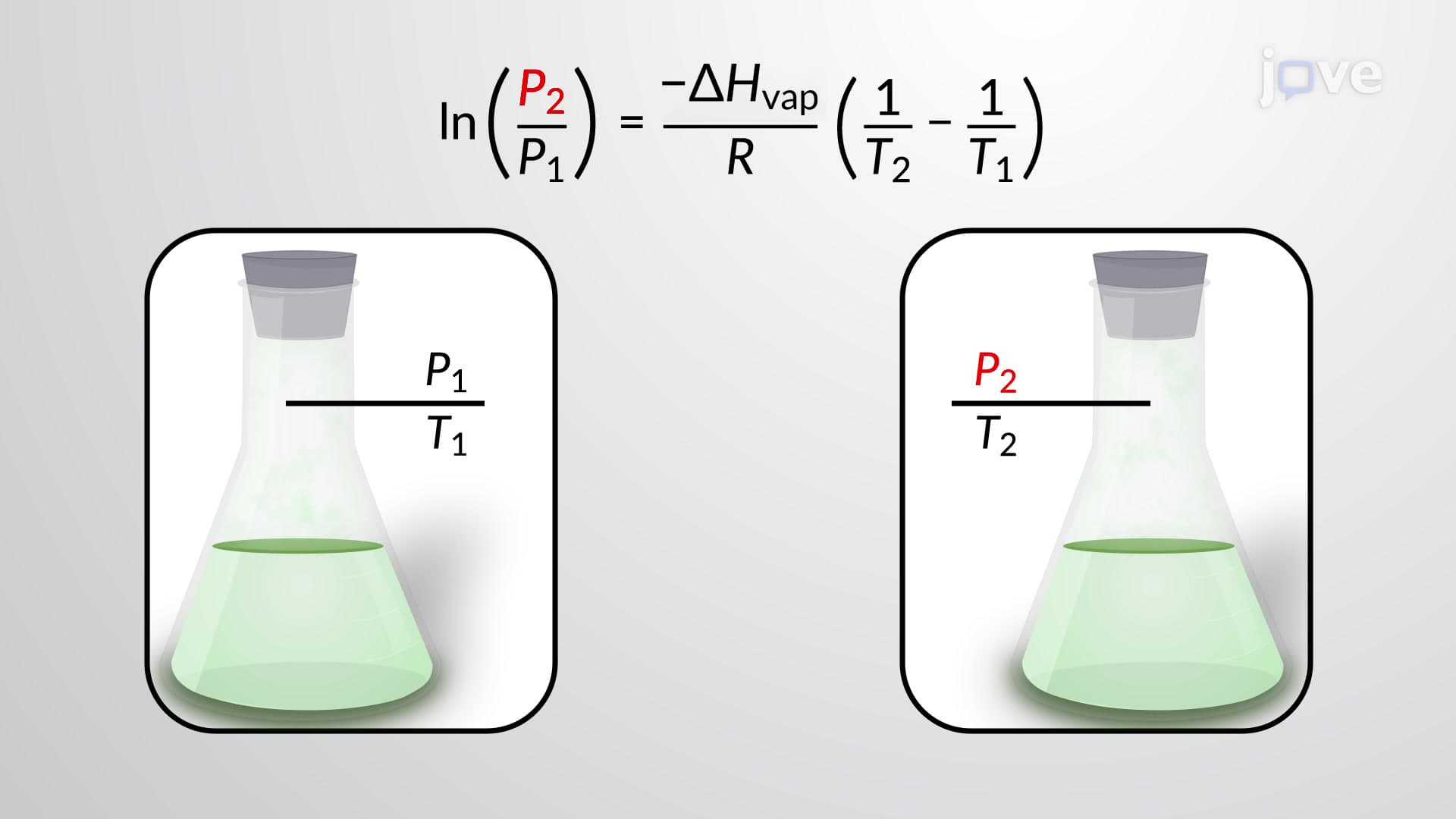
The equation's two-point form enables precise vapor pressure predictions across temperature ranges. For water with ΔHvap = 40.7 kJ/mol, calculating vapor pressure changes from 373 K (1 atm) to 383 K yields 1.409 atm-a 40.9% increase from just a 10 K temperature rise. This dramatic sensitivity explains why pressure cookers achieve faster cooking times and why meteorologists carefully monitor temperature-pressure relationships in weather forecasting.
Students encounter the Clausius Clapeyron equation across multiple academic levels. AP Chemistry courses emphasize its role in phase diagram analysis and thermodynamic calculations. College-level physical chemistry and thermodynamics courses delve deeper into derivations and applications. Pre-med students preparing for the MCAT must understand vapor pressure relationships for passages involving respiratory physiology and anesthesia mechanisms. Engineering students apply these principles in designing distillation columns, steam turbines, and refrigeration systems throughout American industries.
Related Micro-courses