Loading subject page…


532,617 views

Video Summary: What are Thermochemical Equations
Ever wonder why your car's engine gets hot when burning gasoline, or why ice packs turn cold when activated? Thermochemical equations provide the scientific answer by showing exactly how much heat energy is absorbed or released during chemical reactions. These special balanced equations include phase states and enthalpy changes, making them essential for calculating energy transfers in everything from industrial processes to metabolic reactions in the human body. Watch the full video on JoVE Coach to master this concept with expert-led visuals and step-by-step explanations.
Thermochemical equations represent the complete energy picture of chemical reactions, combining traditional balanced equations with quantitative heat data. Unlike standard chemical equations that only show reactants and products, thermochemical equations include the enthalpy change (ΔH) that occurs under constant pressure conditions-the typical environment for most chemical processes.
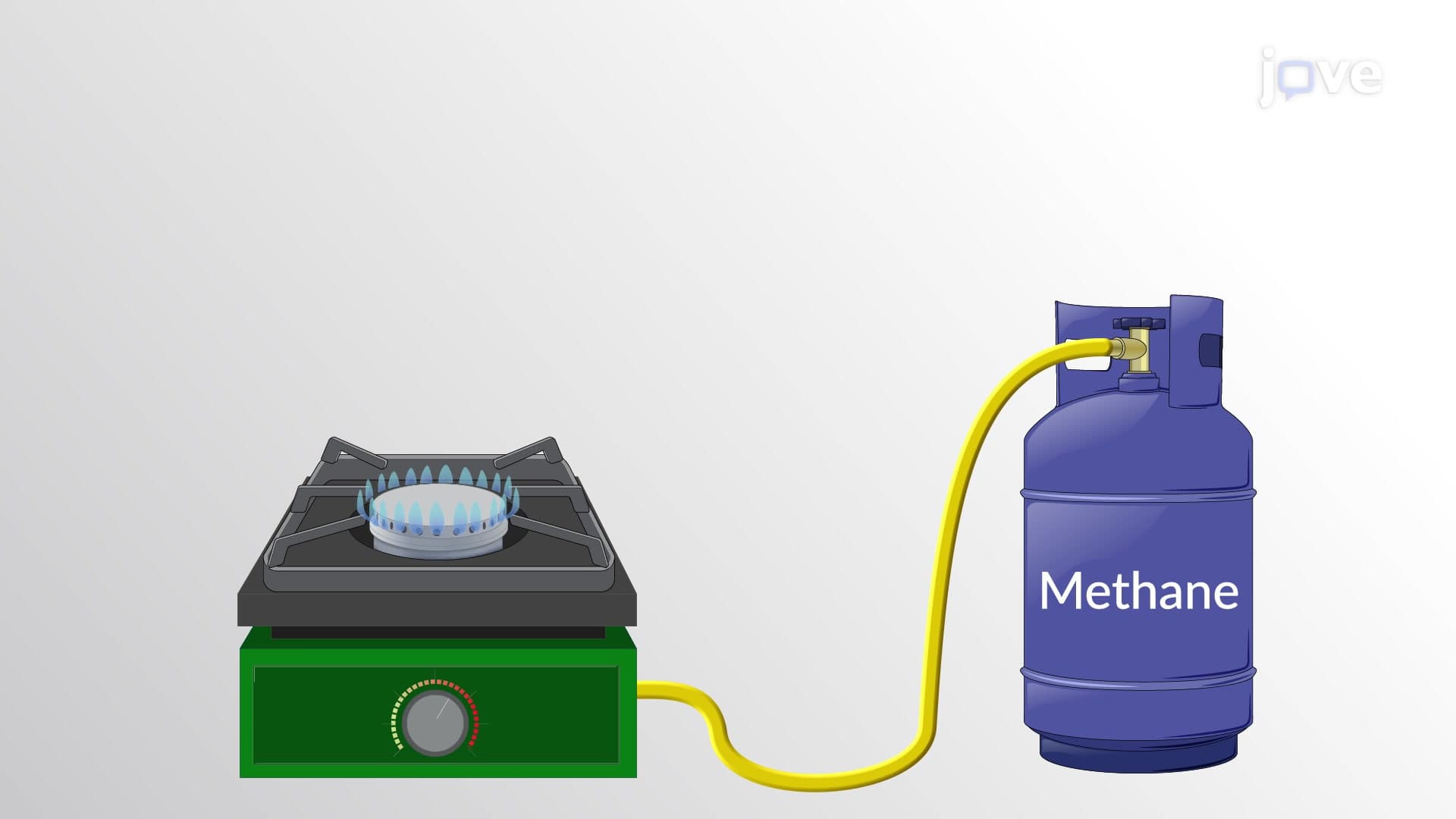
These specialized equations serve as energy blueprints for chemists and engineers. For example, when natural gas companies calculate energy output for heating American homes, they rely on thermochemical equations to determine exactly how much heat each cubic foot of methane will produce during combustion.
Thermochemical equations fall into two fundamental categories based on energy flow direction. Exothermic reactions release energy to surroundings, showing negative ΔH values. The combustion of gasoline in car engines exemplifies this-each gallon burned releases predictable amounts of thermal energy that powers vehicle movement.
Endothermic reactions absorb energy from surroundings, displaying positive ΔH values. Photosynthesis in plants represents a crucial endothermic process, where solar energy converts carbon dioxide and water into glucose. Cold packs used by athletic trainers at American high schools demonstrate endothermic reactions-ammonium nitrate dissolution absorbs heat, creating therapeutic cooling effects.
The coefficients in thermochemical equations create proportional relationships between substance amounts and energy changes. This principle enables precise energy calculations for industrial applications. When Dow Chemical or DuPont scale up production processes, they use these ratios to predict energy requirements and optimize reactor designs.
For combustion analysis, a common topic in AP Chemistry courses, students learn that doubling reactant amounts doubles energy release. This relationship proves essential for MCAT preparation, where test-takers encounter thermochemical calculations in biological energy metabolism questions.
Power plants across the United States utilize thermochemical equation data to optimize fuel efficiency. Coal-fired plants in states like Wyoming and West Virginia calculate energy output per ton of coal using standardized thermochemical values. Similarly, renewable energy facilities converting biomass to electricity rely on these equations to predict energy yields from agricultural waste products.
Chemical manufacturing giants like 3M and Johnson & Johnson depend on thermochemical equations for process safety and economic viability. Understanding exact energy requirements prevents dangerous temperature excursions while minimizing operational costs through efficient heat management strategies.
Related Micro-courses