Loading subject page…


532,617 views
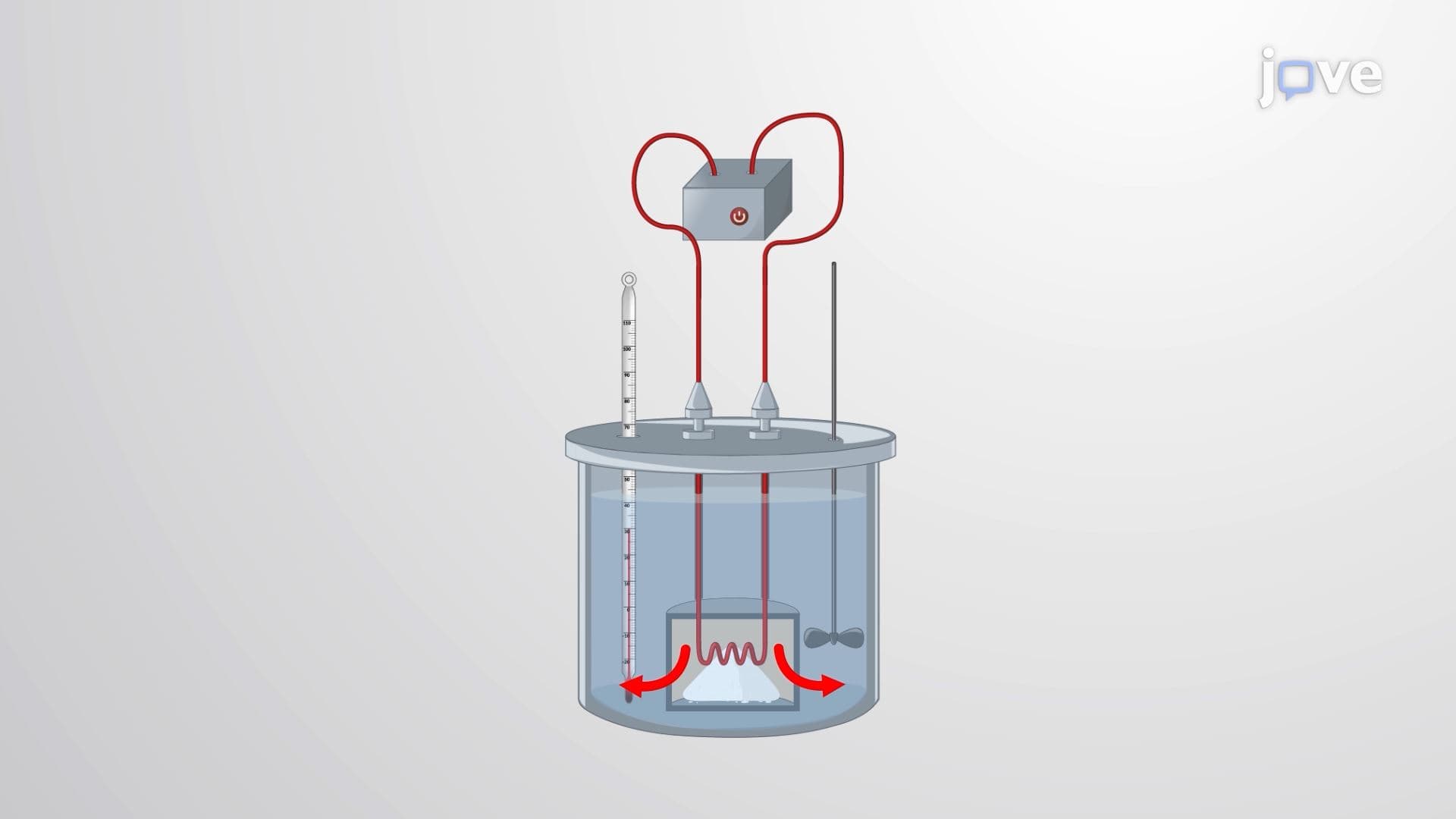

Video Summary: What Is Constant Volume Calorimetry
Did you know that NASA uses constant volume calorimetry to test rocket fuel efficiency before launching missions to the International Space Station? Constant volume calorimetry measures the internal energy change of chemical reactions by keeping volume fixed, eliminating pressure-volume work complications. This technique employs bomb calorimeters-sealed steel containers that capture precise energy measurements during combustion reactions, unlike coffee cup calorimeters used for constant pressure studies. Watch the full video on JoVE Coach to master this concept with expert-led visuals and step-by-step explanations.
Constant volume calorimetry represents a cornerstone technique in thermochemistry, specifically designed to measure internal energy changes during chemical reactions. Unlike constant pressure methods, this approach eliminates the complexity of pressure-volume work by maintaining fixed volume conditions throughout the experimental process.
The theoretical foundation rests on the first law of thermodynamics: ΔE = q + w, where internal energy change equals heat plus work. When volume remains constant (ΔV = 0), no pressure-volume work occurs (w = 0), simplifying the equation to ΔE = q. This elegant relationship makes constant volume calorimetry particularly valuable for studying combustion reactions and fuel efficiency.
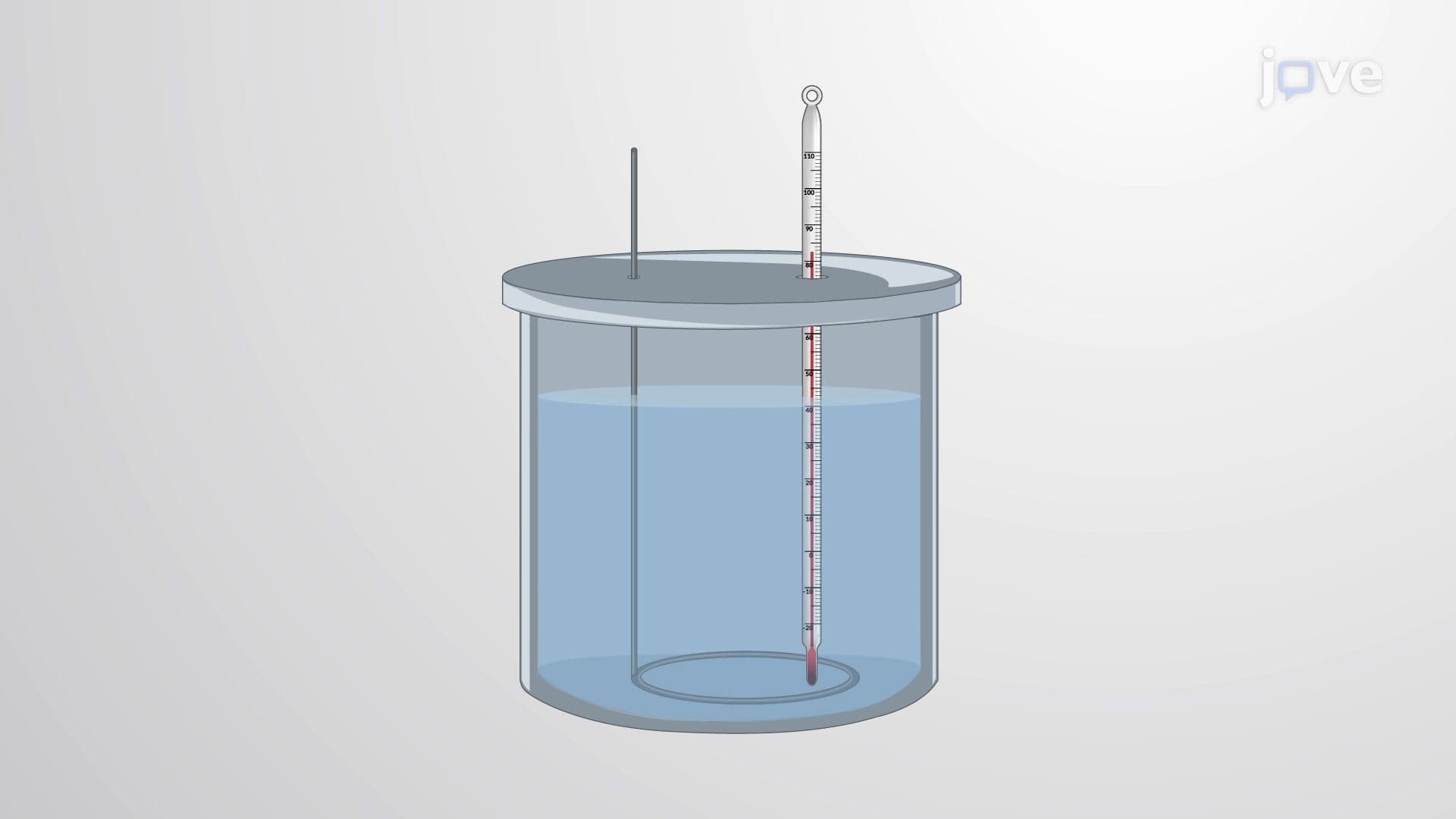
The bomb calorimeter serves as the primary instrument for constant volume calorimetry. This sophisticated device consists of a sealed stainless steel "bomb" containing the sample and excess oxygen, submerged in a water bath within an insulated container. The robust construction withstands high pressures generated during combustion while maintaining constant volume.
During operation, electrical ignition initiates the reaction, releasing energy that heats the calorimeter assembly. Temperature sensors monitor the water bath, allowing precise calculation of energy transfer. The calorimeter's heat capacity-determined through calibration with known standards-enables accurate internal energy calculations.
Constant volume calorimetry finds extensive application in energy research, particularly at institutions like the National Institute of Standards and Technology (NIST), where scientists evaluate fuel properties for automotive and aerospace industries. Petroleum companies routinely use this technique to assess heating values of gasoline, diesel, and alternative fuels.
For students preparing for AP Chemistry exams or college-level physical chemistry courses, mastering constant volume calorimetry proves essential. The MCAT frequently includes calorimetry problems requiring students to distinguish between constant volume and constant pressure conditions. Understanding these concepts strengthens problem-solving skills needed for thermodynamics coursework at universities like MIT, Stanford, and UC Berkeley.
Successful constant volume calorimetry requires careful attention to mathematical relationships. The heat absorbed by the calorimeter (q_cal = C_cal × ΔT) equals the heat released by the reaction. Dividing this value by the number of moles provides the molar internal energy change-a fundamental thermodynamic property.
Students should practice converting between different energy units and understand significant figures in experimental measurements. These skills prove invaluable for laboratory courses and standardized examinations throughout undergraduate chemistry programs.
Related Micro-courses