Loading subject page…


532,601 views


Video Summary: What Is Enthalpy
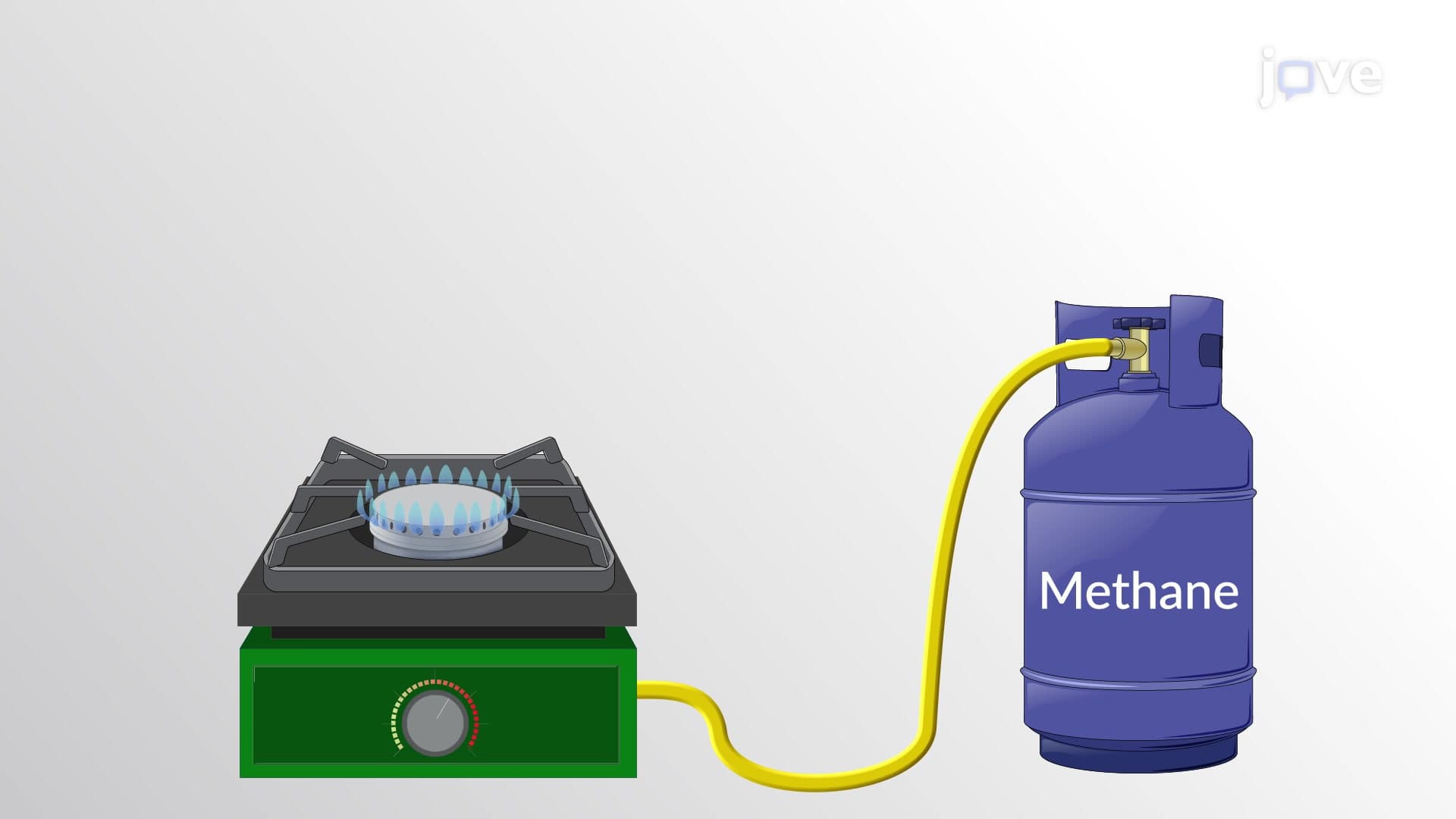
Did you know that when NASA's Space Launch System rocket burns fuel, it releases enough energy to power 50,000 homes for a full day? Enthalpy is the thermodynamic property that measures this total energy release during chemical reactions at constant pressure. Unlike internal energy, which includes both heat and work, enthalpy specifically quantifies the heat flow in reactions like rocket combustion or even cooking on your stovetop. Watch the full video on JoVE Coach to master this concept with expert-led visuals and step-by-step explanations.
Enthalpy serves as chemistry's primary tool for measuring energy changes in reactions occurring at constant pressure-the conditions found in most laboratory experiments and real-world processes. While internal energy (E) accounts for all energy forms within a system, enthalpy (H) specifically addresses the heat component that's most relevant for practical applications.
The enthalpy definition stems from the first law of thermodynamics, where H = E + PV. This equation reveals that enthalpy equals internal energy plus the pressure-volume work term. For constant-pressure processes, the change in enthalpy (ΔH) directly equals the heat exchanged: ΔH = q. This relationship makes enthalpy incredibly useful for predicting temperature changes and energy requirements in chemical reactions.
Understanding enthalpy requires mastering its sign conventions. When Ford's automotive plants burn natural gas for steel production, the negative ΔH indicates an exothermic process-energy flows from the system to surroundings, heating the factory floor. Conversely, the instant cold packs used by NFL trainers demonstrate endothermic reactions with positive ΔH values, where the system absorbs energy and cools the surroundings.
Enthalpy appears extensively on AP Chemistry exams, MCAT thermodynamics sections, and college physical chemistry courses. Students encounter enthalpy calculations when analyzing everything from photosynthesis in corn plants to the energy efficiency of power plants along the Mississippi River. The enthalpy concept proves essential for understanding calorimetry experiments, Hess's Law applications, and bond energy calculations-all frequent exam topics that require both conceptual understanding and computational skills.
Related Micro-courses