Loading…
Loading video…

7,264 views

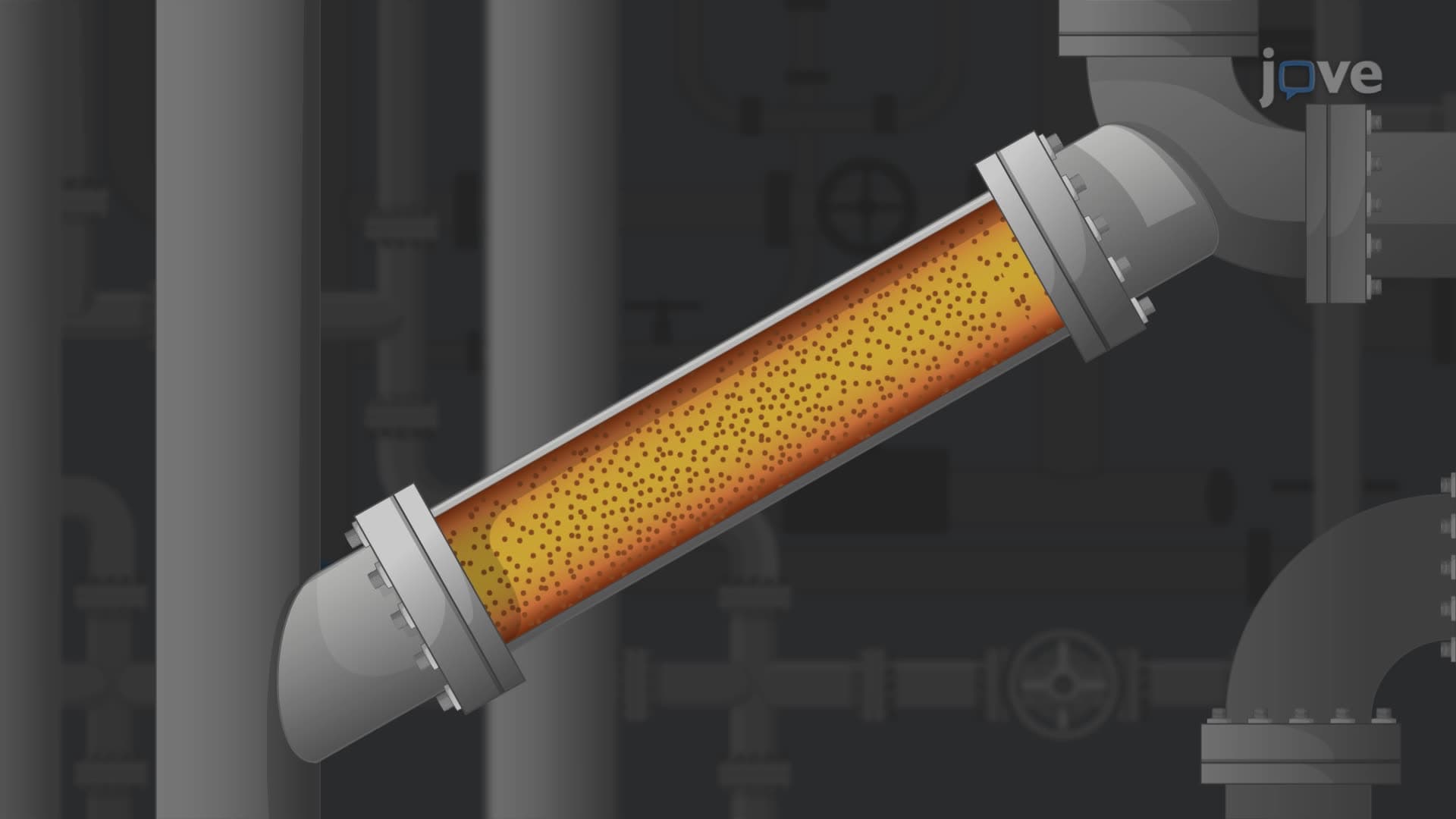
Ever wonder how oil flows smoothly through pipeline systems or how blood moves through narrow capillaries? Couette flow between parallel plates explains this fascinating fluid behavior, where liquid moves in orderly layers without mixing. This steady laminar flow between parallel plates explained concept appears in everything from hydraulic systems in US manufacturing plants to microfluidic devices in medical laboratories. The velocity profile forms a perfect parabola, with fluid moving fastest at the center and stopping completely at the walls. Watch the full video on JoVE Coach to master this concept with expert-led visuals and step-by-step explanations.
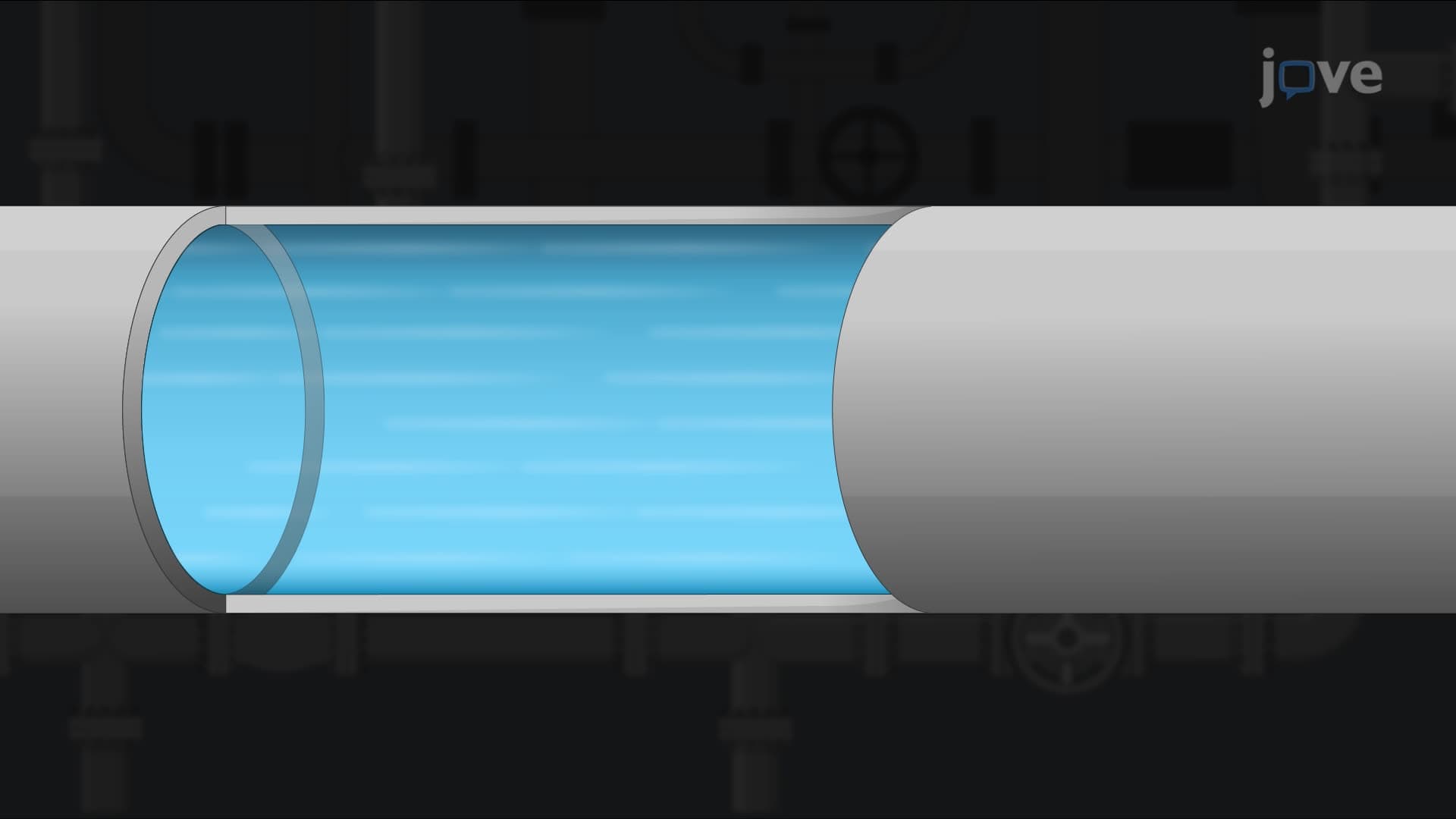
Couette flow represents one of the most fundamental concepts in fluid mechanics, describing how viscous fluids move between two parallel surfaces. This couette flow definition encompasses the orderly, layered movement of fluid where each "sheet" of liquid slides past adjacent layers without turbulent mixing. When students ask what is couette flow in detail, the answer lies in understanding how viscous forces dominate over inertial forces, creating predictable flow patterns.
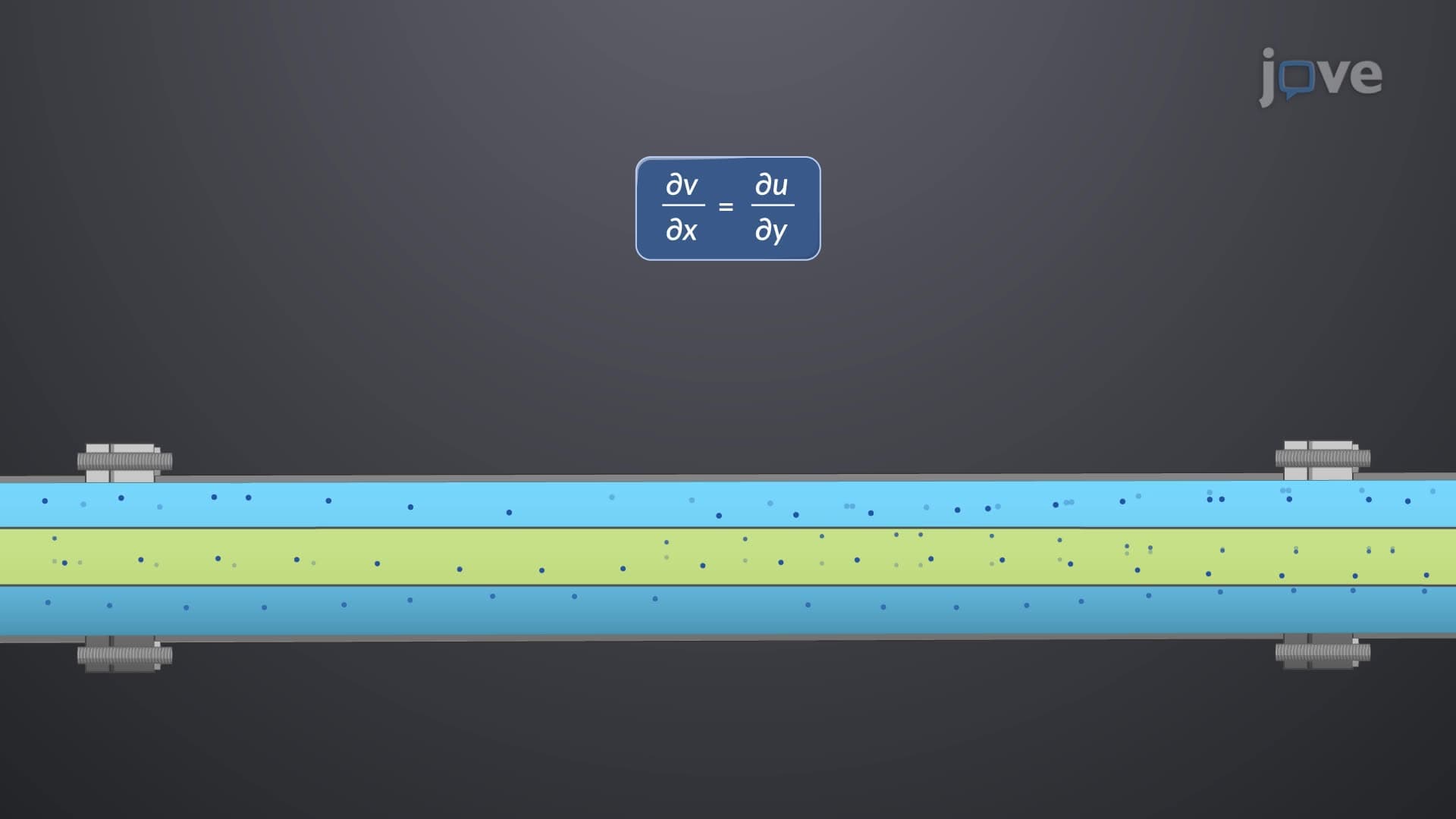
The beauty of this couette flow overview emerges from its mathematical elegance. When pressure-driven flow occurs between stationary parallel plates, the Navier-Stokes equations simplify dramatically. The resulting velocity profile forms a perfect parabola, with maximum velocity at the channel centerline and zero velocity at both walls due to the no-slip condition. This couette flow concept demonstrates that the peak velocity always equals exactly 1.5 times the average flow velocity - a relationship crucial for AP Physics and college fluid mechanics courses.
US engineering students encounter this relationship frequently in MCAT physics sections and university fluid mechanics exams. The pressure drop across the channel directly correlates with flow rate, following the equation: flow rate = (pressure gradient × channel width³) / (12 × fluid viscosity). This formula appears regularly in SAT Subject Test physics and college-level problem sets.
This couette flow study guide emphasizes the critical role of Reynolds number in determining flow behavior. For parallel plate flow, Reynolds numbers below 1,400 typically maintain laminar conditions, while higher values transition to turbulent flow. Students preparing for the MCAT or AP Physics C exams should memorize this threshold, as it frequently appears in multiple-choice questions.
Understanding couette flow requires recognizing that this analysis only applies under laminar conditions. When Reynolds numbers exceed critical values, the orderly parabolic profile breaks down into chaotic, mixing flow patterns that require completely different analytical approaches.
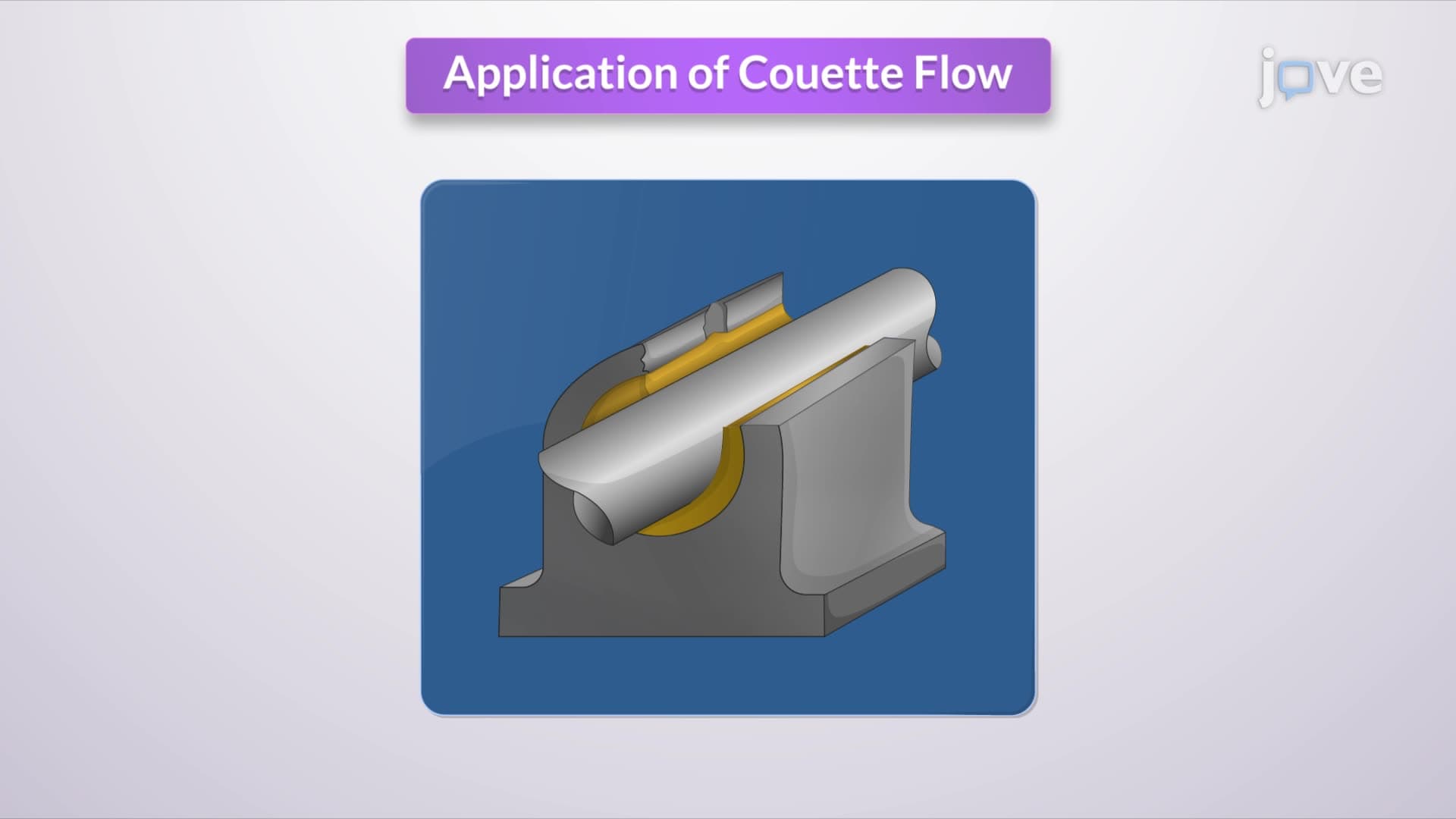
This couette flow basics knowledge translates directly into practical engineering applications across American industries. Irrigation channels in California's Central Valley utilize these principles for efficient water distribution. Municipal water treatment plants in cities like Chicago and Phoenix design sedimentation basins based on parallel plate flow theory to optimize particle settling. Groundwater flow through rock fractures follows similar patterns, making this concept essential for environmental engineering students at institutions like Stanford and MIT.
Biomedical applications include blood flow through narrow vessels and microfluidic devices used in diagnostic equipment manufactured by US companies like Abbott Laboratories and Thermo Fisher Scientific.
Frequently Asked Questions
Steady laminar flow between parallel plates describes orderly fluid movement in narrow channels where velocity varies only perpendicular to the walls, creating a parabolic velocity profile. This represents a specific case of couette flow where pressure gradients drive fluid motion between stationary surfaces. The flow remains smooth and predictable, with fluid layers sliding past each other without mixing. This concept is fundamental to understanding viscous flow behavior in confined geometries.
MCAT passages often test couette flow principles through cardiovascular system questions, asking students to calculate flow rates or pressure drops in blood vessels. AP Physics C mechanics exams frequently include parallel plate flow problems requiring students to apply calculus-based analysis to determine velocity distributions. College physics midterms typically present numerical problems involving the relationship between pressure gradient, viscosity, and flow rate. Students should memorize the 1.5x velocity ratio and Reynolds number criteria.
You need solid algebra skills and basic calculus knowledge, particularly integration and differentiation. Understanding vector notation helps with the Navier-Stokes equations, but most high school problems focus on the simplified results. If you're comfortable with parabolic functions and can work with ratios and proportions, you can master the essential concepts. The mathematical complexity increases significantly in advanced courses, but introductory treatments remain accessible to students with Precalculus backgrounds.
Parallel plate flow occurs in numerous US applications including automotive oil filters, HVAC ductwork in commercial buildings, and food processing equipment used by companies like General Mills and Kraft Heinz. Municipal water treatment facilities across America utilize settling tanks designed on parallel plate principles. Even household items like paint brushes and squeegees demonstrate these flow patterns. Understanding these applications helps students connect theoretical concepts to practical engineering challenges in American industries.
Focus on memorizing key relationships: center velocity equals 1.5 times mean velocity, and Reynolds number determines flow regime. Practice drawing and interpreting parabolic velocity profiles, emphasizing zero velocity at walls. Work through dimensional analysis problems involving pressure gradients, viscosity, and channel geometry. Create comparison charts between laminar and turbulent conditions. For MCAT prep, connect these principles to physiological systems like blood circulation and respiratory airflow.
The parabolic shape results from the balance between viscous forces and pressure forces acting on fluid elements. At the wall, the no-slip condition forces velocity to zero due to molecular adhesion between fluid and solid surfaces. Moving toward the center, viscous stress decreases while pressure-driven acceleration increases, creating a smooth curved profile. This mathematical relationship emerges directly from solving the simplified Navier-Stokes equation for steady, fully-developed flow conditions.
Progress to cylindrical pipe flow (Hagen-Poiseuille flow) which extends similar principles to circular cross-sections. Explore boundary layer theory for flow over flat plates, crucial for aerospace and mechanical engineering applications. Advanced students should investigate non-Newtonian fluid behavior and heat transfer in parallel plate channels. These topics prepare students for graduate-level fluid mechanics courses and professional engineering examinations like the Fundamentals of Engineering (FE) exam.
Identify the driving mechanism: pressure-driven flow between stationary plates creates parabolic profiles, while shear-driven flow between moving plates produces linear velocity distributions. Note boundary conditions carefully - both plates stationary indicates pressure-driven flow, while one moving plate suggests pure couette flow. Combined pressure and shear effects create more complex profiles requiring superposition analysis. Exam problems typically specify these conditions clearly in the problem statement.
Related Micro-courses


Related Subjects
 Electrical Engineering 33 micro-courses›Mechanical Engineering 28 micro-courses›