Loading…
Loading video…

7,264 views
Ever wondered how engineers predict water flow around the Hoover Dam's spillways or design groundwater pumping systems across California's Central Valley? The Navier Stokes equations govern these complex fluid behaviors, but plane potential flows offer a simplified approach to understanding fluid motion patterns. These mathematical models assume irrotational and incompressible flow, using velocity potential and stream functions to describe everything from uniform channel flow to circular vortex patterns around drain systems. Watch the full video on JoVE Coach to master this concept with expert-led visuals and step-by-step explanations.
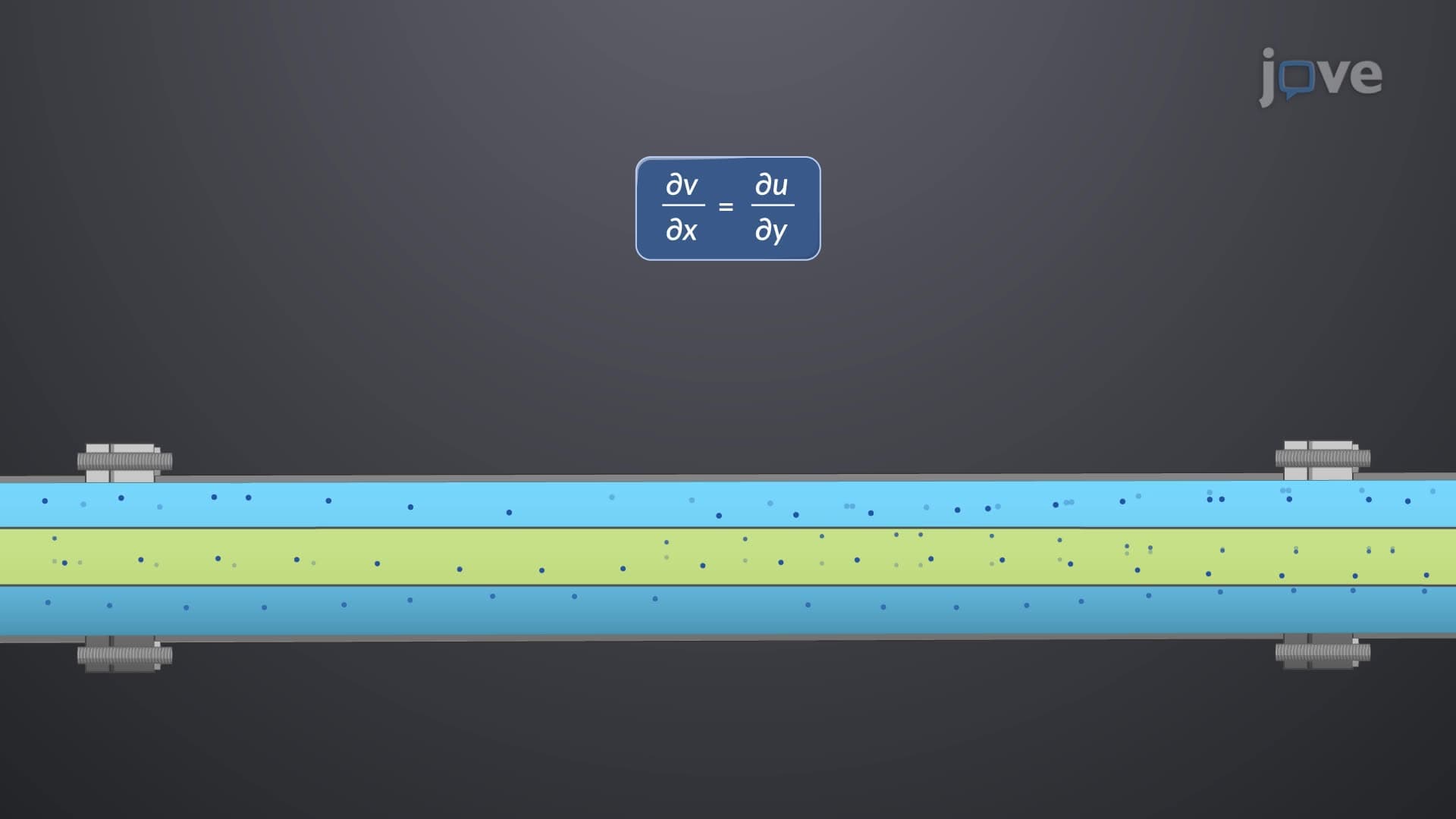
Plane potential flows represent a fundamental simplification of the complex Navier Stokes equations, making fluid dynamics accessible to engineering students and professionals. While the full Navier Stokes equations can describe virtually any fluid motion, they often require computational methods to solve. Plane potential flows offer an elegant analytical approach by assuming two key conditions: the flow is irrotational (no spinning motion of fluid particles) and incompressible (constant fluid density).
The types of Navier Stokes equations include the full viscous form, the inviscid Euler equations, and simplified potential flow equations. When we assume inviscid, irrotational flow, the Navier Stokes equations reduce to Laplace's equation: ∇²φ = 0, where φ represents the velocity potential function. This dramatic simplification occurs because viscous effects become negligible in many practical scenarios, such as flow around large structures or through porous media.
Students preparing for AP Physics C or college fluid mechanics courses will encounter this as a bridge between basic fluid statics and the full complexity of viscous flow. The Navier Stokes equations overview typically begins with these simplified cases to build intuition before tackling more complex scenarios.
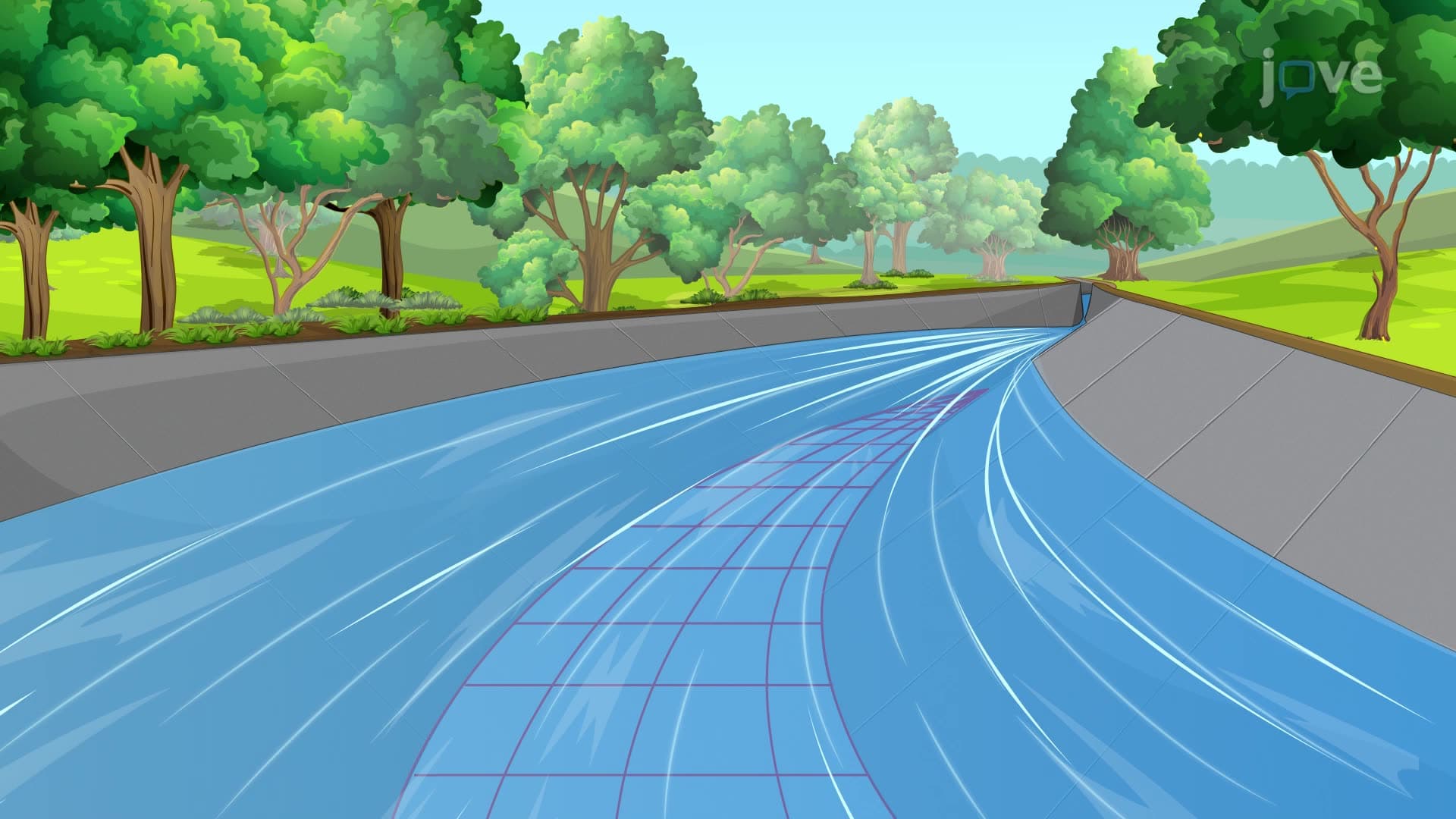
Consider the design of the spillway system at Glen Canyon Dam in Arizona. Engineers use uniform potential flow analysis to predict how water will behave as it moves through the straight approach channels. The parallel streamlines characteristic of uniform flow help determine optimal channel dimensions and flow capacities.
Source and sink flows find immediate application in groundwater management across the Ogallala Aquifer system. When agricultural wells pump water from underground, they create sink flow patterns that help hydrologists predict drawdown zones and interference between neighboring wells. California's Department of Water Resources routinely uses these models to manage groundwater sustainability.
Vortex flows become critical in designing urban stormwater management systems. The spiral flow patterns in drainage structures, from simple storm drains to complex detention basins, follow vortex flow principles. Engineers designing the flood control systems for Houston after Hurricane Harvey relied heavily on these flow pattern predictions.
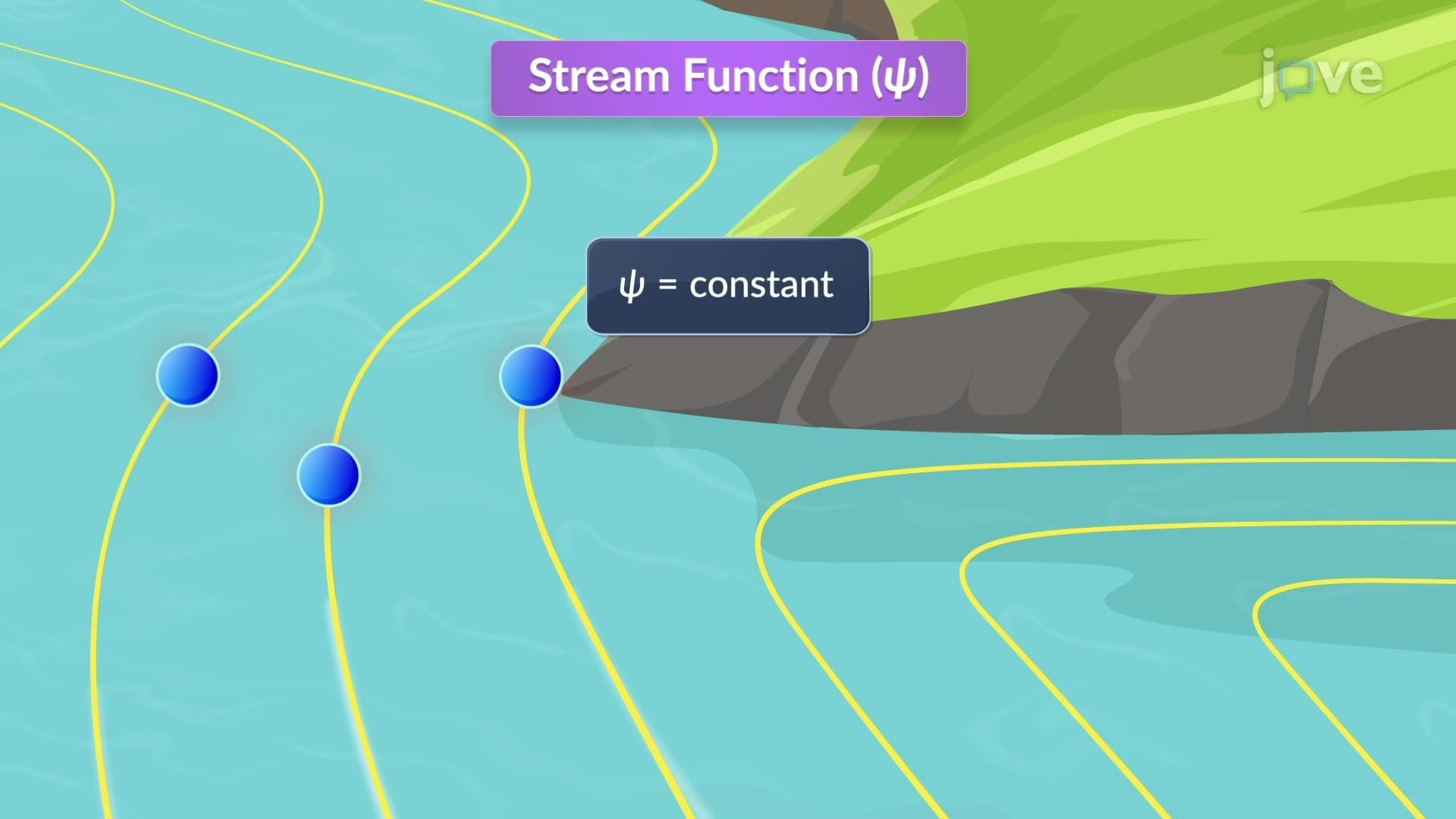
Flow nets—the graphical representation combining streamlines and equipotential lines—serve as powerful design tools. The Army Corps of Engineers uses flow net analysis when designing levee systems along the Mississippi River. By predicting seepage paths under these structures, engineers can identify potential failure points and design appropriate countermeasures like cutoff walls or drainage systems.
This visualization technique proves invaluable for students tackling fluid mechanics problems on the FE exam or in undergraduate coursework. The ability to sketch and interpret flow nets bridges theoretical understanding with practical engineering judgment.
Frequently Asked Questions
Plane potential flows are simplified mathematical models that describe fluid motion by assuming irrotational and incompressible flow conditions. They represent a special case of the broader Navier Stokes equations framework, offering analytical solutions where the full equations would require complex computational methods. These models use velocity potential and stream functions to predict flow patterns in engineering applications.
AP Physics C and introductory college courses typically introduce potential flows as stepping stones to understanding the complete Navier Stokes equations. Expect problems involving streamline sketching, flow rate calculations through uniform flows, and basic source/sink flow analysis. These concepts frequently appear in free-response questions requiring both mathematical calculation and conceptual explanation of flow patterns.
The MCAT focuses more on conceptual understanding than complex mathematical derivations of the Navier Stokes equations. You'll encounter questions about fluid flow principles, pressure relationships, and the physical meaning of viscous versus inviscid flow. Potential flow concepts help build intuition for these broader fluid dynamics principles tested in the physics section.
US engineers apply potential flow analysis in designing dam spillways, groundwater pumping systems, and flood control structures. For example, the Tennessee Valley Authority uses these models for hydroelectric plant design, while California water districts apply them to manage aquifer systems. The simplified mathematics allows rapid design iterations and preliminary feasibility studies.
While the complete Navier Stokes equations require vector calculus and partial differential equations, plane potential flows can be understood with solid algebra and basic calculus skills. High school students in AP Calculus can grasp the fundamental concepts, making this an excellent introduction to more advanced fluid dynamics topics in college coursework.
Start by sketching flow patterns for uniform, source, sink, and vortex flows until you can visualize them instinctively. Practice connecting mathematical expressions to physical flow behavior, and work through flow net construction problems step-by-step. Focus on understanding when potential flow assumptions apply in real engineering scenarios rather than memorizing formulas.
Progress to viscous flow analysis, boundary layer theory, and computational fluid dynamics methods. Advanced topics include turbulence modeling, heat transfer in flowing fluids, and specialized applications like aerospace or biomedical flow analysis. Many students find that solid potential flow fundamentals make these advanced topics much more accessible.
Potential flows demonstrate how mathematical assumptions can dramatically simplify complex equations while preserving essential physics. This experience builds intuition for when and why engineers make similar simplifying assumptions in other areas of the full Navier Stokes equations, such as neglecting certain terms for specific flow regimes or geometric configurations.
Related Micro-courses


Related Subjects
 Electrical Engineering 33 micro-courses›Mechanical Engineering 28 micro-courses›