Loading subject page…

- Electrical Engineering
- Transient and Steady State Response Analysis
- Second Order systems II
Micro-course: Transient and Steady-state Response Analysis
2,329 views
Learn key concepts and earn your certificate.

Second Order systems II

00:00
01:18
Video Summary: What Is Second Order Systems Ii
Why do airplane control surfaces sometimes oscillate wildly before stabilizing, while others smoothly reach their target position? Stability in second-order systems determines whether engineering systems like Boeing 737 autopilot controls will exhibit dangerous oscillations or achieve smooth, controlled responses. Understanding What is Second Order Systems II reveals how damping ratios control system behavior-from underdamped oscillations to overdamped sluggishness. Watch the full video on JoVE Coach to master this concept with expert-led visuals and step-by-step explanations.
- Understand how What is Second Order Systems II encompasses three distinct damping scenarios that determine system stability and response characteristics
- Identify the mathematical relationship between damping ratio values and resulting system behavior in underdamped, critically damped, and overdamped conditions
- Analyze how pole locations in the s-plane directly influence stability and transient response patterns in control systems
- Compare the trade-offs between response speed and stability across different damping configurations
- Evaluate when overdamped systems can be approximated as first-order systems for simplified analysis
- Apply inverse Laplace transform techniques to derive time-domain responses for unit-step inputs
- Recognize how damping ratio selection impacts real-world engineering applications like automotive suspension systems
- Explore the connection between mathematical stability criteria and physical system performance requirements
Understanding What is Second Order Systems II: The Foundation of Stability Analysis
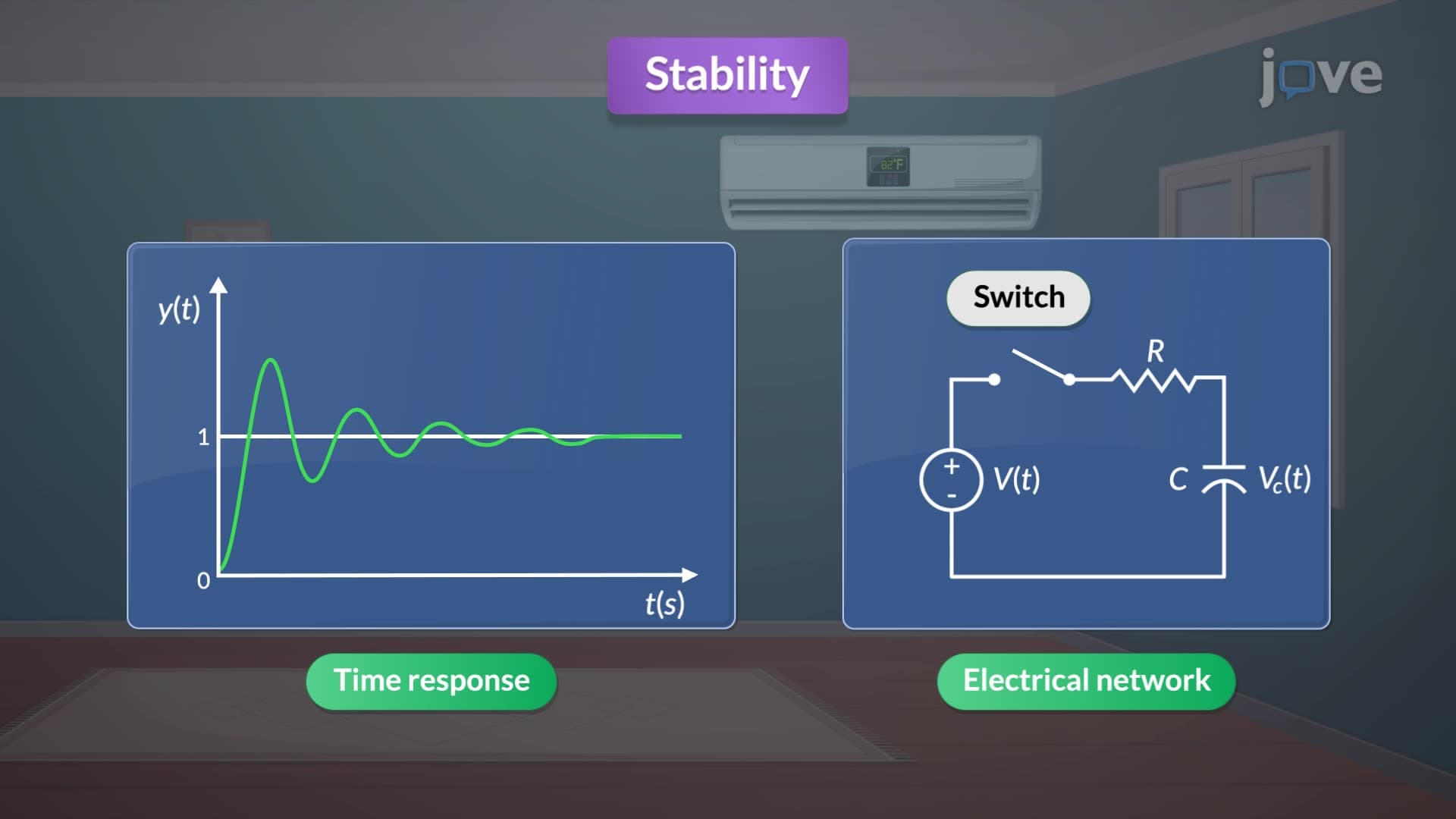
Stability forms the cornerstone of second-order system analysis, determining whether a system will settle to a desired value or exhibit problematic behavior. The stability definition in control theory centers on a system's ability to return to equilibrium after disturbances, while what is stability in detail encompasses both bounded responses and acceptable settling characteristics.
The Three Faces of Second-Order System Behavior
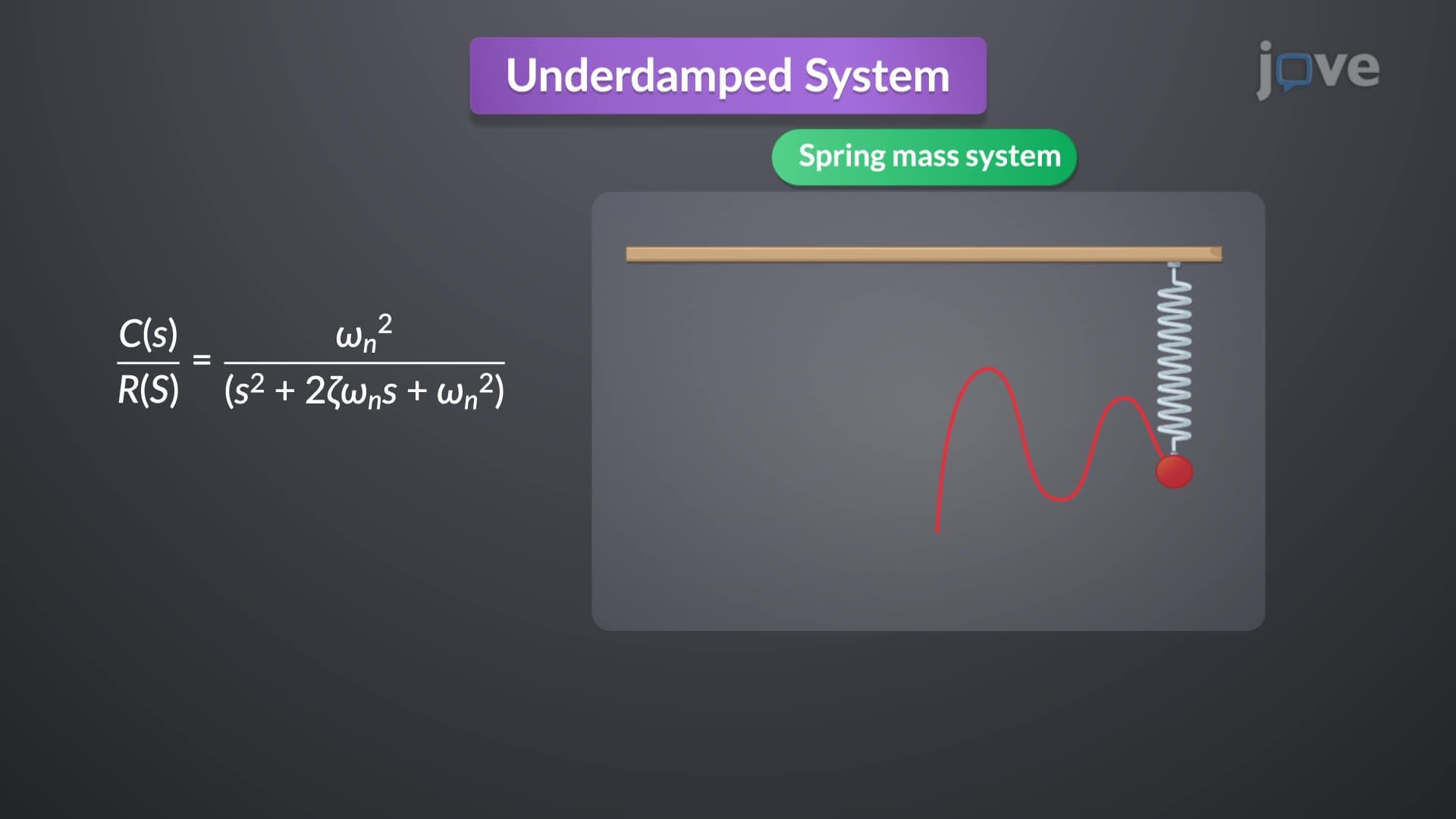
Stability overview reveals three fundamental damping scenarios. In underdamped systems (damping ratio < 1), responses exhibit oscillatory behavior with gradually decreasing amplitude-think of a car's shock absorbers after hitting a pothole. The error signal between input and output creates a damped sinusoidal pattern that eventually reaches steady-state with zero error.
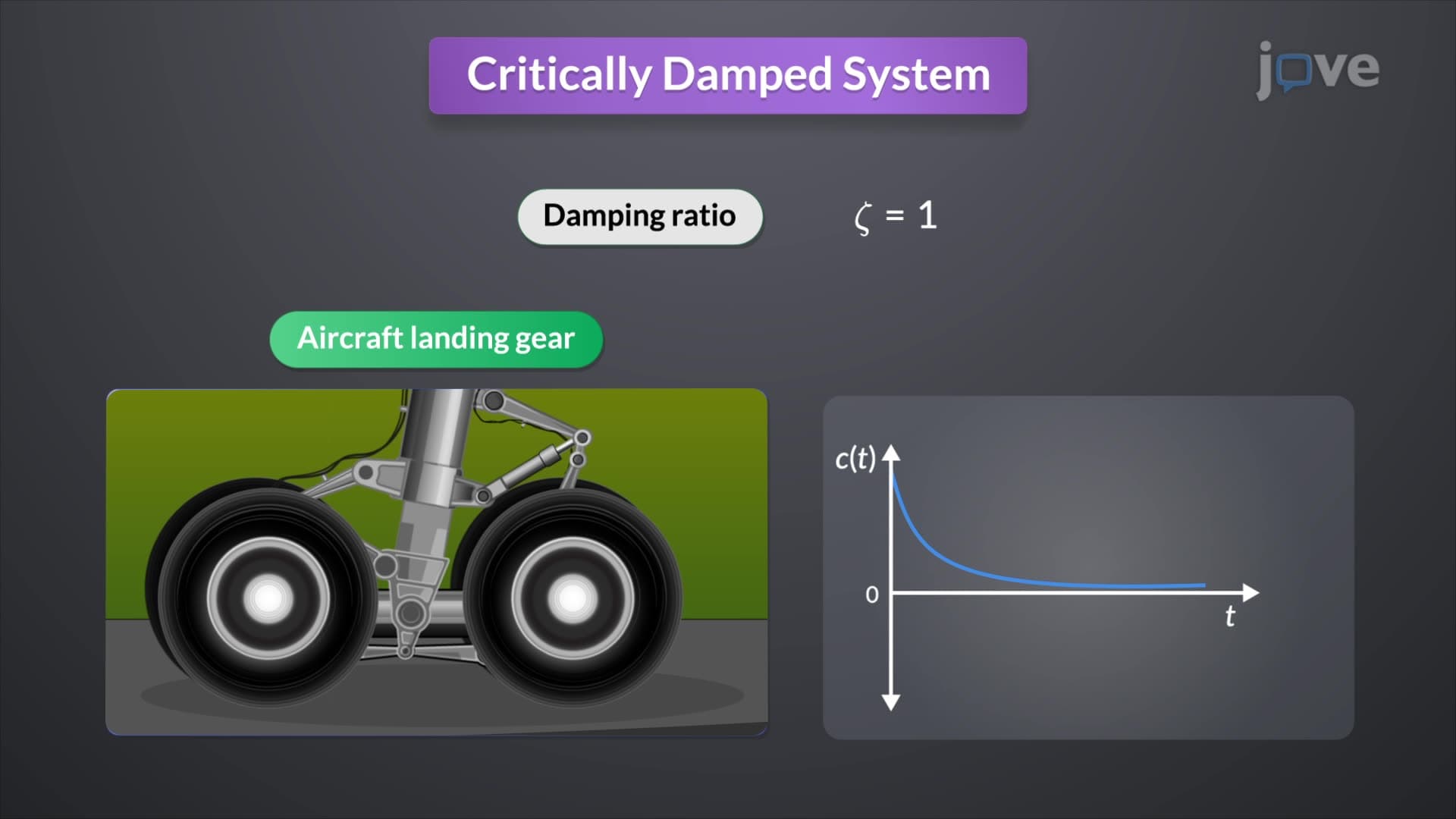
Critically damped systems (damping ratio = 1) represent the optimal balance between speed and stability. Here, both system poles occupy identical locations, producing the fastest possible response without overshoot. This stability concept proves crucial in applications like elevator control systems, where smooth, rapid positioning without oscillation ensures passenger comfort and safety.
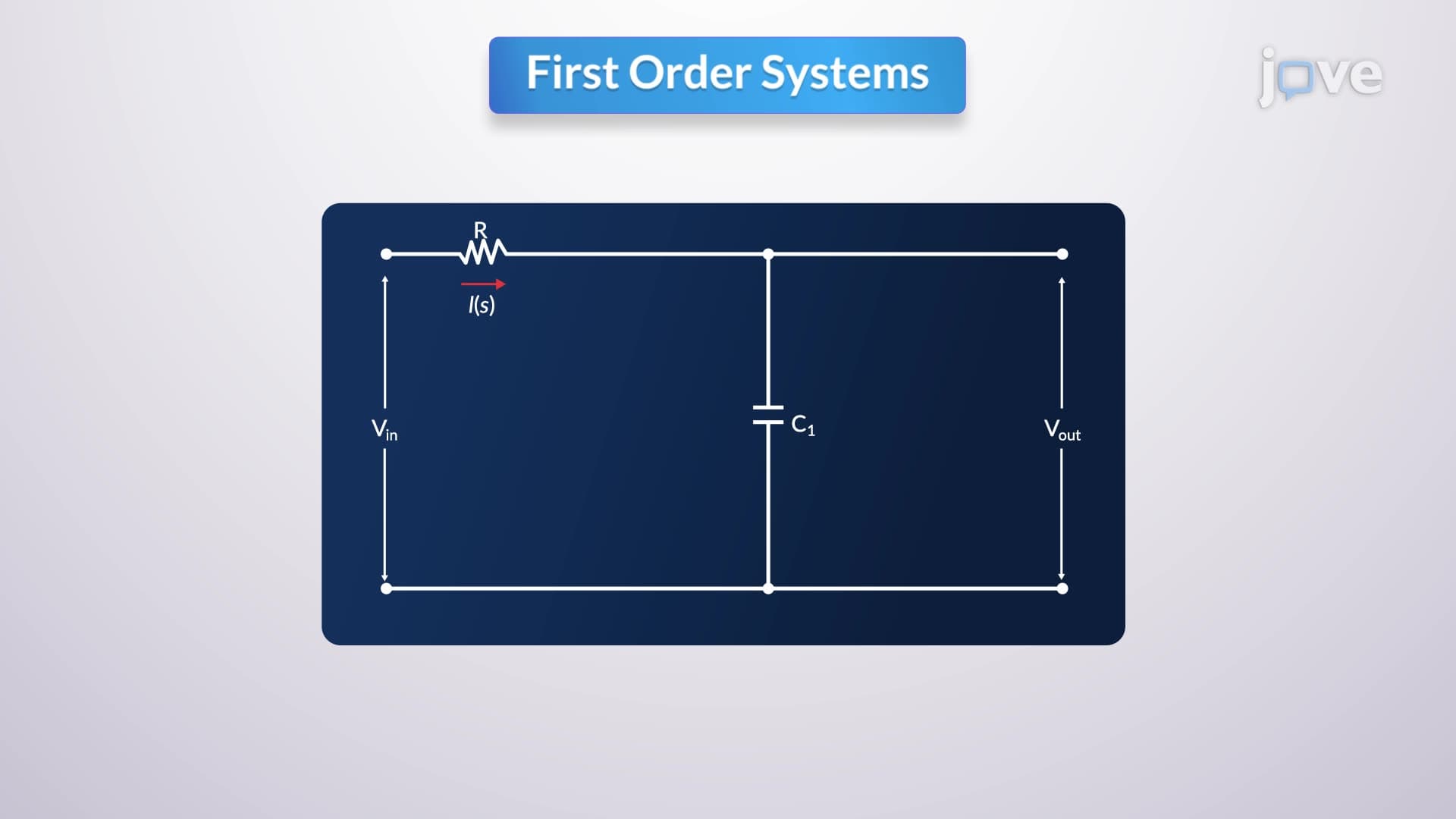
Overdamped systems (damping ratio > 1) feature two distinct, negative real poles. The resulting response combines two exponential decay terms, creating sluggish but stable behavior. When the damping ratio significantly exceeds unity, the faster exponential term dominates, allowing engineers to approximate the system as first-order-a valuable simplification technique taught in AP Physics C and introductory college engineering courses.
Mathematical Foundations and Practical Applications
The stability basics rely on pole placement in the complex s-plane. Stability requires all poles to possess negative real parts, ensuring bounded responses. For understanding stability in exam contexts, remember that pole locations directly correlate with time-domain behavior: closer to the imaginary axis means more oscillatory, while farther left indicates more stable but slower responses.
This stability study guide principle applies across engineering disciplines. NASA's spacecraft attitude control systems exemplify critically damped design-spacecraft must orient precisely without oscillation when photographing distant galaxies. Similarly, Ford's electronic stability control systems use overdamped responses to prevent dangerous vehicle oscillations during emergency maneuvers.
Examination and Assessment Perspectives
SAT Subject Test Math Level 2 and AP Calculus BC students encounter these concepts through differential equations and Laplace transforms. College-level control systems courses, particularly at institutions like MIT and Stanford, emphasize the connection between mathematical analysis and physical reality. MCAT physics sections may test stability concepts within biomechanical contexts, such as analyzing human balance control systems.
Frequently Asked Questions
Second Order Systems II focuses on how damping ratios control system stability and response characteristics. It examines three key scenarios: underdamped (oscillatory but stable), critically damped (optimal speed without overshoot), and overdamped (slow but very stable) responses. Understanding these concepts helps predict whether engineering systems will exhibit dangerous oscillations or achieve smooth, controlled behavior.
Stability in detail means a system returns to equilibrium after disturbances with bounded, acceptable responses. For second-order systems, stability requires negative real parts for all poles, ensuring responses don't grow infinitely. The damping ratio determines response quality: values between 0.4-0.8 typically provide good stability margins while maintaining reasonable settling times.
AP Physics C Mechanics often examines stability through oscillatory motion problems, particularly damped harmonic oscillators. Students analyze how damping coefficients affect amplitude decay and frequency. The Electricity & Magnetism exam may include RLC circuits exhibiting second-order behavior, testing understanding of critically damped versus overdamped responses.
MCAT physics sections test stability concepts through biomechanical systems like human balance control and cardiovascular regulation. Questions often focus on how physiological damping mechanisms prevent dangerous oscillations in blood pressure or postural control. Understanding critically damped responses helps explain optimal biological system design.
Tesla's Autopilot steering control exemplifies critically damped design-vehicles must track lanes smoothly without oscillation. Boeing 777 flight control systems use carefully tuned damping to prevent pilot-induced oscillations during turbulence. Building seismic isolation systems in California employ overdamped responses to protect structures during earthquakes while maintaining stability.
Basic calculus proficiency suffices for fundamental concepts, though Laplace transforms require more mathematical maturity. High school students can grasp stability principles through graphical analysis and physical intuition. College students benefit from differential equations background, but many stability insights emerge from conceptual understanding rather than complex mathematical manipulation.
Focus on connecting mathematical pole locations to physical behavior patterns-create visual associations between s-plane positions and time-domain responses. Practice identifying damping ratios from given parameters, then predict resulting stability characteristics. Work through diverse application examples from automotive, aerospace, and biomedical fields to reinforce pattern recognition.
Progress to frequency domain analysis using Bode plots and Nyquist criteria for stability assessment. Explore modern control theory including state-space methods and optimal control design. Advanced topics include robust control techniques and nonlinear system stability analysis using Lyapunov methods-concepts featured in graduate-level control systems courses at top engineering schools.
Related Micro-courses