Loading…
Loading video…

21,492 views
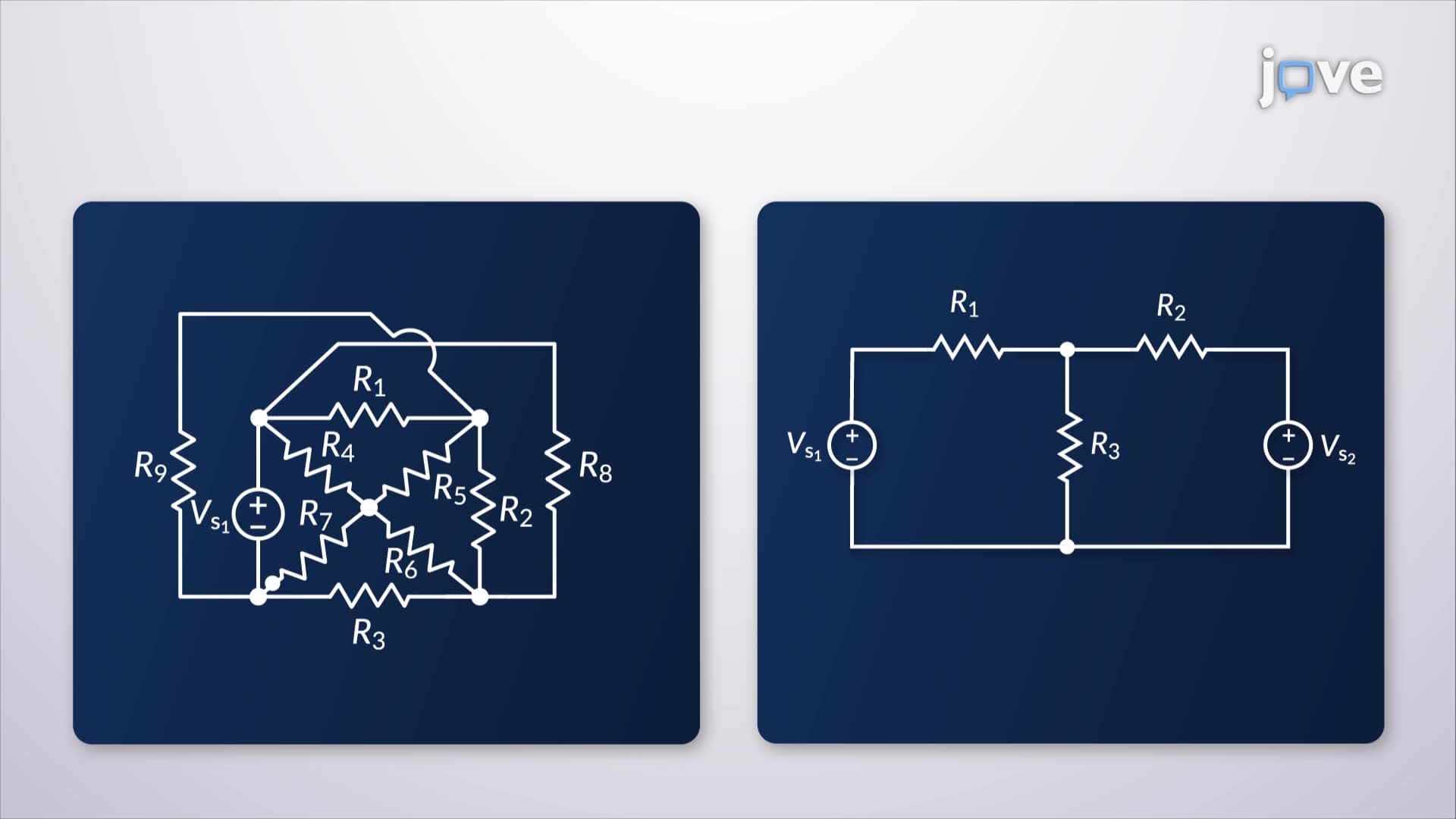
Did you know that Tesla's engineers rely on the same circuit analysis technique you're about to learn to design electric vehicle charging systems? Mesh analysis with independent and dependent current sources simplifies complex electrical networks by treating loops like highways with predictable traffic flow. Consider how power grid operators at California's ISO use similar methods to balance electricity distribution across millions of homes. The Mesh Analysis Method for DC Electrical Circuits transforms intimidating circuit problems into manageable algebraic equations. Watch the full video on JoVE Coach to master this concept with expert-led visuals and step-by-step explanations.
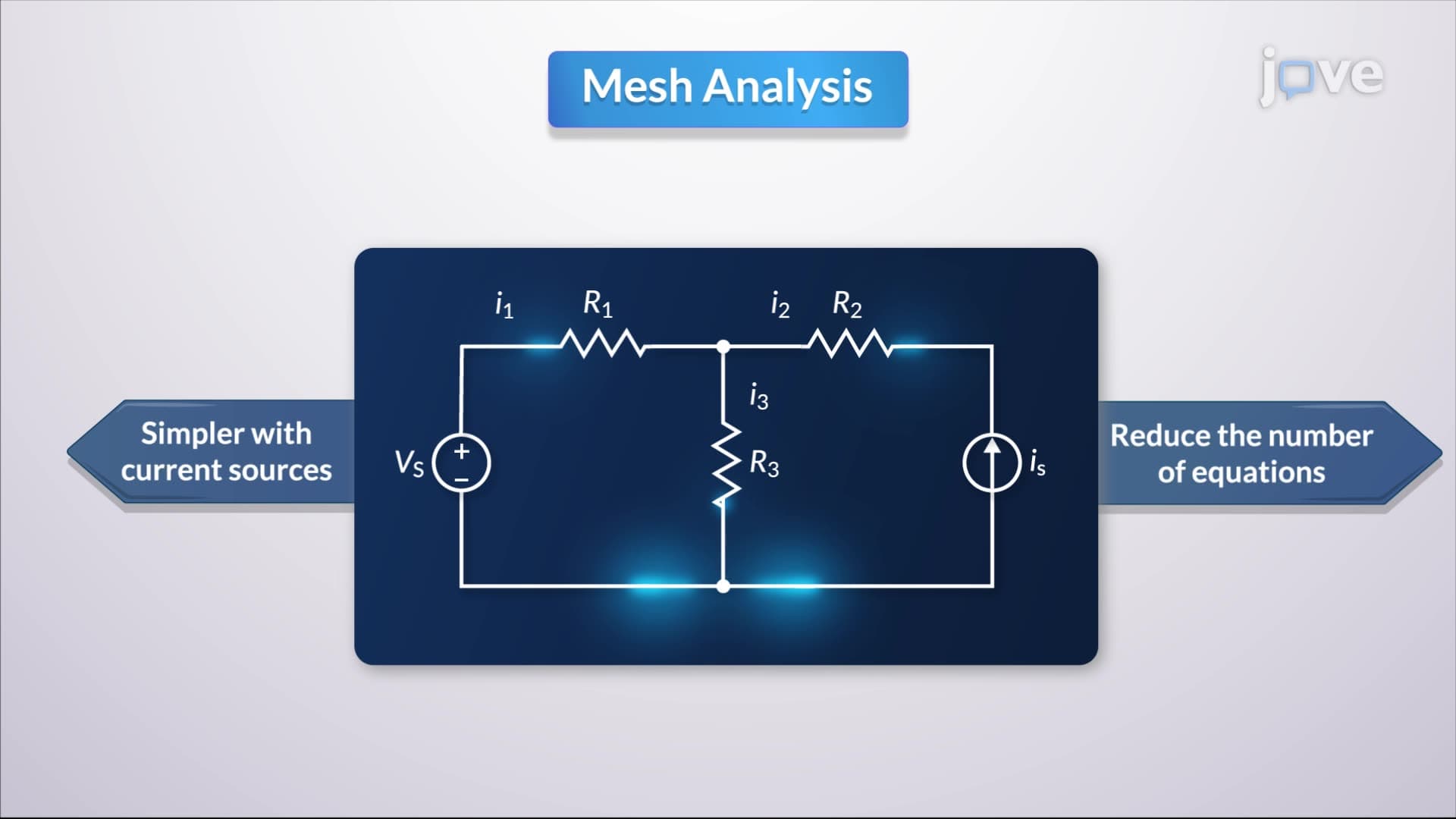
Mesh analysis with independent and dependent current sources represents one of electrical engineering's most powerful systematic approaches to circuit analysis. Unlike the trial-and-error methods that might tempt beginning students, mesh analysis provides a structured pathway that electrical engineers at companies like General Electric and Texas Instruments use daily. This method treats electrical circuits like organized highway systems, where each loop (mesh) carries a predictable current flow pattern.
The beauty of mesh analysis with independent and dependent current sources explained lies in its mathematical elegance. Each mesh current becomes an unknown variable, and Kirchhoff's voltage law provides one equation per mesh. For a circuit with three meshes, you'll solve three equations with three unknowns—exactly what your algebra skills from high school prepare you for. This systematic approach eliminates guesswork and ensures consistent results.
Consider how Boeing's electrical engineers design aircraft power systems. They can't afford circuit analysis errors when designing systems that power navigation equipment at 35,000 feet. Mesh analysis provides the reliability they need because it methodically accounts for every voltage drop and current relationship within the circuit.
How to understand mesh analysis with independent and dependent current sources becomes clearer when you recognize the method's three-step structure. First, identify all independent meshes—these are the fundamental loops that don't overlap unnecessarily. Second, assign mesh currents and write voltage equations using Kirchhoff's voltage law. Third, solve the resulting system of linear equations.
This approach proves invaluable for AP Physics students and college engineering majors alike. SAT Subject Test problems often feature circuit analysis scenarios where mesh analysis provides the quickest solution path. Students preparing for electrical engineering courses like Circuit Analysis I will find mesh analysis forms the foundation for more advanced techniques like AC circuit analysis and filter design.
When circuits include dependent current sources—sources whose output depends on other circuit variables—mesh analysis adapts seamlessly. These sources commonly appear in amplifier circuits that power everything from smartphone audio systems to electric vehicle motor controllers. The dependent source simply adds one more constraint equation to your system, maintaining the method's systematic nature while handling real-world circuit complexity.
Frequently Asked Questions
Mesh analysis is a systematic circuit analysis technique that uses mesh currents as variables to solve electrical networks. It applies Kirchhoff's voltage law to each independent loop (mesh) in a planar circuit, creating a system of linear equations. This method works particularly well for circuits with fewer meshes than nodes, making complex circuit analysis manageable through algebraic problem-solving.
Yes, mesh analysis frequently appears on AP Physics C: Electricity and Magnetism exams and college circuit analysis tests. The College Board expects students to analyze multi-loop DC circuits systematically. Many AP exam free-response questions specifically test your ability to set up and solve mesh equations, making this technique essential for exam success.
Most electrical engineering programs introduce mesh analysis in Circuit Analysis I courses, typically during freshman or sophomore year. While the concept requires solid algebra skills, students who master the three-step process typically perform well on midterms. The systematic nature actually makes it more predictable than other circuit analysis methods.
No advanced math is required beyond high school algebra and basic linear equation solving. If you can solve systems of two or three linear equations—skills taught in Algebra II—you have sufficient mathematical background. The challenge lies more in setting up the equations correctly than in solving them.
Utility companies use mesh analysis principles to model electrical grid networks and optimize power distribution. While they employ computer software for large-scale analysis, the underlying mathematical principles remain identical to classroom problems. Grid operators analyze circuit behavior during fault conditions and plan system expansions using these same techniques.
Practice the three-step method consistently: identify meshes, write KVL equations, and solve systematically. Start with simple two-mesh circuits before progressing to complex networks with dependent sources. Create a checklist to avoid common errors like incorrect voltage polarity or missed dependent source relationships.
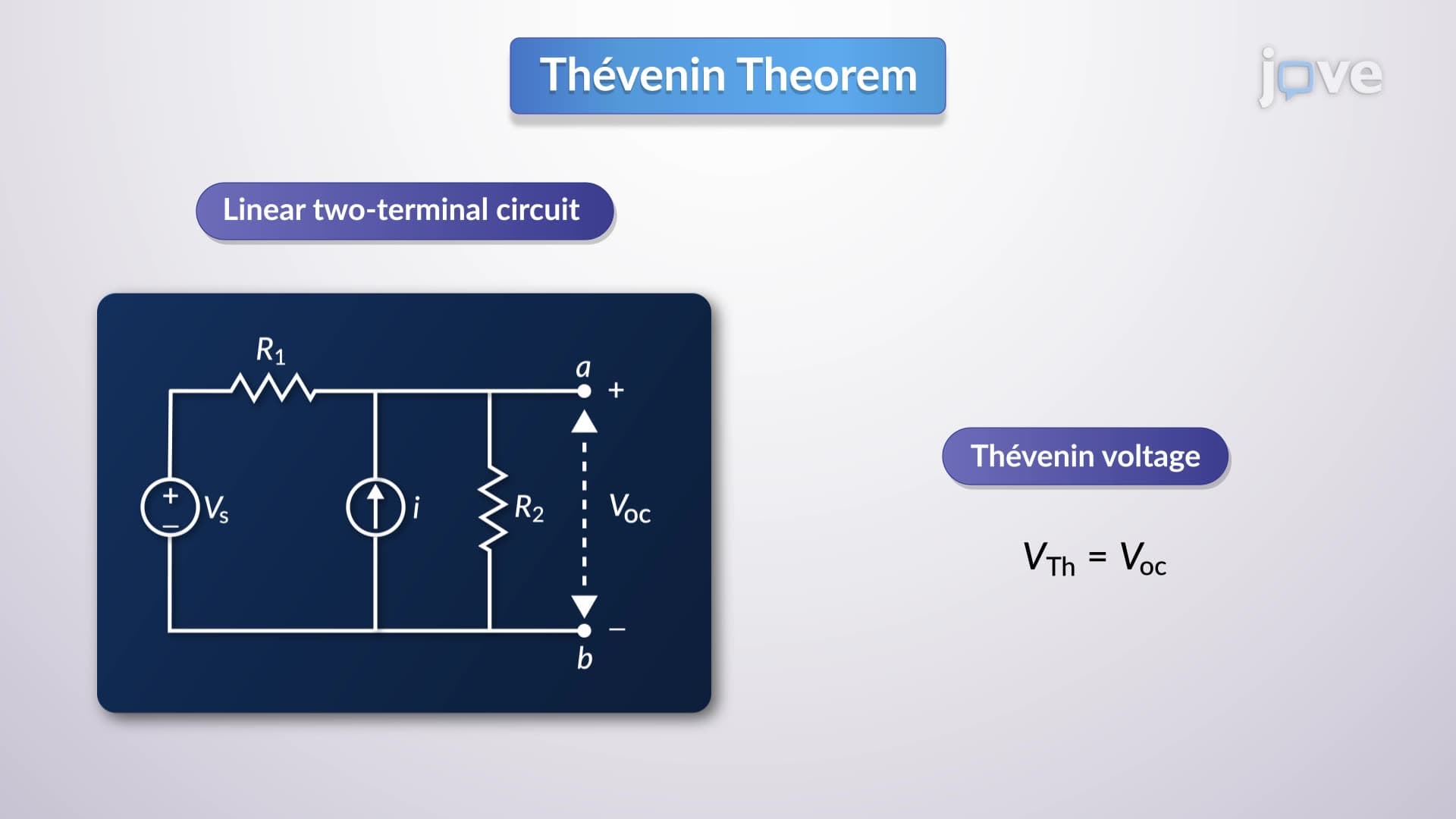
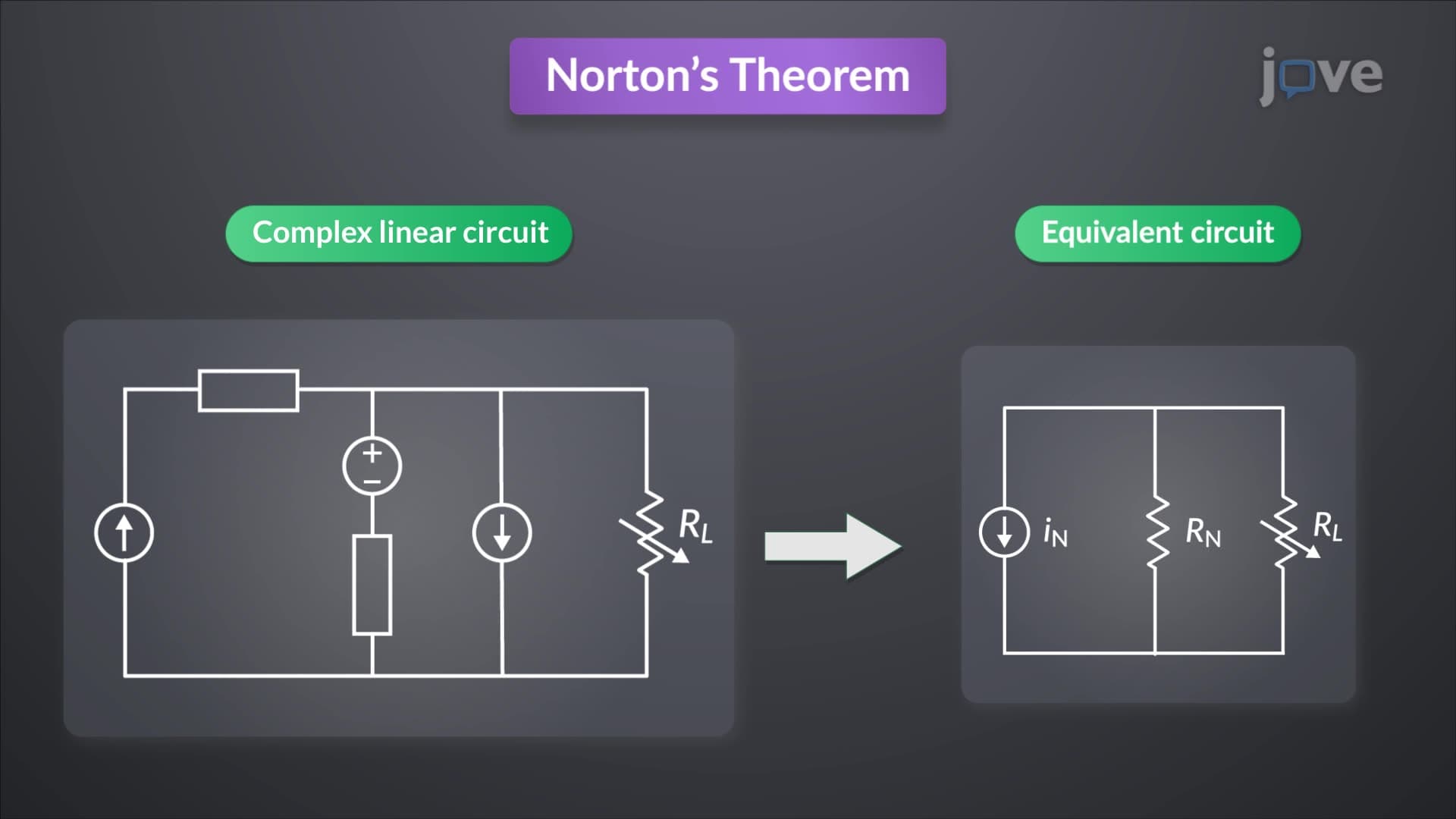
Progress to nodal analysis for comparison, then explore AC circuit analysis using phasor methods. Advanced topics include network theorems like Thevenin and Norton equivalents, which build directly on mesh analysis foundations. These concepts prepare you for upper-level courses in electronic circuits and signal processing.
Related Micro-courses


Related Subjects
 Civil Engineering 30 micro-courses›Mechanical Engineering 28 micro-courses›