Loading…
Loading video…

21,492 views
Did you know that your smartphone charger is engineered using the same principle that maximizes power delivery in massive electrical grids across the United States? A design example strain gauge bridge demonstrates how Maximum Power Transfer optimizes energy delivery by matching load resistance to source resistance. This fundamental concept appears everywhere from Tesla's Supercharger stations to medical devices in hospitals like Johns Hopkins. Understanding Maximum Power Transfer reveals why electrical engineers prioritize impedance matching in circuit design. Watch the full video on JoVE Coach to master this concept with expert-led visuals and step-by-step explanations.
Maximum Power Transfer represents a fundamental principle in electrical engineering that determines optimal conditions for energy delivery between a source and load. This concept becomes essential when designing systems where power delivery efficiency matters more than energy conservation, such as audio amplifiers, radio transmitters, and sensor networks.
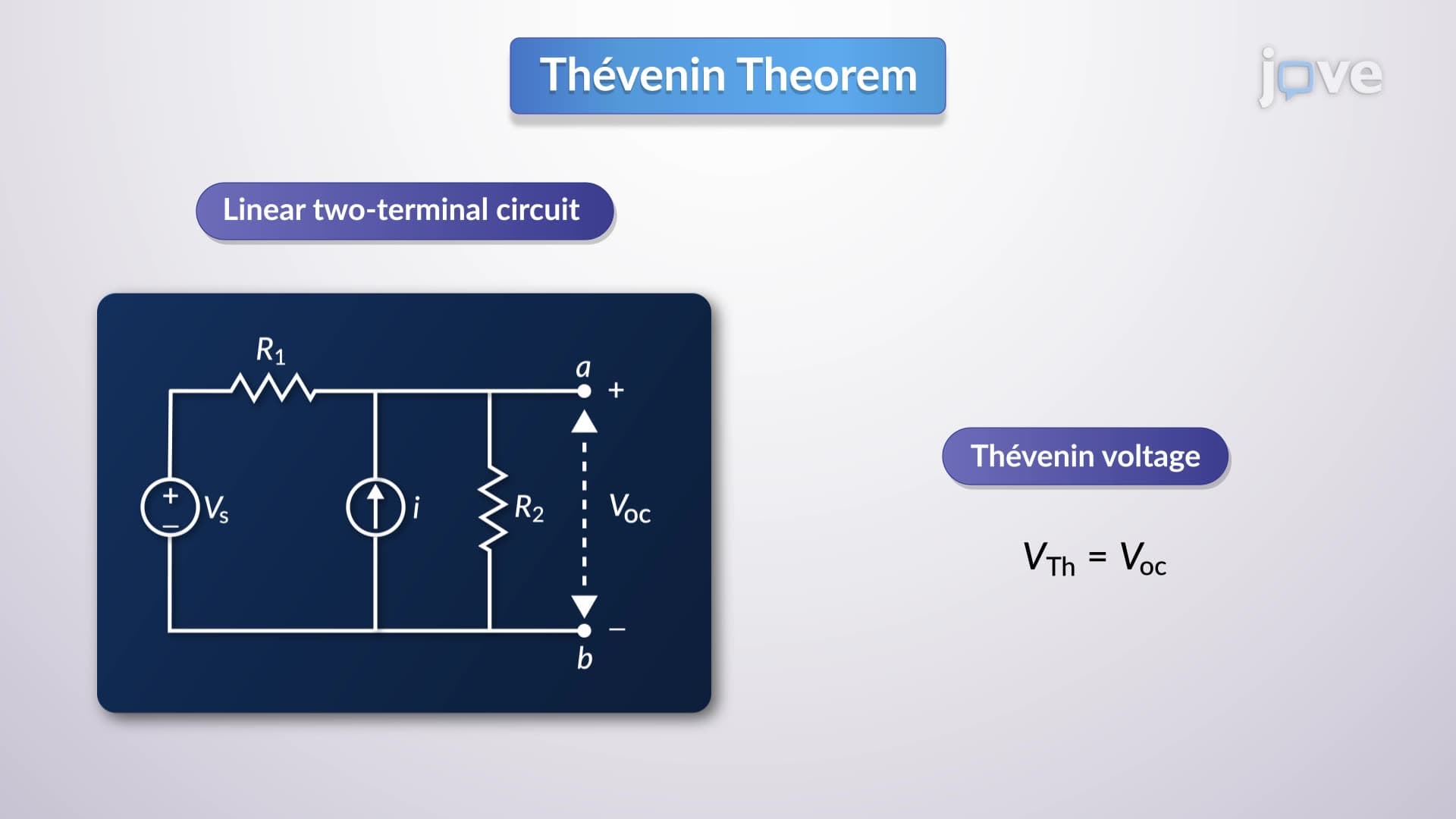
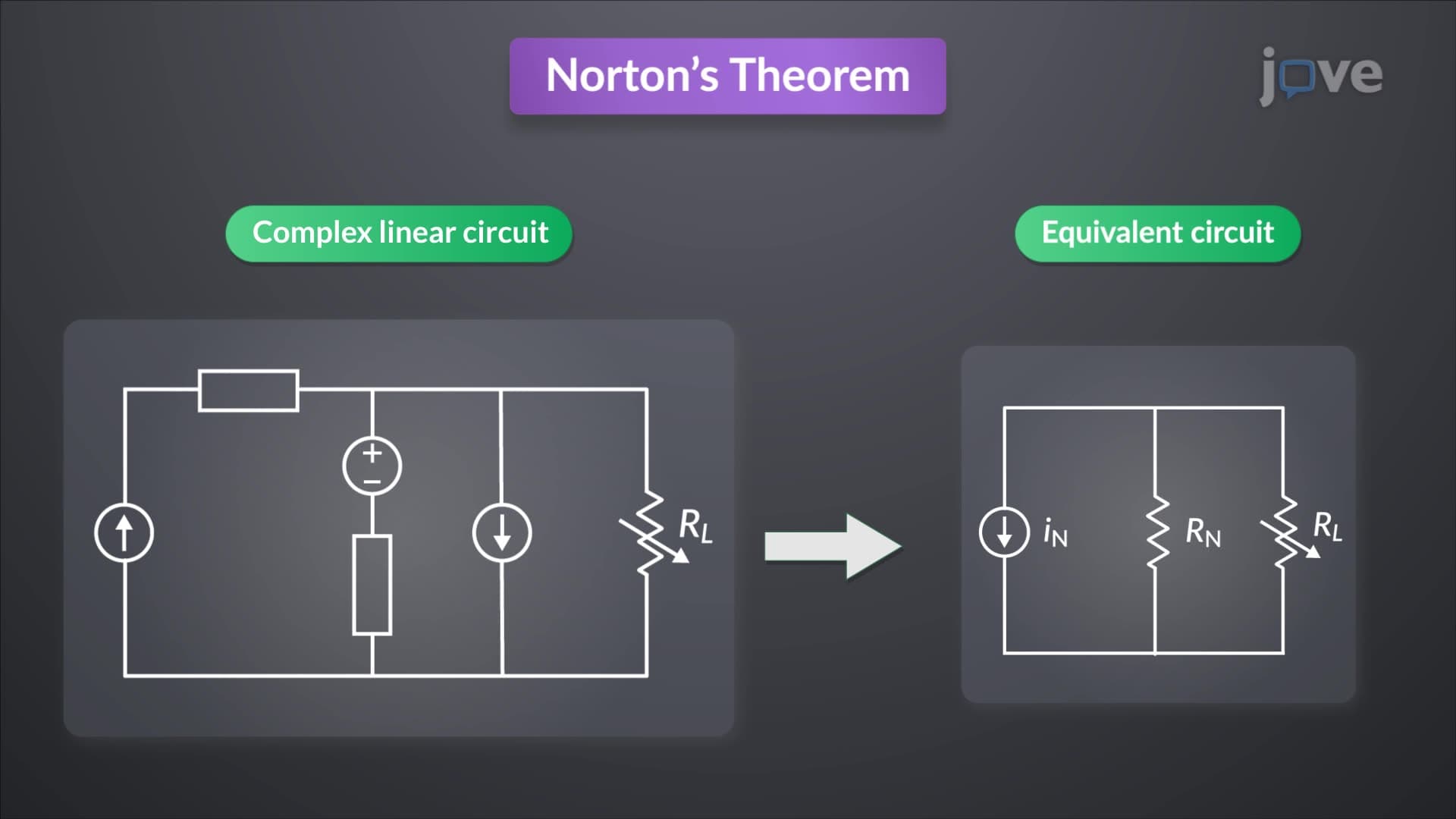
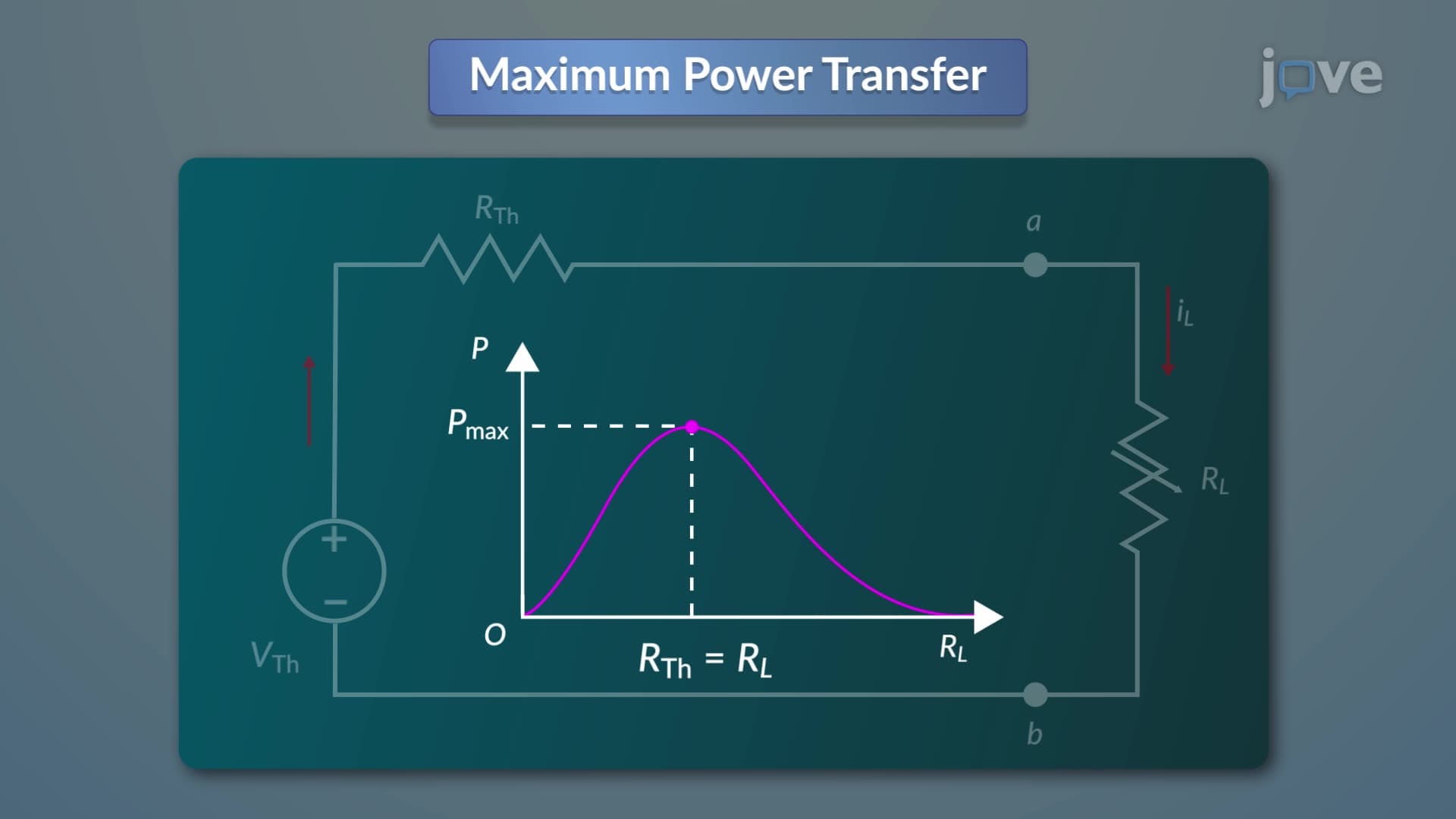
The theorem states that maximum power transfers from a source to a load when the load resistance exactly matches the source's internal resistance. This principle emerges from Thevenin equivalent circuit analysis, where any complex linear circuit reduces to a voltage source in series with a resistance.
The power delivered to a load follows the equation P = I²R(load), where current depends on both source voltage and total circuit resistance. Using Ohm's law and the voltage divider principle, we derive that power equals V²R(load)/[R(source) + R(load)]².
Taking the derivative with respect to load resistance and setting it equal to zero reveals the maximum occurs when R(load) = R(source). The second derivative test confirms this represents a true maximum, not a minimum or inflection point.
This mathematical approach appears frequently on AP Physics exams and college-level circuits courses, where students must demonstrate both conceptual understanding and computational skills.
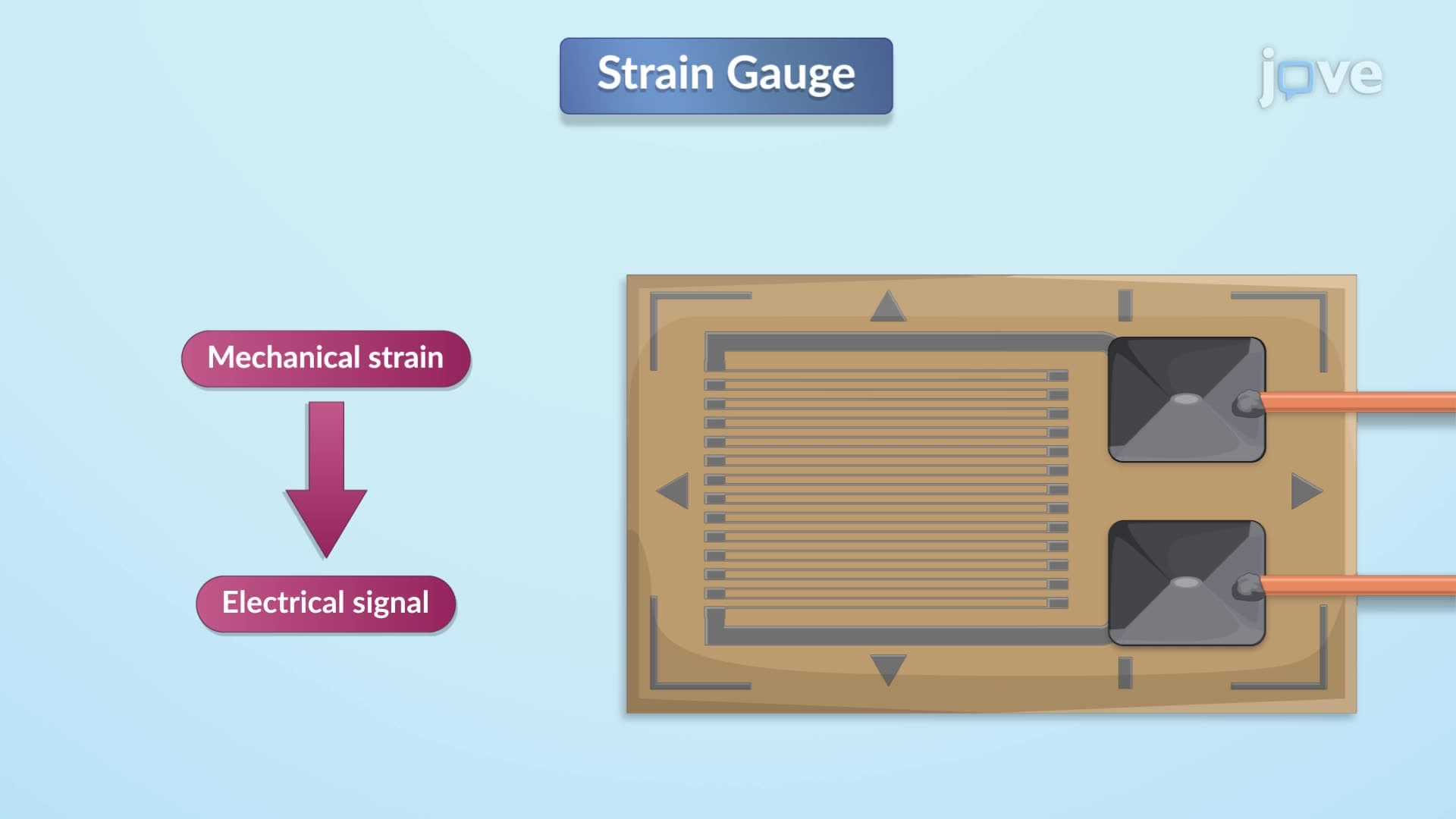
A design example strain gauge bridge perfectly illustrates Maximum Power Transfer principles in practice. These precision measurement devices, used extensively in aerospace testing at NASA and automotive crash testing facilities, require optimal power matching to achieve maximum sensitivity.
In strain gauge configurations, the bridge resistance changes minutely with mechanical stress. Maximum power transfer ensures the measurement circuit receives sufficient signal strength for accurate readings. Engineers designing these systems must balance power delivery optimization with noise reduction and thermal stability considerations.
While Maximum Power Transfer maximizes power delivery, it operates at only 50% efficiency since equal power dissipates in both source and load resistances. This limitation makes the theorem most valuable in applications prioritizing signal strength over energy conservation.
Modern applications include impedance matching networks in radio frequency systems, where cellular tower equipment must efficiently transfer signals across varying antenna loads. Similarly, medical device manufacturers apply these principles when designing ECG amplifiers and neural signal processors used in hospitals throughout the United States.
Frequently Asked Questions
Maximum Power Transfer is a fundamental theorem stating that maximum power delivers from a source to a load when their resistances are equal. This principle is crucial for designing efficient amplifiers, radio transmitters, and precision measurement systems. Engineers use this concept to optimize signal strength in applications where power delivery matters more than energy efficiency.
AP Physics C and college circuits courses frequently test this concept through both theoretical derivations and practical calculations. Students must derive the optimal load resistance using calculus, calculate maximum power values, and explain why 50% efficiency occurs at maximum power transfer. Practice problems often involve Thevenin equivalent circuits and real-world applications.
Yes, the MCAT Physics section includes questions about power transfer in biological systems and medical devices. Professional Engineer (PE) exams test this concept in power systems and electronics contexts. Understanding both the mathematical derivation and practical applications proves essential for success on these standardized assessments.
Boeing engineers apply this principle when designing aircraft electrical systems and sensor networks. Tesla uses impedance matching in their Supercharger stations to optimize power delivery to vehicle batteries. Medical device companies like Medtronic implement these concepts in pacemaker and neural stimulator designs to ensure reliable signal transmission.
Not at all! While the calculus derivation requires differential equations knowledge, the core concept is straightforward: matching resistances maximizes power delivery. Start with basic Ohm's law understanding, then progress to Thevenin equivalent circuits. Most high school physics students successfully grasp this concept with proper foundational preparation.
Practice deriving the theorem from first principles using both algebraic manipulation and calculus approaches. Focus on identifying when to apply maximum power transfer versus maximum efficiency conditions. Create flashcards linking the mathematical relationships to real-world applications, and solve varied problems involving different circuit configurations and measurement scenarios.
Explore impedance matching in AC circuits, including complex impedance calculations and Smith chart applications. Study power system analysis, including load flow calculations and transmission line theory. Advanced topics include scattering parameters, antenna theory, and filter design principles used in modern telecommunications and aerospace engineering applications.
When load resistance equals source resistance, voltage divides equally between them, meaning equal power dissipates in each component. This inherent limitation makes the theorem most valuable for signal processing applications rather than power transmission systems. Understanding this trade-off helps engineers choose appropriate design strategies for different applications.
Related Micro-courses



Related Subjects
 Civil Engineering 30 micro-courses›Mechanical Engineering 28 micro-courses›