Loading…
Loading video…

21,492 views
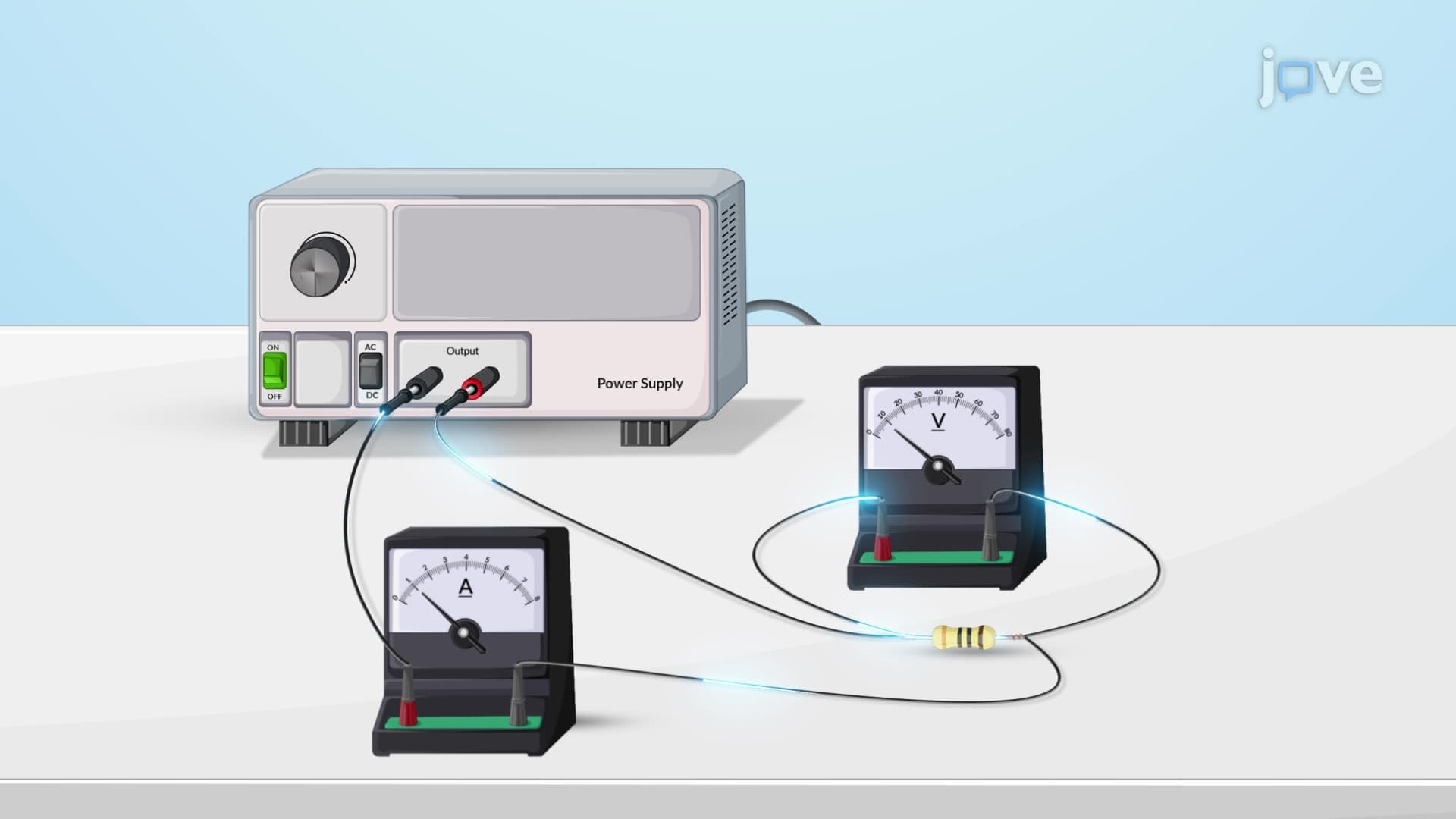
Ever wonder why your smartphone charger works consistently regardless of your battery level? The superposition theorem explains this reliability through linear circuit behavior. Linear circuits maintain proportional voltage-current relationships, like those found in household electrical systems across American homes. What are linear circuits? They're electrical networks where doubling the input voltage exactly doubles the output current, following predictable mathematical patterns that engineers rely on daily. Watch the full video on JoVE Coach to master this concept with expert-led visuals and step-by-step explanations.
What are linear circuits? They represent electrical networks where the relationship between input and output remains mathematically proportional. When you double the voltage input, the current output doubles accordingly. This predictable behavior stems from two fundamental properties: homogeneity (scaling property) and additivity (superposition property). The superposition theorem definition builds directly on these principles, stating that in linear circuits, the total response equals the sum of individual responses from each independent source.
What is superposition theorem in detail? This powerful analytical tool allows engineers to solve complex circuits by examining each independent source separately, then combining results. For instance, when analyzing the electrical grid supplying power to Los Angeles, engineers use superposition to understand how multiple power plants contribute to the total current at any distribution point. The superposition theorem overview reveals its practical importance: it transforms complicated multi-source problems into manageable single-source calculations.
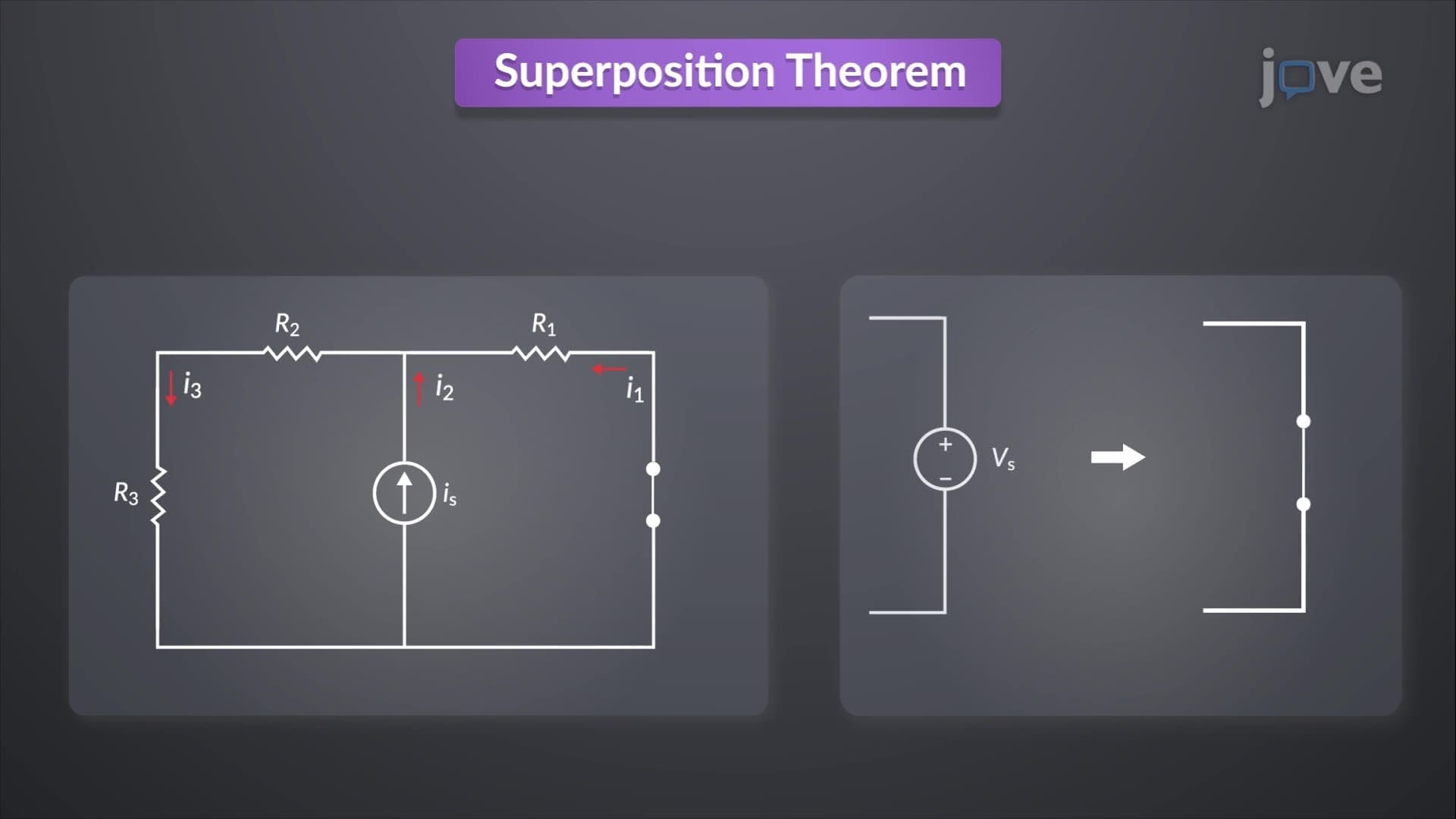
Linear circuits follow Ohm's Law (V = IR) consistently across all operating conditions. When applying the superposition theorem basics, engineers first "turn off" all but one independent source (replacing voltage sources with short circuits, current sources with open circuits), calculate the resulting currents and voltages, then repeat for each source. The superposition theorem concept requires algebraic addition of all individual results to find the final solution.
Students preparing for AP Physics or college-level electrical engineering courses encounter these principles frequently. The understanding superposition theorem becomes crucial for MCAT physics sections and engineering coursework at institutions like MIT and Stanford. However, one critical limitation exists: power calculations don't follow superposition since power depends on the square of current (P = I²R), making it inherently nonlinear.
The superposition theorem study guide approach proves invaluable when analyzing household electrical systems. Consider your home's electrical panel: multiple circuits supply different rooms, each contributing to the total current demand. Utility companies use these principles to predict power consumption patterns across American cities, from New York's skyscrapers to California's suburban neighborhoods. This mathematical framework enables engineers to design stable electrical infrastructure that millions depend on daily.
Frequently Asked Questions
Linear circuits maintain proportional relationships between voltage and current, following predictable mathematical patterns. Unlike nonlinear circuits (containing diodes or transistors), linear circuits obey the superposition theorem and allow engineers to predict exact outputs from given inputs using simple algebraic calculations.
The superposition theorem states that in linear circuits with multiple independent sources, the total response equals the sum of individual responses from each source acting alone. This principle allows complex circuit analysis by breaking problems into manageable single-source calculations, then combining results algebraically.
AP Physics and college exams frequently test superposition through multi-source circuit problems requiring step-by-step analysis. Students must demonstrate turning off sources individually, calculating partial responses, and combining results. MCAT physics sections also include these concepts in electrical circuits passages.
Electrical Engineering programs at universities like Purdue, Georgia Tech, and UC Berkeley emphasize superposition in Circuit Analysis (ECE 201), Electronics I, and Network Theory courses. Physics majors encounter it in Electricity & Magnetism and Applied Physics coursework throughout their undergraduate studies.
Power grid engineers apply superposition to analyze how multiple generators across states like Texas or California contribute to regional electrical demand. They calculate individual contributions from coal plants, solar farms, and natural gas facilities, then sum these effects to predict total grid stability.
Basic algebra and arithmetic suffice for fundamental superposition problems. While advanced electrical engineering requires calculus for AC circuits and complex impedances, introductory linear circuit analysis uses only addition, subtraction, and Ohm's Law applications that high school students can master.
Practice systematic source elimination: cover one source, solve the simplified circuit, repeat for remaining sources, then sum all partial results. Create step-by-step checklists and work through progressively complex problems from textbooks by authors like Nilsson & Riedel or Alexander & Sadiku.
Progress to AC circuit analysis, complex impedances, and frequency response analysis. Advanced coursework includes Laplace transforms, network synthesis, and control systems theory—foundational concepts for electrical engineering graduate programs and professional engineering licensure exams.
Related Micro-courses


Related Subjects
 Civil Engineering 30 micro-courses›Mechanical Engineering 28 micro-courses›