Loading…
Loading video…

6,505 views
Ever wondered how Spotify's audio compression makes songs stream instantly without losing quality? The basic signals of fourier transform enable this digital magic by converting time-domain audio into frequency components. What is Continuous Time Fourier Transform reveals how engineers at companies like Apple and Google process everything from smartphone cameras to medical imaging systems. Watch the full video on JoVE Coach to master this concept with expert-led visuals and step-by-step explanations.
The Continuous Time Fourier Transform (CTFT) represents one of the most powerful mathematical tools in modern engineering and physics. While Fourier series effectively handles periodic signals like the 60 Hz electrical grid frequency used across the United States, real-world signals are often non-periodic. Consider a single lightning strike detected by weather radar systems operated by the National Weather Service—this isolated pulse cannot be represented by periodic Fourier series, requiring the continuous transform approach.
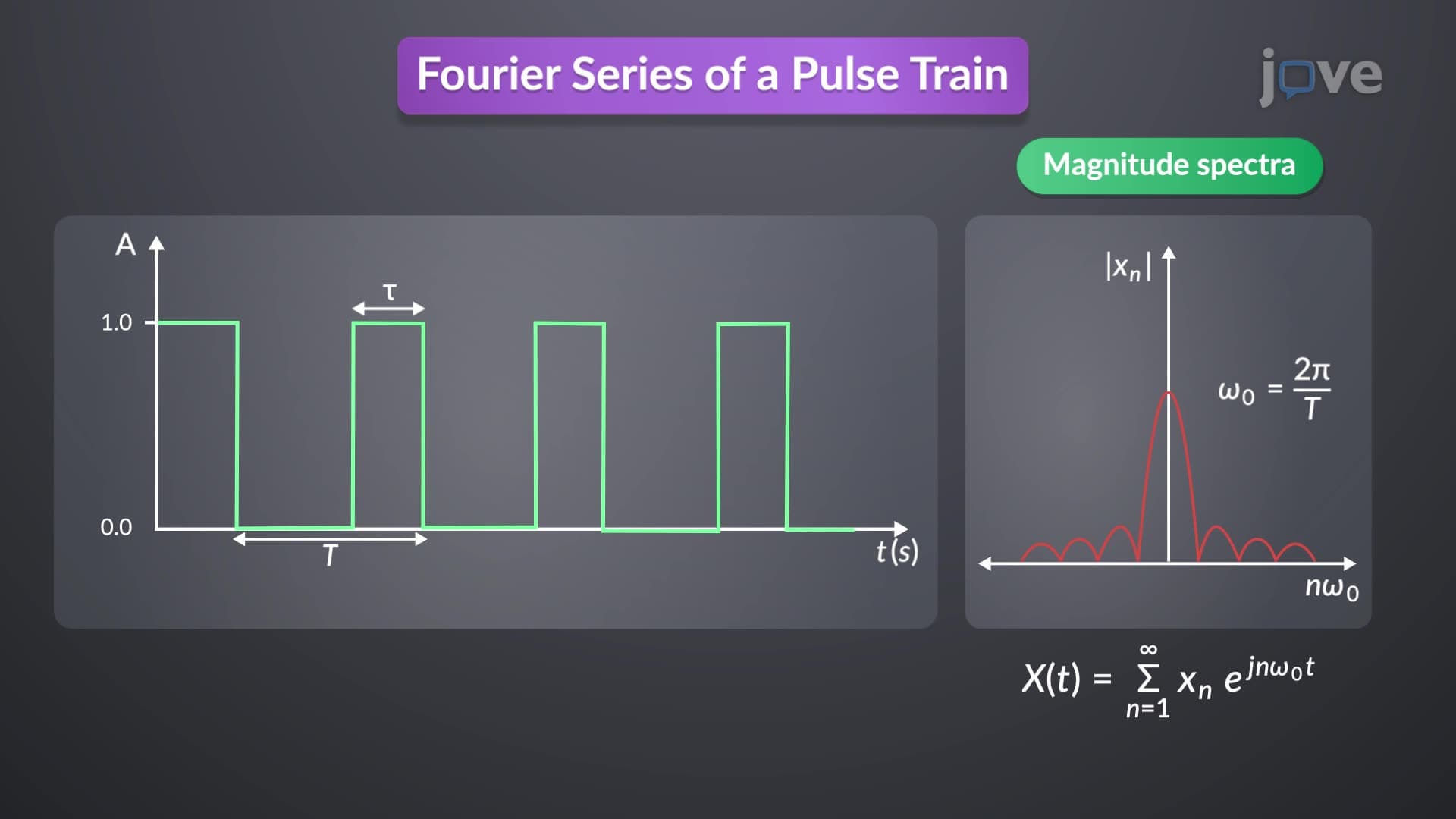
The basic signals of fourier transform tutorial begins with understanding how periodicity affects frequency representation. When analyzing a train of rectangular pulses with finite period T, we obtain discrete frequency components separated by 1/T Hz. As the period increases, these frequency lines move closer together. When T approaches infinity—representing a single, isolated pulse—the discrete spectrum becomes continuous, and the Fourier series summation transforms into an integral. This mathematical evolution explains why radar systems at airports like LAX can detect both repetitive aircraft transponder signals and isolated weather events.
Understanding basic signals of fourier transform requires grasping the Dirichlet conditions that govern transformability. A function must have finite discontinuities, maxima, and minima within any finite interval, and must be absolutely integrable. These conditions ensure that signals encountered in practical applications—from biomedical signals recorded by FDA-approved devices to seismic data collected by the U.S. Geological Survey—can be reliably processed. Students preparing for AP Physics C or undergraduate electrical engineering courses at institutions like MIT or Stanford will encounter these conditions as fundamental prerequisites for signal analysis.
How basic signals of fourier transform works becomes evident in applications spanning multiple industries. Medical imaging systems used in hospitals nationwide rely on CTFT principles to reconstruct MRI images from radio frequency signals. Communications companies like Verizon and AT&T use these mathematical foundations for signal modulation in 5G networks. Even entertainment giants like Disney employ CTFT concepts in digital audio processing for movie soundtracks. For students targeting MCAT preparation, understanding these transforms proves essential for medical physics sections, while engineering students benefit from these concepts across multiple college coursework areas.
Frequently Asked Questions
The Continuous Time Fourier Transform analyzes non-periodic signals by converting them from time domain to frequency domain using continuous integrals rather than discrete summations. Unlike Fourier series which represents periodic signals as combinations of discrete frequency components, CTFT handles isolated events like a single radar pulse or earthquake tremor. This makes it essential for analyzing real-world signals that don't repeat, such as speech patterns or medical diagnostic signals used in American hospitals.
Fourier transform concepts typically appear in advanced college coursework rather than AP Physics C, though the underlying wave and frequency principles are tested. Students planning engineering majors at schools like Caltech or Georgia Tech will encounter detailed CTFT analysis in sophomore-level signals and systems courses. However, understanding frequency domain thinking helps with AP Physics wave problems and prepares students for advanced STEM coursework.
Focus on understanding the mathematical relationship between time and frequency domains rather than memorizing formulas. Practice identifying when signals meet Dirichlet conditions and work through examples involving pulse signals and their spectra. Most engineering programs at universities like University of Michigan or Purdue include CTFT in their signals processing courses, typically requiring strong calculus backgrounds and complex number proficiency.
MRI machines in American hospitals use CTFT principles to convert radio frequency signals into detailed body images that doctors interpret for diagnosis. The transform analyzes how different tissues respond to magnetic fields, creating the frequency domain data that computers reconstruct into the medical images radiologists examine. This same mathematical foundation enables CT scans and ultrasound imaging used throughout the U.S. healthcare system.
The conceptual understanding is accessible to students with strong algebra and trigonometry backgrounds, though the detailed mathematics requires calculus knowledge. Students can grasp how signals transform between time and frequency domains through visual examples and practical applications. Most high schoolers benefit from focusing on the underlying concepts and real-world applications, saving the rigorous mathematical proofs for college coursework in engineering or physics programs.
Start with visual representations showing how time-domain signals correspond to frequency-domain spectra, then practice identifying signal characteristics that determine transformability. Work through examples from different fields—audio processing, medical imaging, and communications—to see practical applications. Create concept maps connecting Fourier series, CTFT, and their applications in American industries to reinforce understanding before tackle mathematical derivations.
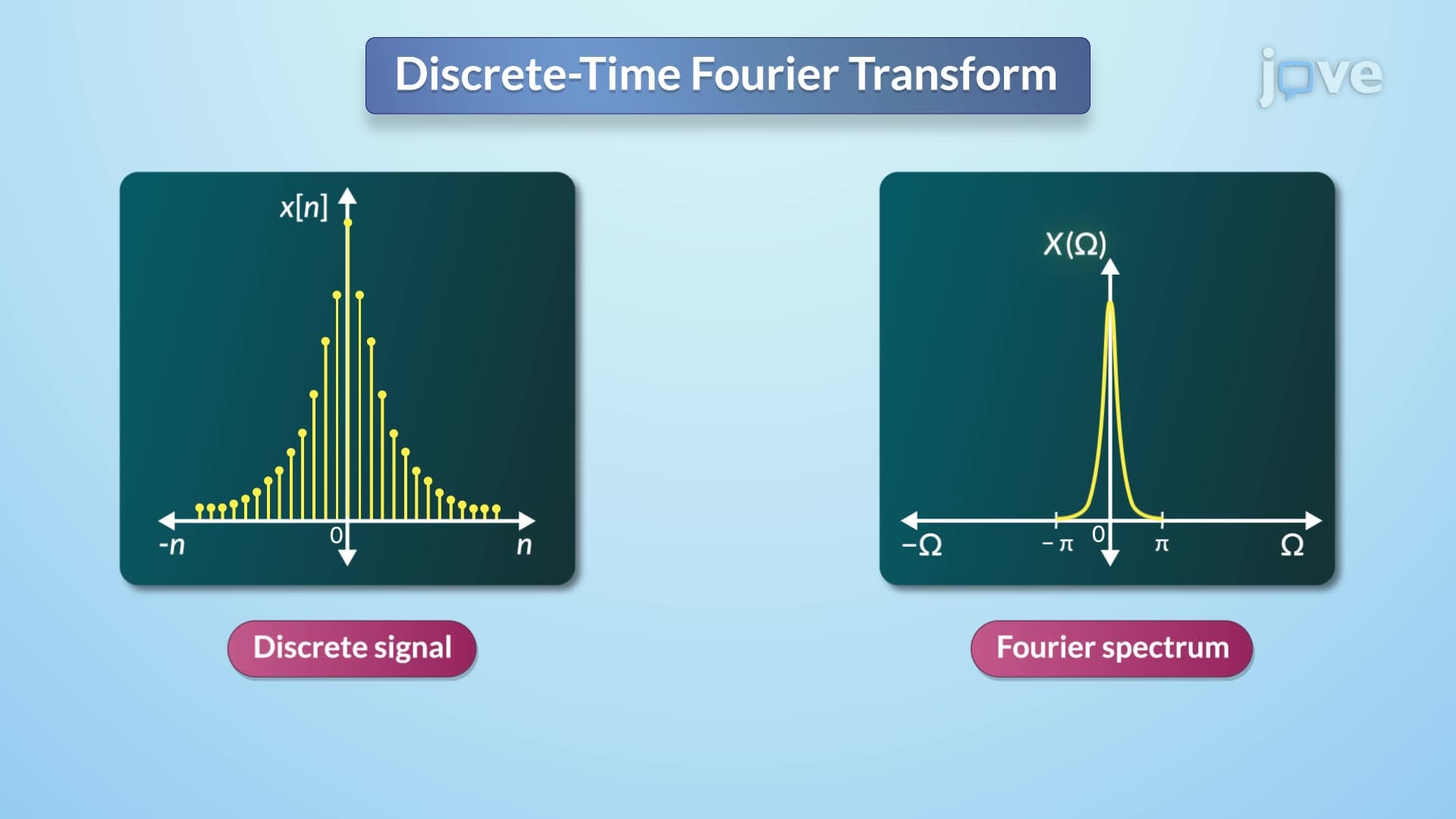
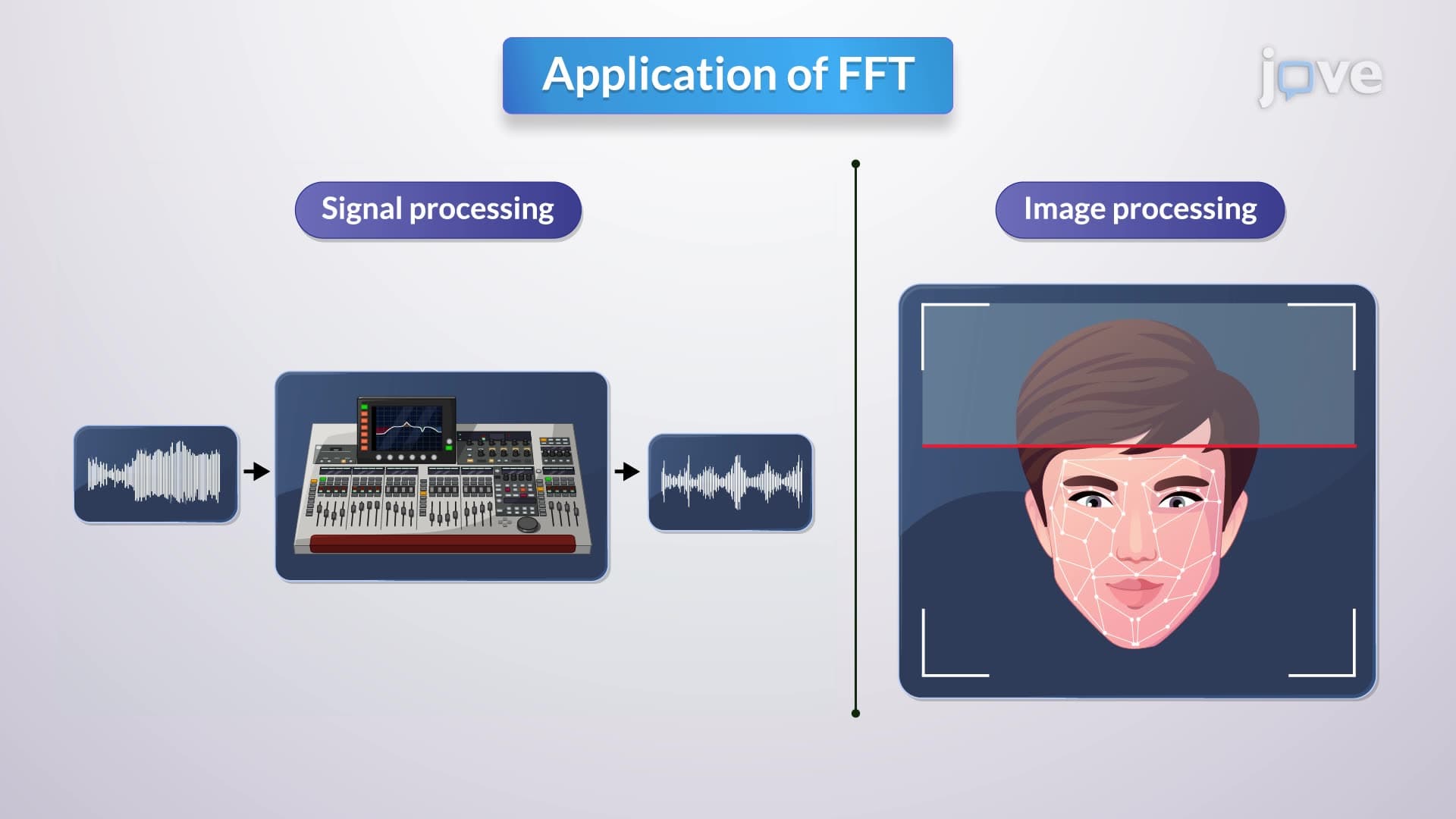
Progress to discrete-time Fourier transforms used in digital signal processing, then explore applications in modern technologies like smartphone audio compression and digital communications. Advanced topics include filter design principles used by companies like Qualcomm and Broadcom, and image processing techniques employed by tech giants like Google and Apple. These concepts form the foundation for specialized fields like biomedical engineering and aerospace communications systems.
MCAT physics sections include wave behavior and frequency analysis that benefit from Fourier transform understanding, particularly in passages about medical imaging or sound wave physics. While detailed transform mathematics won't appear on the exam, the conceptual framework helps students analyze complex wave phenomena and frequency-related problems. This background proves especially valuable for students planning medical careers involving radiology or medical device development.
Related Micro-courses
Related Subjects
 Civil Engineering 30 micro-courses›Mechanical Engineering 28 micro-courses›