Loading subject page…

- Electrical Engineering
- The Fourier Transform
- Properties of DTFT I
Micro-course: The Fourier Transform
6,505 views
Learn key concepts and earn your certificate.


Properties of DTFT I


00:00
01:24
Video Summary: What are Properties of Dtft I
Ever wondered how Netflix's audio compression algorithms maintain crystal-clear sound quality while streaming? The properties of DTFT I form the mathematical foundation behind digital signal processing systems used in everything from smartphone audio to medical imaging equipment across US hospitals. These fundamental properties-including linearity, time-shifting, and frequency manipulation-enable engineers to predict and control how discrete signals behave when transformed between time and frequency domains. Watch the full video on JoVE Coach to master this concept with expert-led visuals and step-by-step explanations.
- Understand what are properties of DTFT I and their role in discrete-time signal analysis
- Identify the six fundamental DTFT properties: linearity, time-shifting, frequency-shifting, time reversal, conjugation, and time scaling
- Analyze how the linearity property enables superposition of multiple discrete signals in frequency domain calculations
- Compare time-shifting effects with frequency-shifting transformations and their phase relationships
- Evaluate conjugation and time reversal properties for symmetric signal analysis in engineering applications
- Apply time scaling principles to compression and expansion of frequency domain representations
- Recognize practical applications of DTFT properties in digital communications and signal processing systems
- Explore mathematical relationships between time-domain operations and their frequency-domain counterparts
Understanding What are Properties of DTFT I
The Discrete-Time Fourier Transform (DTFT) properties represent fundamental mathematical relationships that govern how discrete signals behave when converted between time and frequency domains. These properties serve as powerful tools for electrical engineering students and signal processing professionals, particularly in analyzing digital communication systems used by companies like Qualcomm and Texas Instruments.
Linearity and Superposition Principles
The linearity property stands as the most fundamental characteristic, stating that the DTFT of a linear combination of signals equals the linear combination of their individual DTFTs. Mathematically, if x1[n] has DTFT X1(e^jω) and x2[n] has DTFT X2(e^jω), then a·x1[n] + b·x2[n] transforms to a·X1(e^jω) + b·X2(e^jω). This property enables engineers at aerospace companies like Boeing to analyze complex radar signals by breaking them into simpler components, making system design more manageable for AP Physics students studying wave interference.
Time and Frequency Domain Manipulations
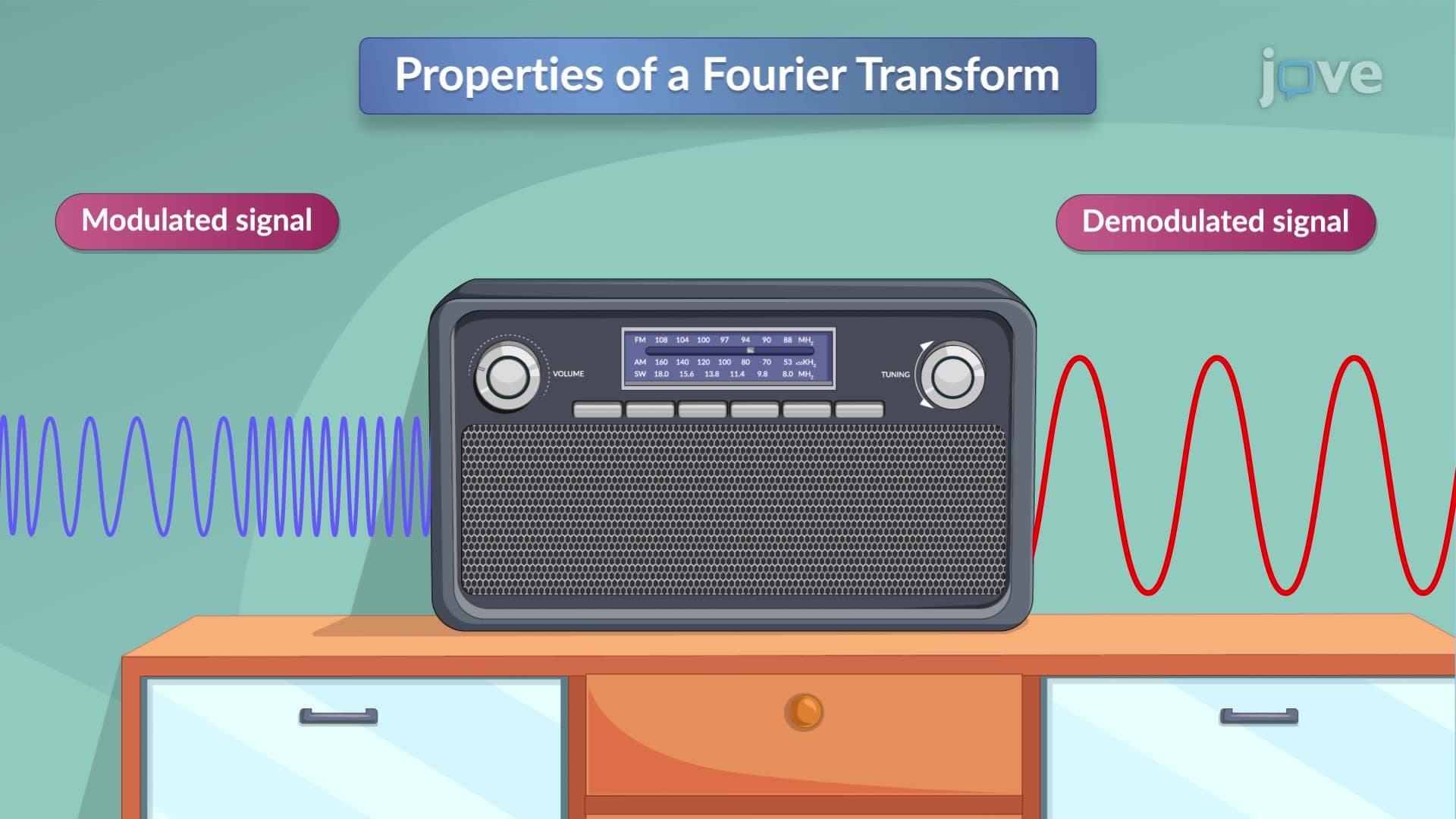
Time-shifting creates a linear phase shift in the frequency domain, where delaying a signal by n0 samples multiplies its DTFT by e^(-jωn0). This property proves essential in digital audio processing applications used by companies like Dolby Laboratories. Conversely, frequency-shifting occurs when multiplying a time-domain signal by a complex exponential, effectively translating frequency components-a technique fundamental to radio frequency systems in cellular networks across the United States.
Symmetry and Conjugation Effects
Time reversal and conjugation properties reveal important symmetries in signal analysis. When a discrete signal is time-reversed (x[-n]), its DTFT becomes X(e^(-jω)), creating a frequency-domain reflection. The conjugation property shows that taking the complex conjugate of a time-domain signal results in both reflection and conjugation of frequency components. These properties become particularly relevant for biomedical engineering students studying MRI signal processing at institutions like Johns Hopkins University, where symmetric analysis helps interpret medical imaging data. Understanding these relationships prepares students for advanced coursework in digital signal processing and helps them excel on standardized tests like the MCAT, where signal analysis concepts increasingly appear in physics sections.
Frequently Asked Questions
Properties of DTFT I are fundamental mathematical rules that describe how discrete-time signals behave when transformed between time and frequency domains. These properties enable engineers to predict signal behavior, design filters, and solve complex communication problems in industries ranging from telecommunications to medical devices.
Linearity and time-shifting properties appear most frequently on standardized exams like AP Physics C and college midterms. Students should focus on understanding how linear combinations of signals transform and how time delays create phase shifts in frequency domain representations.
MCAT physics sections increasingly include signal processing concepts, particularly in passages about medical imaging and diagnostic equipment. Understanding linearity helps analyze superposition of waves, while time-shifting properties explain phase relationships in ultrasound and MRI systems used throughout US hospitals.
Major US companies like Apple use DTFT properties in audio compression algorithms, while telecommunications giants like Verizon apply frequency-shifting for cellular signal processing. Medical device manufacturers such as GE Healthcare utilize conjugation properties in imaging systems across American hospitals.
While calculus knowledge helps, most DTFT properties can be understood with solid algebra and trigonometry skills typically covered in high school. The key is recognizing patterns and relationships rather than complex mathematical derivations, making these concepts accessible to dedicated students.
Create visual connections between time-domain operations and their frequency-domain effects. Practice with concrete examples like audio signals or communication systems, and use mnemonic devices to remember that time delays create frequency phase shifts while frequency shifts require time-domain multiplication.
DTFT properties serve as building blocks for Z-transforms, filter design, and digital communication systems. Mastering these fundamentals prepares students for advanced coursework in digital signal processing, control systems, and communication theory offered at engineering programs nationwide.
Time scaling often proves most difficult because it involves both time-domain compression/expansion and inverse frequency-domain effects. Students benefit from visualizing how sampling rate changes affect frequency representation, particularly in digital audio applications they encounter daily.
Related Micro-courses