Loading video…


 10 Concepts
 6.5K views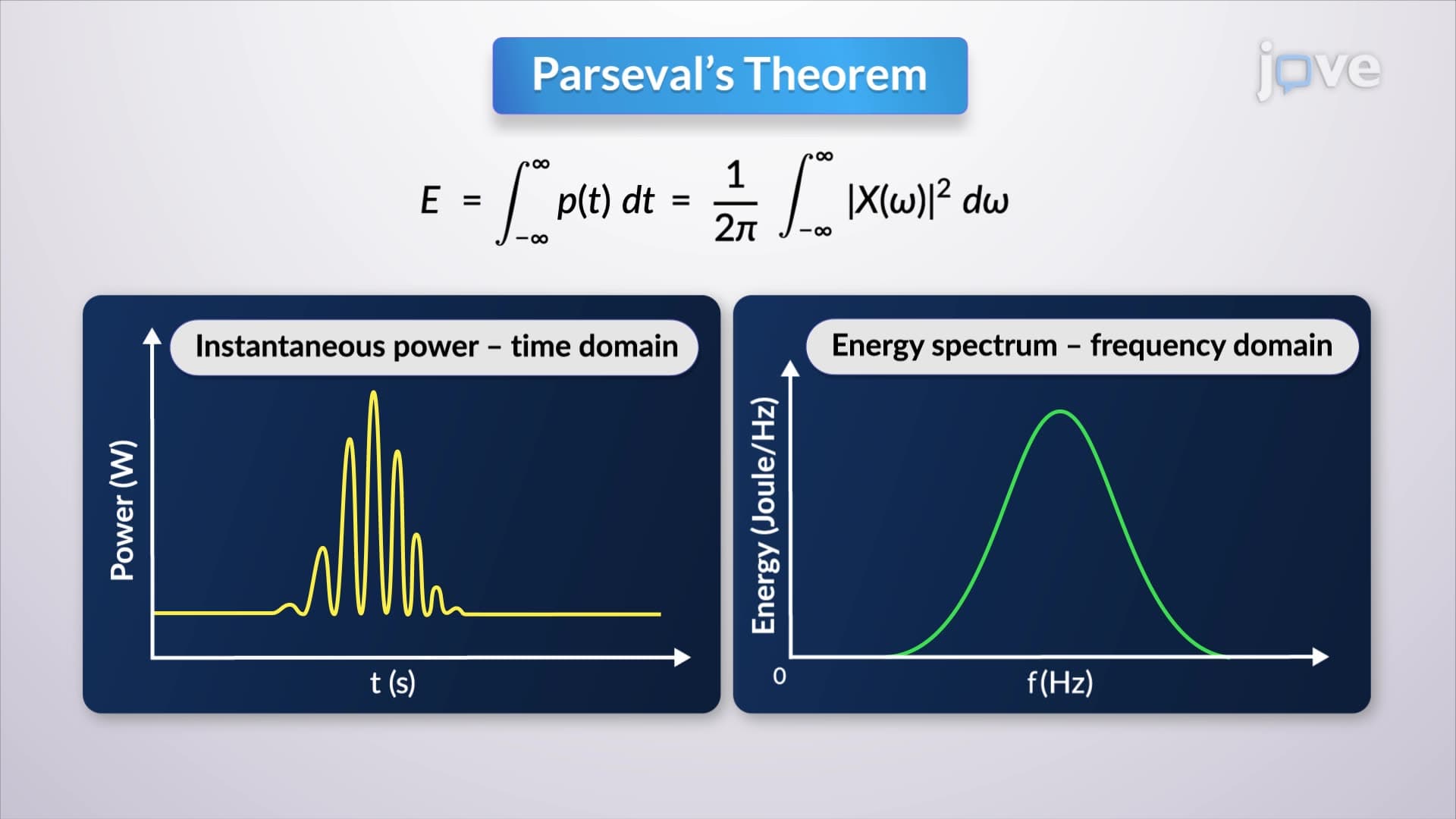

Video Summary: Parsevals Theorem for Fourier Transform Explained
Ever wondered how NASA engineers verify that spacecraft communication signals maintain their power across vast distances? The discrete time fourier transform serves as a fundamental tool in signal processing, with Parseval's Theorem proving that energy remains constant whether calculated in time or frequency domains. This powerful principle demonstrates energy conservation in digital signal analysis, crucial for applications from smartphone audio processing to radar systems used by the FAA for air traffic control. Parseval's Theorem For Fourier Transform Explained reveals how engineers can compute signal energy using either approach with identical results. Watch the full video on JoVE Coach to master this concept with expert-led visuals and step-by-step explanations.
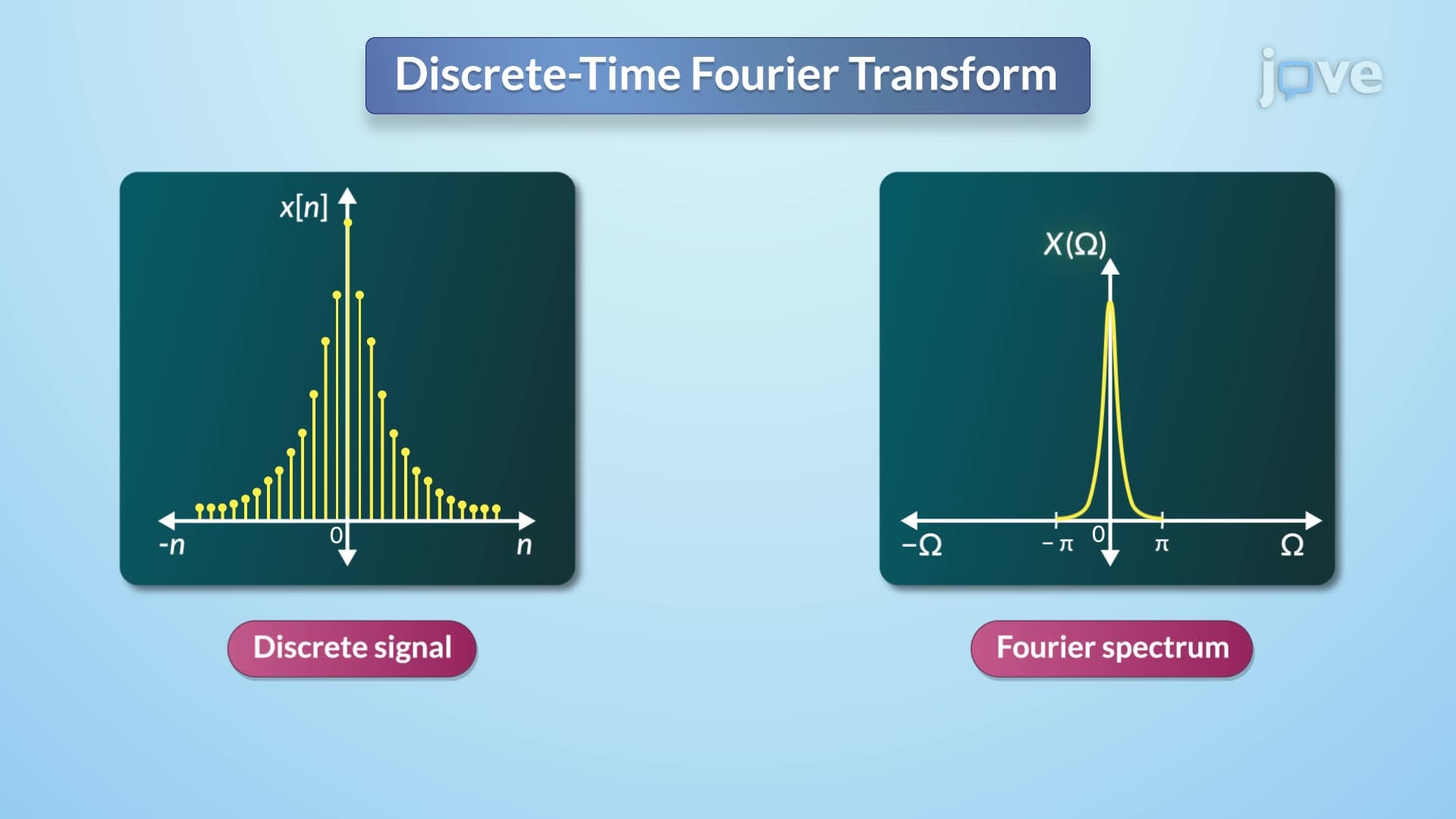
Parseval's theorem stands as one of the most elegant principles in signal processing, establishing a fundamental bridge between time and frequency domain analysis. This theorem proves that the total energy of a signal remains identical whether calculated directly from the time-domain waveform or indirectly from its frequency-domain representation through the discrete time fourier transform. For students preparing for AP Physics or college-level electrical engineering courses, this concept represents a cornerstone understanding of energy conservation in digital systems.
The theorem mathematically states that the integral of the squared magnitude of a signal over time equals one over 2π times the integral of the squared magnitude of its Fourier transform over frequency. This relationship assumes a standard 1-ohm resistor as the reference, where power equals the square of voltage or current. In practical terms, this means engineers at companies like Texas Instruments or Qualcomm can verify their signal processing algorithms by computing energy using either domain and expecting identical results.
Understanding the discrete time fourier transform definition becomes crucial when analyzing how digital devices process information. Consider how Spotify's audio compression algorithms work: engineers use Parseval's theorem to ensure that converting music from time-domain samples to frequency-domain coefficients preserves the audio's energy content. This discrete time fourier transform concept enables efficient storage and transmission while maintaining audio quality. Students studying for the MCAT or engineering placement exams frequently encounter problems requiring energy calculations using both approaches to demonstrate mastery of this principle.
The discrete time fourier transform overview reveals its importance in diverse fields from biomedical engineering to telecommunications. Medical device manufacturers like Medtronic use these principles when designing pacemakers, ensuring that electrical signals maintain proper energy levels for cardiac stimulation. Similarly, cellular network engineers at Verizon or AT&T apply Parseval's theorem when optimizing signal transmission power across different frequency bands. For college students preparing midterm exams, practicing energy calculations in both domains develops essential problem-solving skills while reinforcing the fundamental concept that Fourier transforms preserve signal energy through mathematical transformation.
Related Micro-courses