Loading…
Loading video…

2,354 views
When a power grid carries 138,000 volts through transmission lines across Texas, how do engineers safely measure that deadly voltage? Overcurrent relays depend on specialized devices called instrument transformers to step down dangerous electrical quantities to measurable levels. These critical components include current transformers that reduce high currents and voltage transformers that scale down high voltages, enabling safe monitoring in power systems from California's Pacific Gas & Electric to New York's Con Edison. Watch the full video on JoVE Coach to master this concept with expert-led visuals and step-by-step explanations.
Instrument transformers serve as the critical interface between high-power electrical systems and sensitive measurement equipment. These specialized transformers enable engineers to safely monitor electrical parameters that would otherwise be impossible to measure directly. In the context of power system protection, particularly with overcurrent relays, instrument transformers provide the scaled-down electrical signals necessary for accurate fault detection and system protection.
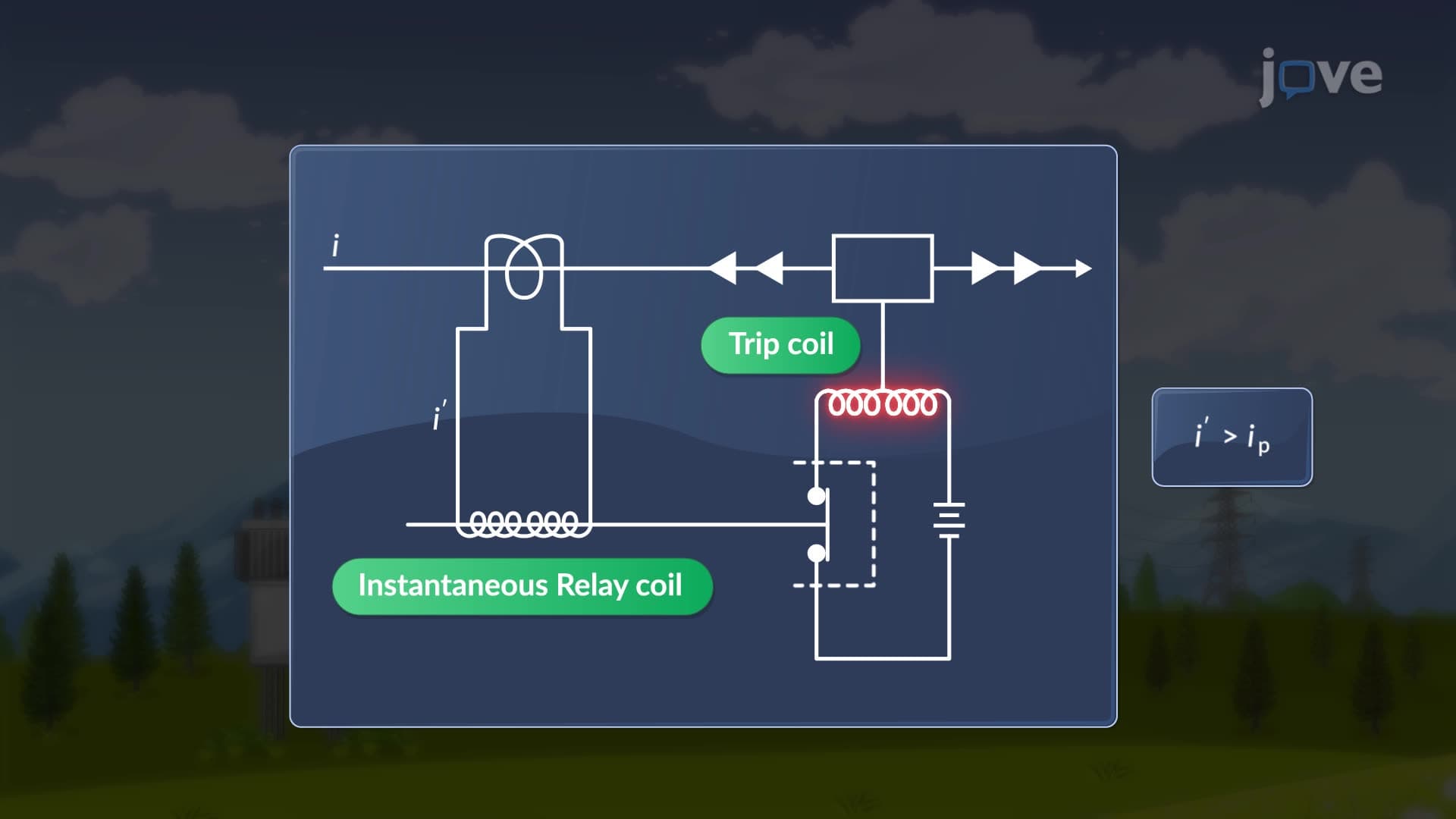
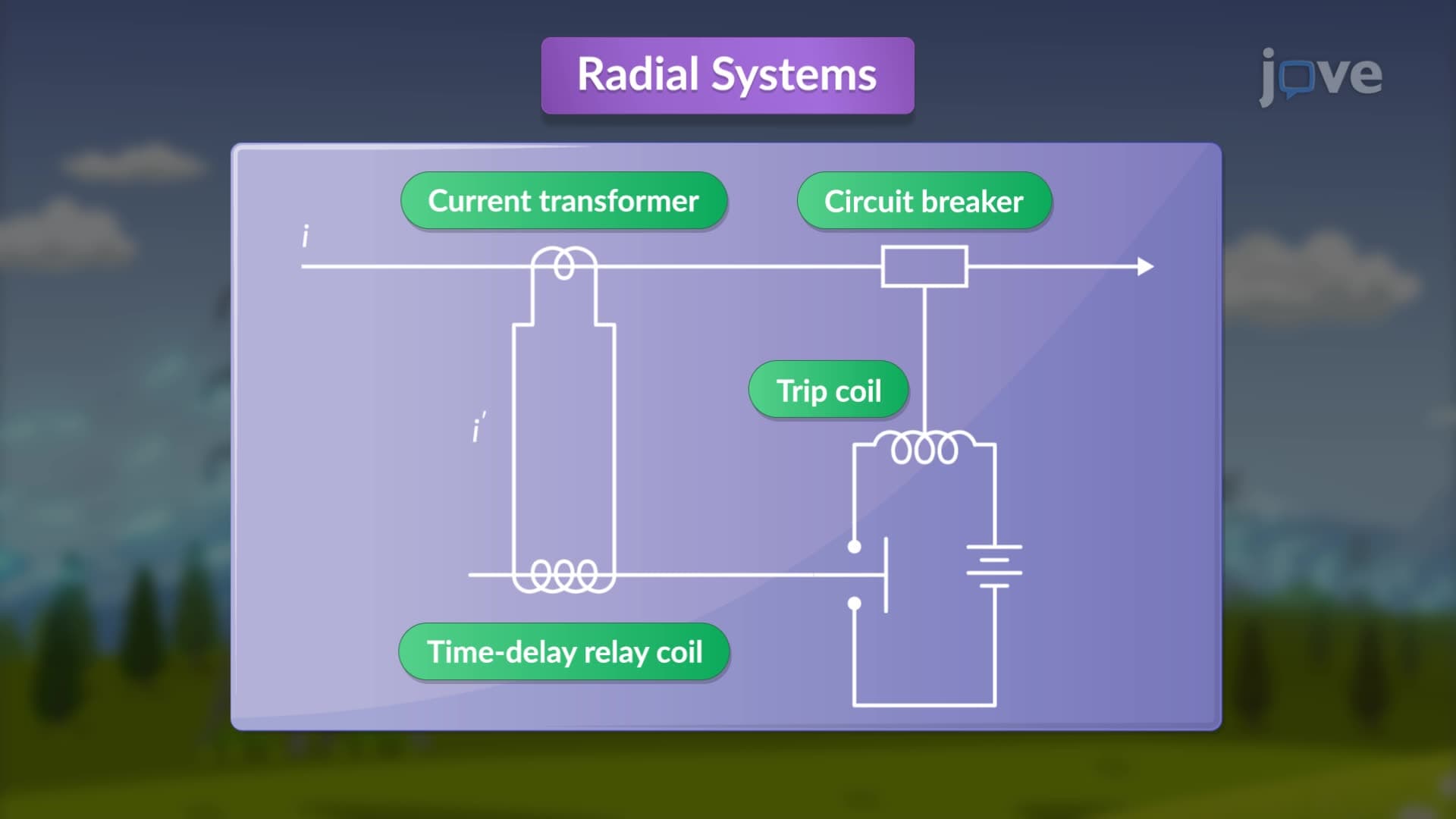
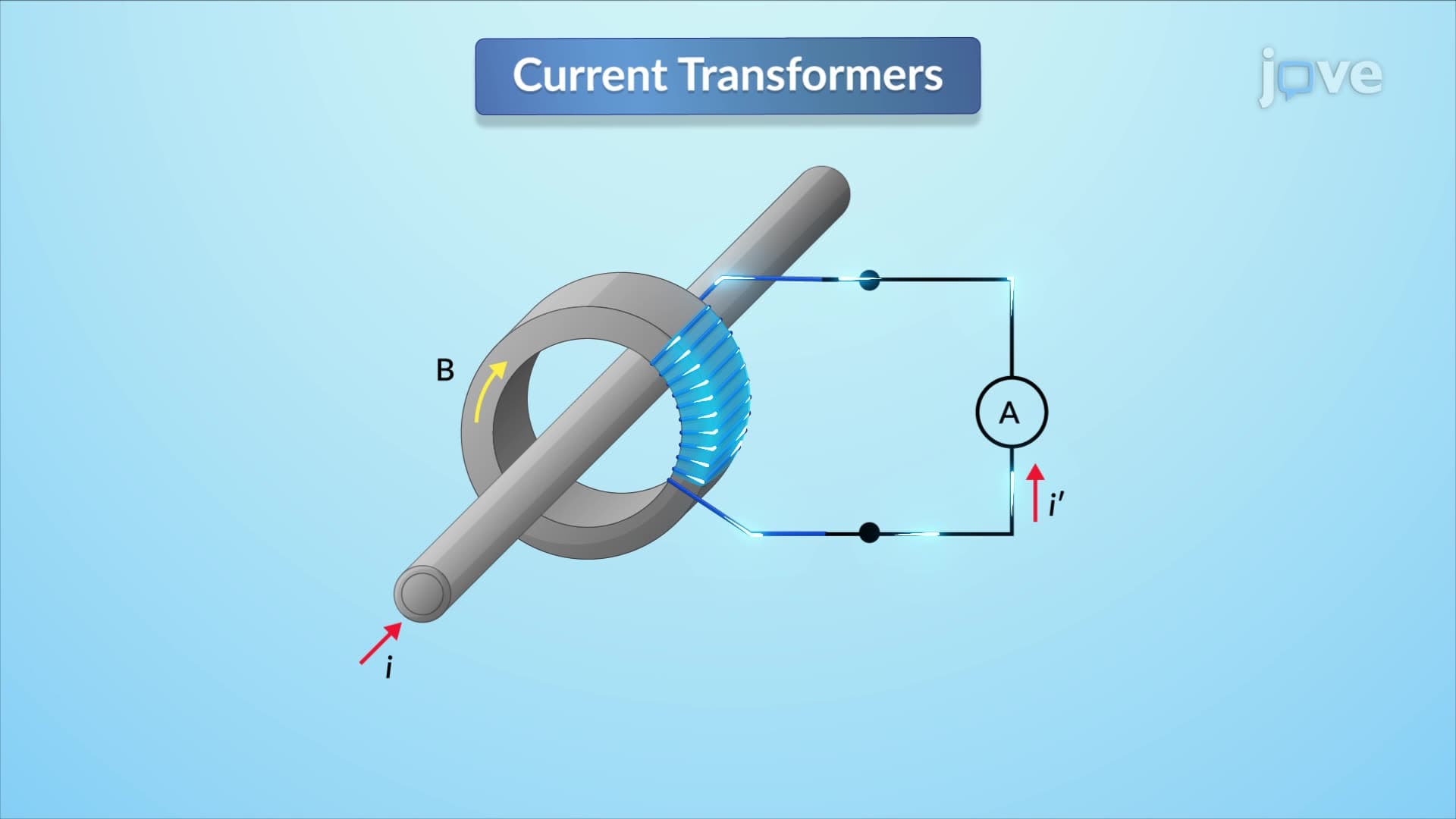
Current transformers (CTs) operate on a unique principle where the primary winding typically consists of a single conductor or bus bar carrying the full system current. The secondary winding, containing many more turns, wraps around this primary conductor. This configuration creates a step-down current ratio—for example, a 1000:5 CT reduces 1000 amperes of primary current to 5 amperes on the secondary side.
The secondary of a current transformer connects in series with measuring instruments or overcurrent relays, which present essentially zero impedance. This low-impedance connection ensures maximum current transfer and accurate current measurement. However, CT performance can be compromised by magnetic saturation during high fault currents, leading to measurement errors that can affect overcurrent relay operation.
Voltage transformers (VTs), also called potential transformers (PTs), feature a primary winding with more turns than the secondary winding. Unlike current transformers, voltage transformers connect their secondary windings in parallel with high-impedance measuring devices. A typical voltage transformer might step down 13,800 volts to 120 volts, providing a safe measurement signal.
For protection applications, voltage transformers are often modeled as ideal devices that maintain the phase relationship of the primary voltage while scaling it down proportionally. However, real voltage transformers introduce small voltage drops and phase shifts that must be considered in precision applications.
These instrument transformers are fundamental to overcurrent relays and other protective devices throughout the US electrical grid. From substations operated by utilities like Duke Energy to industrial facilities across the Midwest, instrument transformers enable the protective systems that prevent equipment damage and maintain power quality. Students preparing for electrical engineering courses, the Fundamentals of Engineering (FE) exam, or professional engineering licensure will encounter these concepts extensively in power systems coursework.
Frequently Asked Questions
Instrument transformers are specialized devices that safely scale down high voltages and currents to measurable levels for protective equipment and measuring instruments. They're essential because they enable safe monitoring and protection of power systems while isolating sensitive equipment from dangerous high-voltage conditions. Without them, overcurrent relays and other protective devices couldn't function safely in high-power electrical systems.
All types of overcurrent relays rely on instrument transformers, including instantaneous overcurrent relays, inverse-time overcurrent relays, and definite-time overcurrent relays. Current transformers provide the scaled-down current signals these relays need to detect fault conditions. The CT ratio determines the relay's pickup settings and coordination with other protective devices in the system.
These concepts commonly appear in AP Physics C: Electricity and Magnetism and college-level circuit analysis courses. Exam questions often focus on transformer ratios, impedance relationships, and applications in power systems. Students should understand the basic operating principles and be able to calculate secondary currents and voltages based on turns ratios and primary quantities.
Yes, the FE Electrical and Computer Engineering exam includes power systems questions that may involve instrument transformer calculations. You'll need to understand current and voltage transformer ratios, impedance transformations, and their applications in protective relaying. Practice problems typically involve calculating secondary quantities and understanding CT burden effects.
Every major electrical utility in the US uses instrument transformers extensively. For example, Pacific Gas & Electric's transmission substations throughout California rely on current transformers for overcurrent protection and revenue metering. Similarly, Con Edison's distribution networks in New York City use voltage transformers to monitor system voltage and coordinate protective devices across their urban electrical grid.
No, the basic concepts require only high school algebra and an understanding of Ohm's Law. While advanced analysis involves complex impedances and phasor diagrams, introductory understanding focuses on simple ratios and proportional relationships. Students with strong algebra skills can master the fundamental principles needed for most electrical technology programs.
Focus on understanding the physical construction differences between current and voltage transformers, then practice ratio calculations extensively. Create comparison charts showing CT versus VT characteristics, connection methods, and typical applications. Work through numerical problems involving turns ratios and secondary quantities, as these commonly appear on exams.
Progress to protective relaying principles, particularly overcurrent relay coordination and time-current characteristic curves. Also explore power system analysis topics like fault calculations and symmetrical components. Understanding instrument transformers provides the foundation for advanced power system protection and control topics in electrical engineering curricula.
Related Micro-courses


Related Subjects
 Civil Engineering 30 micro-courses›Mechanical Engineering 28 micro-courses›