Loading subject page…

- Marketing
- Digital Marketing
- Search Engine Marketing
Micro-course: Digital Marketing
5,168 views
Learn key concepts and earn your certificate.







Search Engine Marketing

00:00
01:22
Video Summary: What Is Search Engine Marketing
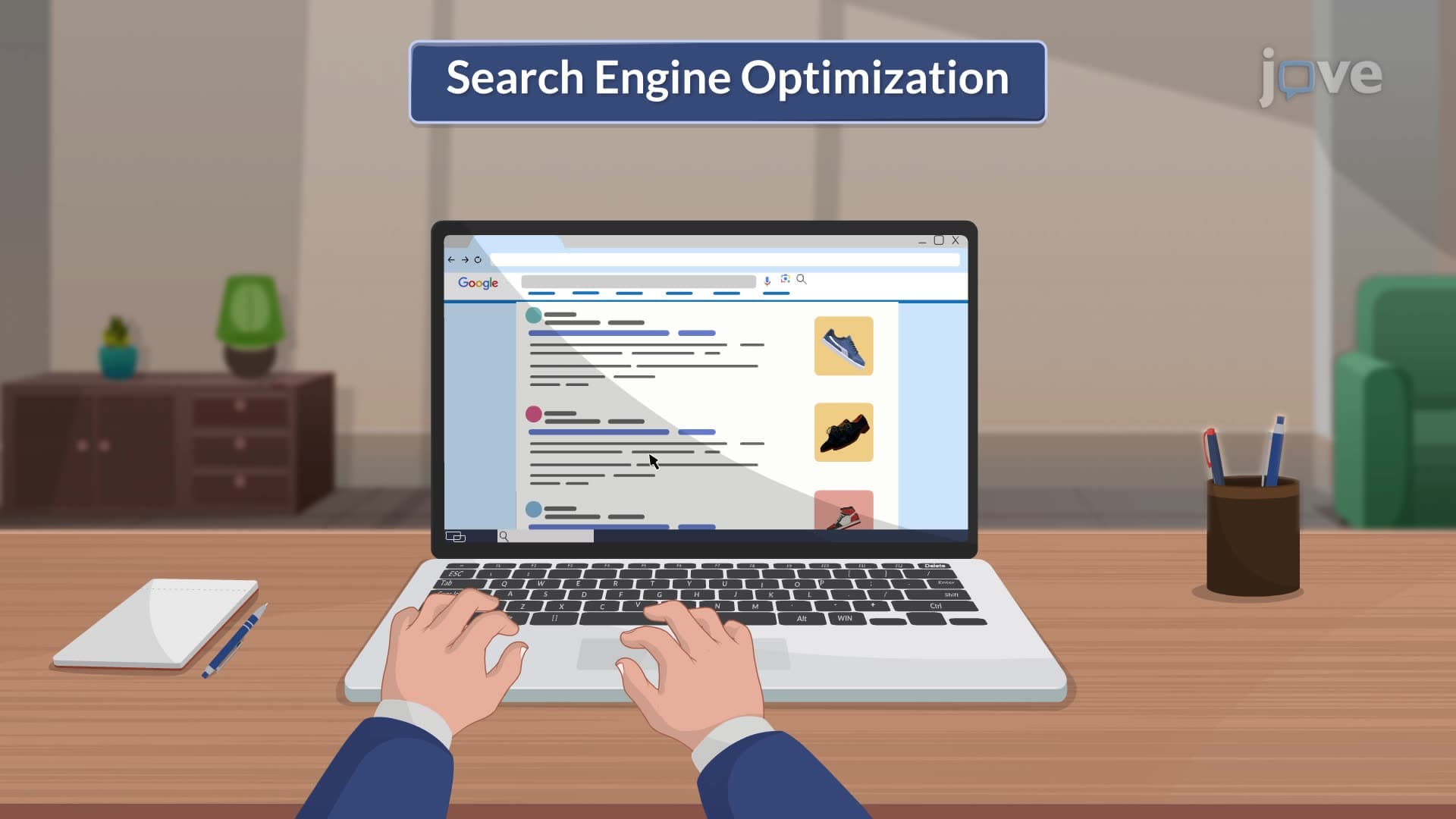
In today's digital-first economy, 93% of online experiences begin with search engines, making search engine marketing a critical revenue driver for businesses. Search engine marketing leverages paid advertising to capture high-intent customers actively seeking solutions, with companies like Amazon spending billions annually on SEM to dominate search results for product categories. Unlike organic SEO, SEM delivers immediate visibility and measurable ROI through strategic keyword targeting and auction-based ad placements. Watch the full video on JoVE Coach to master this concept with expert-led visuals and step-by-step explanations.
- Apply pay-per-click bidding strategies to optimize advertising spend and maximize customer acquisition costs within budget parameters
- Evaluate Quality Score factors to reduce advertising costs while improving ad placement and campaign performance metrics
- Analyze competitor keyword strategies and auction dynamics to identify market opportunities and pricing gaps
- Implement targeted demographic and geographic segmentation to reach high-value customer segments with precision
- Compare different ad formats (text, shopping, display) to determine optimal creative approaches for specific business objectives
- Leverage real-time analytics and conversion tracking to make data-driven budget allocation decisions across campaigns
- Identify high-intent keywords that align with customer purchase journeys and business revenue goals
- Assess campaign ROI and attribution models to demonstrate marketing effectiveness to executive stakeholders
Understanding Search Engine Marketing in Business Context
Modern businesses face an increasingly crowded digital marketplace where organic search visibility takes months to develop. Search engine marketing addresses this challenge by providing immediate access to customers with demonstrated purchase intent. When someone searches "enterprise software solutions" or "commercial real estate Boston," they're signaling active buying behavior-making SEM a powerful tool for capturing qualified leads at the moment of interest.
Strategic Components of Effective SEM Campaigns
Successful search engine marketing operates on three interconnected pillars: keyword strategy, ad creative optimization, and landing page alignment. The keyword strategy involves identifying terms your target customers actually use, not just industry jargon. For example, while a cybersecurity company might focus on "endpoint protection," their customers often search for "computer virus protection for business."
The ad auction system rewards relevance over pure spending power through Quality Score algorithms. This metric evaluates how well your keywords, ad copy, and landing pages work together to serve user intent. Companies with higher Quality Scores-like how Salesforce maintains consistently relevant ad copy that matches their landing page messaging-achieve better ad positions at lower costs than competitors who simply outbid them.
Competitive Implications and Market Positioning
Search engine marketing creates dynamic competitive landscapes where market share can shift based on campaign performance rather than just brand recognition. Smaller companies can compete effectively against industry giants by targeting long-tail keywords and niche segments. For instance, a regional accounting firm can outperform national chains like H&R Block on local searches by focusing on "CPA tax services [city name]" rather than broad terms like "tax preparation."
ROI Measurement and Performance Optimization
Unlike traditional advertising channels, SEM provides granular performance data that directly ties to business outcomes. Advanced attribution modeling helps identify which keywords and ad variations drive the highest-value customers, enabling strategic budget reallocation. Companies like HubSpot have built entire growth strategies around SEM data insights, using search behavior to inform product development and market expansion decisions.
Frequently Asked Questions
Search engine marketing is paid advertising on search engines to achieve immediate visibility for targeted keywords, while SEO focuses on earning organic rankings over time. SEM provides instant results and precise targeting control, making it ideal for product launches, seasonal campaigns, or competitive market entry where waiting months for organic visibility isn't viable.
Calculate your customer lifetime value and acceptable acquisition costs, then run small test campaigns targeting your most profitable services or products. If you can acquire customers at 20-30% of their lifetime value through SEM, it typically represents a strong ROI. B2B companies often see higher returns due to larger deal sizes and longer customer relationships.
Focusing on metrics like click-through rates or impressions instead of business outcomes like revenue, pipeline generation, or market share gains. Executives care about how SEM contributes to growth targets and competitive positioning. Always frame SEM performance in terms of customer acquisition costs, revenue attribution, and strategic market advantages.
Amazon combines massive SEM spending with sophisticated bid management across millions of product-related keywords, often bidding on competitor brand names and complementary products. They leverage their vast customer data to create highly targeted shopping ads and use dynamic pricing strategies that adjust bids based on inventory levels, seasonality, and competitive pressure.
While basic campaign setup is accessible to most professionals, advanced SEM management requires understanding of analytics, conversion tracking, and bid optimization strategies. Many successful executives partner with SEM specialists or agencies while maintaining strategic oversight of budget allocation, targeting decisions, and performance expectations aligned with business objectives.
SEM skills demonstrate direct revenue impact and data-driven decision-making abilities that executives value highly. Professionals who can show measurable business growth through SEM campaigns often advance to digital marketing leadership, growth strategy roles, or general management positions where customer acquisition expertise drives company success.
Focus on marketing attribution models to understand the full customer journey impact, audience remarketing strategies for nurturing qualified prospects, and integration with CRM systems for closed-loop reporting. These advanced concepts help optimize the entire sales funnel rather than just driving initial clicks.
Related Micro-courses