Loading…
Loading video…

392 views

Ever wondered how engineers design the perfect pizza size or astronomers track planetary orbits? Circles form the mathematical foundation for countless calculations in our daily lives, from the radius of a basketball hoop (18 inches) to satellite trajectories. Understanding what is circles reveals how this fundamental geometric shape connects all points at equal distance from a center, creating the basis for equations used in physics, engineering, and architecture. Watch the full video on JoVE Coach to master this concept with expert-led visuals and step-by-step explanations.
Circles represent one of geometry's most elegant and practical shapes, defined as the set of all points equidistant from a fixed center point. This seemingly simple definition underlies complex applications across STEM fields, from NASA's orbital mechanics calculations to civil engineers designing curved highway ramps with precise radius measurements.
The mathematical beauty of circles emerges from their perfect symmetry. Unlike polygons with vertices and varying side lengths, every point on a circle maintains the exact same distance—the radius—from the center. This consistency makes circles predictable and measurable, essential qualities for engineering precision and scientific modeling.
The standard circle equation (x - h)² + (y - k)² = r² stems directly from the distance formula, which itself derives from the Pythagorean Theorem. Here, (h, k) represents the center coordinates, and r equals the radius length. This equation proves invaluable for AP Calculus students tackling related rates problems and SAT Math Section questions involving coordinate geometry.
Consider a real example: The Pentagon building in Washington, D.C., despite its name, contains circular courtyards. If a courtyard has center coordinates (50, 30) and radius 25 feet, its equation becomes (x - 50)² + (y - 30)² = 625. This mathematical representation allows architects to precisely plan landscaping, drainage systems, and pedestrian pathways.
Converting between graphical and algebraic representations strengthens problem-solving skills crucial for college-level mathematics. When graphing from an equation, students extract the center coordinates directly from standard form, then measure the radius distance to plot points accurately.
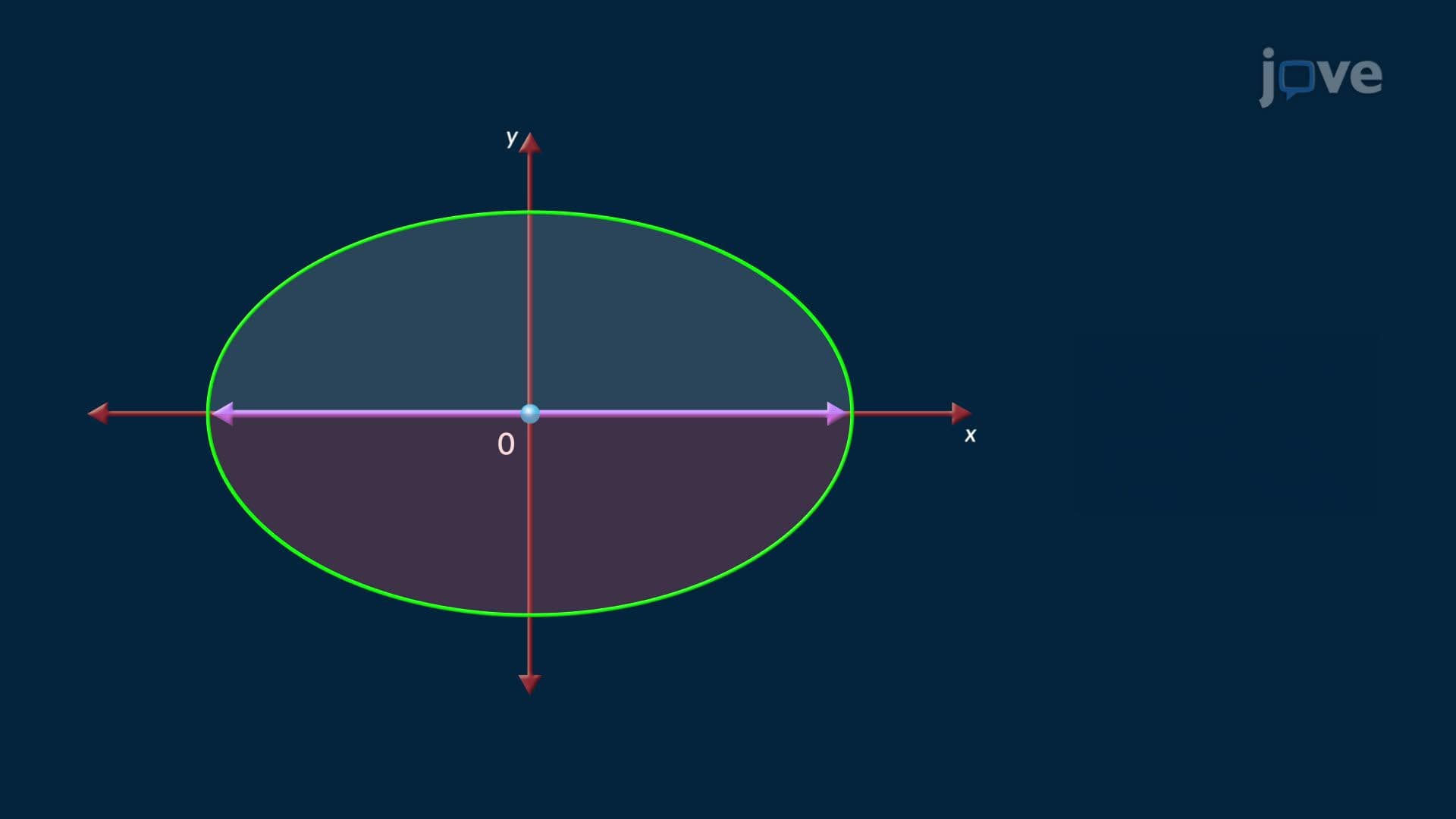
Conversely, analyzing a circle graph requires identifying the center point and measuring the radius to substitute into the standard equation. This skill proves essential for physics courses involving circular motion, where students must interpret velocity vectors and acceleration diagrams.
When circle equations appear in expanded form like x² + y² + 6x - 8y + 16 = 0, completing the square reveals the hidden center and radius information. This algebraic technique, fundamental for pre-calculus and calculus courses, transforms complex expressions into recognizable standard form.
This process parallels real engineering challenges where initial measurements yield raw data requiring mathematical manipulation to extract meaningful parameters for design specifications.
Frequently Asked Questions
Circles are geometric shapes consisting of all points that maintain equal distance from a fixed center point. This distance is called the radius, and the mathematical relationship creates the foundation for circular equations, trigonometry, and countless real-world applications from wheel design to planetary motion calculations.
A circle is the set of all points in a plane that are exactly the same distance (radius) from a given point (center). This definition helps solve problems involving circumference, area, and coordinate geometry by providing the basis for all circle-related formulas and theorems.
SAT Math frequently tests circle equations in coordinate geometry, asking students to find centers, radii, or points of intersection. Questions often involve converting between standard form and expanded form, requiring completion of the square techniques that demonstrate algebraic manipulation skills essential for college mathematics.
AP Calculus emphasizes circles in related rates problems, optimization scenarios, and integration applications. Students must master circle equations, understand how radius and circumference change over time, and apply derivative concepts to circular motion problems that frequently appear on the AP exam.
Engineers use circle equations to design everything from highway curve banking to water treatment facility layouts. For example, civil engineers calculating proper radius for Interstate highway curves apply circle geometry to ensure safe vehicle speeds, while aerospace engineers use circular orbital mechanics for satellite positioning systems.
Circle geometry builds naturally from basic algebra and coordinate geometry concepts most students already know. The key skills—plotting points, using the distance formula, and basic algebraic manipulation—provide sufficient foundation for understanding circle equations and their applications.
Focus on converting between different circle equation forms through repeated practice with completing the square techniques. Create visual connections between graphs and equations, work through real-world application problems, and practice identifying centers and radii quickly to build speed for timed exams like the SAT or AP tests.
Circle concepts lead naturally to trigonometry (unit circle), calculus (optimization and related rates), physics (circular motion and waves), and higher mathematics including conic sections, polar coordinates, and complex number representations that form the foundation for engineering and science coursework.
Related Micro-courses

Related Subjects
 Physics 33 micro-courses›
 Statistics 17 micro-courses›