Loading…
Loading video…
392 views
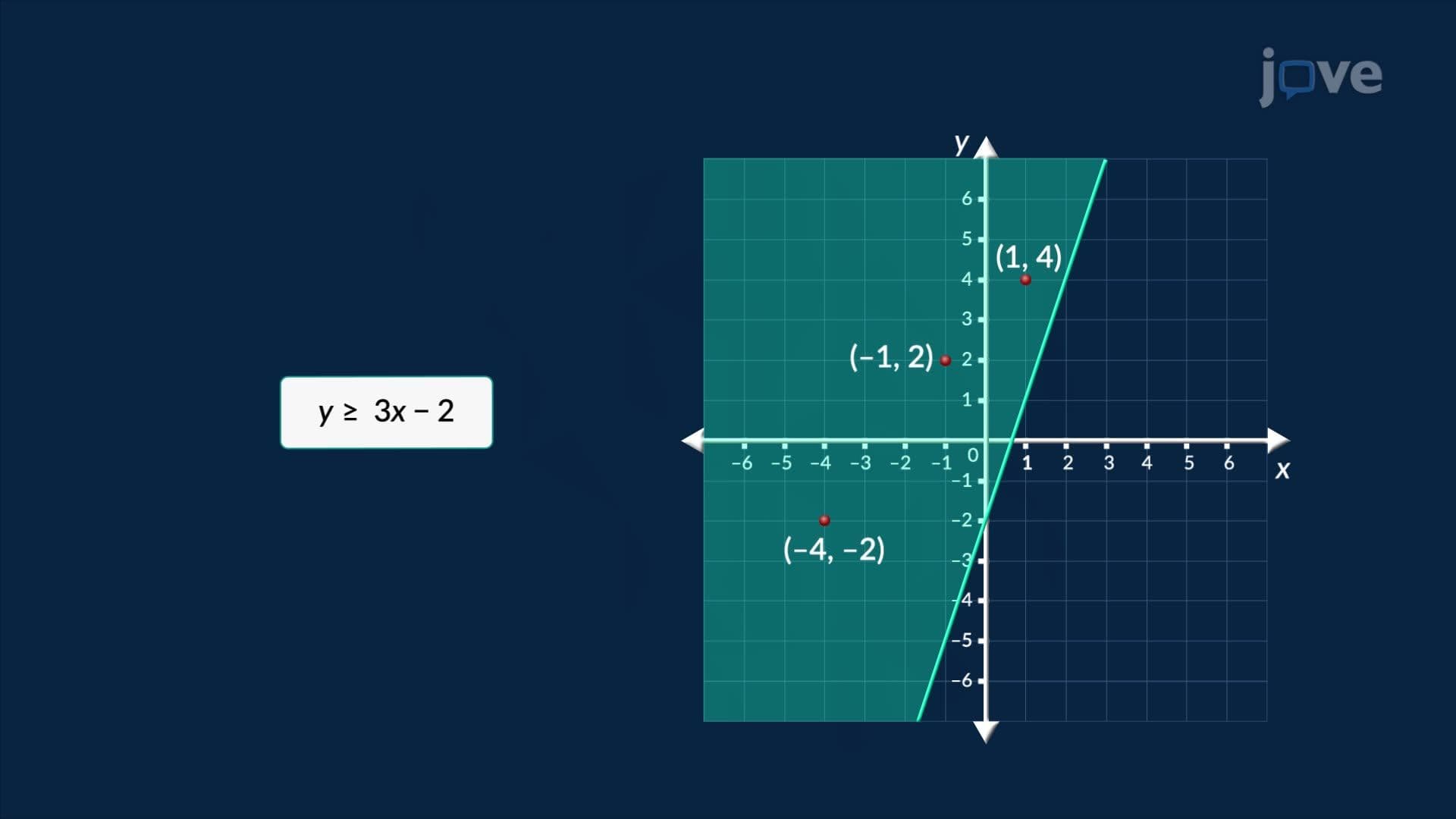
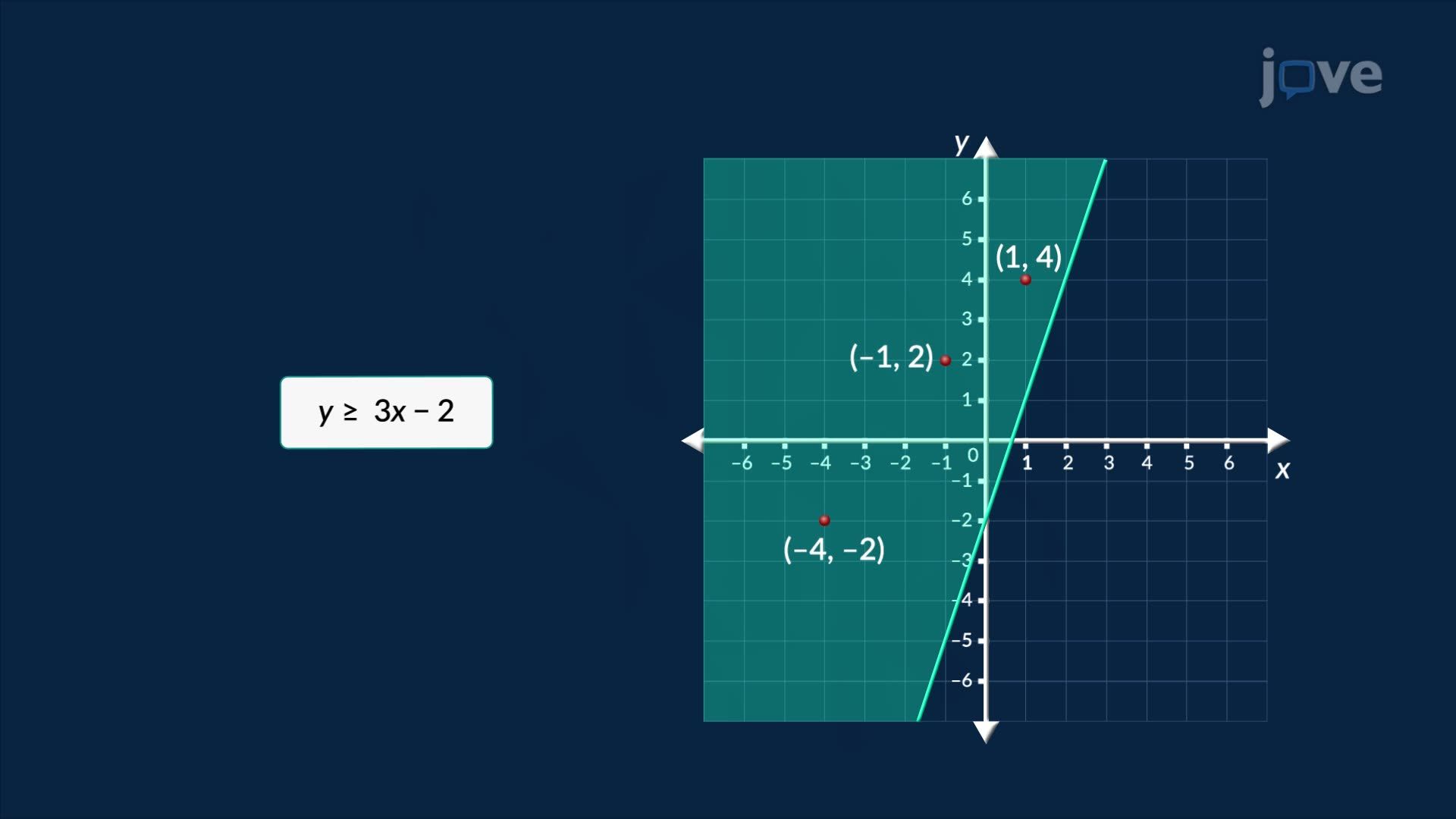
Did you know that financial analysts at major US banks like JPMorgan Chase use solving inequalities graphically to determine safe investment zones? Solving inequalities graphically transforms abstract mathematical relationships into visual representations that reveal solution sets through shaded regions on coordinate planes. This powerful technique helps students visualize where one function lies above or below another, making complex comparisons intuitive. What is solving inequalities graphically becomes clear when you see how budget constraints create boundary lines that separate feasible from unfeasible spending scenarios. Watch the full video on JoVE Coach to master this concept with expert-led visuals and step-by-step explanations.
Solving inequalities graphically transforms mathematical relationships into visual representations that make solution sets immediately apparent. Unlike algebraic methods that require step-by-step manipulation, graphical approaches leverage the coordinate plane to show exactly where one expression exceeds, equals, or falls below another. This method proves particularly valuable for complex inequalities involving quadratic functions or systems of multiple constraints.
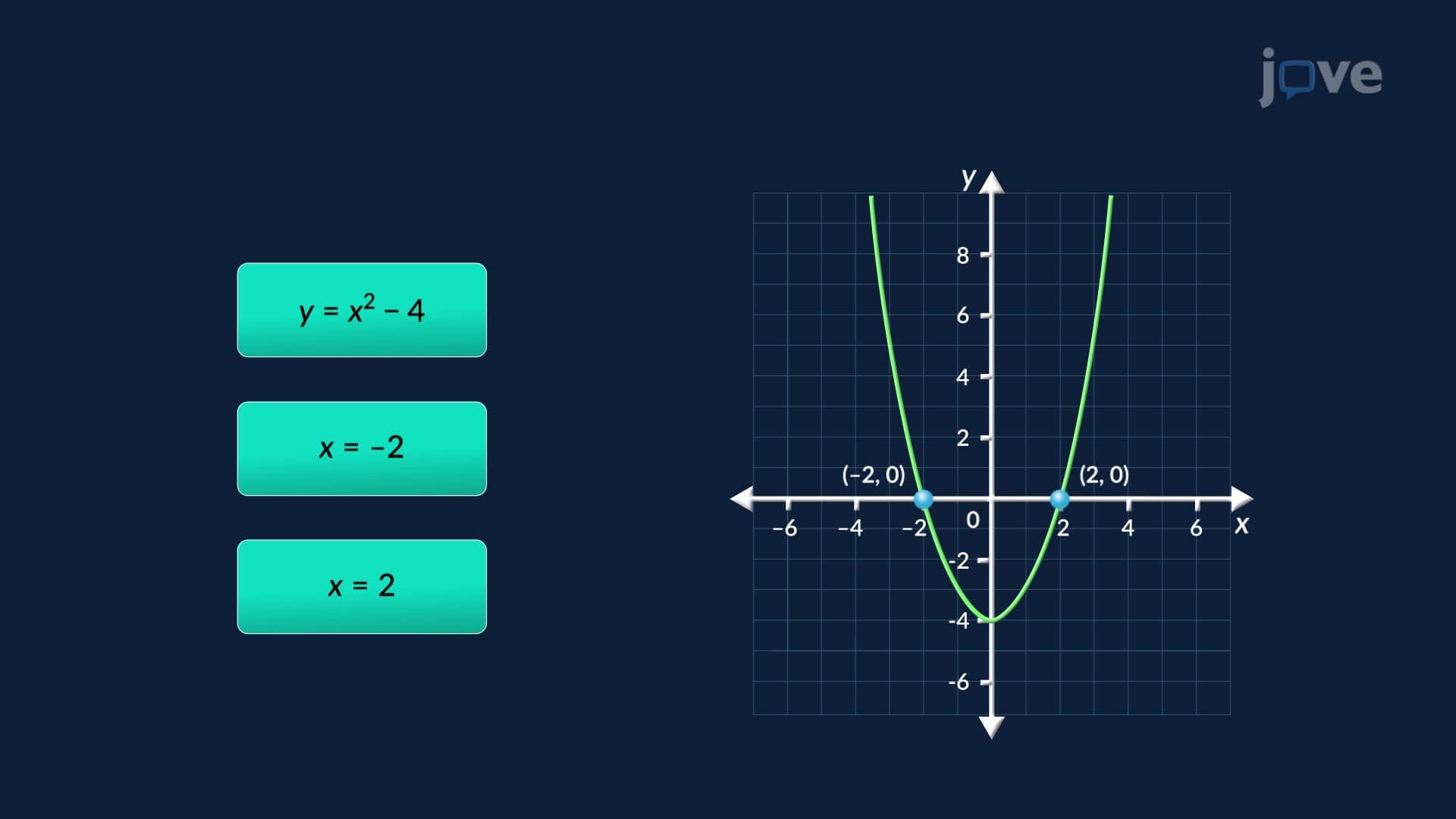
The graphical method begins by treating each side of an inequality as a separate function. For a quadratic inequality like x² - 2x - 3 ≥ 0, you first graph the parabola y = x² - 2x - 3. The x-intercepts occur where the parabola crosses the x-axis, marking critical boundary points. For inequalities involving "greater than or equal to" (≥), you shade the region where the parabola lies above or on the x-axis. Conversely, "less than or equal to" (≤) inequalities require shading where the function falls below or touches the x-axis.
When comparing two functions, such as a quadratic and linear inequality, both graphs appear on the same coordinate plane. Their intersection points become crucial boundary markers. Students taking the AP Calculus exam frequently encounter these mixed-function inequalities, where understanding the graphical relationship between different function types proves essential for success.
Advanced applications involve multiple inequalities creating systems with overlapping solution regions. Consider a business scenario where a manufacturing company must satisfy both material cost constraints and production capacity limits. Each constraint creates its own boundary line, and the feasible solution exists only in the overlapping shaded region. This concept appears regularly on SAT Math Level 2 tests and college algebra midterms.
Financial institutions like Bank of America use graphical inequality solving for risk assessment models. Investment portfolios must satisfy multiple constraints simultaneously: minimum return requirements, maximum risk tolerance, and regulatory compliance limits. Each constraint creates a boundary on the investment space, and viable portfolios exist only in the intersection of all acceptable regions. Similarly, NASA engineers use these techniques for spacecraft trajectory planning, where fuel consumption and safety margins create multiple inequality constraints that must be satisfied simultaneously.
Frequently Asked Questions
Solving inequalities graphically is a visual method that uses coordinate planes to find solution sets by plotting functions and shading regions where inequalities hold true. This technique transforms abstract mathematical relationships into concrete visual representations, making it easier to understand complex comparisons between functions. Students benefit because graphical methods provide immediate visual confirmation of algebraic solutions and help develop spatial reasoning skills essential for advanced mathematics and real-world problem-solving.
The SAT Math section frequently includes graphical inequality problems worth 10-15% of total points, particularly in the Calculator section where students must interpret shaded regions and intersection points. AP Calculus AB and BC exams feature these concepts in free-response questions involving optimization and related rates. Students must demonstrate ability to connect graphical representations with algebraic solutions, often requiring interpretation of feasible regions for real-world scenarios like business constraints or physics applications.
Linear inequalities create straight boundary lines that divide the coordinate plane into two regions, with solutions existing on one side of the line. Quadratic inequalities form parabolic boundaries, creating more complex solution regions that may include intervals, single points, or empty sets depending on the parabola's orientation and relationship to the x-axis. College algebra courses emphasize that quadratic inequalities often require students to identify where parabolas lie above or below specific horizontal lines or other functions.
Tesla uses graphical inequality methods for battery optimization in their Gigafactory operations. Engineers must balance multiple constraints: production costs must stay below budget lines, energy efficiency must exceed minimum thresholds, and output capacity must meet demand forecasts. Each constraint creates a boundary line on graphs plotting cost versus efficiency, and feasible operating conditions exist only in overlapping shaded regions where all inequalities are satisfied simultaneously.
Graphical methods often help students who find algebraic manipulation challenging because visual representations make abstract concepts concrete. Many students discover that seeing shaded regions and boundary lines clarifies relationships that seemed confusing in equation form. High school math teachers report that students with strong visual learning preferences frequently excel at graphical inequality solving even when traditional algebraic approaches prove difficult.
Practice with graphing calculator technology used on standardized tests, focusing on accurate function plotting and proper shading techniques. Create summary cards showing different inequality symbols and their corresponding graphical representations. Work through mixed problems combining linear and quadratic functions, since these appear frequently on college entrance exams and placement tests. Time yourself solving complete problems to build speed for timed testing environments.
Graphical inequality solving provides foundational skills for calculus optimization, linear programming in business mathematics, and constraint analysis in engineering applications. Students pursuing STEM majors encounter these concepts in multivariable calculus, where inequality systems define three-dimensional feasible regions. Economics majors use similar graphical techniques for analyzing market equilibrium conditions and consumer choice theory in intermediate microeconomics courses.
Related Micro-courses



Related Subjects
 Physics 33 micro-courses›
 Statistics 17 micro-courses›