- Math Fundamentals
- Coordinates and Graphs
Micro-courses:11

Coordinates and Graphs
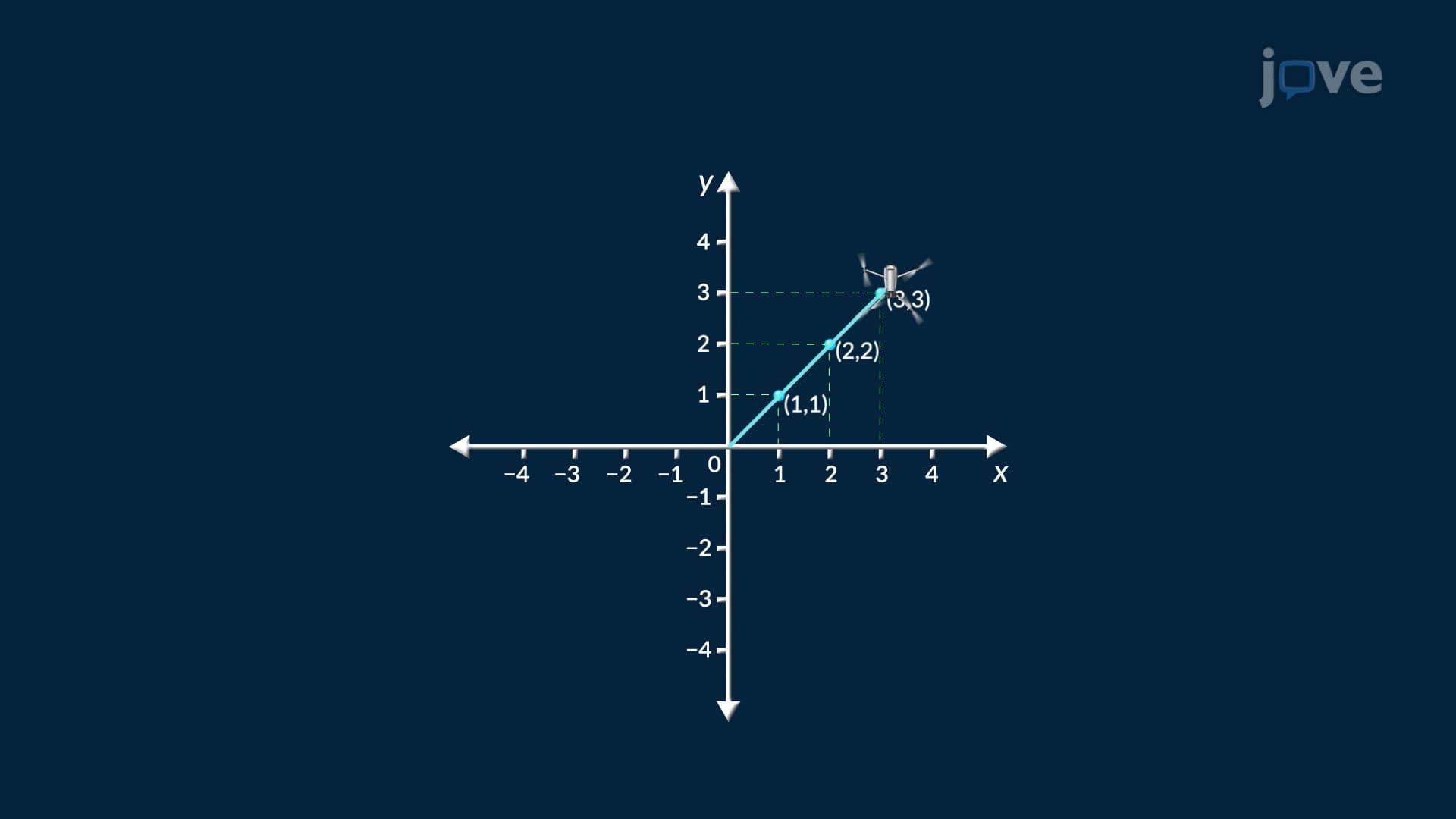
1. Coordinate Plane

2. The Distance Formula
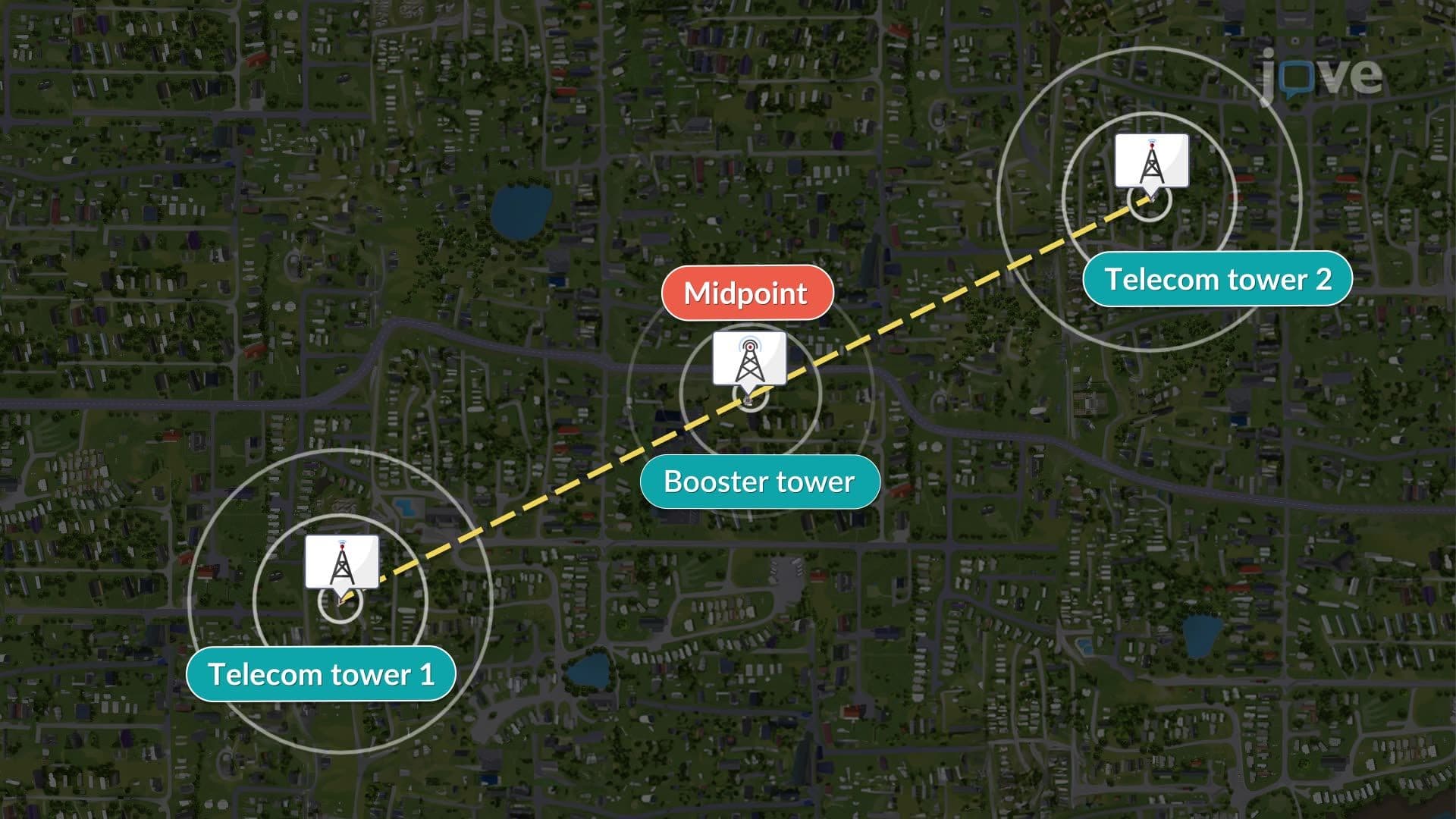
3. The Midpoint Formula
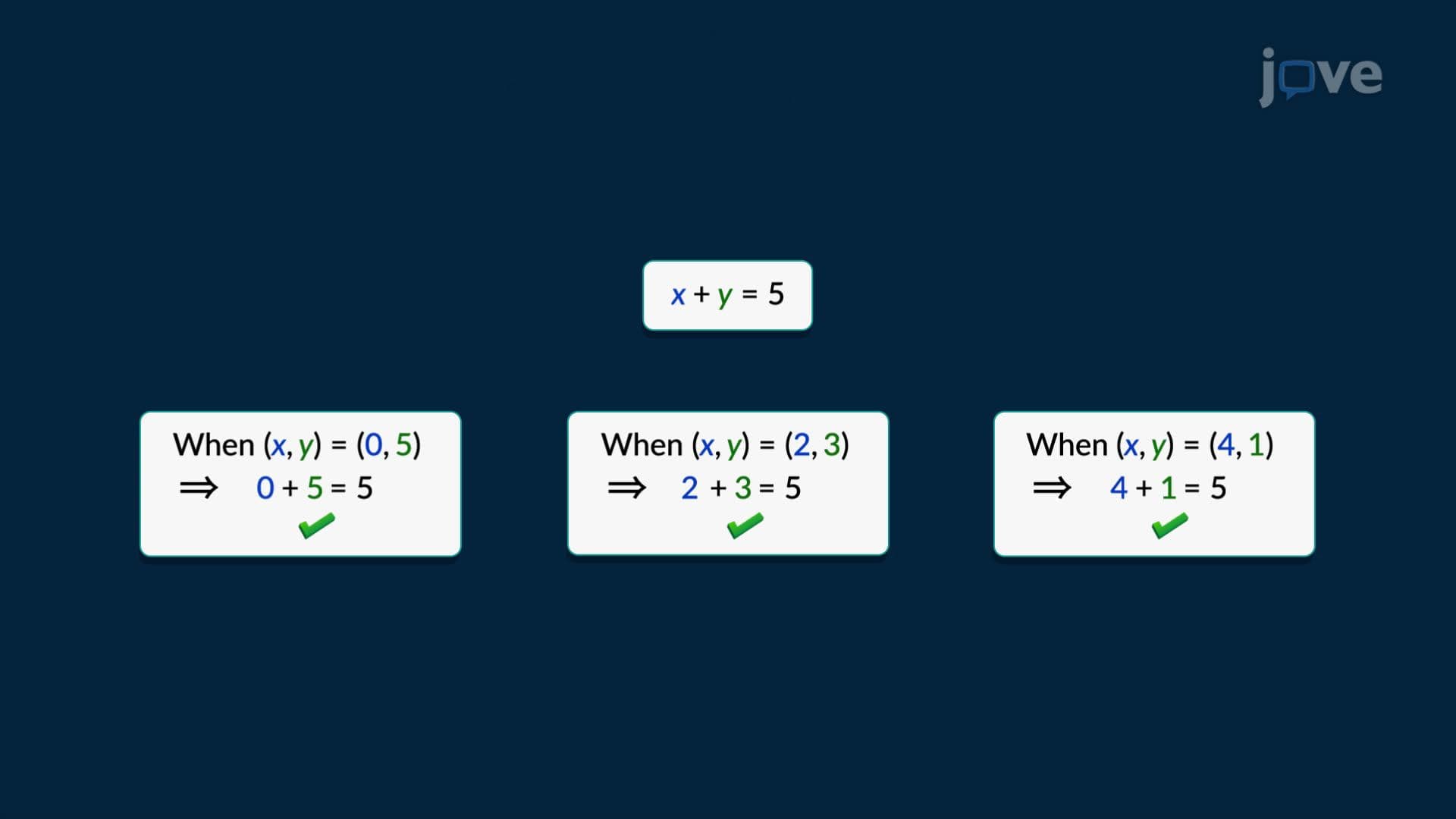
4. Graphs of Equations in Two Variables

5. Circles
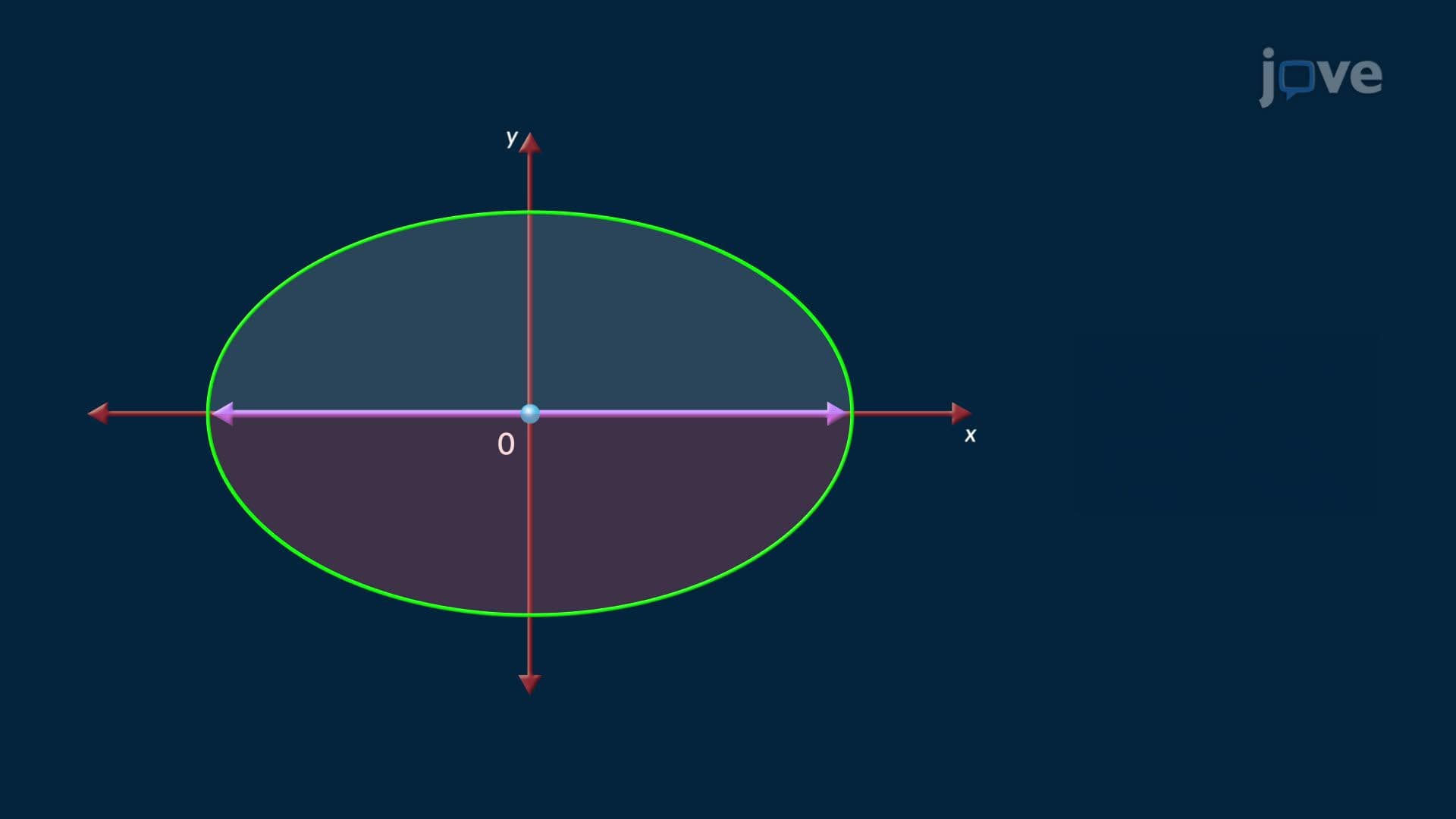
6. Symmetry
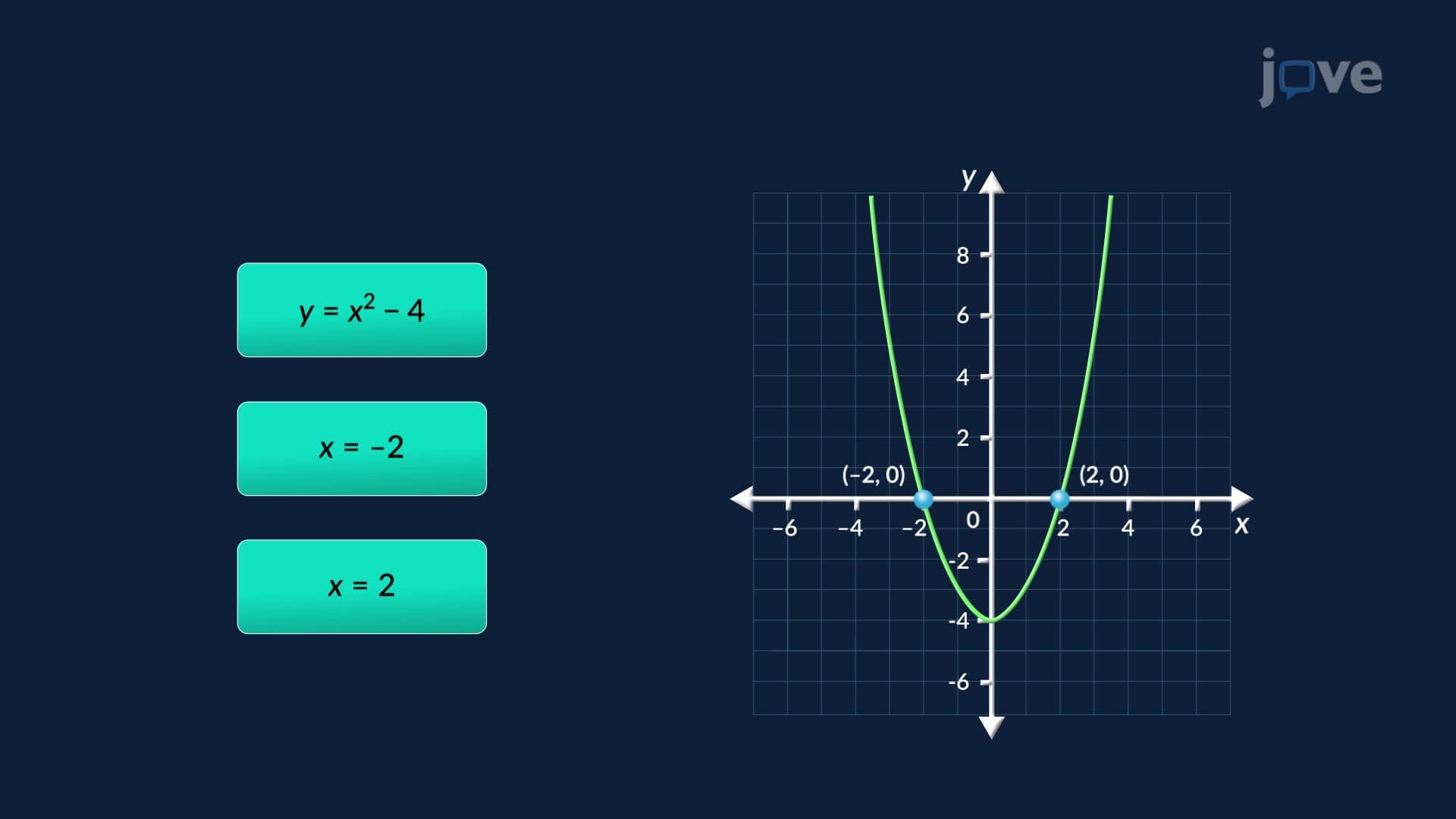
7. Solving Equations Graphically
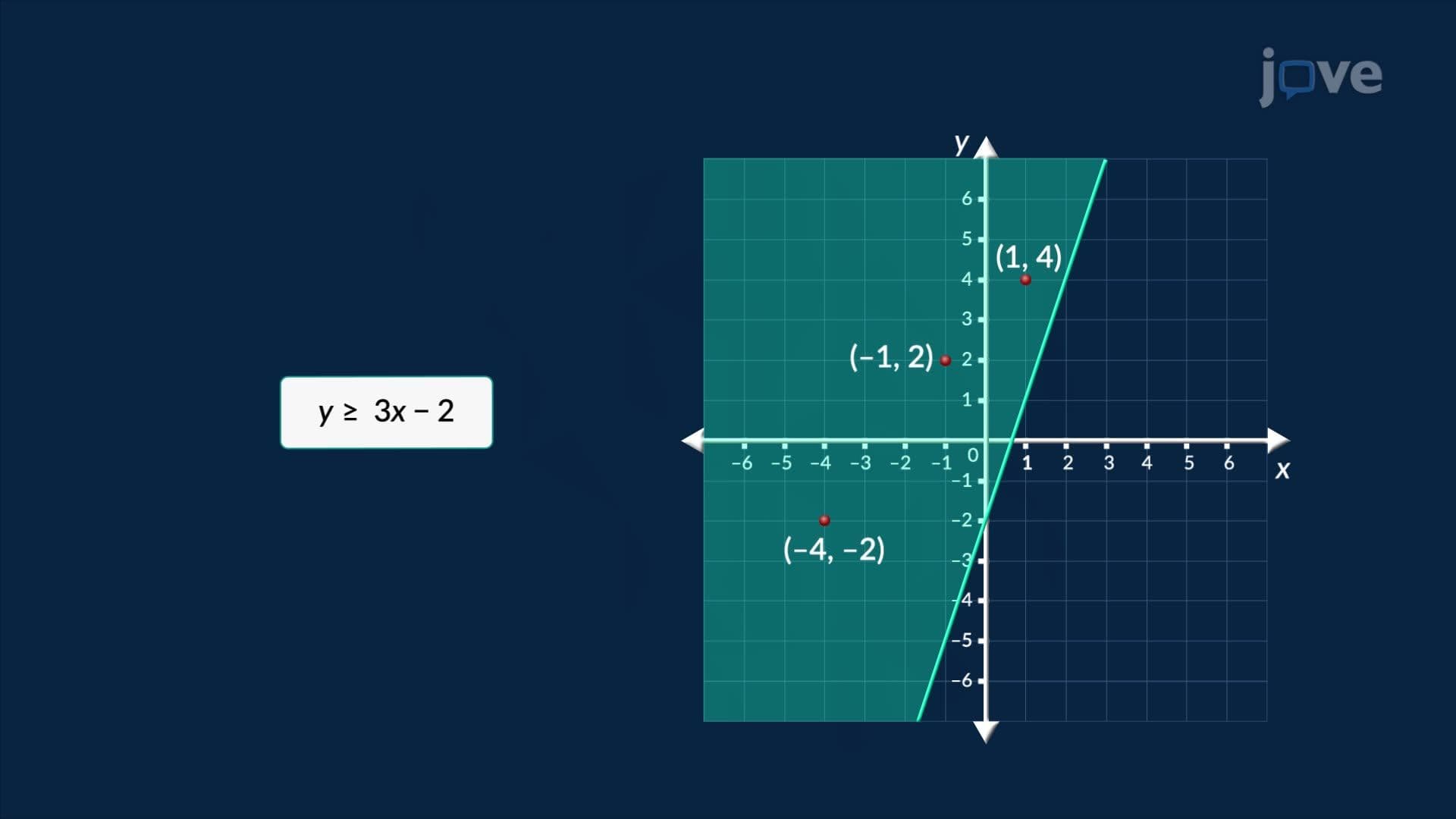
8. Solving Inequalities Graphically
Coordinates and graphs form the foundation of mathematical visualization and analytical problem-solving. This JoVE Coach micro-course explores coordinate plane graphing, from basic Cartesian coordinates to advanced applications in graphing equations and inequalities. Students will master essential skills including the distance and midpoint formulas, plotting points in coordinate systems, and solving real-world problems using coordinate geometry principles applied in fields like telecommunications, business analytics, and navigation systems.
- Understand the structure and organization of the coordinate plane and Cartesian coordinate system
- Learn to plot points accurately using ordered pairs and identify quadrant locations
- Apply the distance formula to calculate straight-line distances between any two points
- Identify midpoints between coordinates using the midpoint formula for optimal positioning
- Explore graphing techniques for linear equations, circles, and other geometric shapes
- Analyze symmetry patterns in graphs across axes and about the origin
- Apply graphical methods to solve equations and systems of equations systematically
- Understand how to solve inequalities using coordinate plane graphing techniques
1. Coordinate Plane Fundamentals The coordinate plane consists of perpendicular x and y axes intersecting at the origin, creating four distinct quadrants. Every point has unique coordinates (x,y) that function like a GPS address system. Positive x-values appear right of the y-axis, while negative values appear left. Similarly, positive y-values lie above the x-axis. This system enables precise location identification in applications ranging from mapping drone flight paths to plotting economic data trends. Understanding quadrant placement helps students navigate complex graphing problems and interpret real-world coordinate applications effectively.
2. Distance and Midpoint Calculations The distance formula, derived from the Pythagorean theorem, calculates straight-line distances between coordinate points by finding the hypotenuse of right triangles formed by horizontal and vertical differences. The midpoint formula determines exact center points by averaging x and y coordinates separately. These calculations prove essential in telecommunications for optimal cell tower placement, in urban planning for equidistant facility locations, and in logistics for efficient distribution center positioning. Mastering these formulas enables students to solve practical geometry problems and understand spatial relationships in coordinate systems.
3. Graphing Equations and Functions Graphing equations involves selecting x-values, calculating corresponding y-values, and plotting ordered pairs to reveal visual patterns. Intercepts mark where graphs cross axes, providing crucial reference points for analysis. Linear equations create straight lines, while quadratic equations form parabolas. This visualization technique helps analyze business data like tracking movie ticket sales over time, where daily sales patterns emerge clearly through coordinate plotting. Understanding graphing fundamentals enables students to interpret mathematical relationships visually and make predictions based on observed trends and patterns.
4. Circles and Geometric Shapes Circle equations derive from the distance formula, representing all points equidistant from a center point. The standard form reveals center coordinates and radius length directly. Completing the square transforms non-standard equations into recognizable formats. These concepts apply to designing circular sports facilities, determining broadcast coverage areas, and modeling planetary orbits. Students learn to convert between algebraic equations and geometric representations, developing skills essential for advanced mathematics and real-world applications requiring circular or elliptical modeling in engineering and design projects.
5. Symmetry and Pattern Recognition Graphs exhibit three symmetry types: reflection across x-axis, y-axis, or rotation about the origin. Testing symmetry involves substituting negative values and observing equation behavior. Symmetric patterns appear in architectural designs, manufacturing specifications, and natural phenomena modeling. Recognition of symmetry simplifies graphing complex functions and helps predict curve behavior. Students develop visual analysis skills that transfer to physics applications, engineering design problems, and artistic applications where symmetric properties create aesthetic appeal and functional efficiency in coordinate-based design systems.
6. Solving Equations and Inequalities Graphically Graphical equation solving identifies x-intercepts where functions equal zero, while systems solutions occur at intersection points. Quadratic equations may have zero, one, or two real solutions based on x-axis interaction patterns. Inequality solutions appear as shaded regions representing value ranges satisfying given conditions. Business applications include finding break-even points where revenue equals costs, and budget analysis comparing expenses against allocated funds. These visual problem-solving techniques help students understand solution sets intuitively and apply mathematical reasoning to practical decision-making scenarios.
Frequently Asked Questions
The x-coordinate (first number) indicates horizontal position from the origin, while the y-coordinate (second number) shows vertical position. Think of x as "left-right movement" and y as "up-down movement" from the center point.
Both exams test coordinate plane concepts including distance/midpoint formulas, graphing linear and quadratic functions, and interpreting coordinate-based word problems. Expect 3-5 questions per test covering these fundamental coordinate geometry skills.
The distance formula calculates separation between points, while the midpoint formula finds exact center locations. Distance helps measure spacing (like cell tower coverage), while midpoint determines optimal central positioning (like placing emergency services equidistant from communities).
Equations create specific lines or curves, while inequalities create regions or areas. Inequality graphs use shading to show all coordinate points satisfying the given conditions, not just individual solution points along a curve.
Coordinate systems visualize relationships between variables, making patterns obvious. Businesses use them for sales tracking, engineers for design specifications, and scientists for data analysis. They transform abstract numbers into understandable visual information.
Understanding concepts enables formula derivation and flexible problem-solving. While memorization helps with speed, conceptual understanding allows adaptation to unfamiliar problems and prevents common calculation errors during high-stakes testing situations.
Practice plotting points daily, work through real-world applications, and connect formulas to geometric principles. Use graphing technology to verify hand calculations, but ensure you can work problems without technological assistance for exam situations.
Coordinate geometry foundations support calculus concepts like derivatives and integrals, statistics data visualization, and physics motion analysis. Strong coordinate skills enable success in engineering, computer science, and scientific research requiring mathematical modeling and spatial reasoning.
This microcourse includes 8 concept videos that walk you through the building blocks of Math Fundamentals. Each video is short, about 1 minute, so you can cover a full topic during a coffee break or between classes. The full sequence starts with Coordinate Plane and ends with Solving Inequalities Graphically.
The playlist moves from big-picture ideas to the precise vocabulary used in Math Fundamentals. Early videos introduce Coordinate Plane, The Distance Formula, and The Midpoint Formula. The middle of the series focuses on Circles, Symmetry, and Solving Equations Graphically. The final stretch covers Solving Inequalities Graphically.
The natural next step is Functions and Their Graphs. From there, you can move to Polynomial and Rational Functions, Exponential and Logarithmic Functions, and Systems of Equations and Inequalities. Once you finish those, the full Math Fundamentals curriculum of 11 microcourses on JoVE Coach opens up, taking you from foundational concepts to advanced systems.
Related Subjects
 Physics 33 micro-courses›
 Statistics 17 micro-courses›