- Math Fundamentals
- Polar Coordinates and Vectors
Micro-courses:11

Polar Coordinates and Vectors
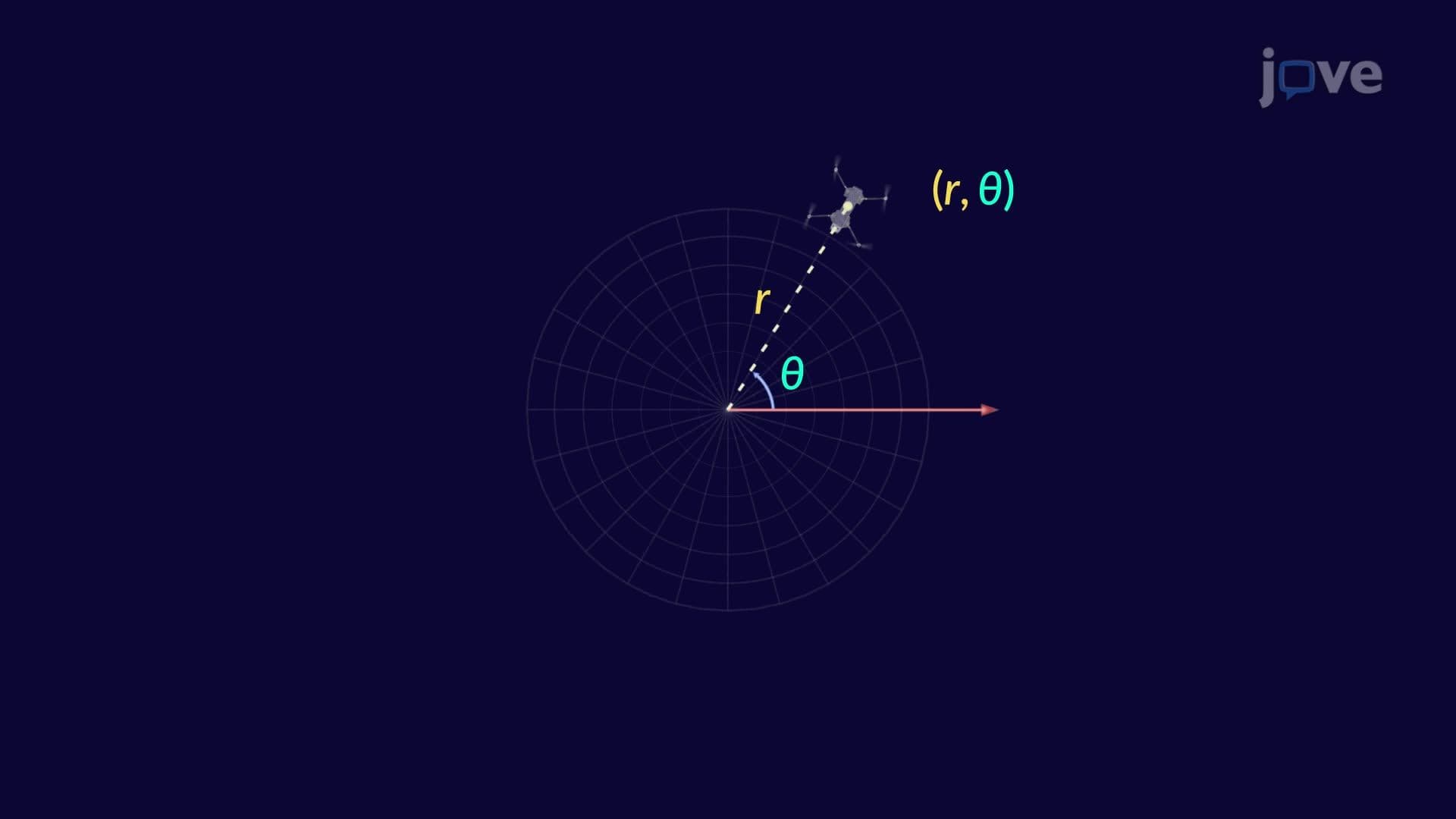
1. Polar Coordinates
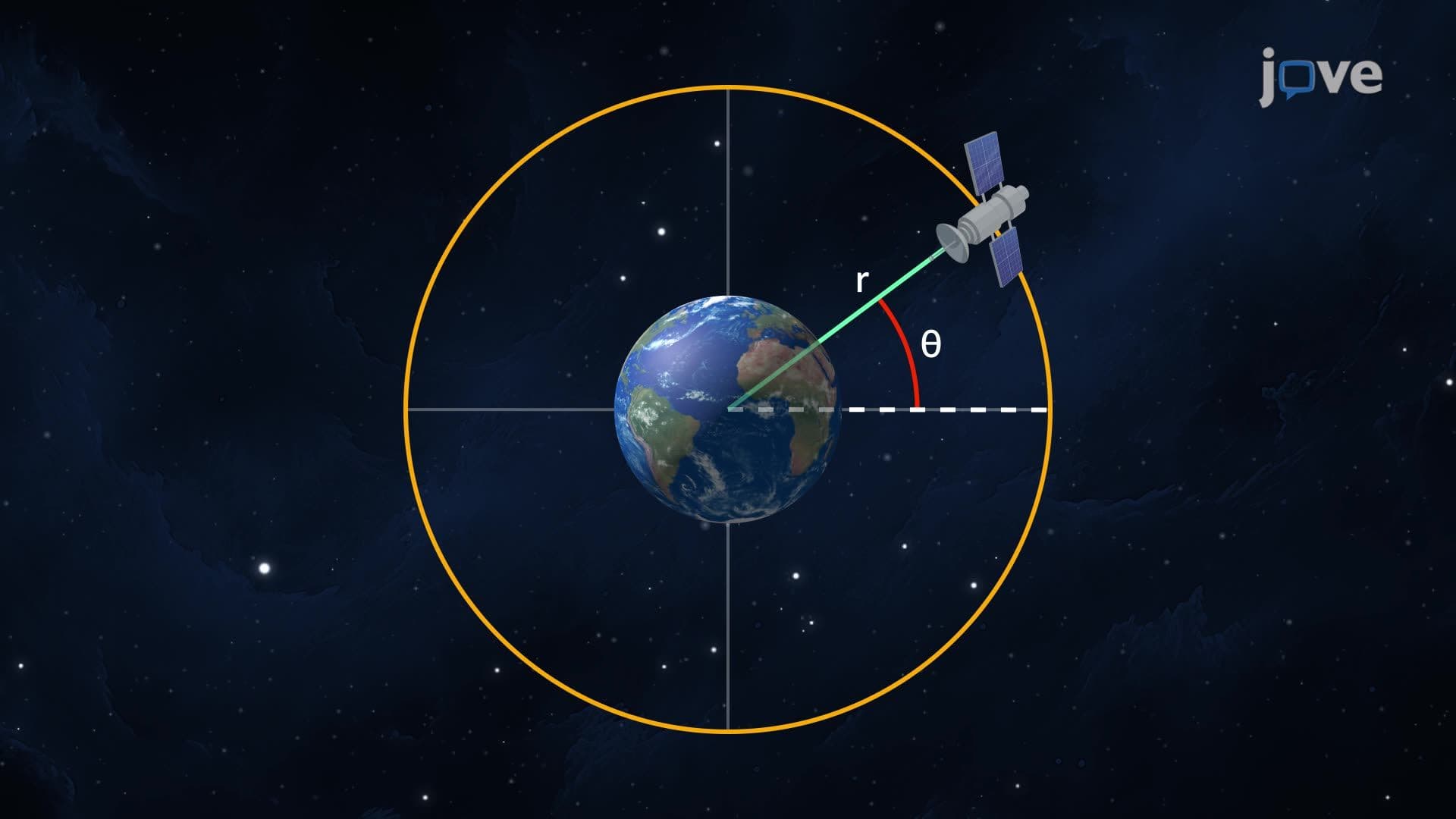
2. Graphs of Polar Equations
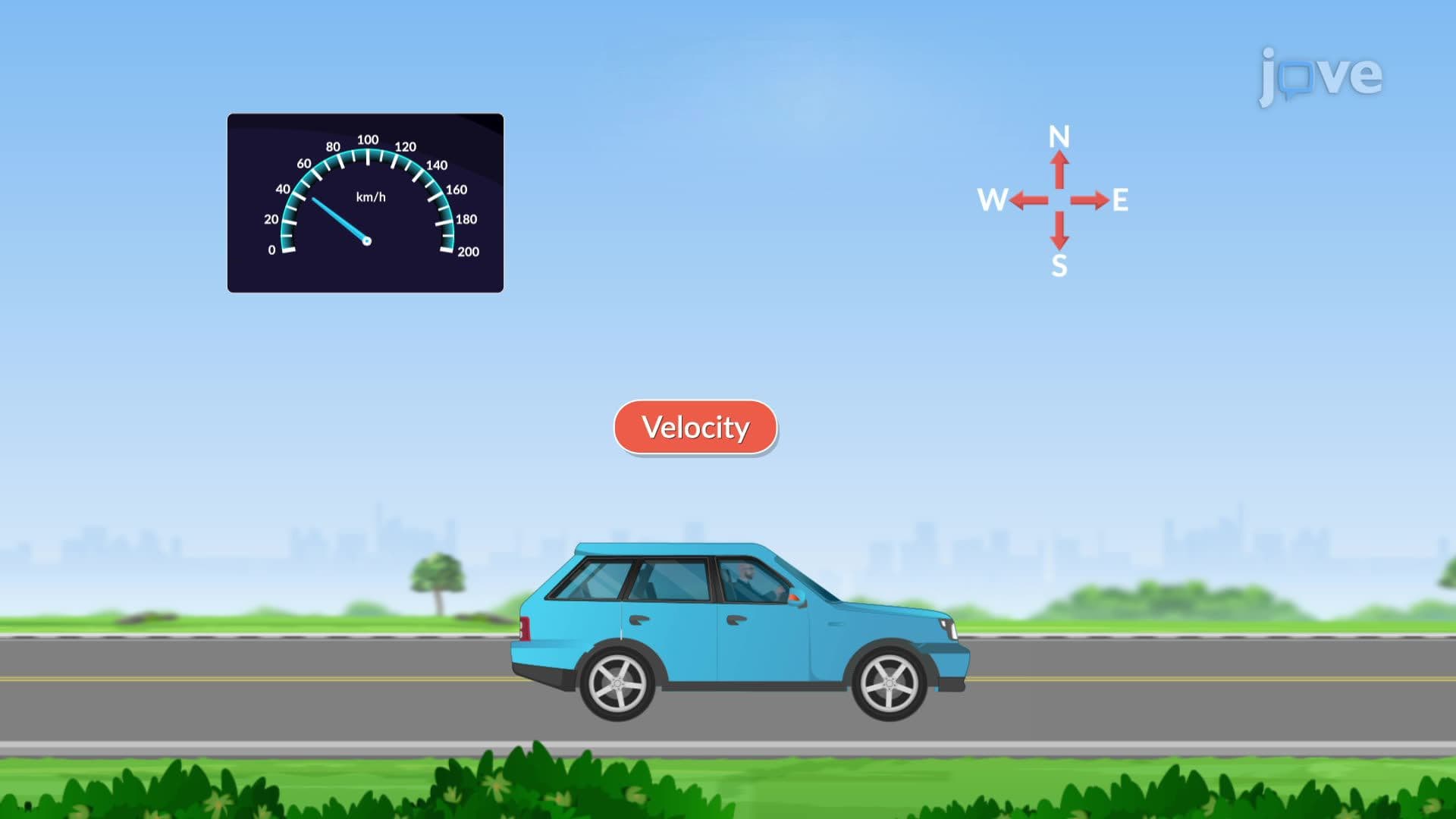
3. Vectors
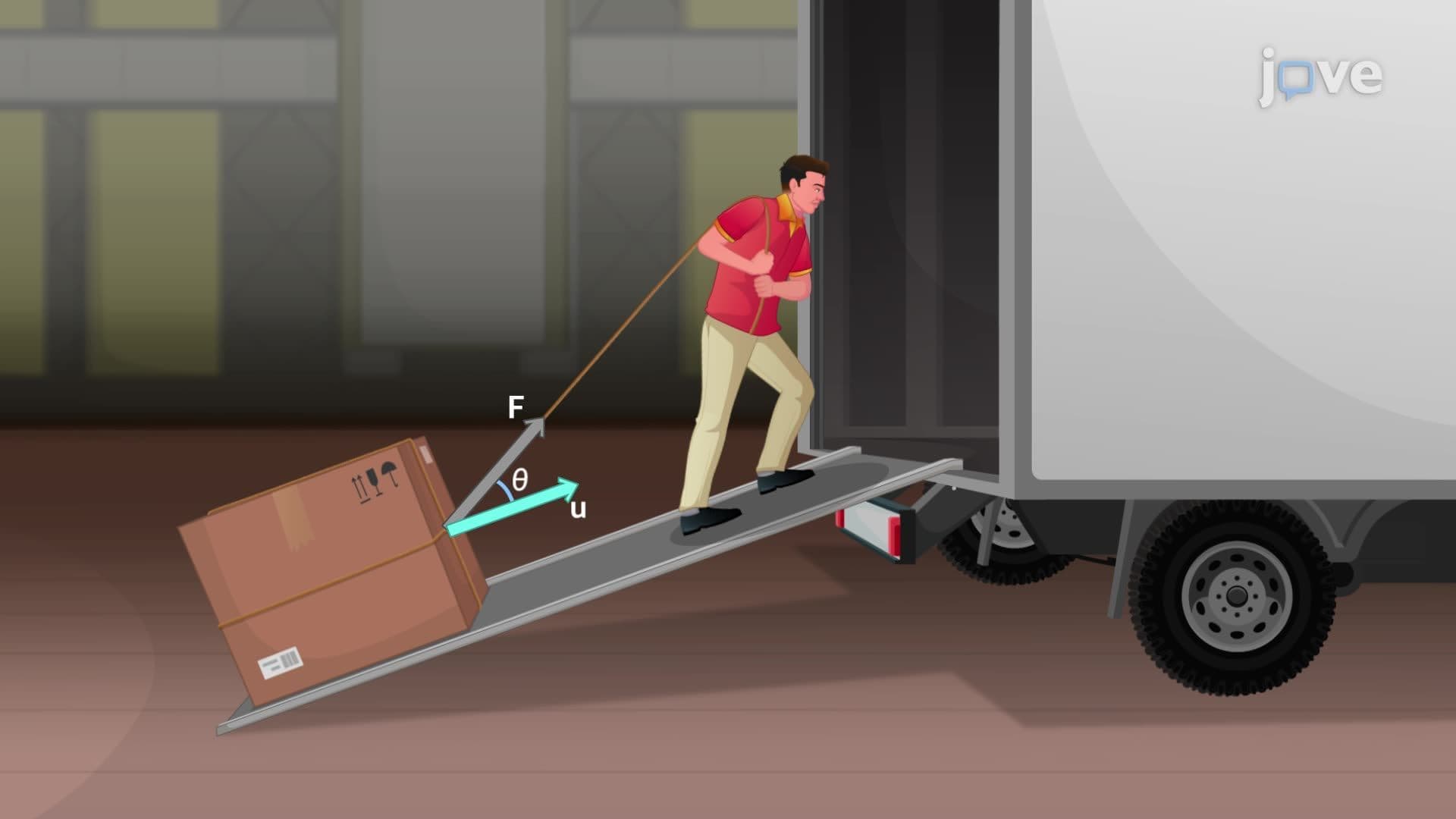
4. The Dot Product
Polar coordinates provide an alternative coordinate system using distance and angle measurements, essential for describing circular motion, satellite tracking, and engineering applications. This comprehensive course from JoVE Coach explores the polar coordinate system fundamentals, graphing techniques, vector operations, and polar coordinates and vector operations through real-world examples like drone navigation and force analysis on inclined planes.
- Understand how polar coordinates locate points using radius and angle measurements
- Learn to convert between polar and Cartesian coordinate systems using trigonometric relationships
- Identify key features of polar graphs including circles, lines, and rose curves
- Explore vector representation using magnitude and direction components
- Analyze vector addition and subtraction through geometric and algebraic methods
- Apply dot product calculations to determine vector projections and scalar quantities
- Understand how polar coordinates model real-world phenomena like satellite orbits
- Learn to decompose vectors into horizontal and vertical components for problem-solving
1. Polar Coordinate System Fundamentals: The polar coordinate system uses a central point called the pole and measures locations using radius (r) and angle (θ) values. Unlike Cartesian coordinates that use perpendicular grid lines, polar coordinates employ concentric circles and radial rays. A point's location is determined by its distance from the pole and the angle measured counterclockwise from the polar axis. This system proves invaluable for describing circular motion, such as tracking hurricanes around the eye or analyzing planetary orbits. Multiple representations exist for each point since adding 2π to any angle returns to the same location.
2. Coordinate Conversion Between Systems: Converting between polar and Cartesian coordinates relies on fundamental trigonometric relationships. From polar to Cartesian: x = r cos θ and y = r sin θ. The reverse conversion uses r = √(x² + y²) and θ = arctan(y/x), though careful attention to quadrant placement is essential. These conversions enable engineers to switch between coordinate systems based on problem requirements. For example, GPS navigation systems internally use spherical coordinates (similar to polar) but display locations using familiar latitude-longitude grids for user convenience.
3. Graphing Polar Equations: Polar graphs create distinctive patterns impossible to achieve easily in Cartesian coordinates. Constant radius equations (r = c) produce perfect circles centered at the origin. Fixed angle equations (θ = c) generate straight lines through the pole. Trigonometric functions create fascinating curves: r = a cos θ produces circles, while r = a cos(nθ) generates rose patterns with petals. These graphs help aerospace engineers plot satellite trajectories and marine biologists track ocean current patterns. Understanding these fundamental shapes enables recognition of more complex polar functions.
4. Vector Representation and Properties: Vectors combine magnitude and direction into single mathematical objects, essential for describing physical quantities like velocity, force, and acceleration. Represented as directed line segments with initial and terminal points, vectors can be written using bold notation (v) or arrow notation (v⃗). Two vectors are equal when they share identical magnitude and direction, regardless of position. This property allows vector translation without changing the vector's identity. Applications include analyzing aircraft flight paths where pilots must account for both airspeed (magnitude) and heading (direction) to reach destinations accurately.
5. Vector Operations and Addition: Vector addition follows the head-to-tail rule or parallelogram method, both yielding identical results. The head-to-tail method places one vector's initial point at another's terminal point, with the sum connecting the remaining initial point to terminal point. The parallelogram method uses vectors sharing a common initial point, with their sum represented by the diagonal. Vector subtraction involves adding the negative of a vector, effectively reversing its direction. These operations prove crucial in physics problems involving multiple forces, such as analyzing the net force on bridges under various load conditions.
6. Dot Product Applications: The dot product multiplies two vectors to produce a scalar quantity, calculated as a⃗ · b⃗ = |a⃗||b⃗|cos θ, where θ represents the angle between vectors. This operation determines vector projections and measures how much one vector acts in another's direction. Physical applications include calculating work done by forces, where work equals force magnitude times displacement in the force's direction. Engineers use dot products to analyze structural forces, determining how much of a cable's tension acts vertically versus horizontally in suspension bridge designs.
Frequently Asked Questions
While Cartesian coordinates use perpendicular grid lines and measure horizontal/vertical distances, polar coordinates use a central point (pole) and measure distance plus angle. Think of it like giving directions: Cartesian says "go 3 blocks east, then 4 blocks north," while polar says "go 5 blocks in the northeast direction (at 53° angle)." Both locate the same point using different measurement approaches.
Since a full rotation (360° or 2π radians) returns to the same direction, adding multiples of 2π to any angle doesn't change the location. Additionally, negative radius values combined with opposite angles (θ + π) represent the same point. For example, (3, 30°) equals (3, 390°) and (-3, 210°). This flexibility helps in calculations but requires careful attention during problem-solving.
Yes, polar coordinates frequently appear on AP Calculus BC exams, SAT Subject Test Mathematics Level 2, and some SAT questions. Typical problems include coordinate conversion, finding areas bounded by polar curves, and analyzing polar graphs. The AP exam especially emphasizes polar equations of conics and calculus applications like finding tangent lines to polar curves.
Use the right triangle formed by x, y, and r. The horizontal leg is x = r cos θ (cosine relates to adjacent side), and vertical leg is y = r sin θ (sine relates to opposite side). For reverse conversion, r represents the hypotenuse using Pythagorean theorem: r = √(x² + y²), while θ = arctan(y/x) comes from the tangent ratio opposite/adjacent.
Polar coordinates excel in situations involving rotation or circular motion. Air traffic controllers track aircraft using radar systems that naturally measure distance and bearing (polar coordinates). Marine navigation relies on compass headings and distances. Weather forecasters track hurricane movements using polar-based models. Even everyday GPS systems internally use spherical coordinates (3D version of polar) before converting to familiar map displays.
Magnitude measures the vector's total length or strength (always positive), while components break the vector into horizontal and vertical parts that can be positive or negative. Think of velocity: a car traveling 50 mph northeast has magnitude 50 mph, but components might be +35 mph eastward and +35 mph northward. The components add up (using Pythagorean theorem) to give the original magnitude.
Most students find polar coordinates moderately challenging initially due to the different thinking approach, but vectors tend to be more intuitive since they relate to familiar physical concepts. The key difficulty lies in coordinate conversion and visualizing polar graphs. With consistent practice sketching basic polar curves and working conversion problems, most students achieve proficiency within 2-3 weeks of focused study.
Start by sketching polar coordinate grids and plotting points manually to build intuition. Practice coordinate conversions daily using both exact and approximate values. For vectors, draw diagrams for every problem showing magnitude and direction clearly. Use graphing calculators or online tools to verify polar graphs, but always sketch by hand first. Create formula cards linking geometric interpretations with algebraic expressions, and work plenty of mixed practice problems combining both topics.
This microcourse includes 4 concept videos that walk you through the building blocks of Math Fundamentals. Each video is short, about 1 minute, so you can cover a full topic during a coffee break or between classes. The full sequence starts with Polar Coordinates and ends with The Dot Product.
The playlist moves from big-picture ideas to the precise vocabulary used in Math Fundamentals. Early videos introduce Polar Coordinates, Graphs of Polar Equations, and Vectors. The final stretch covers The Dot Product.
The natural next step is Analytic Geometry. From there, you can move to Introduction to Sequences and Series and Limits. Once you finish those, the full Math Fundamentals curriculum of 11 microcourses on JoVE Coach opens up, taking you from foundational concepts to advanced systems.
Related Subjects
 Physics 33 micro-courses›
 Statistics 17 micro-courses›