Loading subject page…
Micro-course: Introduction to Sequences and Series
326 views
Learn key concepts and earn your certificate.


Sequences

00:00
01:29
Video Summary: What are Sequences
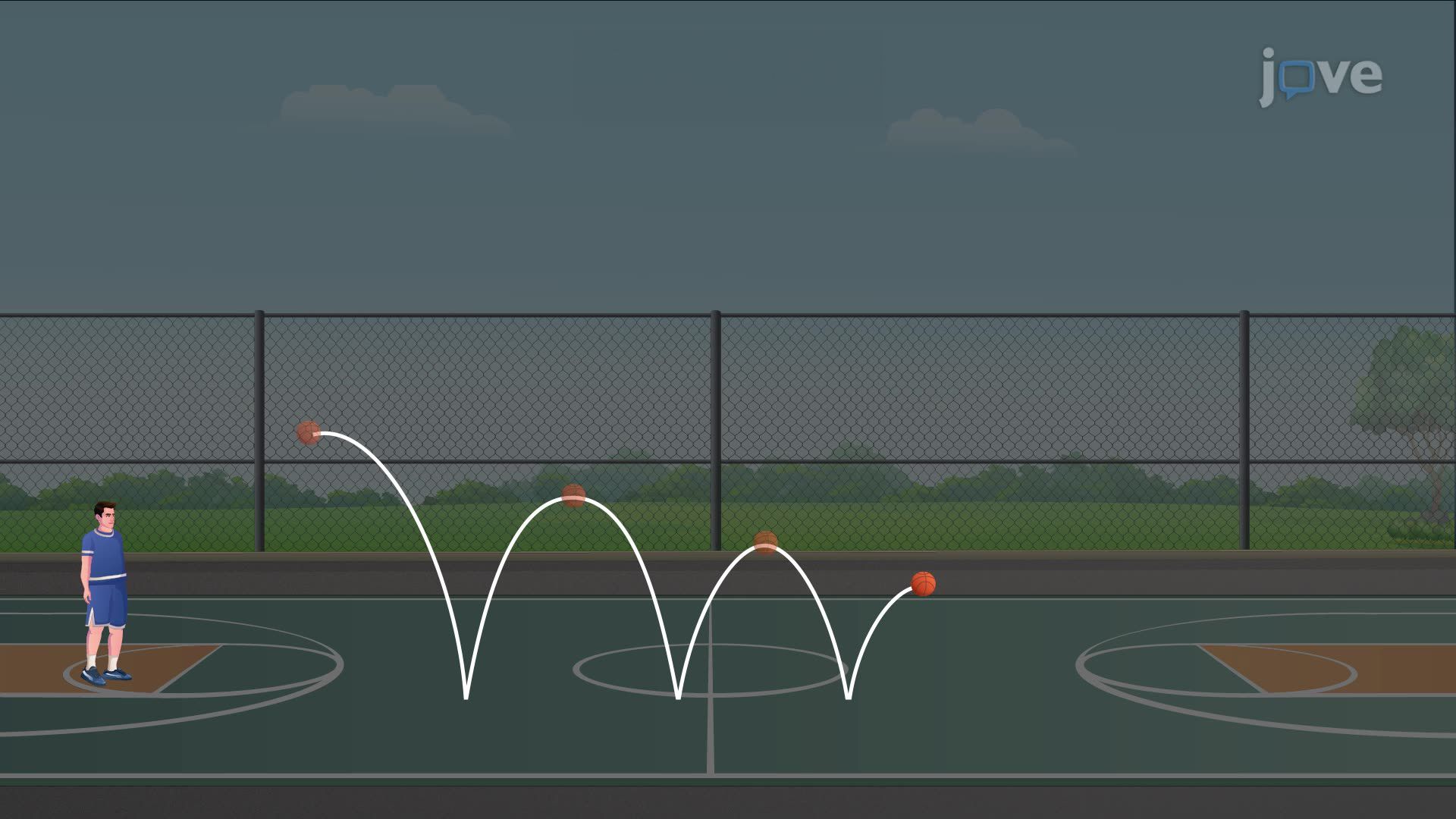
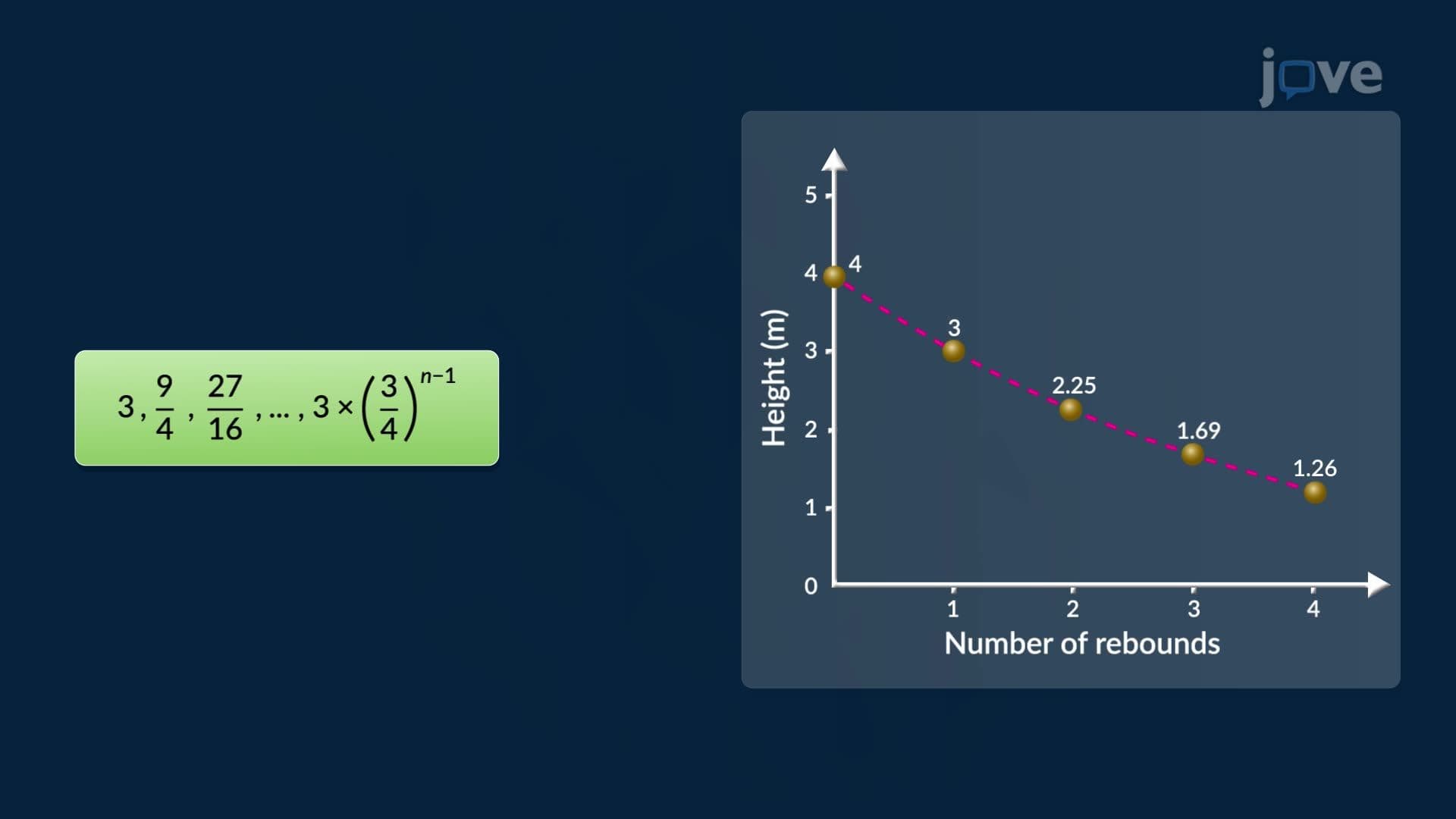
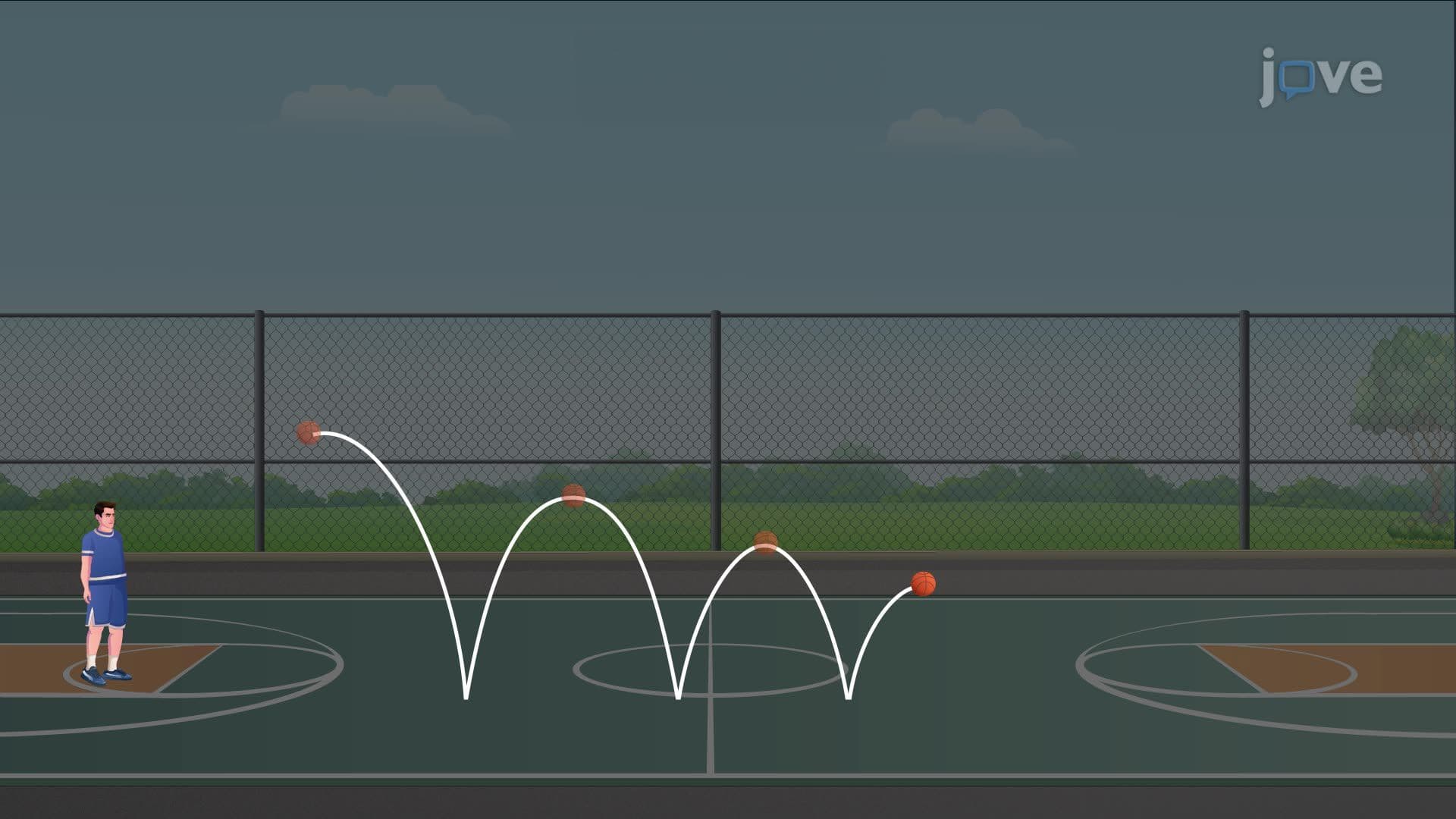
Ever wonder how Netflix predicts your next binge-watch or how your student loan payments are calculated? Sequences are mathematical patterns that govern everything from streaming algorithms to mortgage calculations. These ordered lists of numbers follow specific rules, like how a basketball's bounce height decreases by a predictable fraction each time it hits the court. Understanding what sequences are unlocks the mathematical foundation behind countless real-world applications. Watch the full video on JoVE Coach to master this concept with expert-led visuals and step-by-step explanations.
- Understand what sequences are as ordered lists of numbers following specific mathematical patterns or rules
- Identify different components of sequences including terms, positions, and the nth term formula
- Analyze recursive sequences where each term depends on previous terms, such as the famous Fibonacci sequence
- Apply sequence concepts to solve real-world problems involving patterns like savings growth or population changes
- Recognize partial sums and their role in tracking cumulative values using sigma notation
- Evaluate how sequences model decreasing patterns like radioactive decay or increasing patterns like compound interest
- Compare explicit formulas versus recursive definitions for finding sequence terms
- Explore the sequence of partial sums and its practical applications in financial mathematics
Understanding What Sequences Are: The Mathematical Foundation
Sequences form the backbone of mathematical pattern recognition, serving as ordered collections of numbers where position determines value. Unlike random lists, sequences follow deliberate rules that allow mathematicians to predict future terms and analyze long-term behavior. In algebra courses across US high schools, students encounter sequences as early as Algebra II, while calculus students explore their convergence properties.
Types of Sequences: From Simple to Complex Patterns
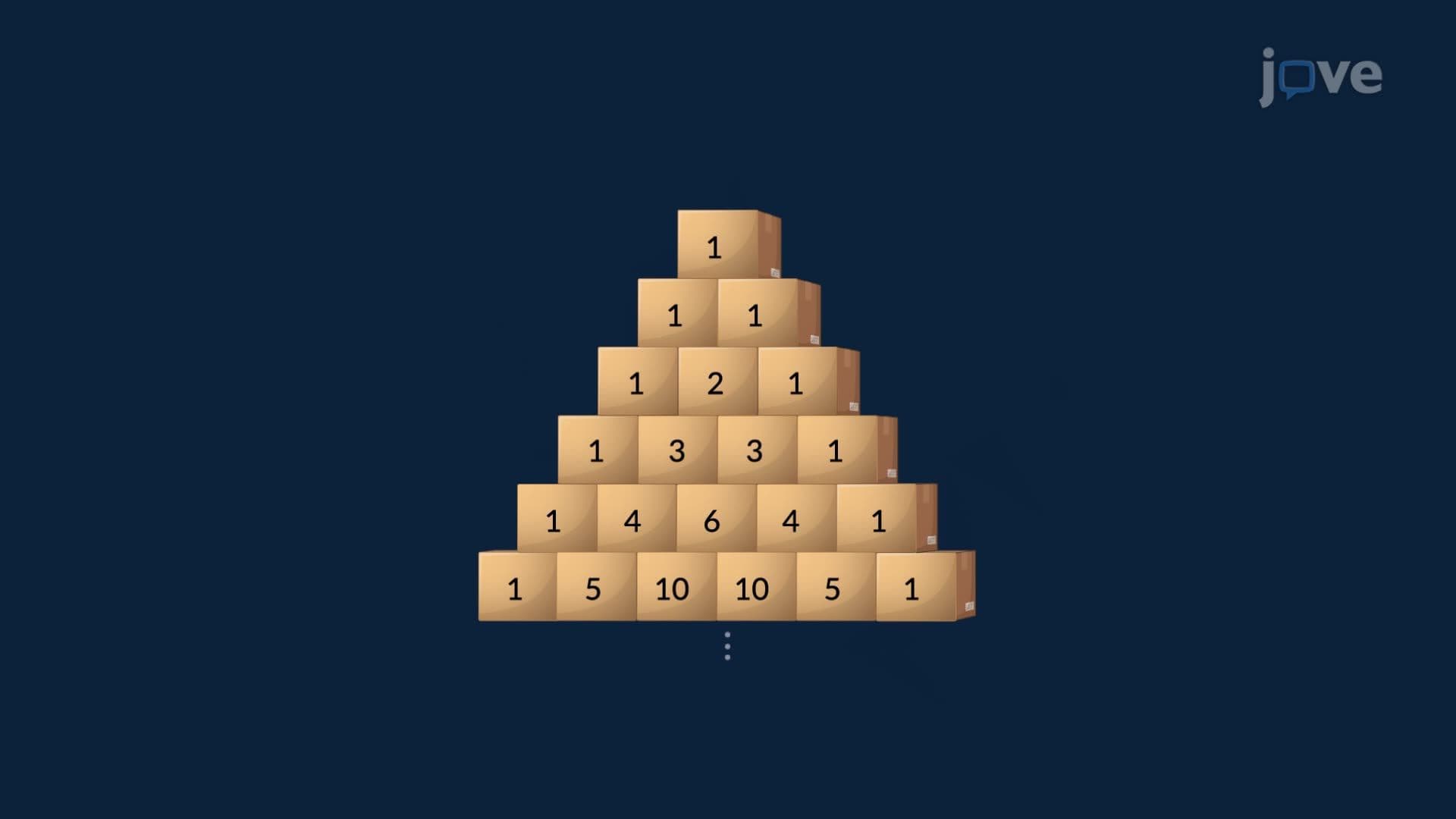
Mathematical sequences come in various forms, each serving different analytical purposes. Arithmetic sequences add a constant difference between consecutive terms, like the sequence 2, 5, 8, 11, where each term increases by 3. Geometric sequences multiply by a constant ratio, such as a bouncing ball losing 25% of its height with each bounce: 10 feet, 7.5 feet, 5.625 feet. Recursive sequences define terms using previous values, with the Fibonacci sequence (1, 1, 2, 3, 5, 8...) being the most famous example where each term equals the sum of the two preceding terms.
The nth Term Formula: Precision in Pattern Recognition
The power of sequences lies in their predictability through nth term formulas. For position n, these formulas eliminate guesswork. An arithmetic sequence uses the formula: nth term = first term + (n-1) × common difference. Geometric sequences follow: nth term = first term × (common ratio)^(n-1). These formulas prove invaluable on standardized tests like the SAT Math section, where students must identify patterns and calculate specific terms efficiently.
Partial Sums and Practical Applications
Partial sums represent the cumulative total of sequence terms up to a specific position, often expressed using sigma notation. In financial mathematics, partial sums model savings account growth, where weekly deposits form a sequence and partial sums show total accumulated savings. College students studying business calculus encounter partial sums when analyzing revenue streams, investment returns, and loan amortization schedules. Understanding partial sums prepares students for advanced topics in series convergence, essential for AP Calculus BC and university-level mathematics courses.
Frequently Asked Questions
Sequences are ordered lists of numbers that follow specific mathematical rules or patterns, where each number's position determines its value. They're crucial because they model real-world phenomena like population growth, financial calculations, and scientific measurements, making them essential for algebra, calculus, and applied mathematics courses.
SAT Math problems often test arithmetic and geometric sequence recognition, requiring students to find missing terms, identify patterns, or calculate sums. These questions typically involve real-world contexts like savings plans or depreciation schedules. Strong sequence skills can significantly boost your SAT Math score.
Arithmetic sequences have constant differences between consecutive terms, while geometric sequences have constant ratios. AP Calculus BC emphasizes geometric sequences for series convergence tests. Understanding both types is essential for tackling infinite series problems that frequently appear on the AP exam.
Mortgage payments follow a geometric sequence pattern where the principal portion increases while interest decreases each month. The remaining balance forms a decreasing geometric sequence, helping lenders calculate exact payment schedules and total interest over the loan term.
Not at all! Basic sequences only require algebra skills like substitution and pattern recognition. If you can work with formulas and understand coordinate systems, you have the foundation needed. Most high school students successfully master sequences in Algebra II or Pre-Calculus courses.
Practice identifying patterns quickly by working with arithmetic and geometric sequences daily. Focus on nth term formulas and memorize common sequence types. Use visual methods like graphing terms to recognize patterns, and time yourself solving problems to build speed for standardized tests.
Recursive sequences like Fibonacci appear throughout advanced mathematics, from number theory to differential equations. They model natural phenomena like shell spirals and flower petal arrangements. Understanding recursive relationships prepares students for dynamic systems in calculus and mathematical modeling courses.
After sequences, explore infinite series and convergence tests, which extend sequence concepts to calculus. Study limits, as they connect sequences to continuous functions. Mathematical induction also builds on sequence logic, providing proof techniques essential for advanced mathematics courses.
Related Micro-courses