Loading…
Loading video…

4,094 views
Why do skyscrapers like Chicago's Willis Tower need precisely calculated support columns to prevent catastrophic failure? Euler's formula for pin connections provides the critical mathematical foundation for determining when slender columns will buckle under load. This essential engineering principle helps structural engineers at firms like Skidmore, Owings & Merrill design safe buildings by calculating the maximum load a pin-connected column can support before buckling occurs. Watch the full video on JoVE Coach to master this concept with expert-led visuals and step-by-step explanations.
Euler's formula for pin connections represents one of the most fundamental concepts in structural mechanics, providing engineers with the mathematical tools to predict when slender columns will buckle. Developed by Swiss mathematician Leonhard Euler in the 18th century, this formula remains essential for modern structural analysis taught in engineering programs at universities like MIT, Stanford, and Georgia Tech.
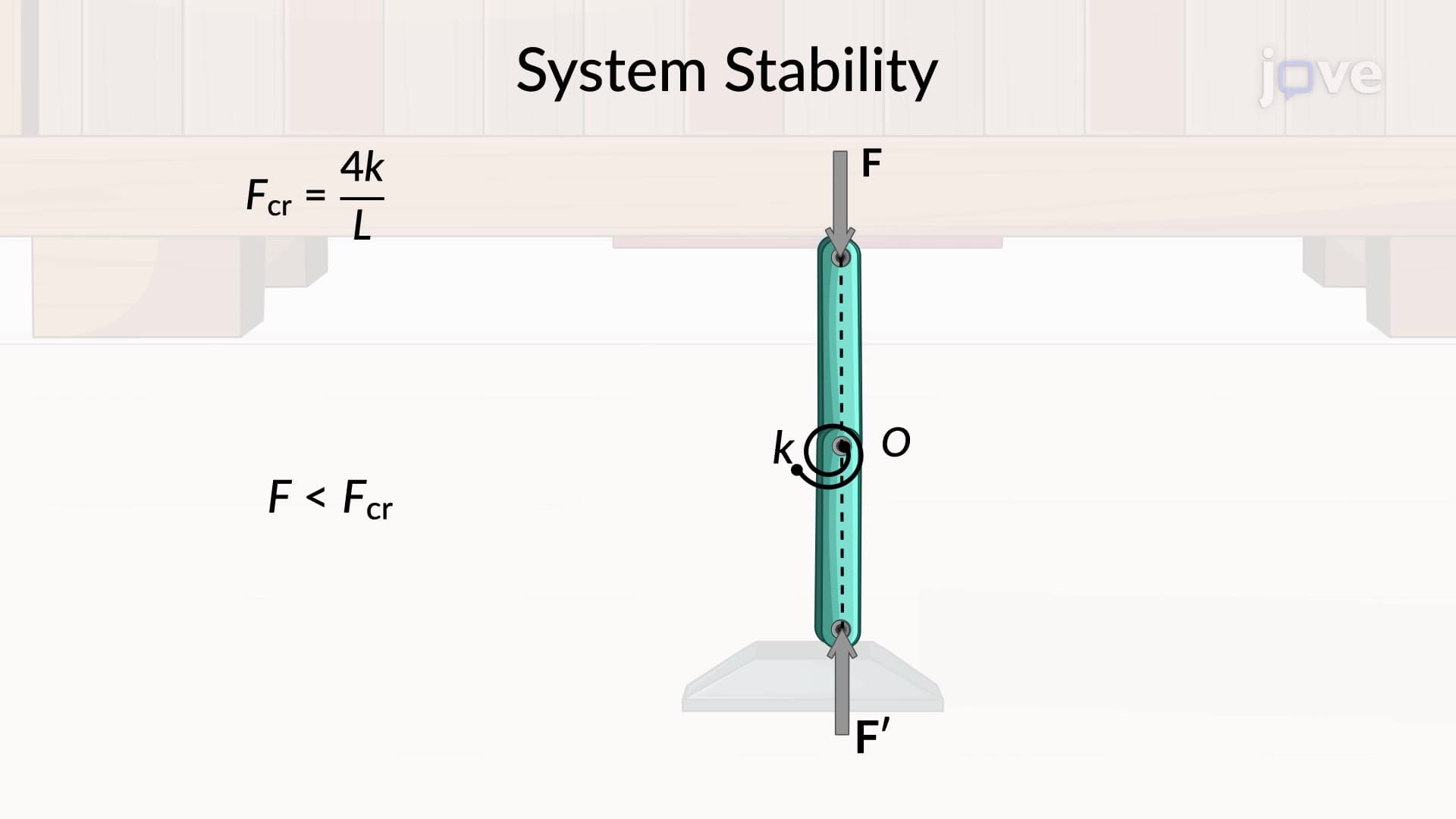
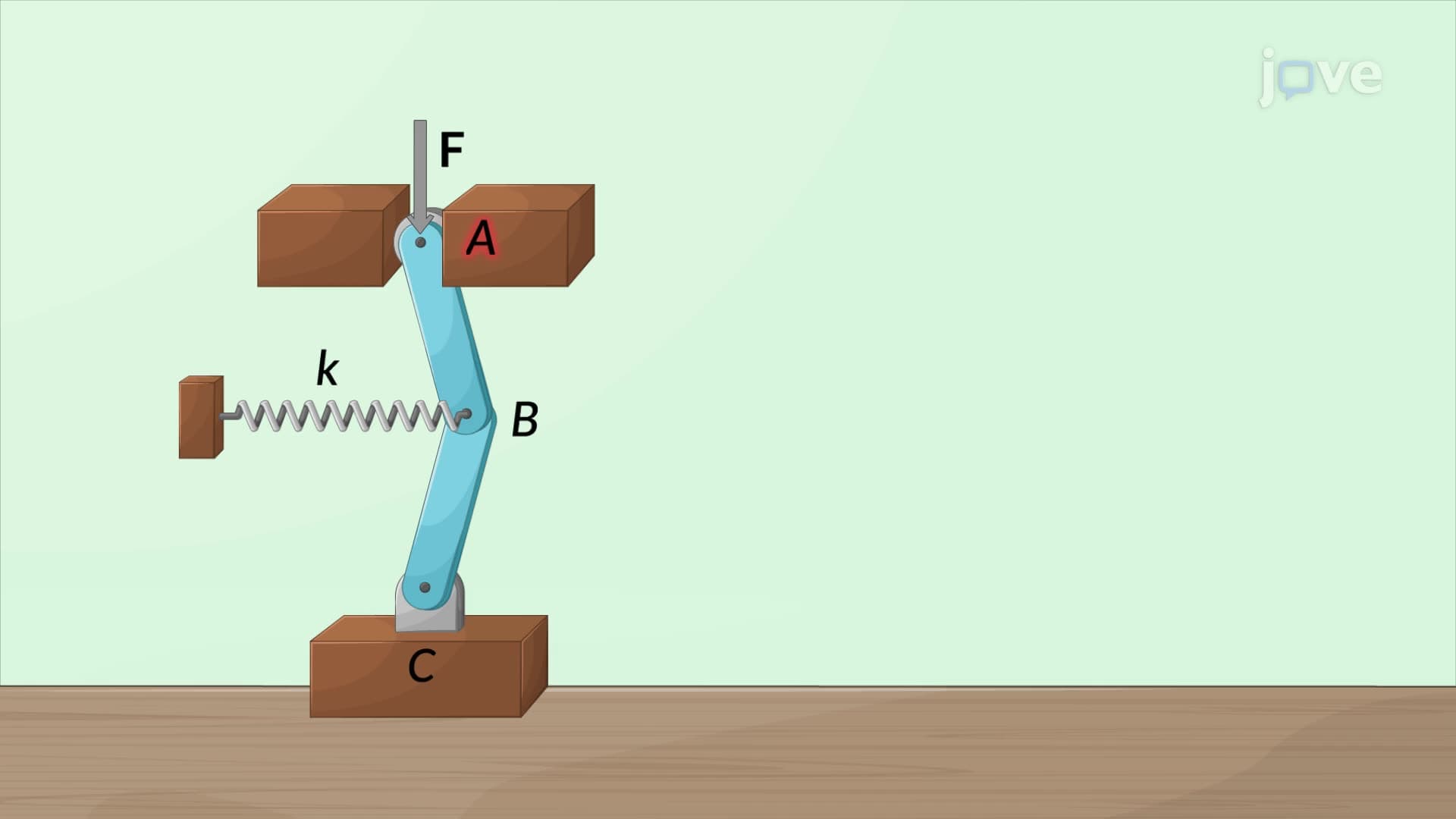
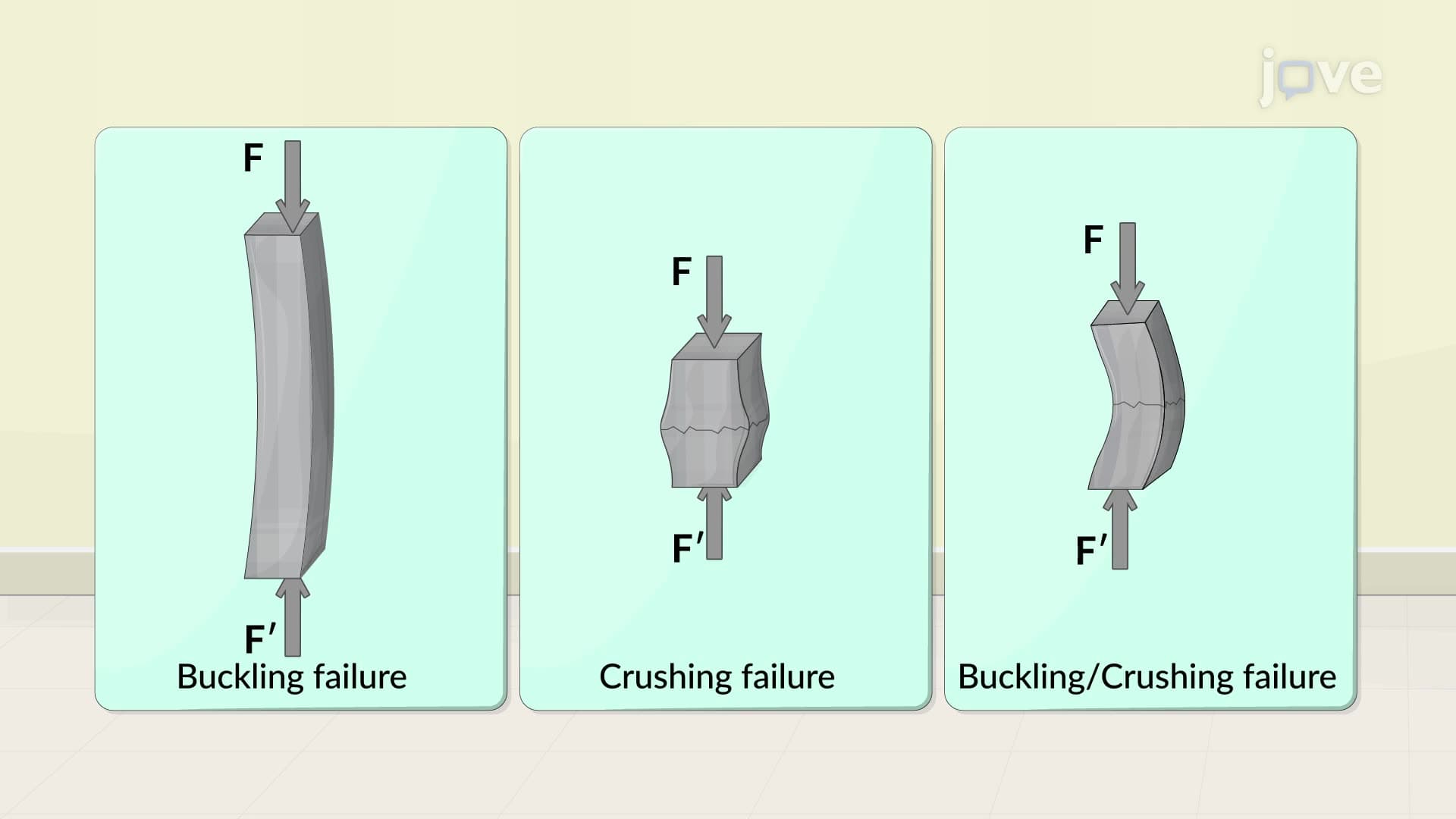
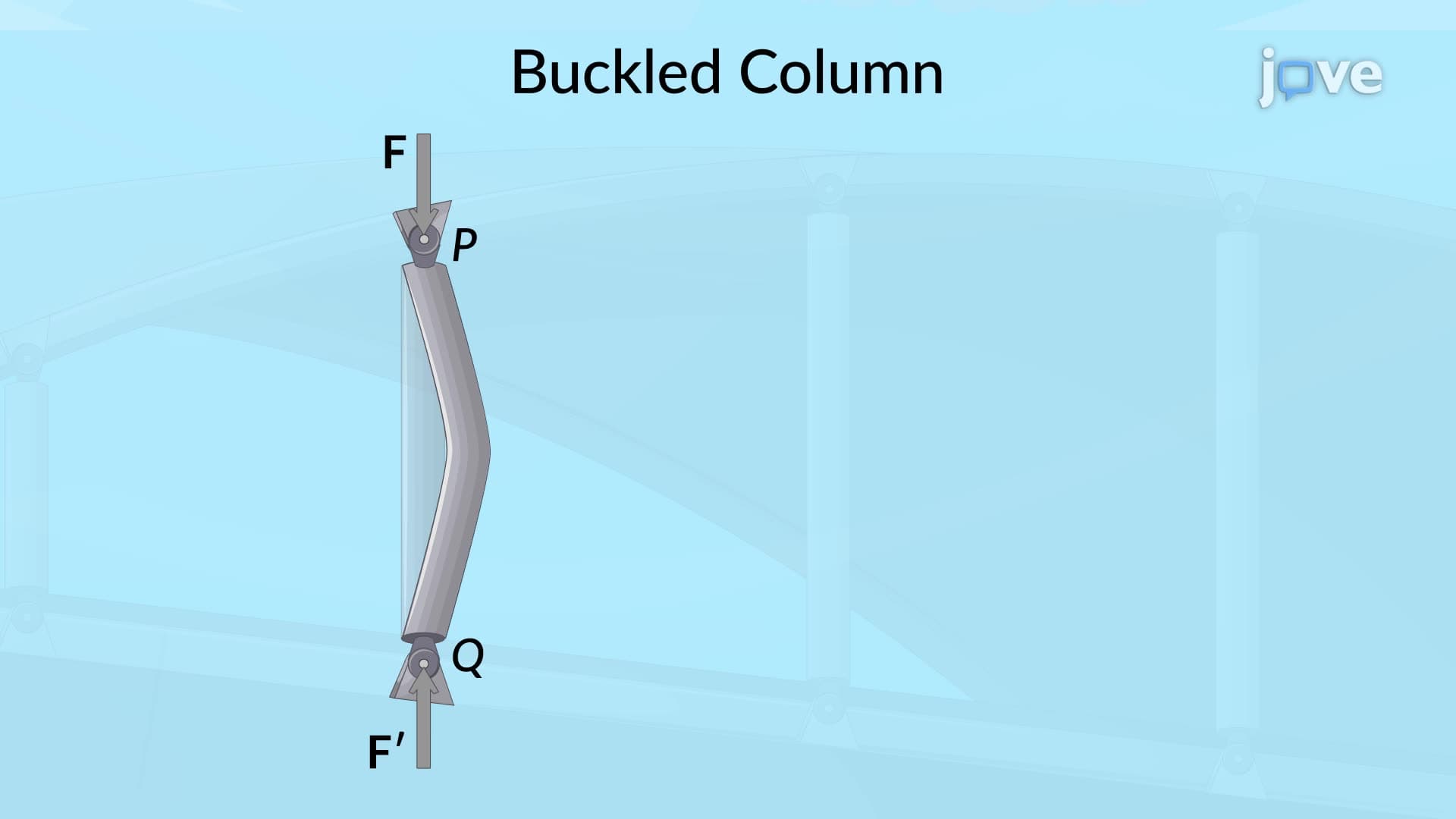
The derivation begins with a pin-connected column under axial load, where both ends are free to rotate but cannot translate. When the applied load approaches the critical value, the column becomes unstable and deflects laterally. This behavior is captured through a second-order differential equation that relates the bending moment to the curvature of the deflected column.
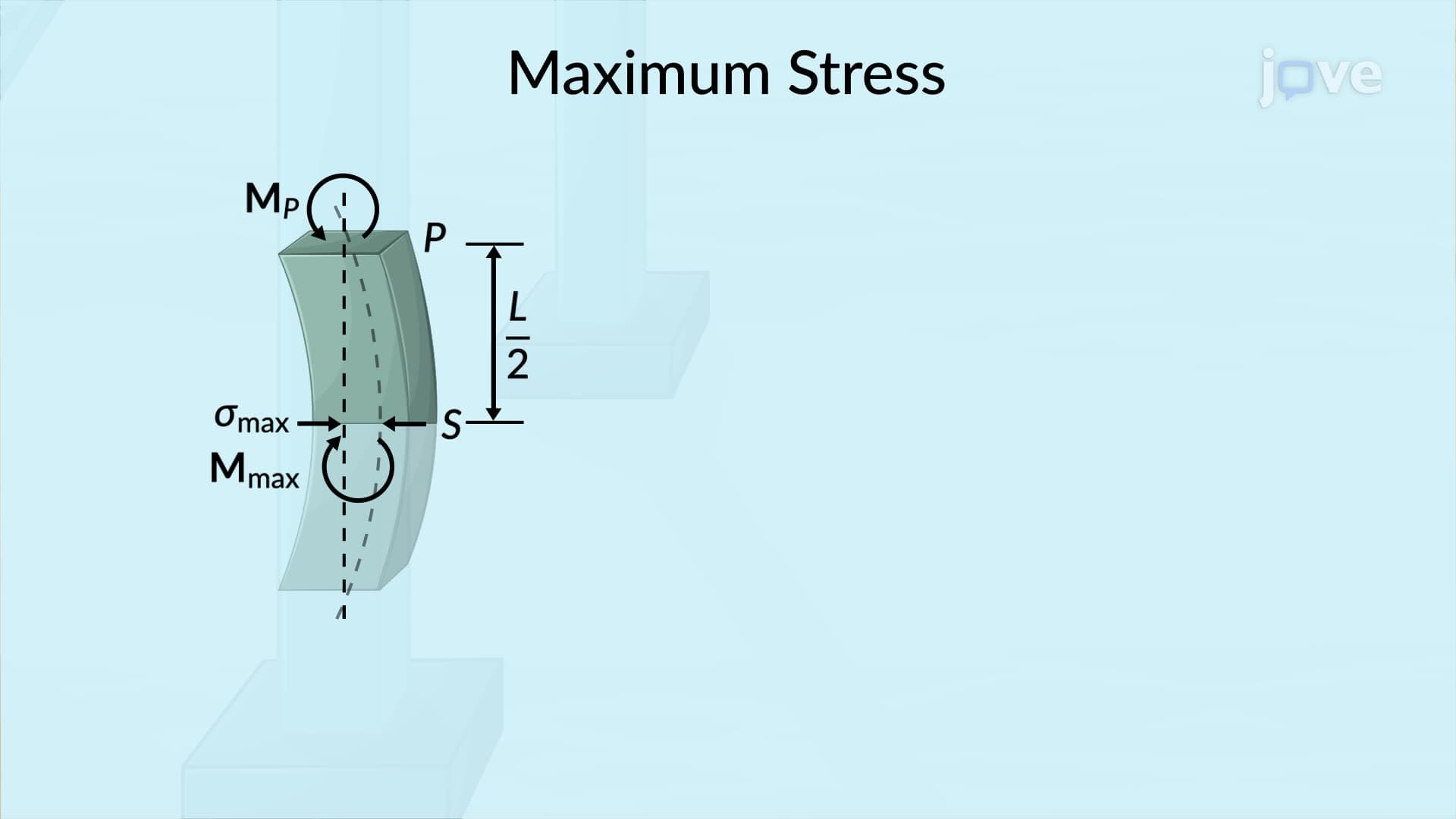
The mathematical relationship starts with M = EI(d²y/dx²), where M represents the bending moment, E is the modulus of elasticity, I is the moment of inertia, and y represents lateral deflection. For a buckled column, the moment equals -Py, leading to the differential equation EI(d²y/dx²) + Py = 0. This simplifies to d²y/dx² + (P/EI)y = 0, a classic harmonic oscillator equation.
The euler's formula for pin step by step solution process involves applying specific boundary conditions. For pin connections, the deflection y must equal zero at both ends (x = 0 and x = L). The general solution takes the form y = A sin(√(P/EI)x) + B cos(√(P/EI)x). The first boundary condition (y = 0 at x = 0) immediately requires B = 0, simplifying the solution to y = A sin(√(P/EI)x).
The second boundary condition (y = 0 at x = L) leads to the critical insight. Either A = 0 (trivial solution representing no buckling) or sin(√(P/EI)L) = 0. The non-trivial solution requires √(P/EI)L = nπ, where n represents positive integers. The smallest value occurs when n = 1, yielding the famous Euler buckling formula: P(critical) = π²EI/L².
This formula appears frequently in structural engineering courses and professional practice across the United States. The American Institute of Steel Construction (AISC) incorporates Euler's principles into building codes, while mechanical engineering students encounter it in courses on machine design and structural analysis. For AP Physics C students, understanding this concept provides valuable preparation for college-level mechanics courses.
Engineering firms like Bechtel and Fluor Corporation regularly apply these principles when designing everything from bridge supports to offshore drilling platforms. The formula helps determine appropriate safety factors and guides material selection for critical structural components.
Frequently Asked Questions
Euler's formula for pin connections is a mathematical equation that predicts when slender columns will buckle under axial loads. It's crucial because it helps engineers design safe structures by determining the maximum load a column can support before failure, preventing catastrophic collapses in buildings, bridges, and mechanical systems.
The AP Physics C Mechanics exam may include conceptual questions about column buckling, while college engineering exams typically require students to calculate critical loads, derive the differential equation, or analyze different end conditions. Students often encounter problems involving safety factor calculations and material property effects on buckling behavior.
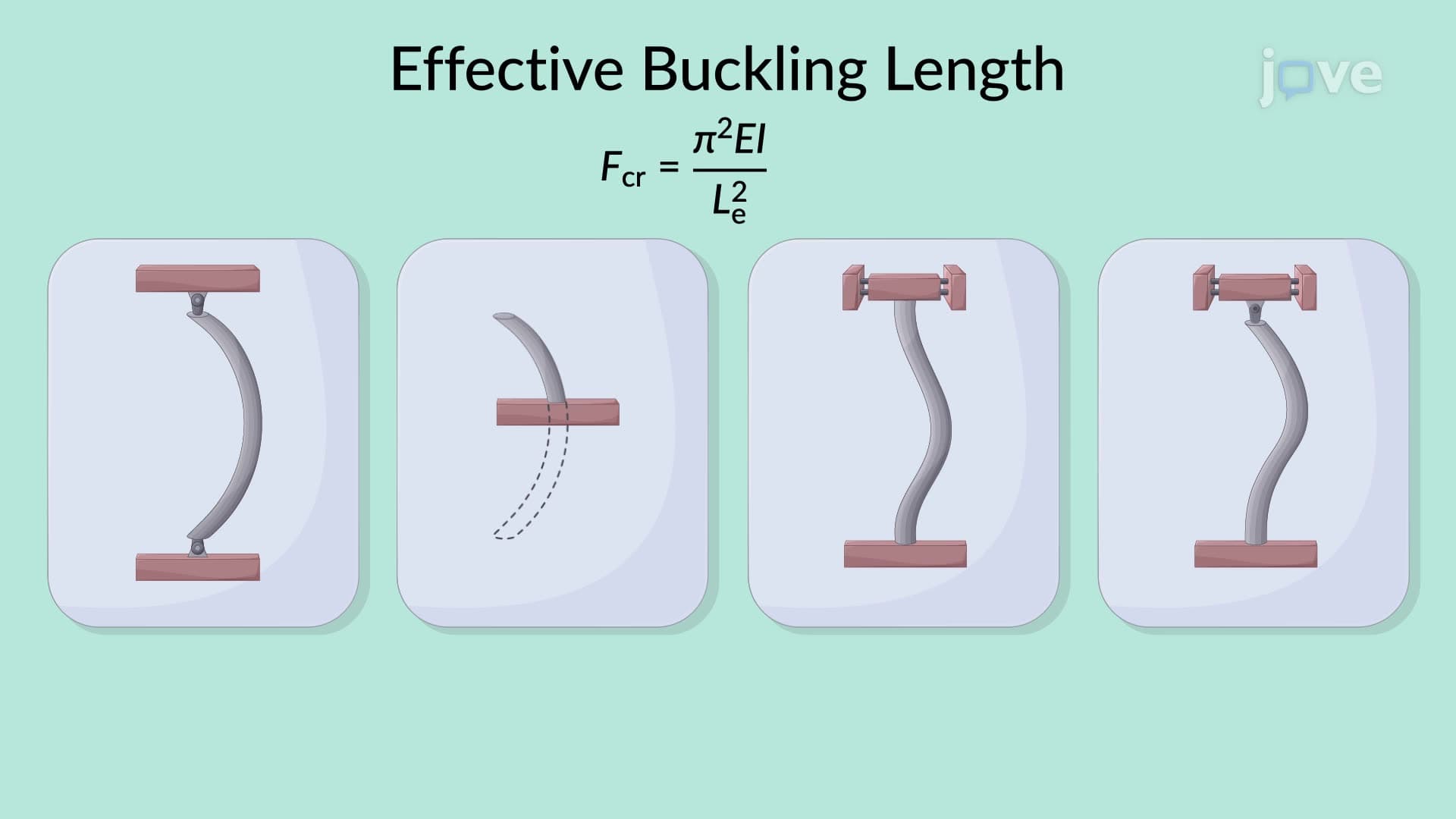
Pin connections allow rotation at both ends but prevent translation, resulting in the formula P(critical) = π²EI/L². This differs from fixed-fixed columns (4π²EI/L²) or fixed-free columns (π²EI/4L²). The pin condition represents a common real-world scenario in structural connections and serves as the foundation for understanding more complex end conditions.
Steel bridge construction commonly uses pin connections in truss members, where the Euler formula helps engineers size compression members to prevent buckling. For example, the San Francisco-Oakland Bay Bridge replacement project required extensive buckling analysis of steel compression members using Euler's principles to ensure structural safety under earthquake loads.
While the complete derivation involves differential equations typically covered in Calculus II, the core concept and formula application can be understood with basic algebra and trigonometry. High school students can grasp the physical meaning and use the formula for calculations, while the mathematical derivation becomes clearer after completing introductory calculus courses.
Practice identifying column end conditions, memorize the pin-connected formula P(critical) = π²EI/L², and work through problems involving different materials and geometries. Focus on understanding how changes in length, moment of inertia, and material properties affect critical load. Create a formula sheet connecting different end conditions to their respective buckling formulas.
Euler's formula serves as the foundation for studying lateral-torsional buckling, plate buckling theory, and advanced topics like geometric nonlinearity in structural analysis. It also connects to vibration analysis, as the mathematical form resembles eigenvalue problems encountered in dynamic analysis of structures and mechanical systems.
Progress to studying different end conditions (fixed, free), then explore inelastic buckling for shorter columns, lateral-torsional buckling of beams, and plate buckling theory. These topics build naturally on Euler's foundation and are essential for advanced structural and mechanical engineering coursework.
Related Micro-courses
Related Subjects
 Civil Engineering 30 micro-courses›Electrical Engineering 33 micro-courses›