Loading…
Loading video…

4,094 views
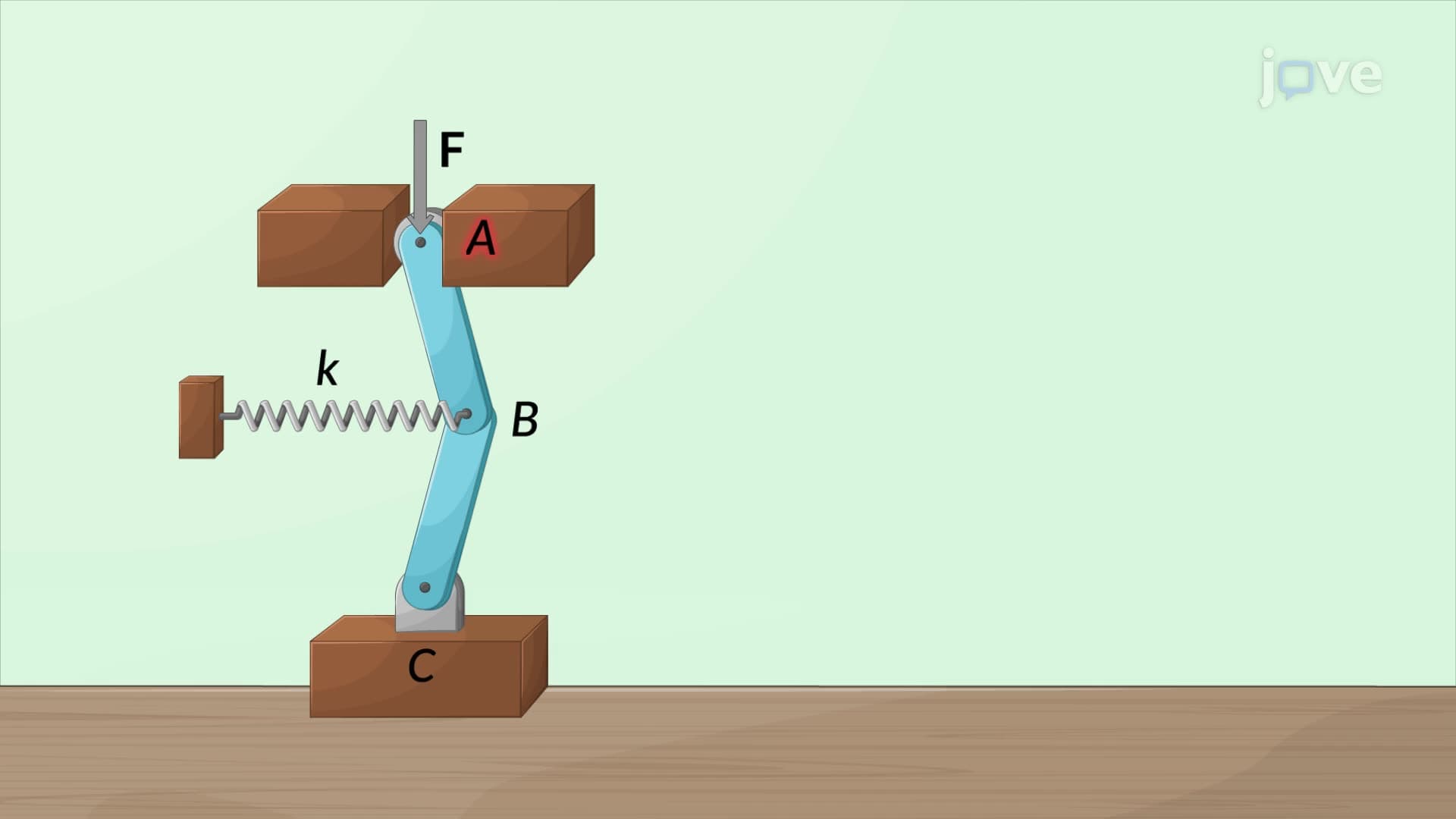
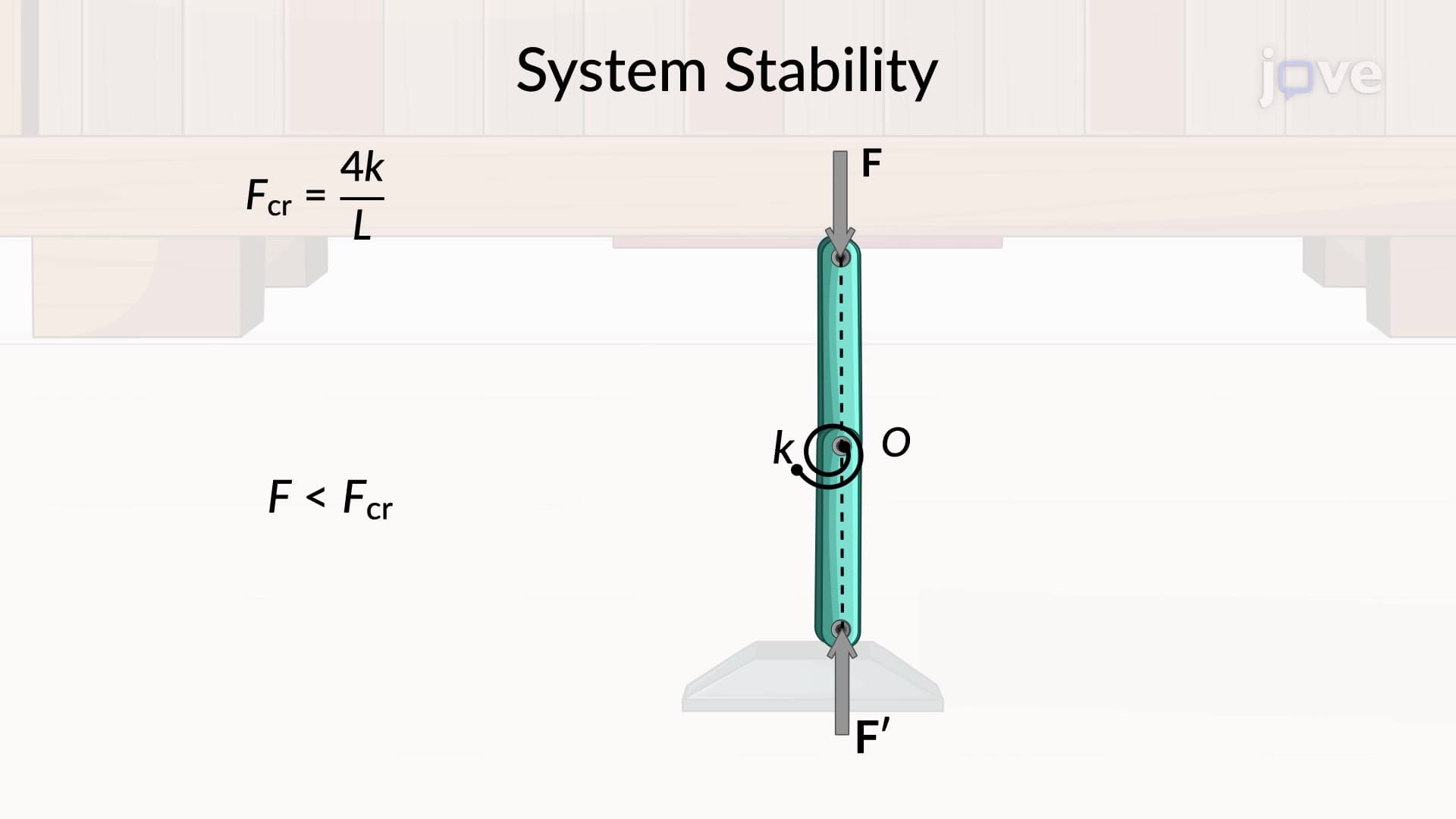
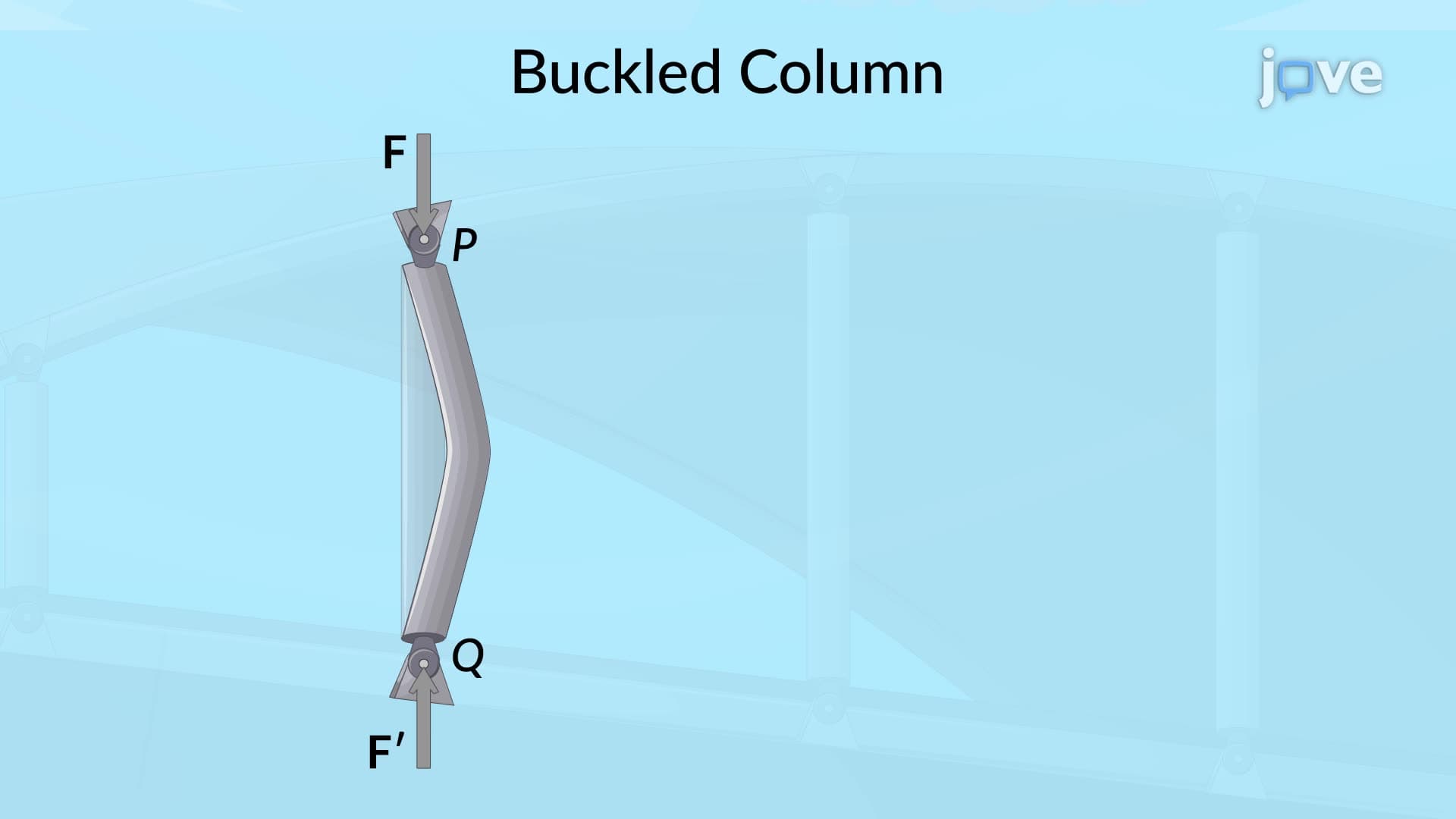
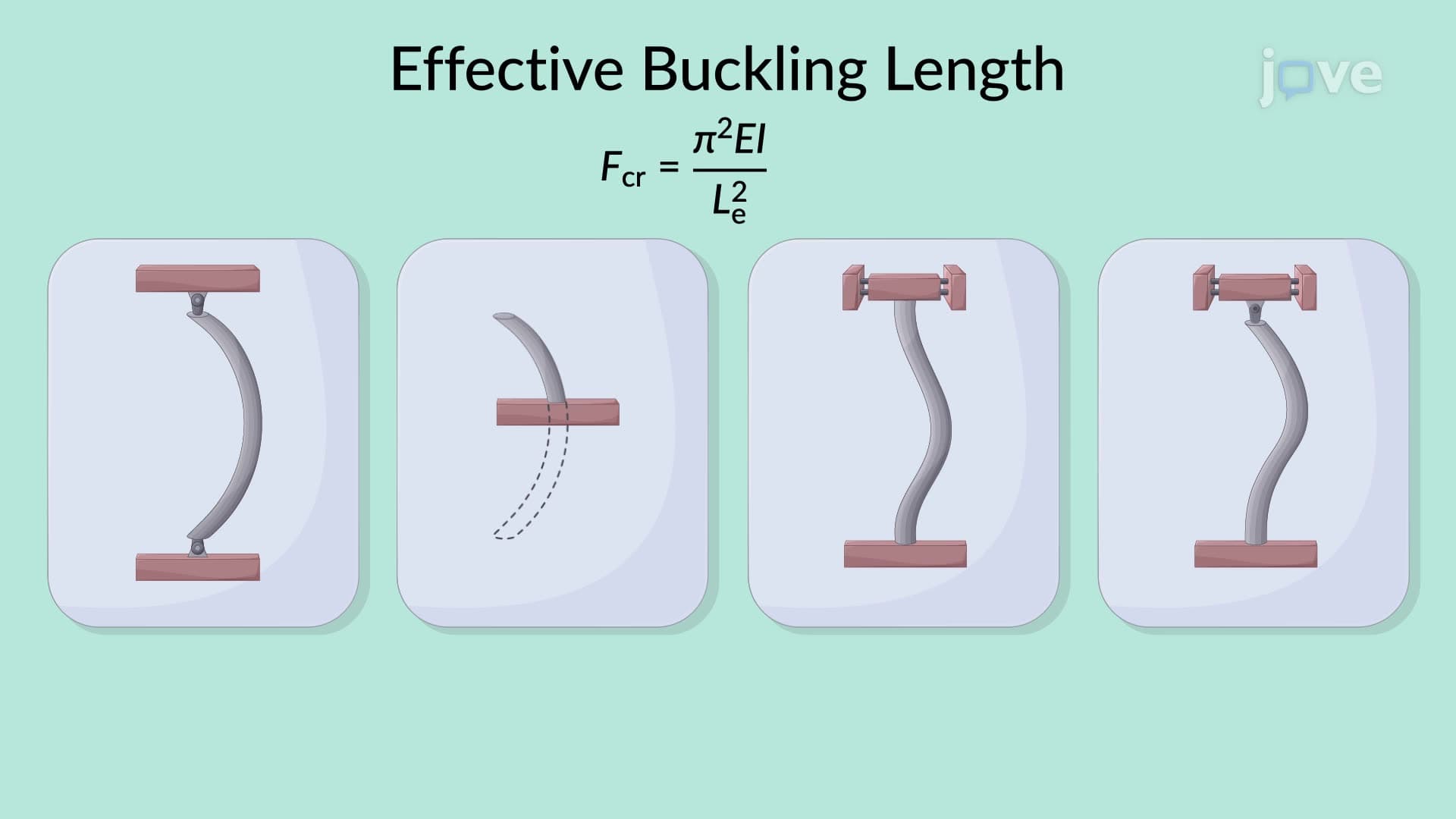
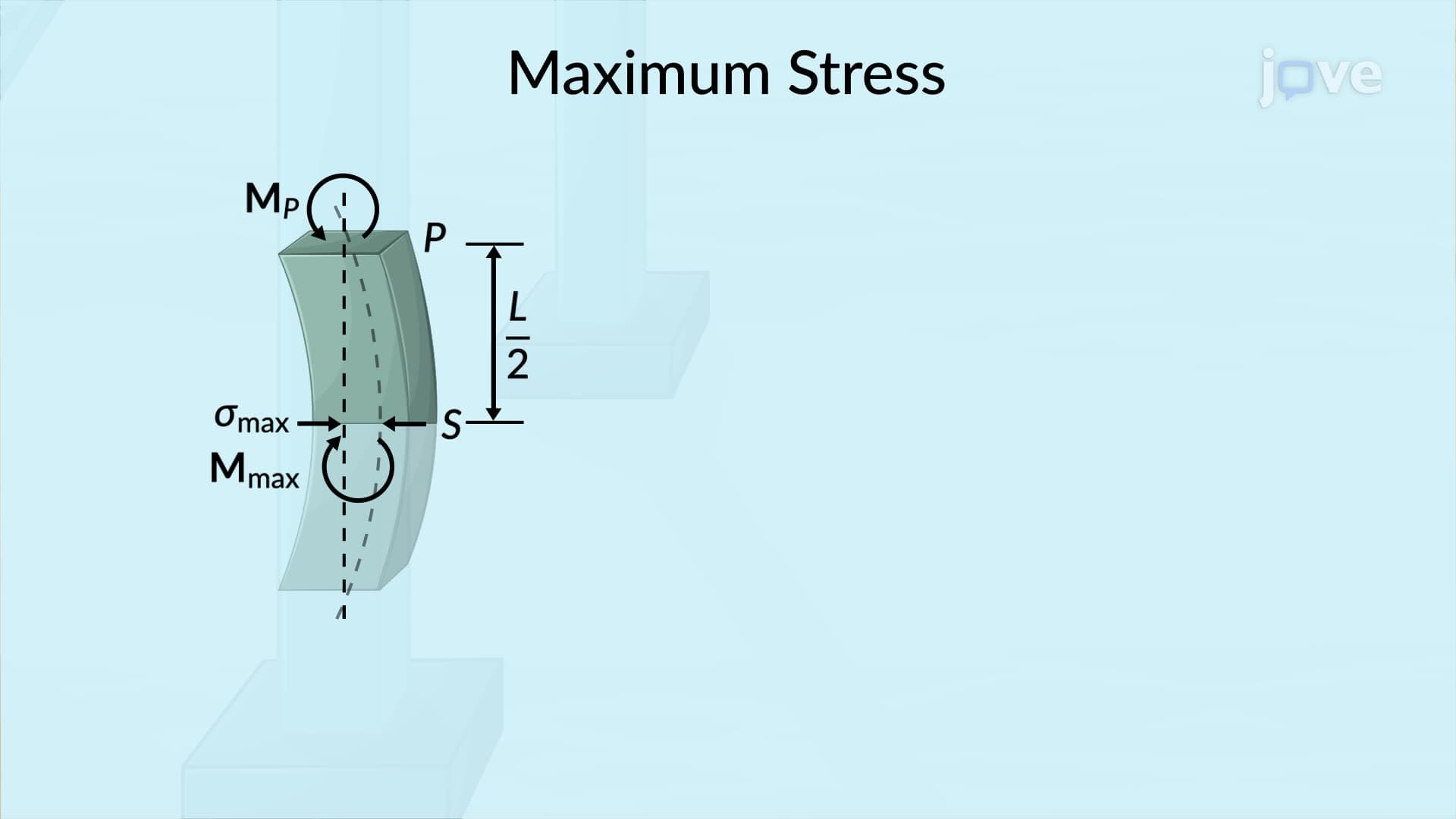
Ever wonder why the Tacoma Narrows Bridge collapsed in 1940, or why construction cranes have specific weight limits? Problem-solving with Euler's Column Buckling Formula reveals the critical load threshold where structural elements fail catastrophically. This engineering analysis examines a two-bar system with spring connections, demonstrating how to calculate the exact moment when applied forces cause structural instability. By applying equilibrium equations and moment analysis, engineers can predict failure points before they occur—essential knowledge for designing everything from skyscrapers in Manhattan to oil rigs in the Gulf of Mexico. Watch the full video on JoVE Coach to master this concept with expert-led visuals and step-by-step explanations.
Problem-solving with Euler's Column Buckling Formula extends far beyond simple column analysis into complex multi-element structural systems. When engineers design interconnected structures—like the suspension cables on San Francisco's Golden Gate Bridge or the framework of Chicago's Willis Tower—they must account for how individual components interact under load. The two-bar spring system represents a fundamental building block in structural engineering, where rigid elements connect through flexible joints or supports.
Effective structural analysis begins with systematic free-body diagram construction. Each structural element must satisfy both force equilibrium (sum of forces equals zero) and moment equilibrium (sum of moments about any point equals zero). In the two-bar system, these principles apply simultaneously to multiple connection points. The horizontal force equilibrium ensures that spring forces balance the horizontal components of support reactions, while moment equilibrium about each joint determines the magnitude of these reactions. This methodology mirrors techniques used in AP Physics C mechanics problems and undergraduate statics courses at institutions like MIT and Stanford.
The critical load calculation involves solving a system of equilibrium equations where the spring elongation X cannot equal zero for meaningful structural behavior. This mathematical constraint—similar to eigenvalue problems in advanced engineering mathematics—determines the threshold load where the system transitions from stable to unstable behavior. Engineers at companies like Boeing and Lockheed Martin use analogous calculations when designing aircraft structures that must withstand varying load conditions without catastrophic failure.
This analytical approach directly applies to numerous engineering scenarios across American infrastructure. Bridge designers use similar multi-element buckling analysis when evaluating how deck sections interact with support towers. Building engineers apply these principles when analyzing how floor joists connect to support beams in high-rise construction. The spring element represents any flexible connection—from rubber isolators in earthquake-resistant buildings in California to expansion joints in highway overpasses experiencing temperature variations. Understanding these interactions proves crucial for engineers preparing for the Fundamentals of Engineering (FE) exam and Professional Engineering (PE) licensure.
Frequently Asked Questions
Problem-solving with Euler's Column Buckling Formula for multi-bar systems involves analyzing the critical load at which interconnected structural elements become unstable. This approach combines classical buckling theory with equilibrium analysis to determine failure thresholds in complex structures. Engineers use these calculations to design safe, reliable connections in everything from building frameworks to mechanical assemblies.
Exam problems typically present two-bar or multi-element systems requiring students to draw free-body diagrams, apply equilibrium equations, and solve for critical parameters. Students must demonstrate understanding of both static equilibrium principles and stability analysis. Common variations include different spring configurations, varying bar lengths, or alternative loading conditions that test conceptual mastery.
The complexity arises from simultaneously satisfying multiple equilibrium conditions while accounting for system stability requirements. Students must track forces and moments across several connection points, then solve the resulting system of equations. Success requires strong algebra skills combined with clear physical intuition about how structural elements interact under load.
Bridge engineers apply these principles when designing cable-stayed bridges like the Arthur Ravenel Jr. Bridge in Charleston, where deck sections connect to tower cables. Building engineers use similar analysis for curtain wall connections on skyscrapers and seismic isolation systems in California hospitals. Mechanical engineers apply these concepts to robotic arm joints and aerospace structural connections.
While advanced treatments involve differential equations, the fundamental concepts require only algebra and trigonometry accessible to high school students. The key insight is recognizing how equilibrium conditions create mathematical constraints that determine critical load values. Students comfortable with basic physics problem-solving can master these techniques with focused practice.
Start by practicing free-body diagram construction for each system component separately, then combine them systematically. Work through problems step-by-step, clearly labeling all forces and moments before writing equilibrium equations. Create summary sheets showing common connection types and their corresponding equilibrium relationships to build pattern recognition skills.
Focus on understanding the physical meaning behind each equilibrium equation rather than memorizing formulas. Practice identifying which forces balance which other forces, and verify that your mathematical solutions make physical sense. Review similar problems from different textbooks to see various presentation styles and solution approaches.
Advanced structural dynamics explores how these systems respond to time-varying loads, while nonlinear analysis examines large-deformation behavior. Finite element methods extend these principles to complex geometries, and optimization theory helps designers find optimal configurations. These topics form the foundation for graduate-level structural engineering and aerospace design courses.
Software like ANSYS and Abaqus automate the equilibrium calculations but require engineers to understand the underlying physics to interpret results correctly. Engineers must still set up proper boundary conditions, select appropriate element types, and validate computational results against hand calculations for simple cases like the two-bar system.
Related Micro-courses
Related Subjects
 Civil Engineering 30 micro-courses›Electrical Engineering 33 micro-courses›