Loading subject page…

- Mechanical Engineering
- Kinetics of a Particle: Force and Acceleration
- Equations of Motion: Normal and Tangetial Components
Micro-course: Kinetics of a Particle: Force and Acceleration
2,566 views
Learn key concepts and earn your certificate.


Equations of Motion: Normal and Tangetial Components


00:00
01:10
Video Summary: Equations of Motion Normal and Tutorial
Ever wonder how NASCAR drivers navigate steep banked turns at 180+ mph without flying off the track? The equations of motion normal and tangential components explain exactly how forces work in curved motion. When a Tesla Model S takes a sharp corner on California's Pacific Coast Highway, its acceleration has two distinct components: tangential (speeding up or slowing down) and normal (changing direction toward the curve's center). These fundamental physics principles govern everything from roller coaster design to satellite orbital mechanics. Watch the full video on JoVE Coach to master this concept with expert-led visuals and step-by-step explanations.
- Understand how equations of motion normal and tangential components describe particle motion along curved paths
- Identify the two distinct acceleration components in curvilinear motion and their physical meanings
- Analyze how normal acceleration always points toward the center of curvature as centripetal acceleration
- Compare tangential acceleration (changes in speed magnitude) with normal acceleration (changes in direction)
- Apply Newton's second law to solve problems involving forces in normal and tangential directions
- Recognize when tangential acceleration is positive (speeding up) versus negative (slowing down)
- Evaluate real-world curved motion scenarios using normal-tangential coordinate systems
- Explore the relationship between centripetal force and normal acceleration in circular motion
Understanding Equations of Motion Normal And Tangential Framework
The equations of motion normal and tangential approach provides a powerful method for analyzing curved motion by decomposing acceleration into two perpendicular components. Unlike Cartesian coordinates that remain fixed in space, this coordinate system moves with the particle, making it ideal for curved trajectories.
Normal Component: The Direction-Changing Force
The normal component of acceleration always points toward the center of curvature, regardless of whether the particle speeds up or slows down. This acceleration component, also called centripetal acceleration, equals v²/ρ where v represents speed and ρ is the radius of curvature.
In practical terms, when a Ford Mustang navigates the banked curves at Daytona International Speedway, the normal force from the track surface provides the centripetal force needed to maintain circular motion. The banking angle helps redirect the car's weight to contribute to this inward force, allowing higher speeds without sliding outward.
Tangential Component: The Speed-Changing Force
The tangential component lies along the curve's tangent and determines how quickly speed changes. Positive tangential acceleration increases speed (like a motorcycle accelerating out of a turn), while negative tangential acceleration decreases speed (like a car braking before entering a curve).
This concept frequently appears on AP Physics exams and college mechanics courses. Students often encounter problems involving cars on circular tracks, pendulums, or particles sliding down curved ramps where they must resolve forces into normal and tangential directions.
Real-World Applications and Problem-Solving
Engineers use these principles when designing highway on-ramps, where the curve radius and banking angle must accommodate safe speeds for various vehicles. The California Department of Transportation applies these equations when designing freeway interchanges to ensure trucks can navigate curves safely at posted speed limits.
For exam success, remember that normal acceleration is never zero in curved motion (unless the path becomes straight), while tangential acceleration can be zero when speed remains constant. Practice identifying which forces contribute to each component-friction might act tangentially when braking but normally when providing centripetal force.
Frequently Asked Questions
Equations of motion normal and tangential components break down curved motion into two perpendicular directions. The tangential component describes how speed changes along the path, while the normal component describes how direction changes toward the curve's center. This approach simplifies analyzing complex curved motion by using Newton's laws in these natural coordinate directions.
AP Physics frequently tests these concepts through circular motion problems, banked curve scenarios, and pendulum questions. Students must identify forces acting in normal and tangential directions, then apply F = ma in each direction separately. Common problems involve finding minimum speeds for loop-the-loops or maximum safe speeds for banked highway curves.
First, draw a clear diagram showing the curved path and particle position. Next, establish normal and tangential coordinate axes at that point. Then identify all forces and resolve them into normal and tangential components. Finally, apply Newton's second law in each direction: ΣFt = mat and ΣFn = man = mv²/ρ.
MCAT passages often embed these concepts in biological contexts, such as blood flow through curved arteries or centrifuge operation in medical labs. Questions might ask about forces on red blood cells in curved vessels or calculate centripetal acceleration in laboratory equipment. Understanding the normal component as centripetal force is crucial for these applications.
Theme parks like Six Flags use these equations to ensure rider safety and comfort throughout curved sections. Engineers calculate normal forces at each point to guarantee cars stay on tracks, while tangential forces determine acceleration and braking requirements. The normal component creates the "G-force" sensation riders experience in loops and sharp turns.
Basic understanding requires only algebra and trigonometry, making it accessible to high school physics students. While calculus helps with advanced applications involving variable curvature, most introductory problems use constant radius curves. Focus on force identification and component resolution rather than complex mathematical derivations.
Start with simple circular motion examples before tackling complex curves, and always draw detailed free-body diagrams showing both coordinate systems. Practice identifying which forces contribute to normal versus tangential acceleration, and memorize that normal acceleration always equals v²/ρ for any curved path.
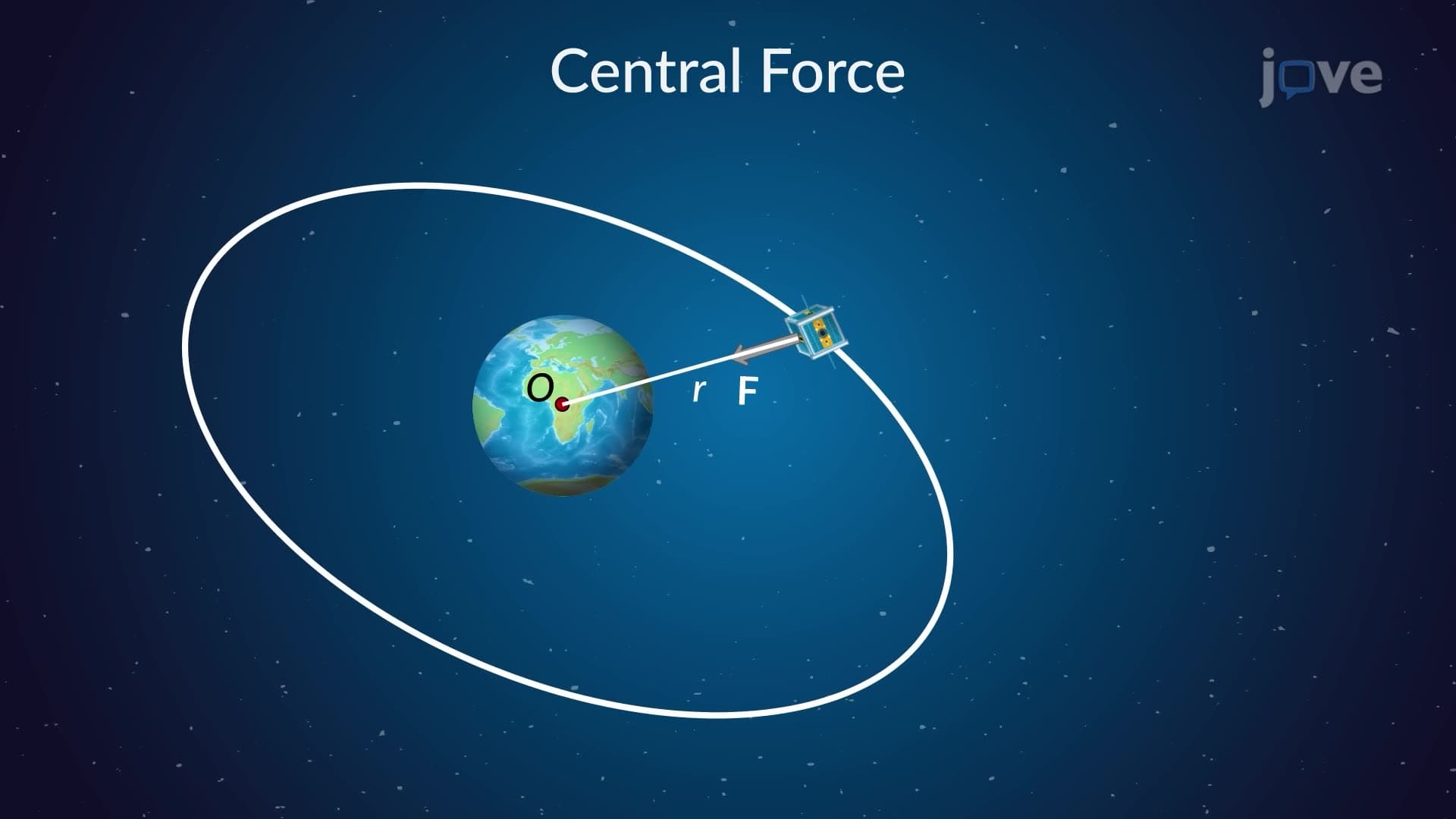
Satellite orbits represent pure normal acceleration cases where tangential acceleration is zero (constant orbital speed). The gravitational force provides exactly the centripetal force needed for circular orbits. This connection appears in advanced physics courses and helps explain how GPS satellites maintain precise positions above Earth.
Related Micro-courses
12 Concepts

13 Concepts

10 Concepts