Loading subject page…

- Molecular Biology
- Biochemistry of the Cell
- Nucleic Acids
Micro-course: Biochemistry of the Cell
320,100 views
Learn key concepts and earn your certificate.


Nucleic Acids

00:00
02:43
Video Summary: What are Nucleic Acids
Did you know that every cell in your body contains about 6 billion DNA "letters" that could stretch 6 feet if unraveled? Nucleic acids biology explained reveals how DNA and RNA serve as life's instruction manual, storing and transmitting genetic information in every living organism. From solving crimes through forensic DNA analysis used by the FBI to developing personalized medicine treatments at major US hospitals, understanding what are nucleic acids unlocks the mysteries of heredity, evolution, and cellular function. Watch the full video on JoVE Coach to master this concept with expert-led visuals and step-by-step explanations.
- Understand what are nucleic acids and distinguish between the two main types: DNA and RNA
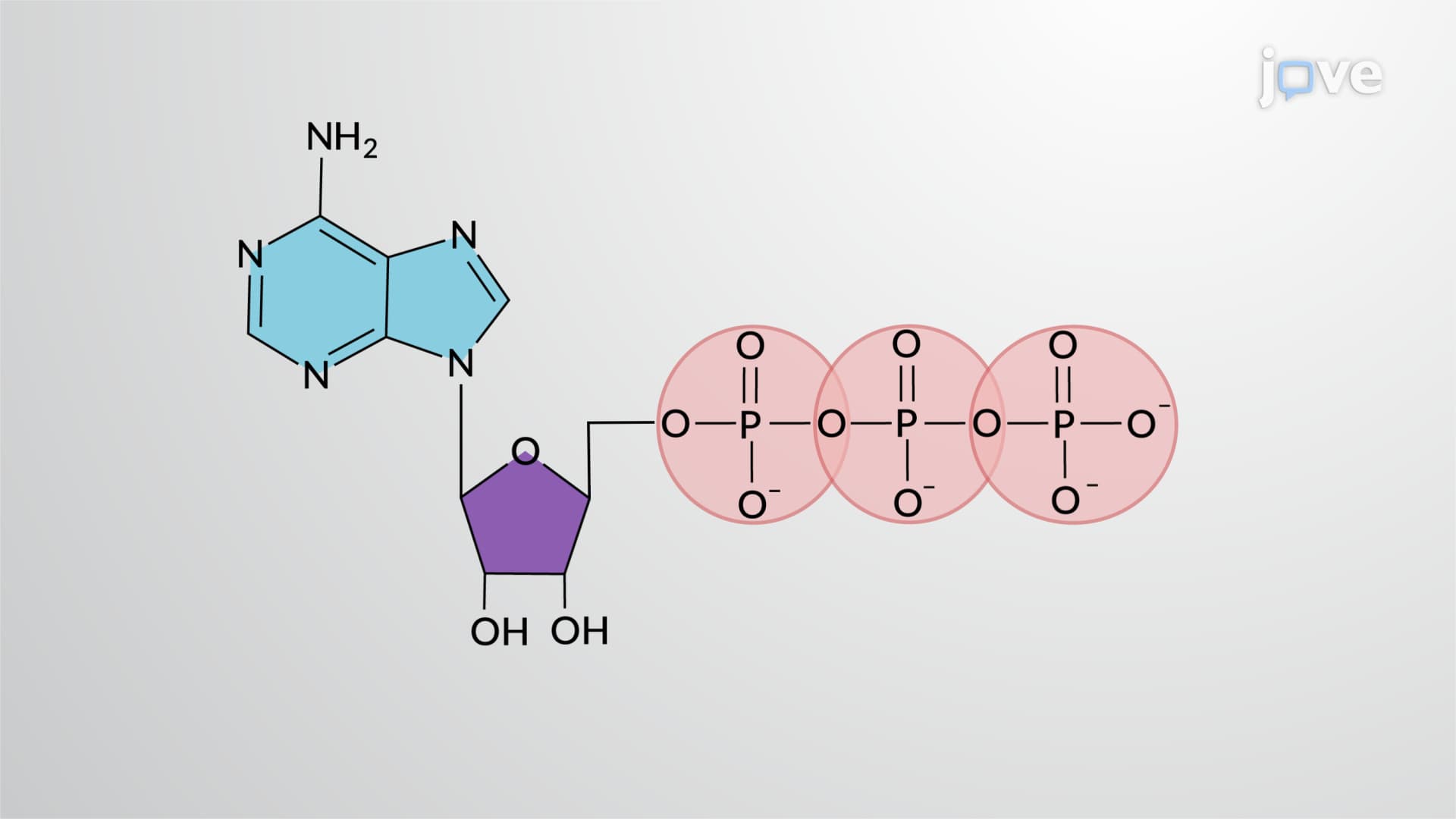
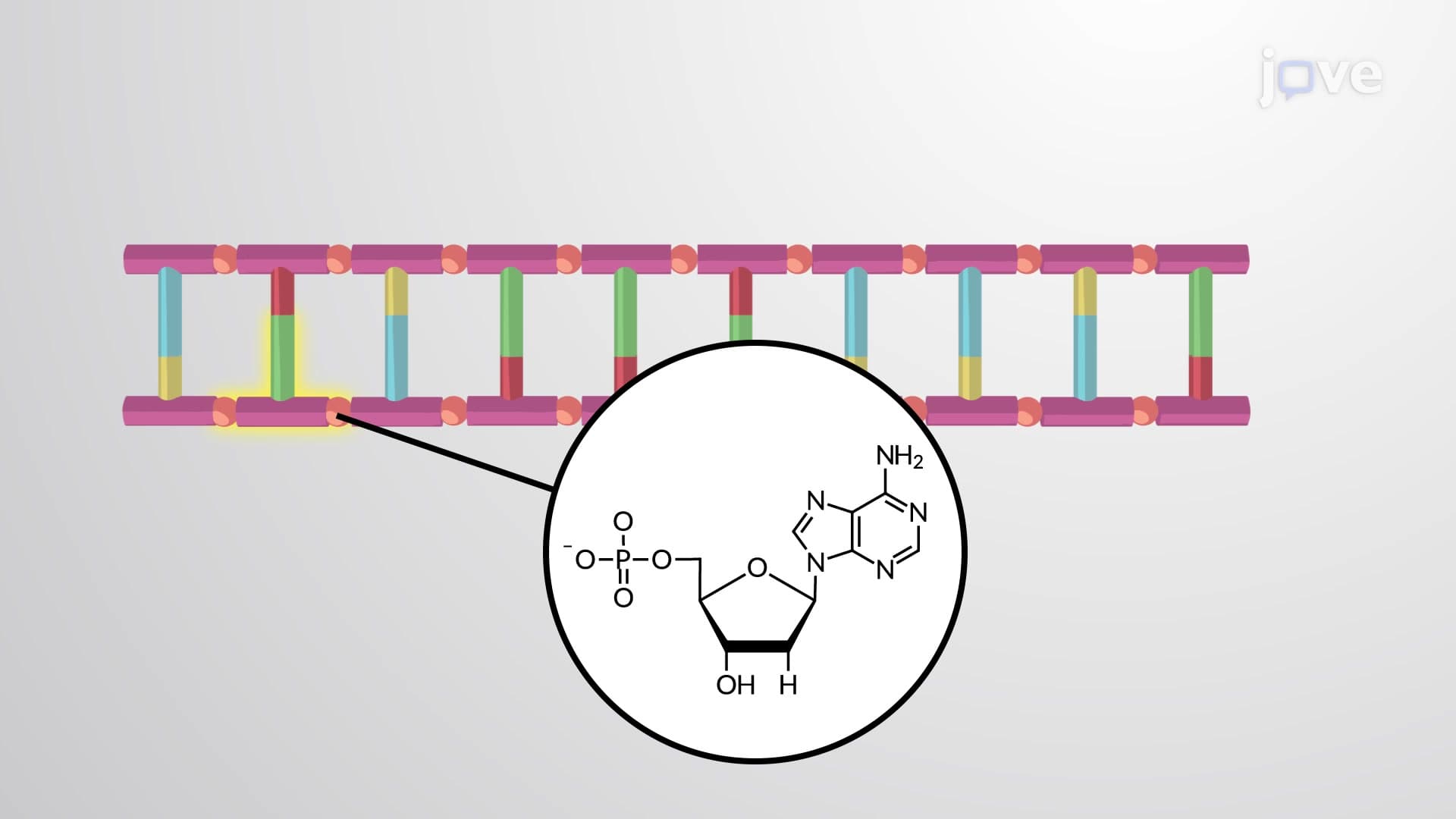
- Identify the three components of nucleotide building blocks: sugar, phosphate group, and nitrogenous base
- Analyze how complementary base pairing (A-T and G-C in DNA; A-U and G-C in RNA) enables genetic information storage
- Compare the structural differences between DNA's double helix and RNA's single-stranded forms
- Evaluate the functional roles of DNA in heredity and RNA in protein synthesis through the central dogma
- Apply knowledge of purine and pyrimidine base classifications to predict molecular interactions
- Recognize real-world applications in genetic engineering, medical diagnostics, and forensic science
- Explore how nucleic acid mutations contribute to genetic disorders and evolutionary processes
What are Nucleic Acids: The Foundation of Life
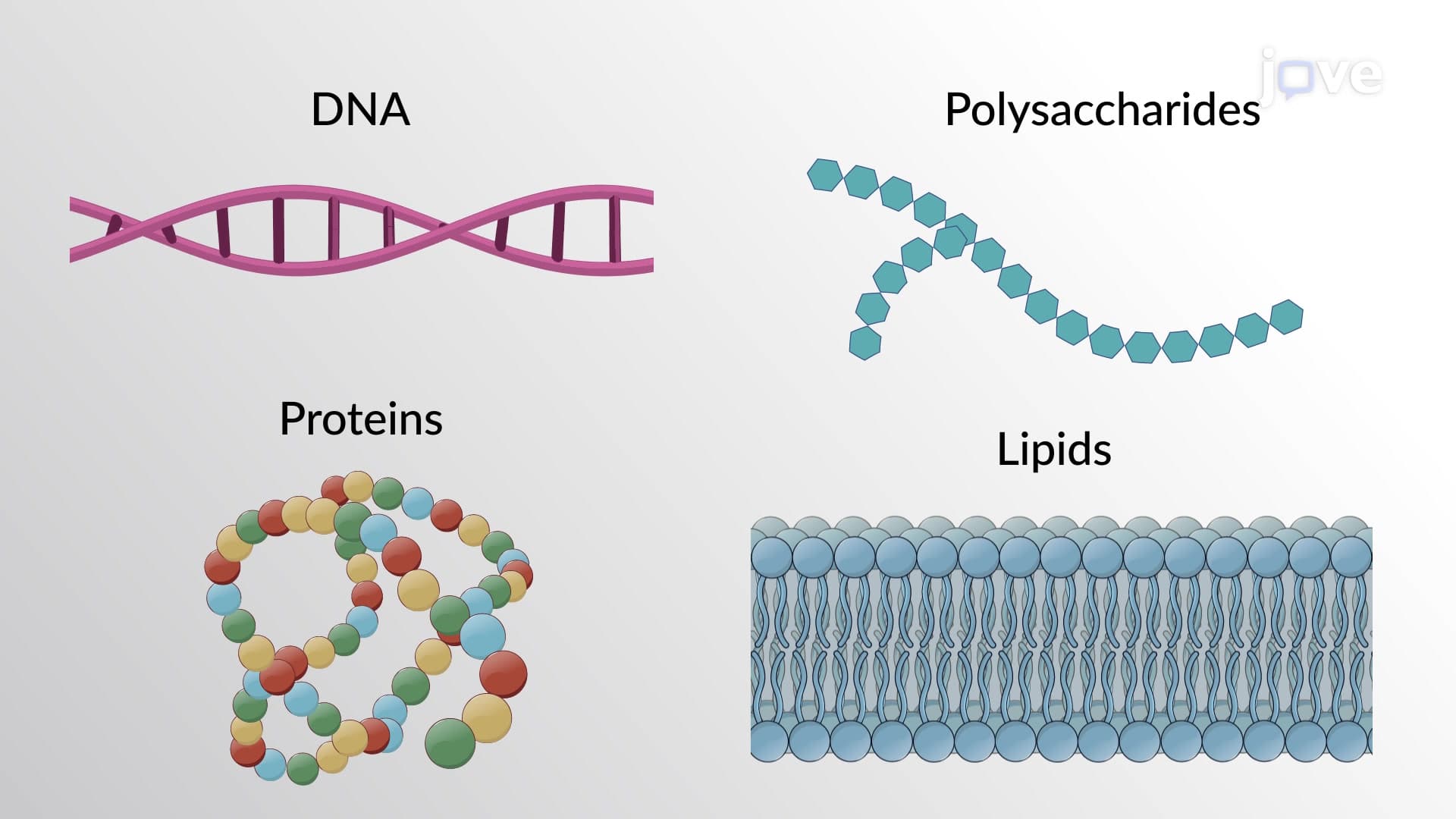
Nucleic acids biology explained begins with understanding these remarkable biomolecules as the universal storage devices for genetic information. Found in every living cell from bacteria to humans, nucleic acids exist as two primary types: deoxyribonucleic acid (DNA) and ribonucleic acid (RNA). These complex polymers serve as the molecular basis for heredity, ensuring that genetic traits pass from one generation to the next while enabling cellular processes essential for life.
Nucleotide Building Blocks: The Molecular Architecture
Each nucleic acid consists of repeating units called nucleotides, the fundamental nucleotide building block nucleic acids. Every nucleotide contains three essential components: a five-carbon sugar (deoxyribose in DNA or ribose in RNA), a phosphate group, and one of four nitrogenous bases. The bases fall into two categories: purines (adenine and guanine) with double-ring structures, and pyrimidines (cytosine, thymine in DNA, or uracil in RNA) with single-ring structures. This purine pyrimidine nucleic acid classification proves crucial for understanding base pairing rules that govern genetic information storage and transmission.
DNA Structure and Function: The Double Helix Blueprint
DNA's iconic double helix structure, discovered by James Watson and Francis Crick at Harvard University, features two antiparallel strands connected by hydrogen bonds between complementary bases. Adenine always pairs with thymine (two hydrogen bonds), while guanine pairs with cytosine (three hydrogen bonds). This precise nucleic acid information storage system allows DNA to maintain genetic stability while enabling accurate replication during cell division. In human cells, DNA resides primarily in the nucleus, containing approximately 3 billion base pairs that encode roughly 20,000-25,000 genes.
RNA Diversity and Central Dogma Applications
Unlike DNA's storage role, RNA demonstrates remarkable functional diversity. Messenger RNA (mRNA) carries genetic instructions from DNA to ribosomes, transfer RNA (tRNA) delivers amino acids during protein synthesis, and ribosomal RNA (rRNA) catalyzes peptide bond formation. The central dogma describes this genetic nucleic acid function flow: DNA → RNA → proteins. This knowledge proves essential for success on standardized exams like the AP Biology exam, MCAT biochemistry sections, and college-level molecular biology courses, where students must predict outcomes of genetic mutations and analyze experimental results involving nucleic acid manipulation.
Frequently Asked Questions
Nucleic acids are biomolecules that store and transmit genetic information in all living organisms. They include DNA, which contains hereditary instructions, and RNA, which helps convert those instructions into proteins. Understanding nucleic acids is fundamental to grasping concepts like heredity, evolution, gene expression, and modern biotechnology applications from medical treatments to agricultural improvements.
Both exams extensively test nucleic acid structure, function, and applications. The AP Biology exam includes multiple-choice questions about base pairing rules and free-response questions requiring analysis of DNA replication or protein synthesis scenarios. The MCAT biochemistry section emphasizes nucleic acid chemistry, enzyme mechanisms, and molecular genetics, often presenting experimental data for interpretation.
DNA contains deoxyribose sugar and thymine, forms a stable double helix, and stores genetic information long-term in the nucleus. RNA contains ribose sugar and uracil instead of thymine, typically exists as single strands, and performs diverse functions including protein synthesis, gene regulation, and catalysis. These structural differences directly relate to their distinct biological roles.
The FBI and police departments across the US use DNA fingerprinting to solve crimes by comparing genetic profiles from evidence to suspect samples. Medical laboratories use nucleic acid testing for diagnosing genetic disorders, detecting infections, and developing personalized cancer treatments. Agricultural companies employ genetic engineering techniques to create crops with improved traits like disease resistance.
Absolutely not! While nucleic acids involve complex chemistry, the core concepts build logically from basic chemistry principles you already know. Start with understanding the four bases and their pairing rules, then gradually explore structure and function. Many successful pre-med and biology students master these concepts during their junior or senior year of high school.
Focus on drawing and labeling structures repeatedly until you can sketch DNA and RNA from memory. Practice predicting base pairing in different scenarios and work through protein synthesis problems step-by-step. Create concept maps connecting structure to function, and use active recall techniques rather than passive reading to test your understanding.
Consider studying epigenetics (how gene expression changes without DNA sequence changes), CRISPR gene editing technology, non-coding RNA functions, and DNA repair mechanisms. These cutting-edge areas represent active research fields with significant medical and biotechnology applications, making them valuable for students pursuing careers in genetics, medicine, or bioengineering.
Mutations in DNA sequences can alter protein structure and function, leading to genetic diseases like sickle cell anemia or cystic fibrosis. Cancer often results from mutations affecting genes that control cell division and growth. Understanding these connections helps explain how genetic counseling, gene therapy, and targeted cancer treatments work at the molecular level.
Related Micro-courses